Continent number 5! 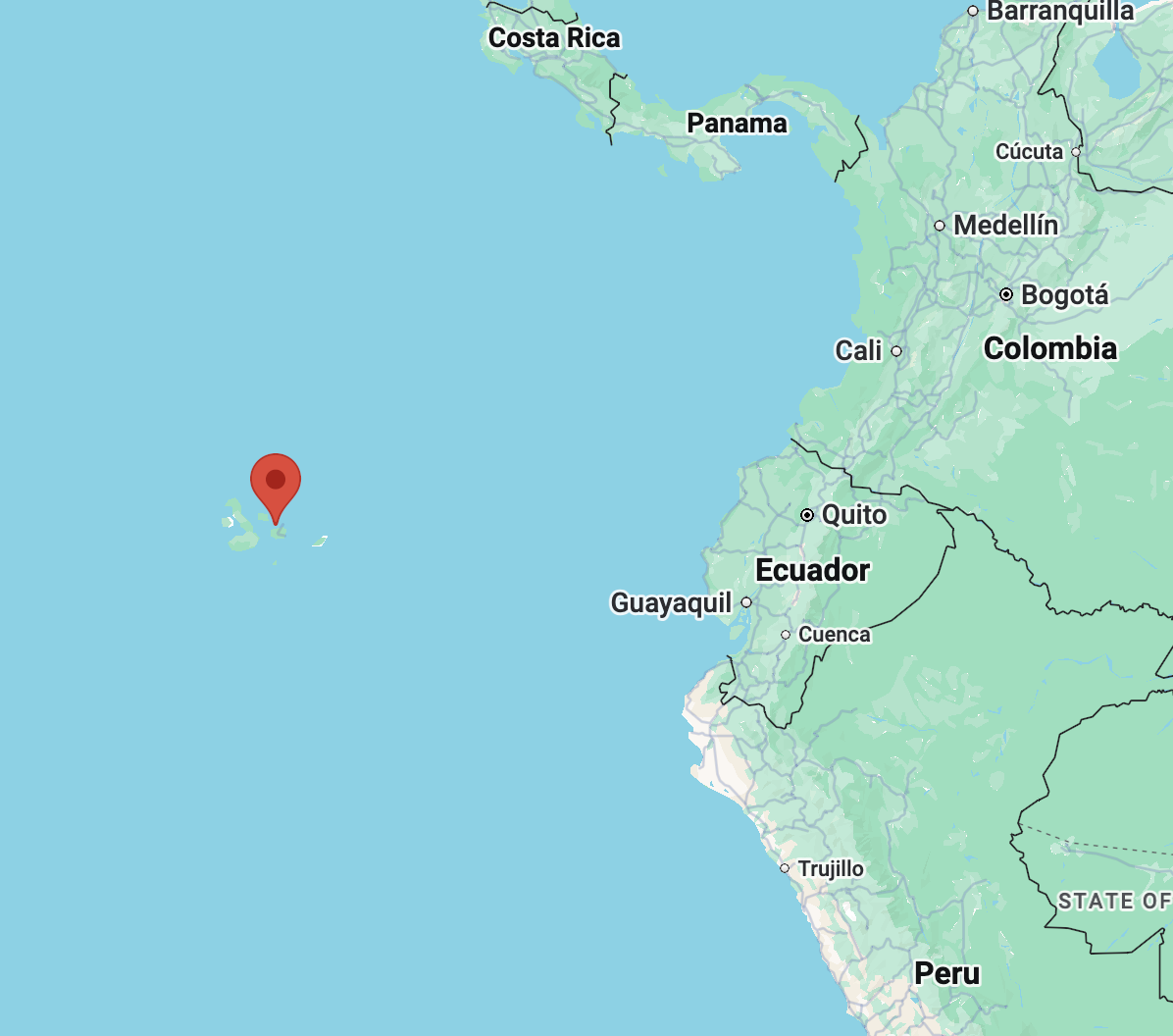
Traveling to Ecuador in South America with Scales Mound High School students will be the 5th continent that I have visited. (The two left are Australia and Antarctica.) Adding the Galapagos to this trip is another adventure checked off my bucket list.
Day one – June 20, 2026
Today is a travel day. We flew from Chicago O’Hare International Airport to Mariscal Sucre International Airport in Quito, Ecuador. We had a layover at Panama City International Airport, Panama. Travel days are exciting and exhausting.
Our tour director, Raul, met us at the airport and took us to the hotel. He gave a brief city tour and shared some history of Ecuador as we traveled to the airport. Raul has lived in Ecuador his entire life. He told us it is expensive and not easy to move to another country.
Buernas tardas Quito, Ecuador! (Good afternoon)
Day two – June 21, 2026
Today’s itinerary is to travel to the Mindo, Ecuador, region.
Hummingbirds
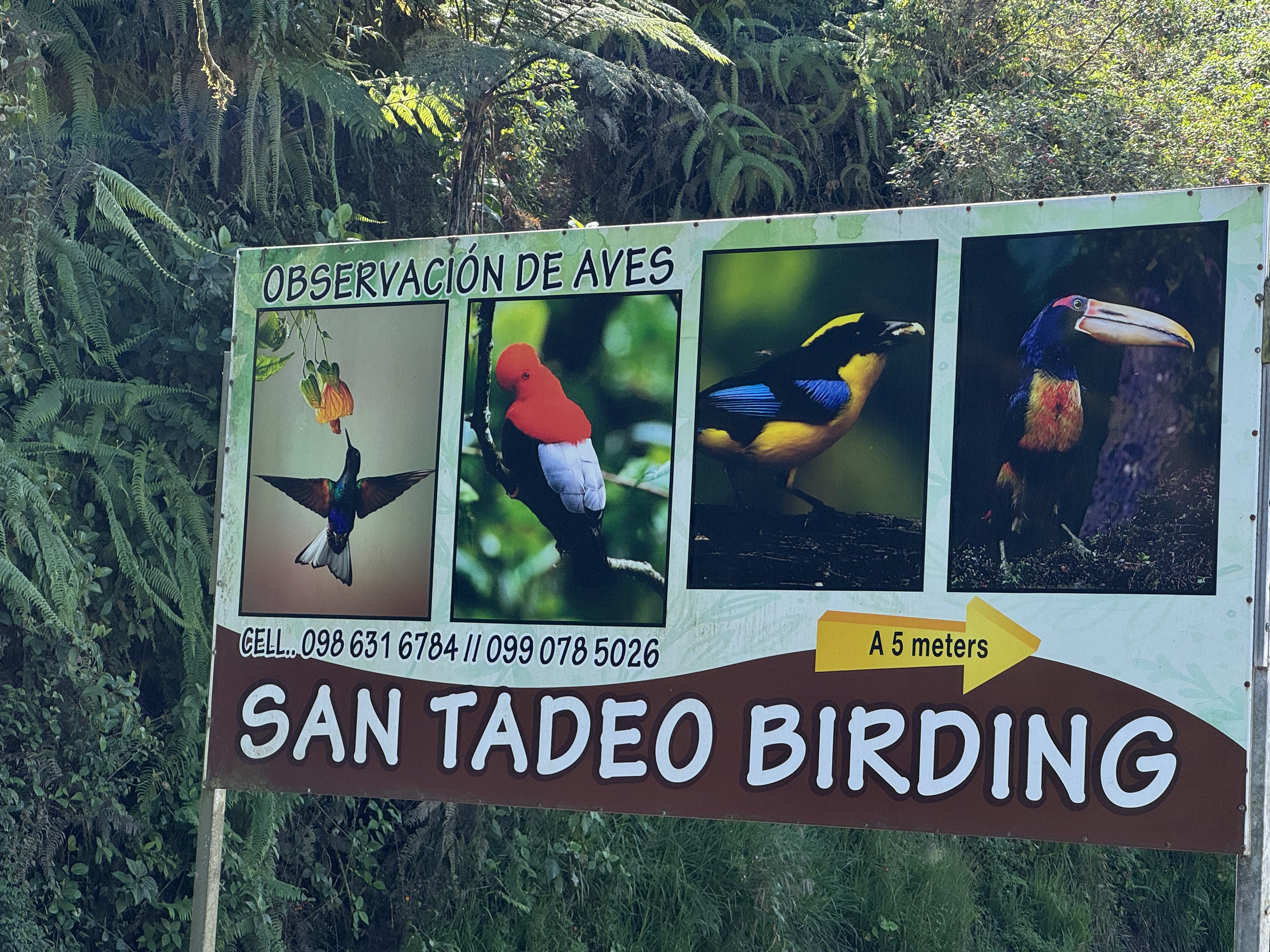
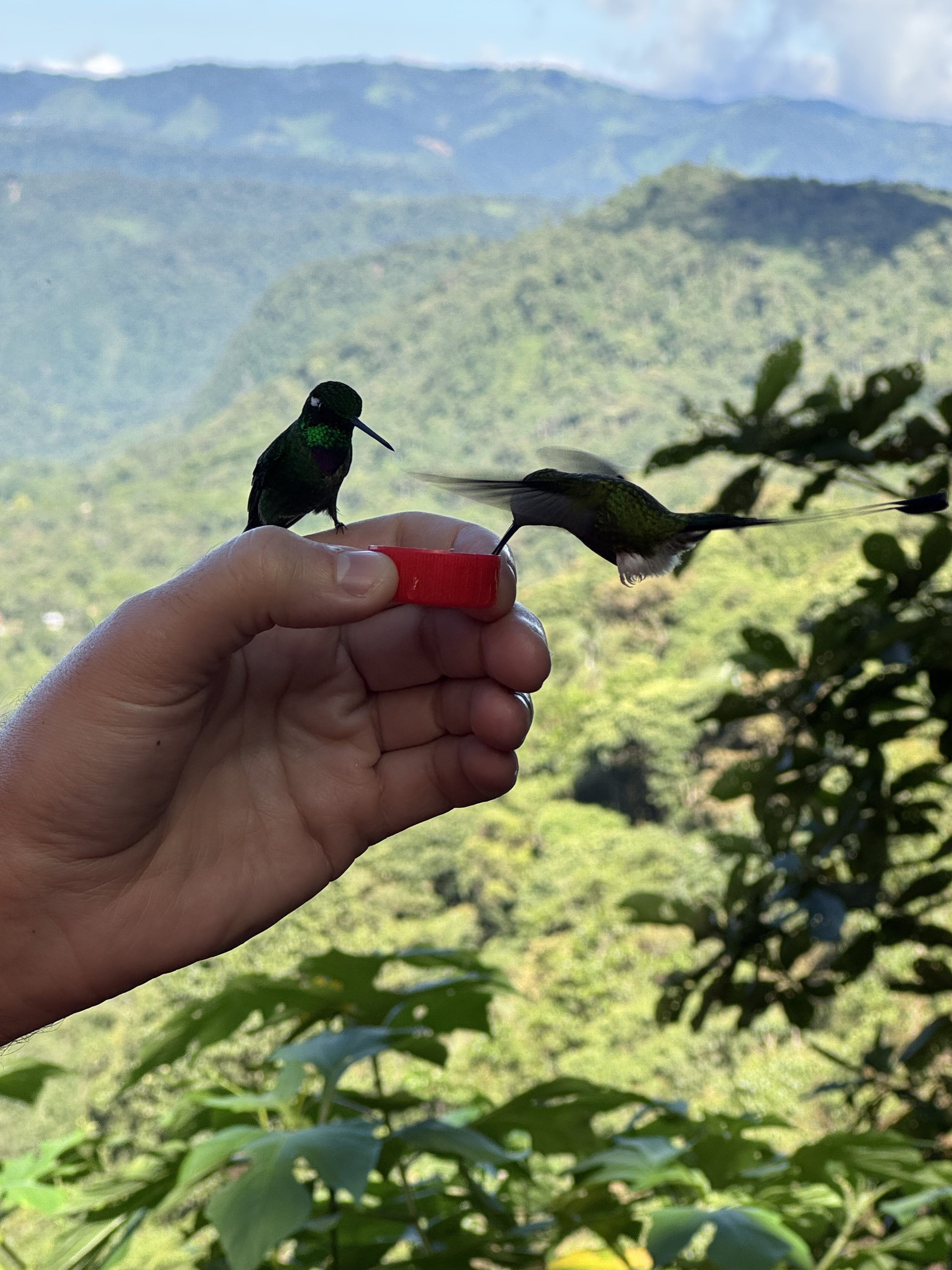
The first stop is the Tadeo Hummingbird Sanctuary. Hand-feeding hummingbirds is a very unique experience. The sanctuary has over 200 species of hummingbirds. There are over 1000 species in Ecuador.
How to hand-feed a hummingbird. You need hummingbird food in a red pop bottle lid. Why red? It will attract the hummingbirds. Next, stand very still and hold the lid so the hummingbird can approach.

Chocolate Makers Factory tour. Yum!
This tour was different from other cacao tours I have taken. At this facility, they processed cacao into chocolate and roasted locally grown coffee beans. Of course, a great mix. Coffee and chocolate definitely go together.
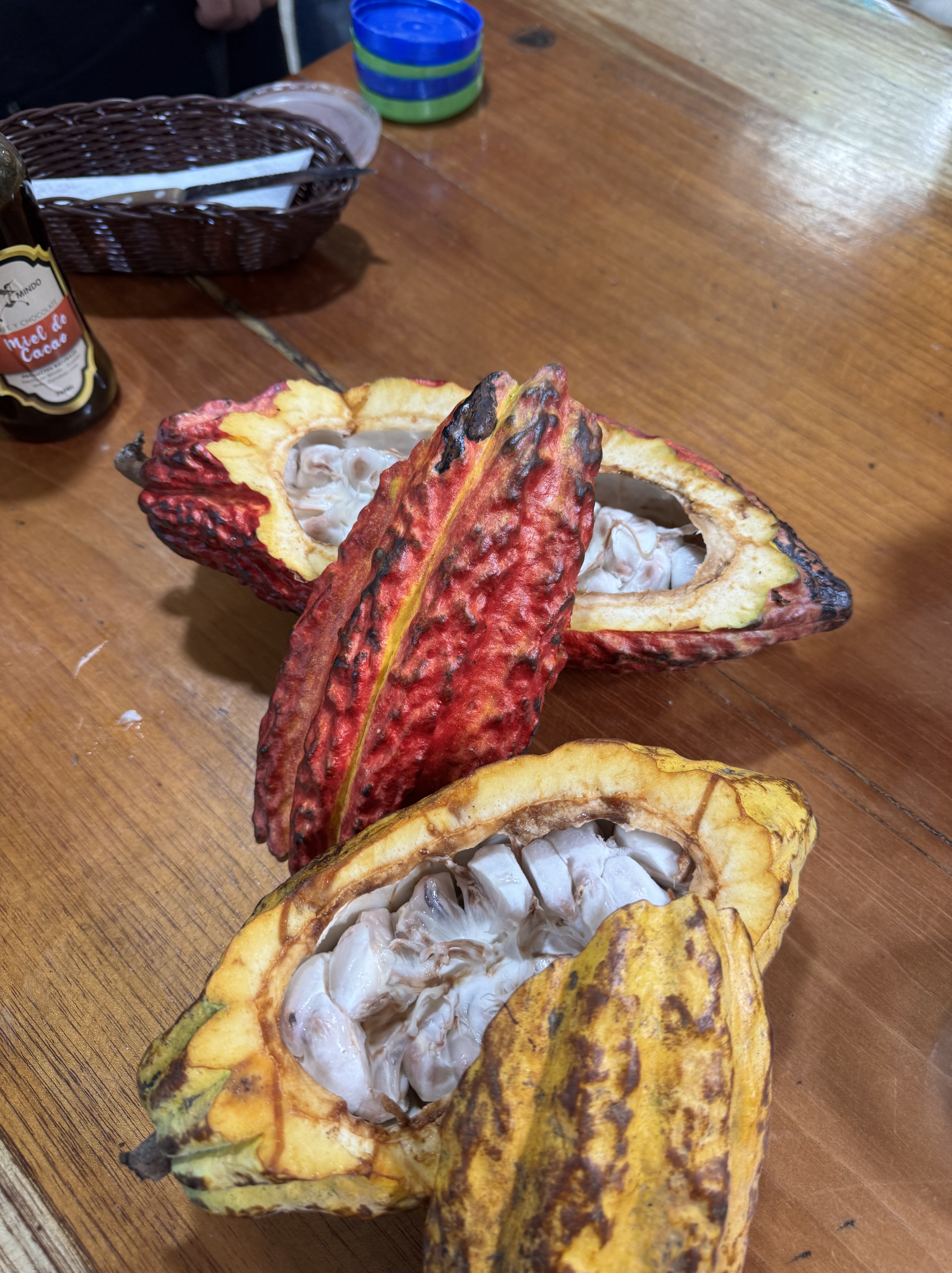
 Cacao originated in Ecuador and was domesticated in the Amazon region. Plants and seeds were taken to other countries in South and Central America. Ecuador produces 60% of the world’s cacao.
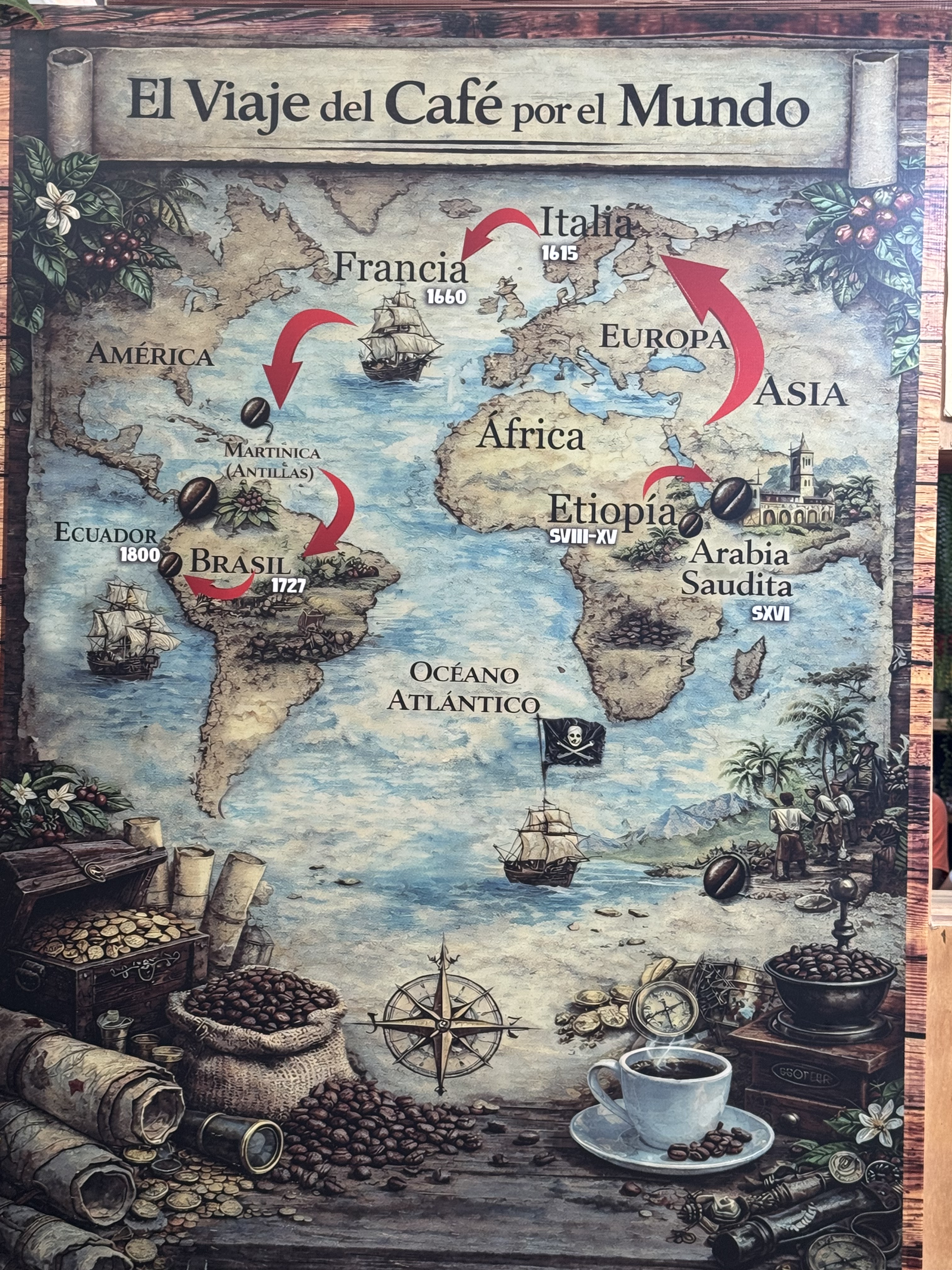
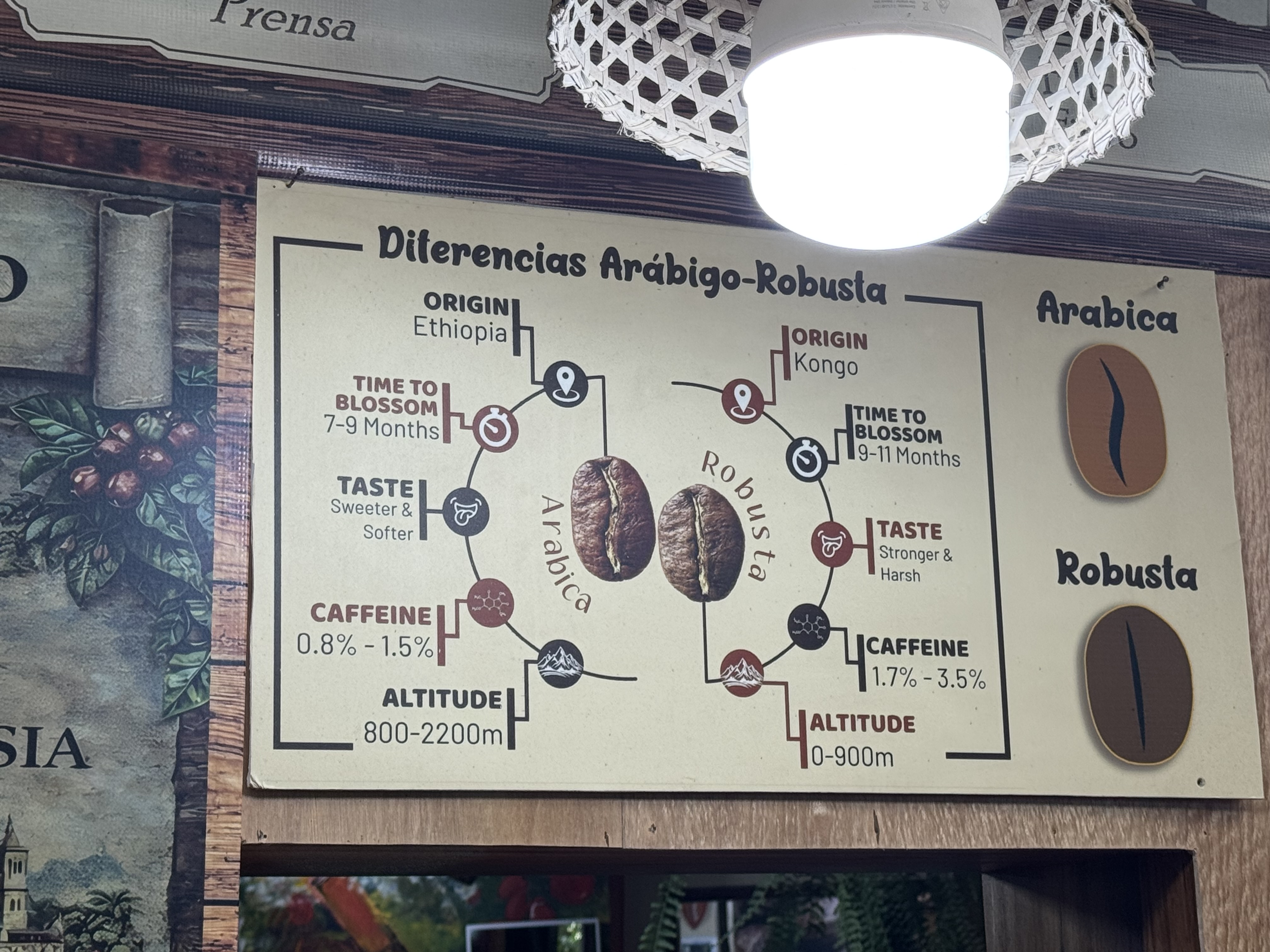
Ecuador is also known for great coffee, and it is grown throughout the country.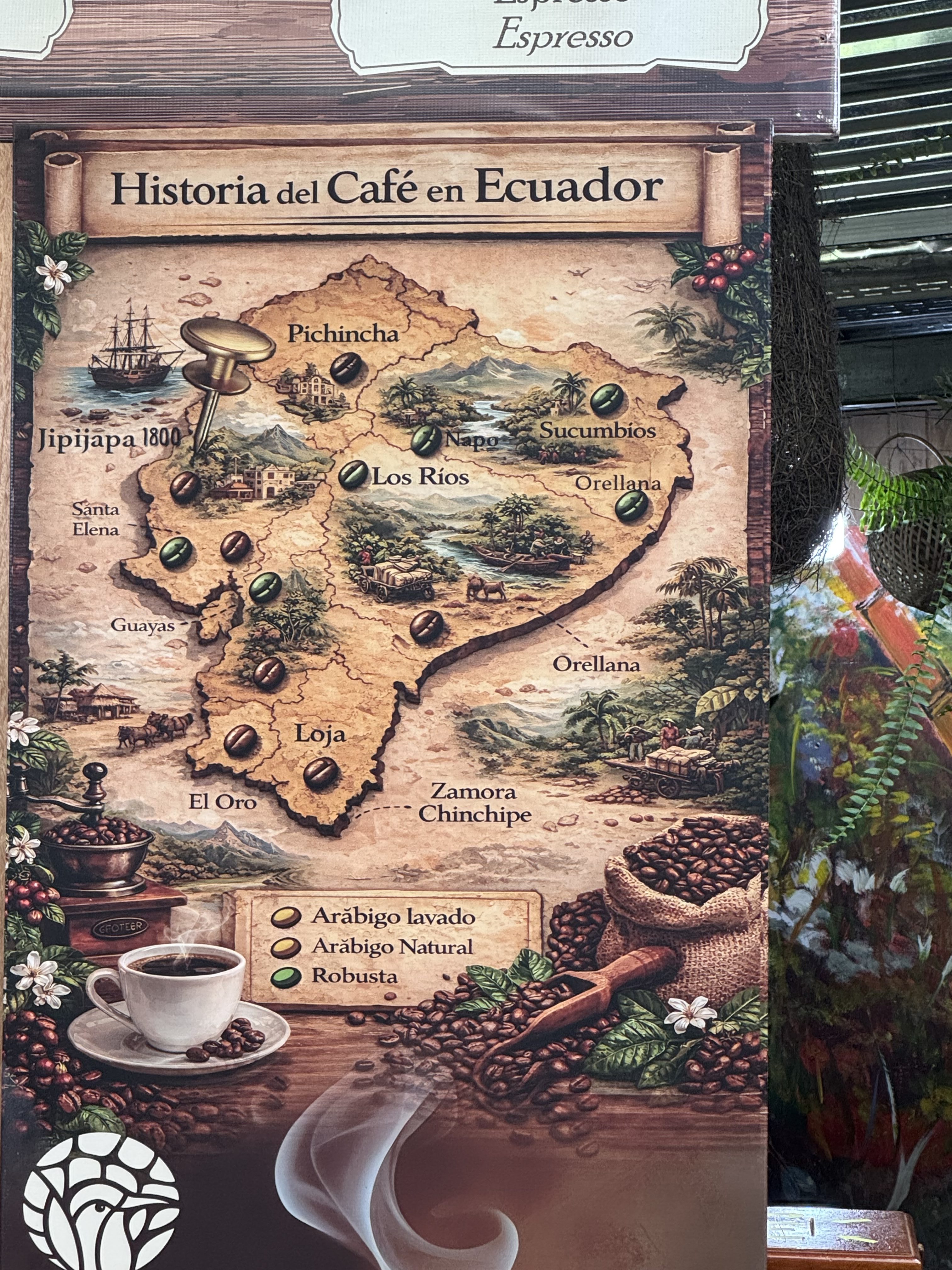
The process of going from bean to chocolate is complex, yet simple. First, the fruit pod is opened, and the cacao beans are extracted. The cacao is then fermented in a wooden box to remove the fleshy part around the bean. Then the beans are air-dried until they feel dry. Then they are roasted in a pan over a flame, stirring continuously. When the bean shells start to pop or open, the roasting is complete, and the bean husks need to be removed using a stone grinding tool. This tool is also used to grind the beans into a powder. The final step is to use the ground powder to make a chocolate product.
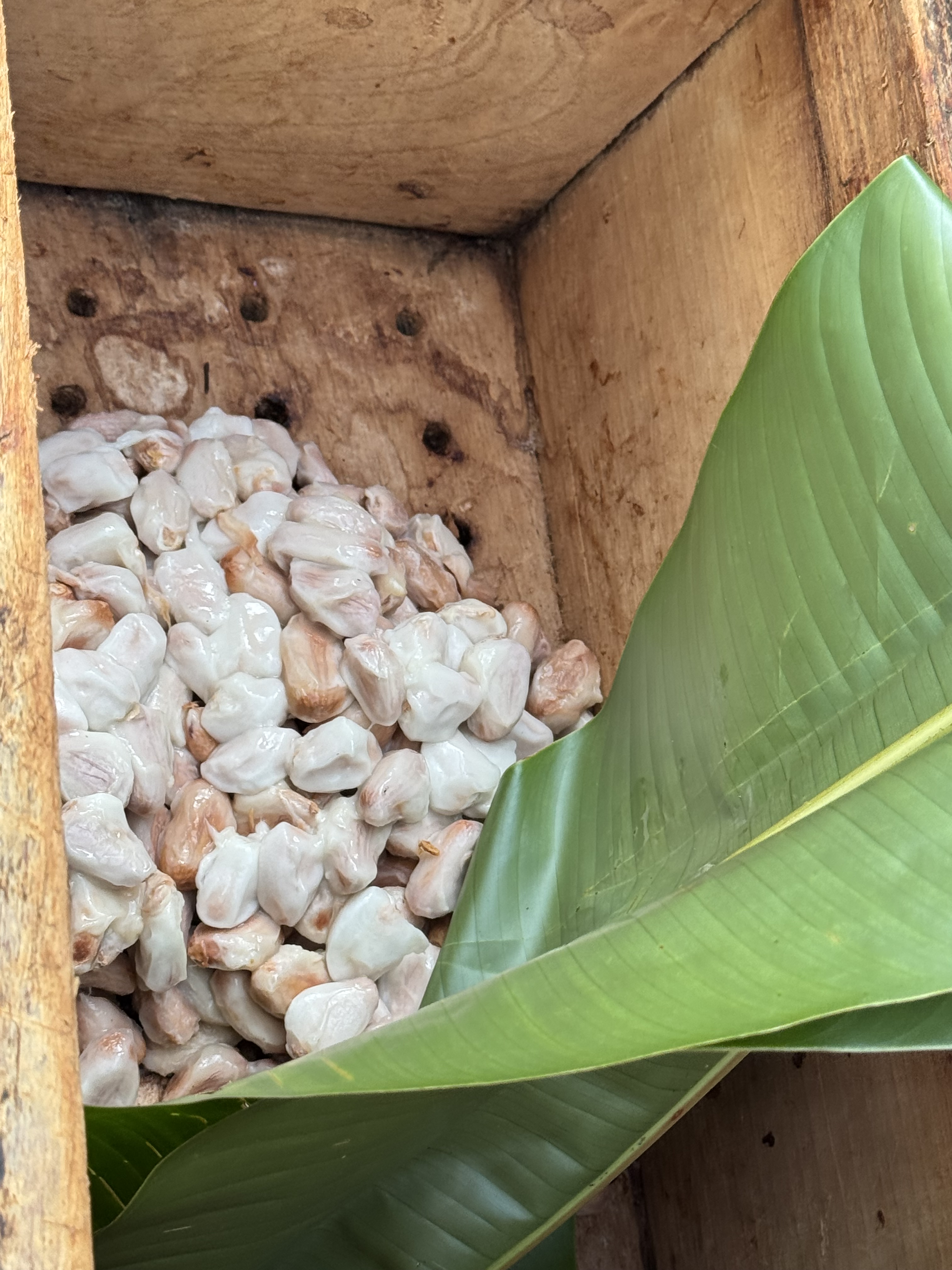
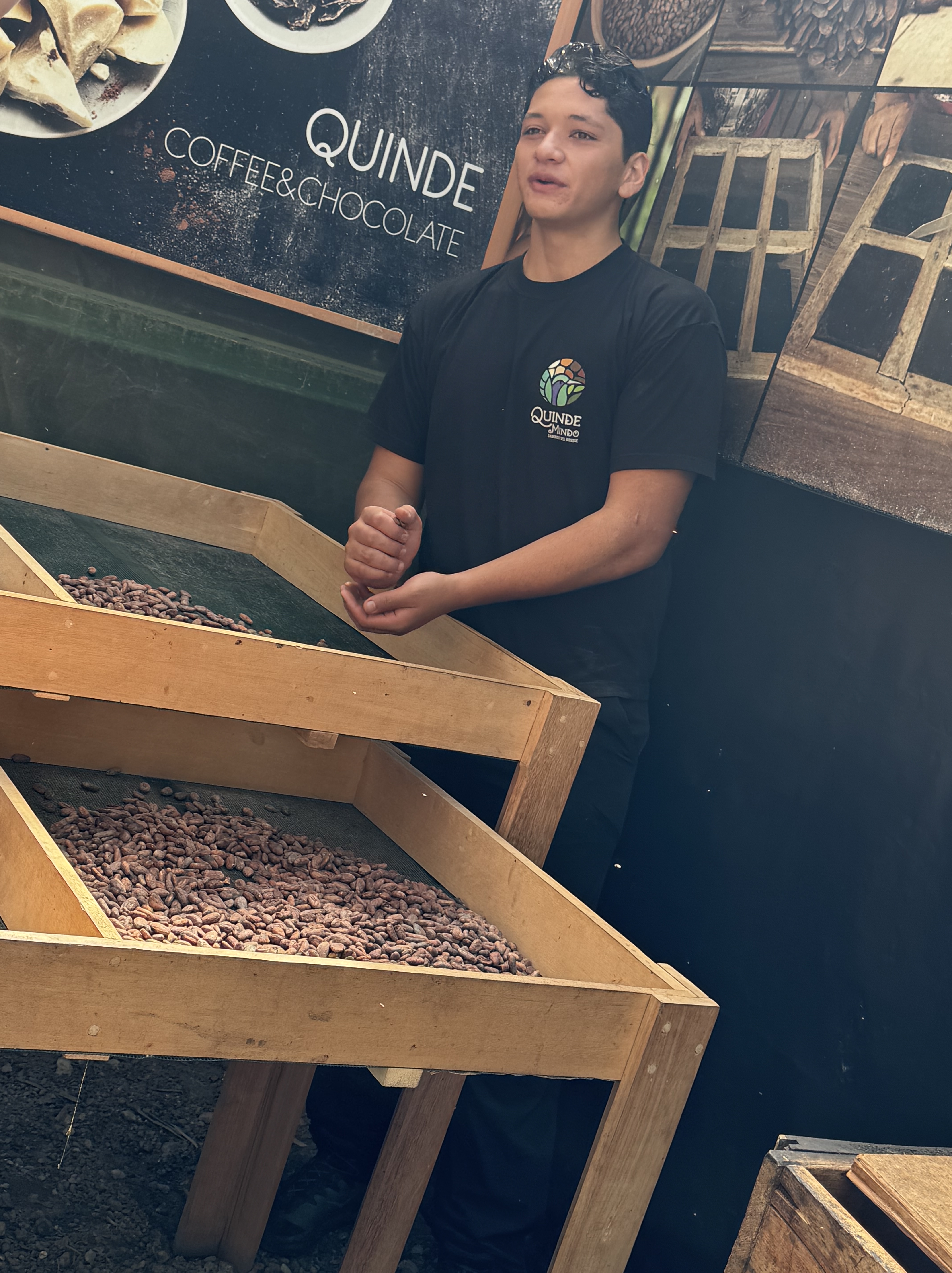
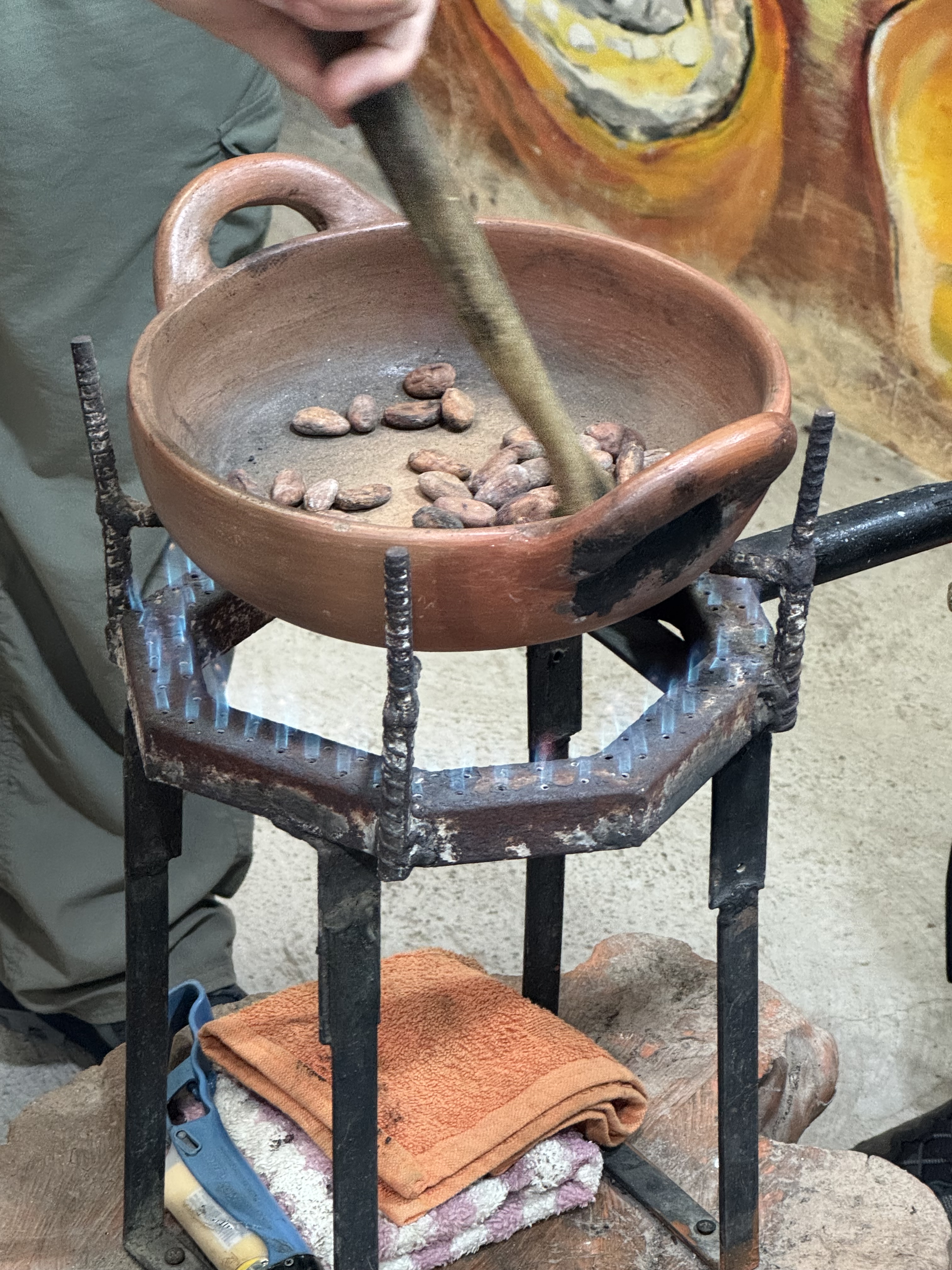
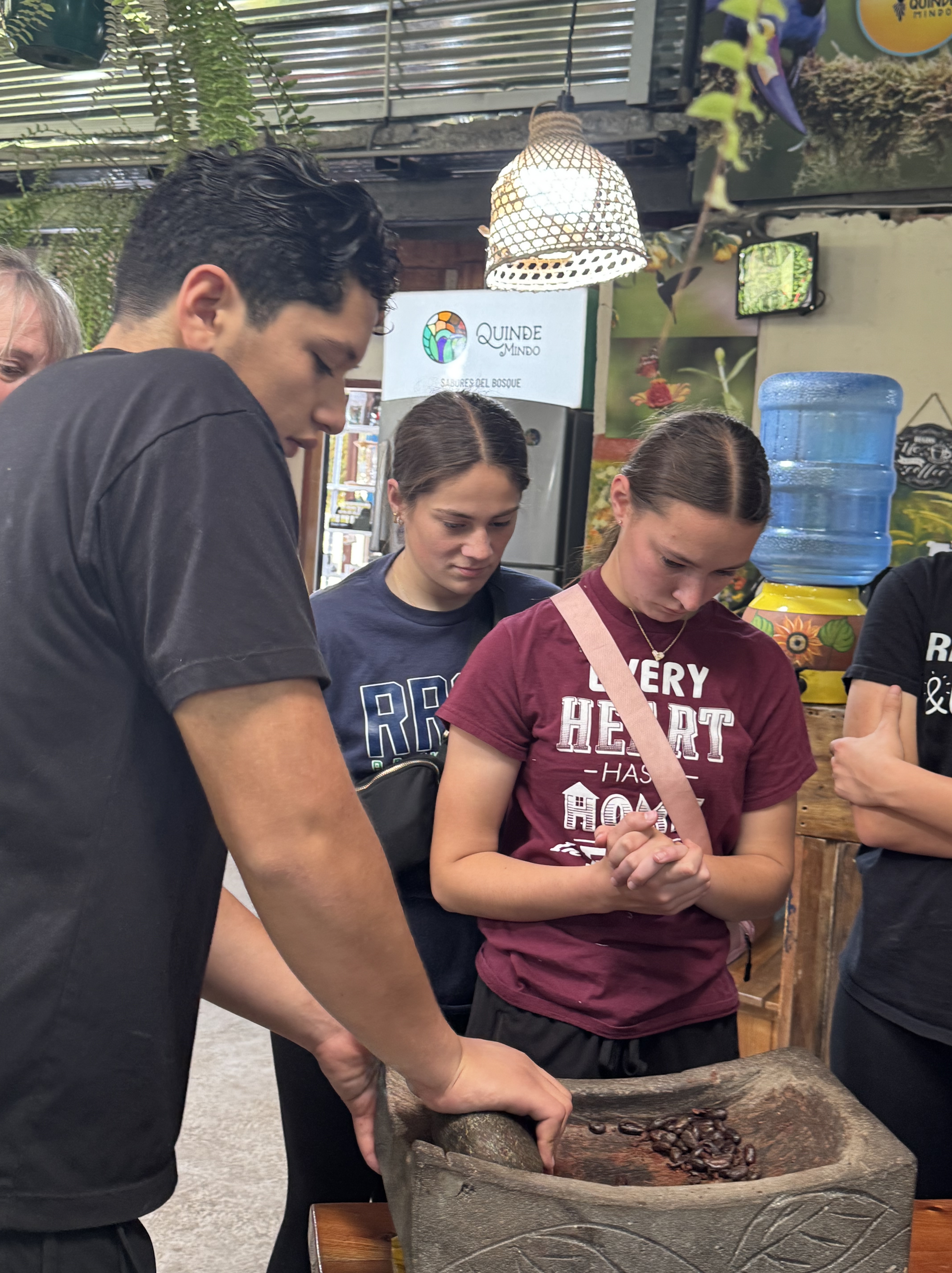
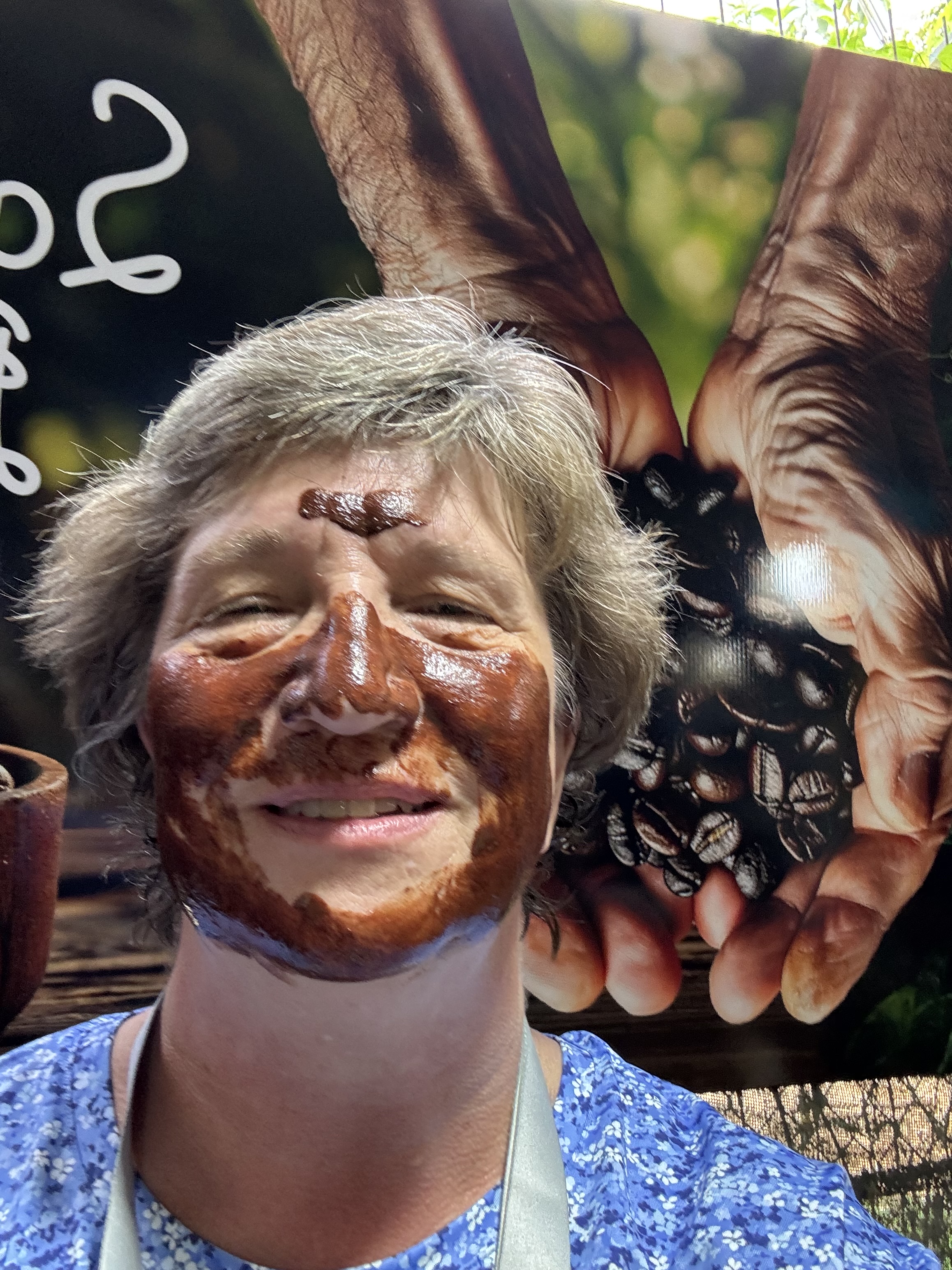
Products cacao is used for: chocolate flavoring, candy, beverages such as hot cocoa or liquor, and cosmetics like face masks
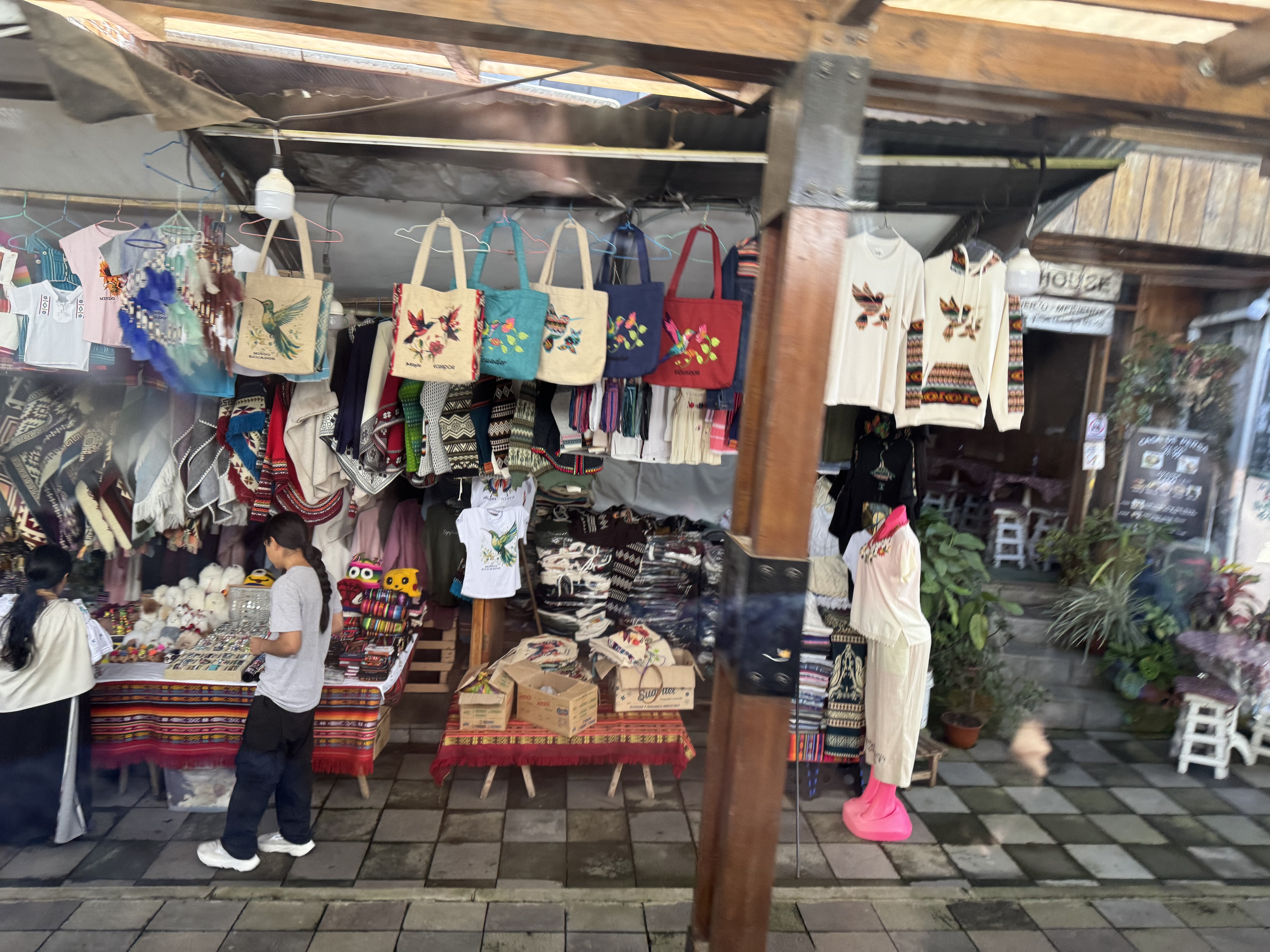
A little shopping in Mindo!
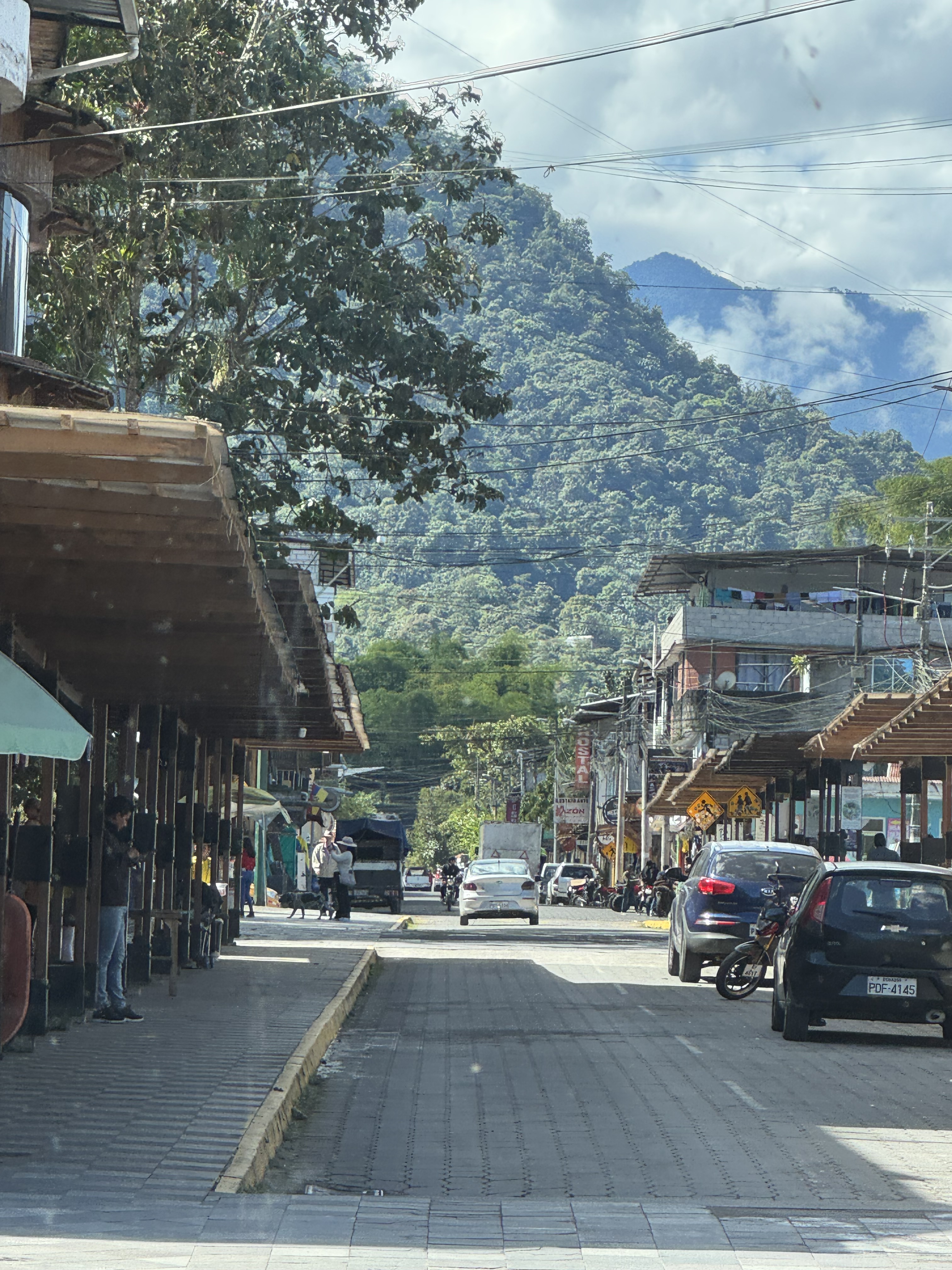
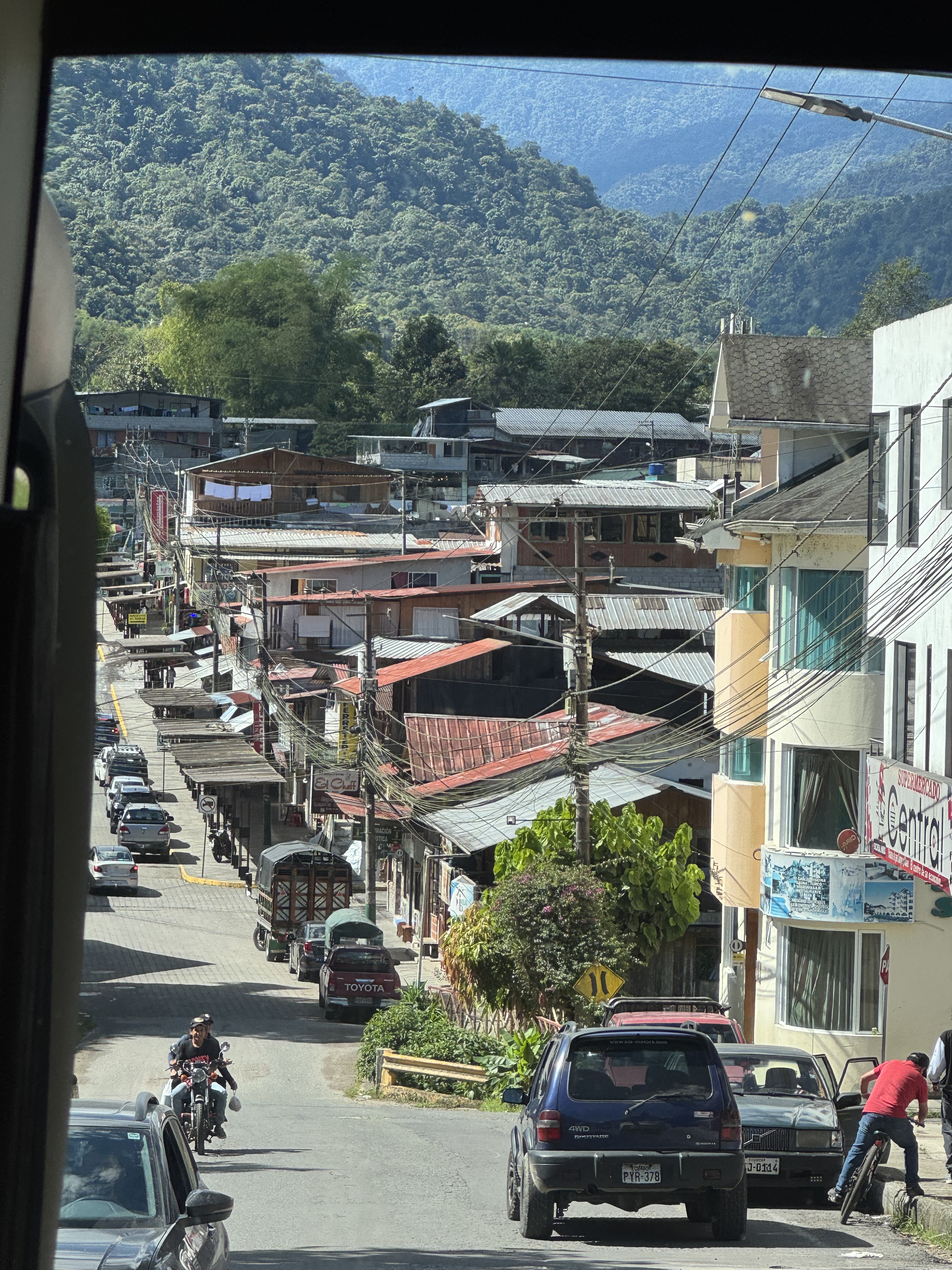
Mitad del Mundo
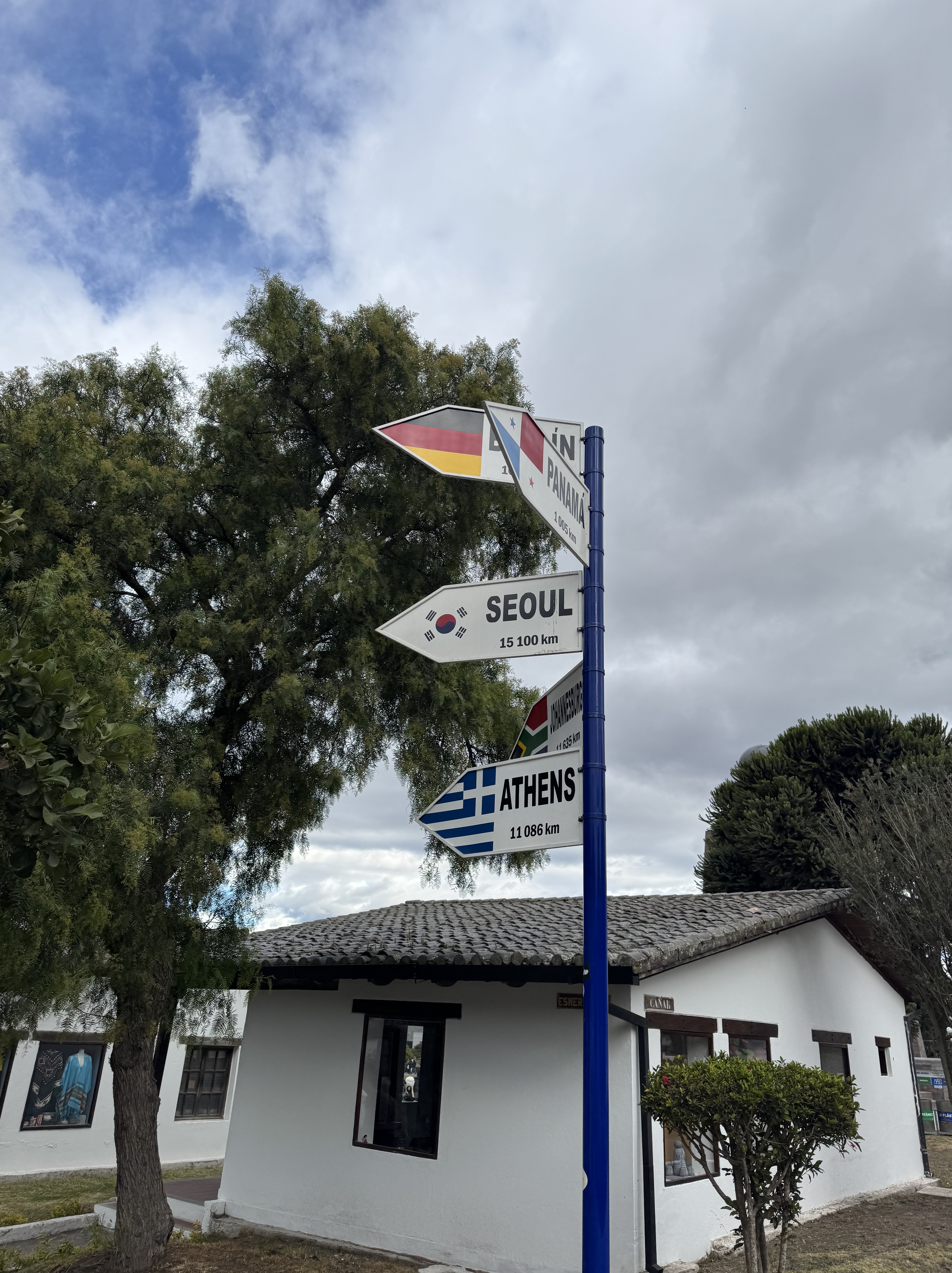
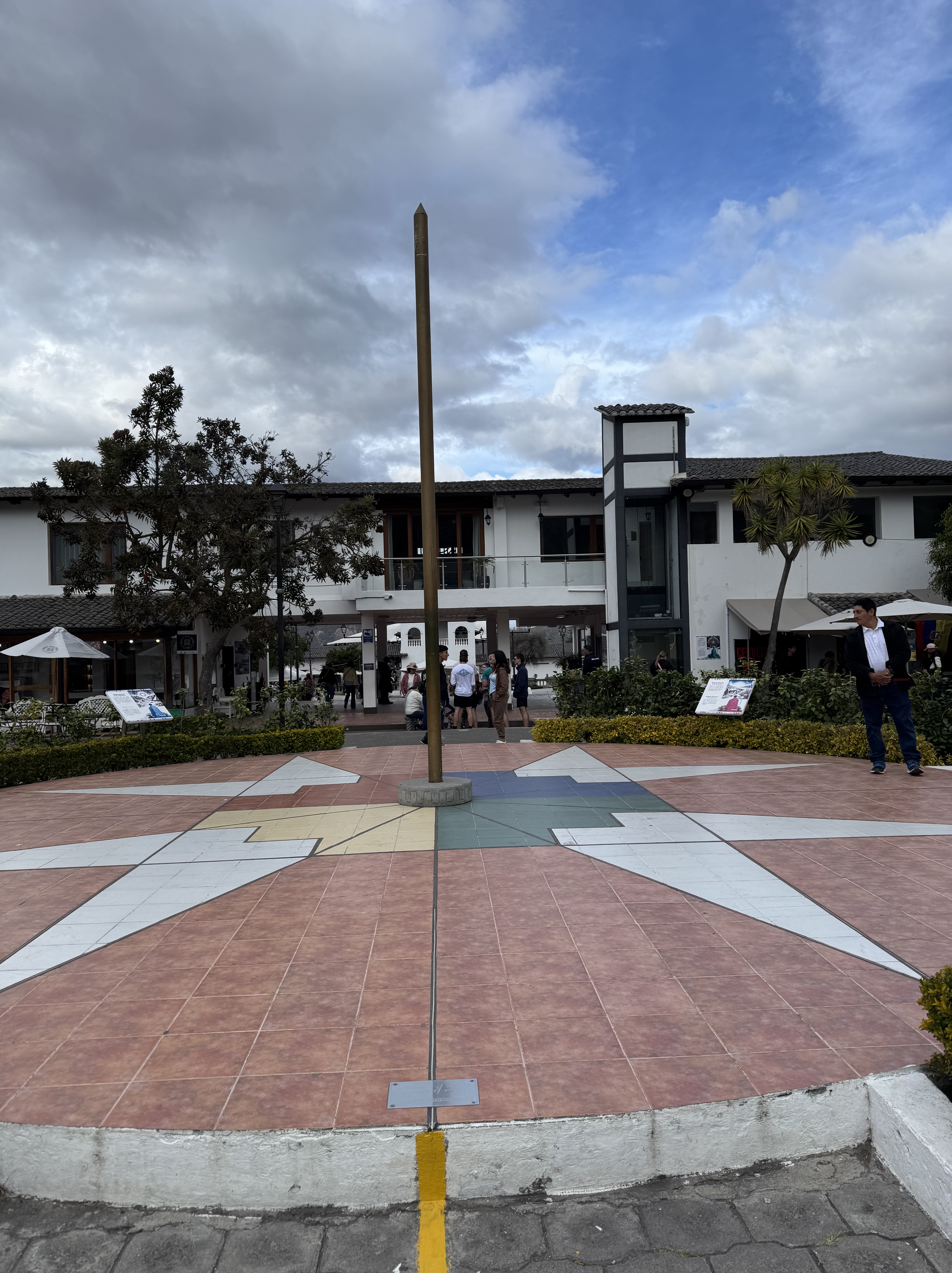
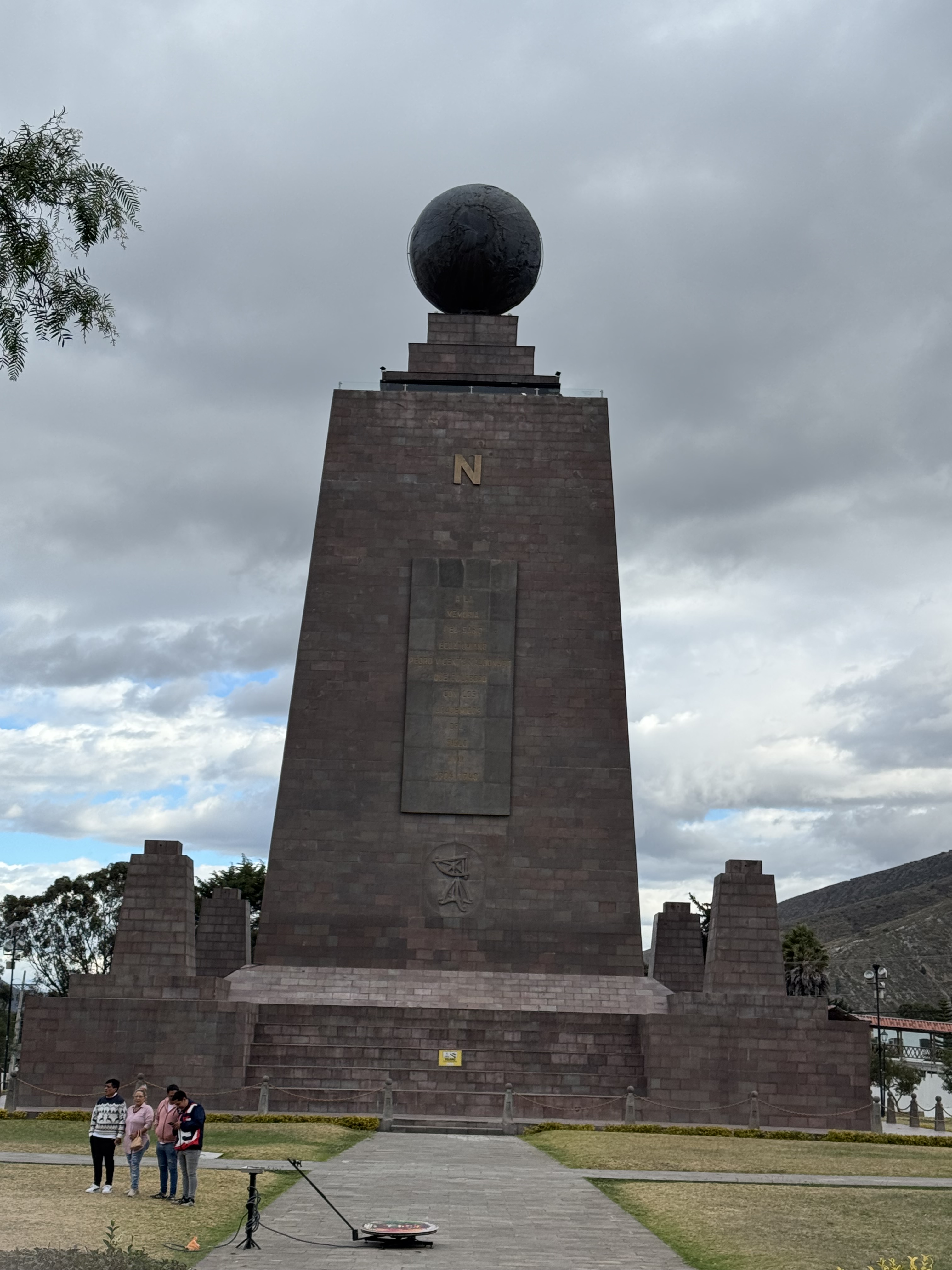
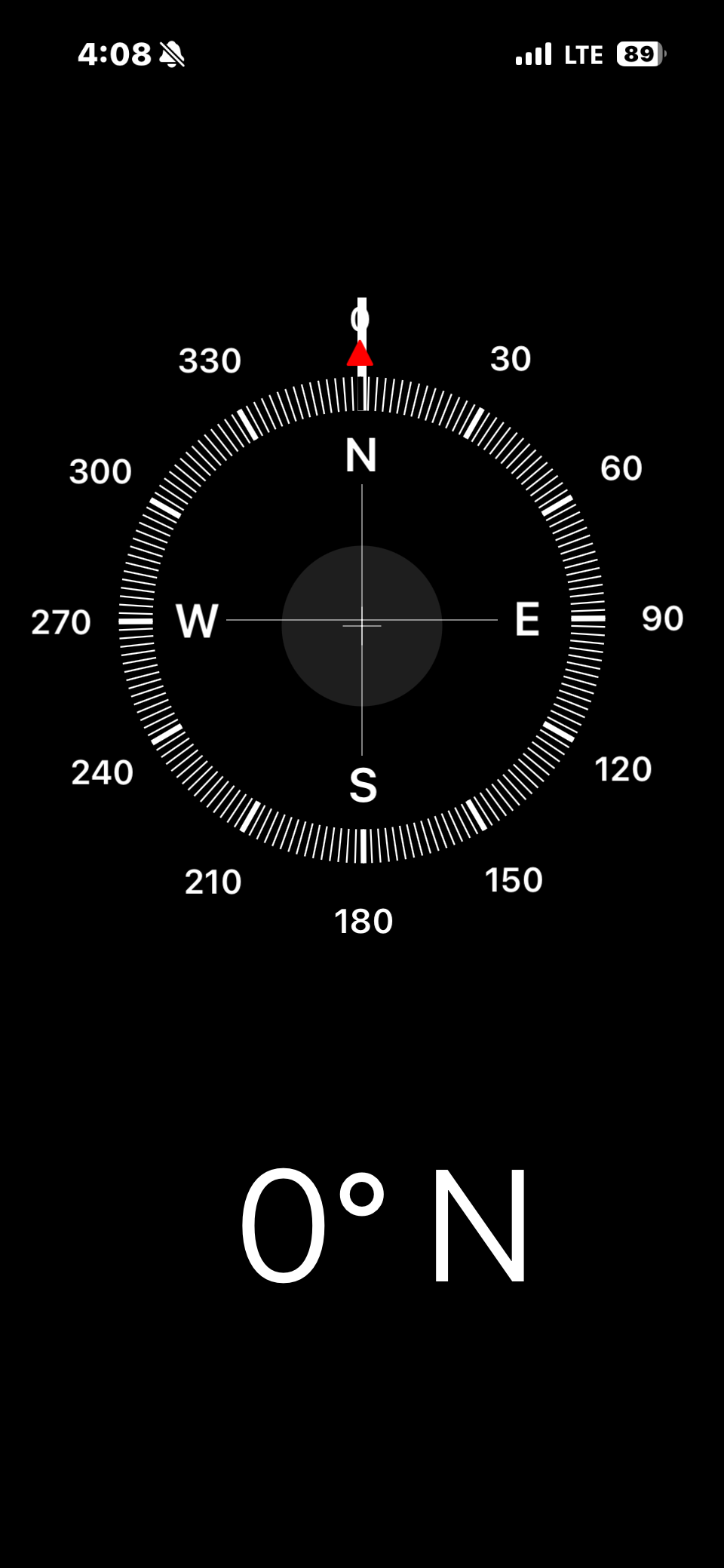
We stopped where the Northern and Southern hemispheres meet. The Monument of the Equator, located in San Antonio de Pichincha, is the highlight of this area, plus a shopping area with a variety of Ecuadorian products. The monument is in honor of the French expedition led by Charles-Marie de La Condamine in 1736. However, later geographers’ surveys indicated they were 250 meters (273 yards) off in their calculations of the equator.
Day three – June 22. 2026
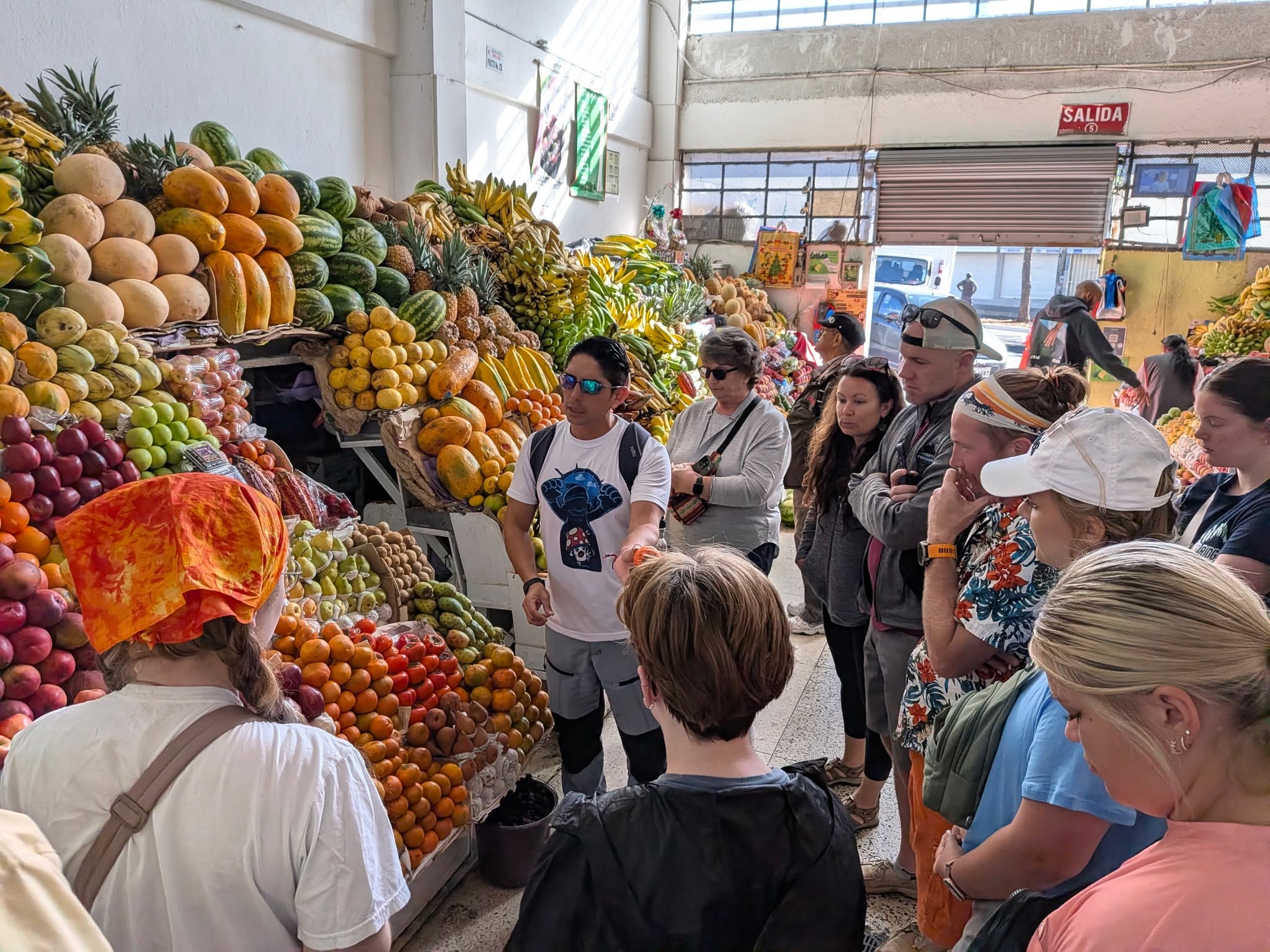
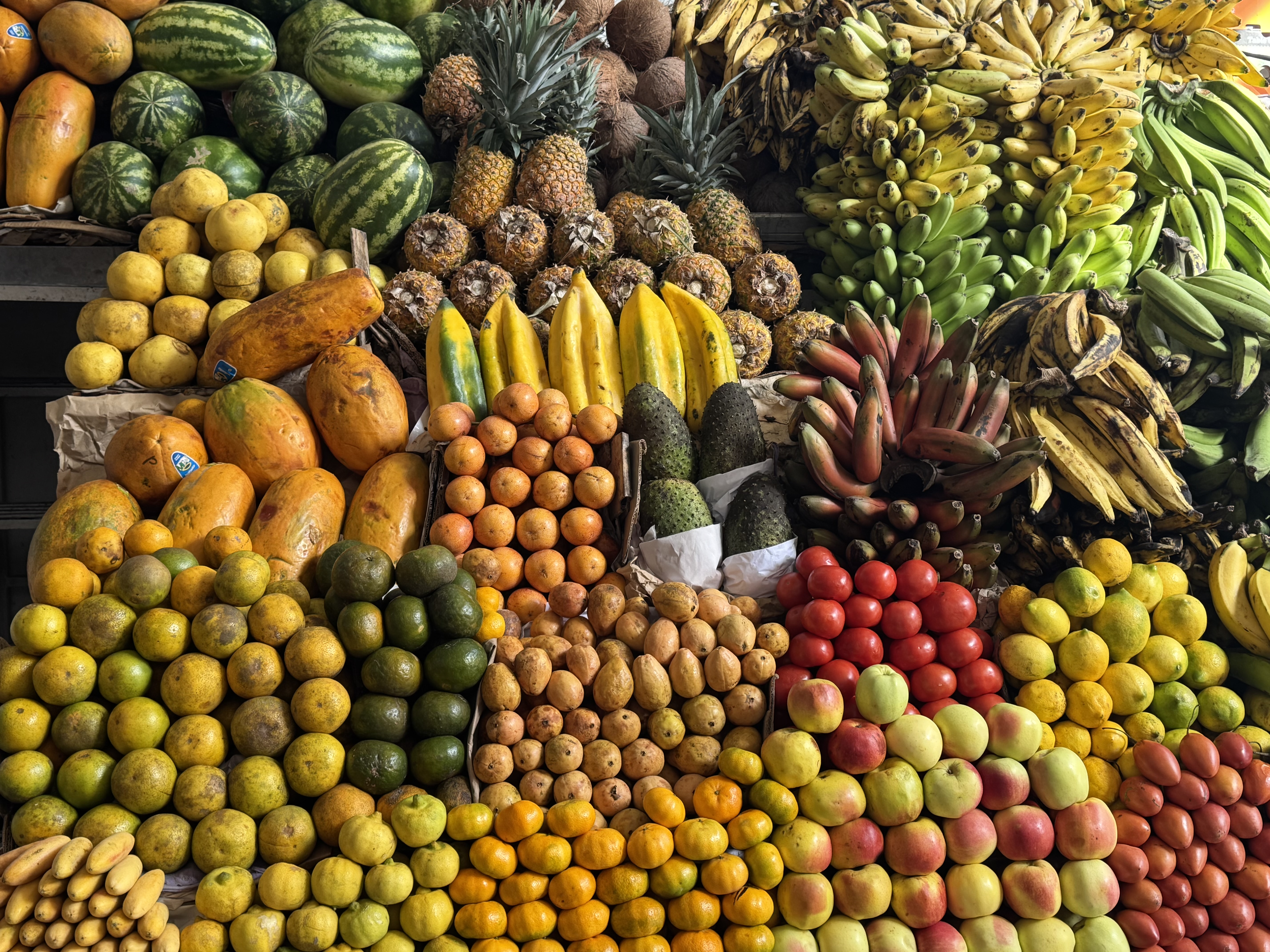
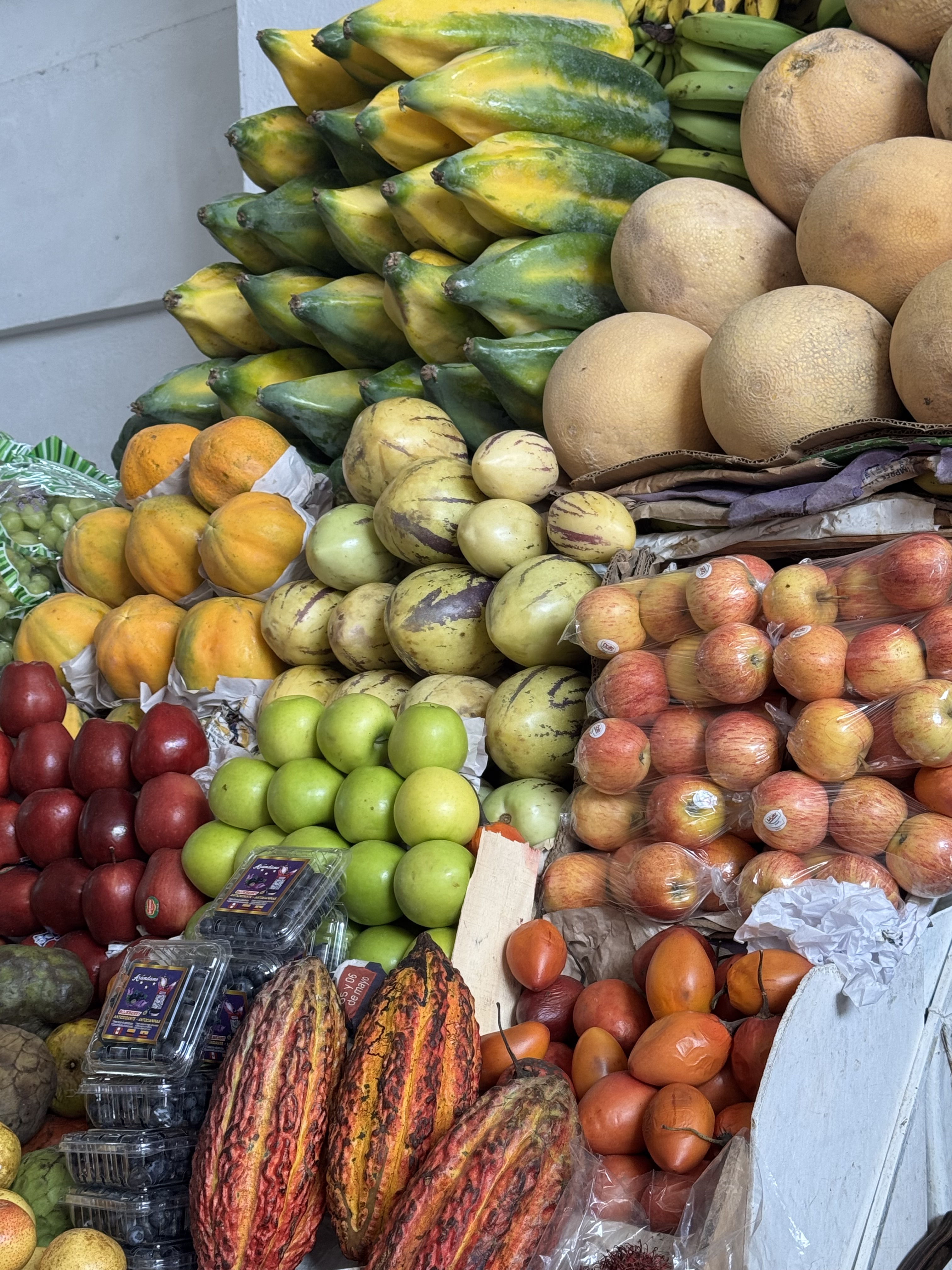
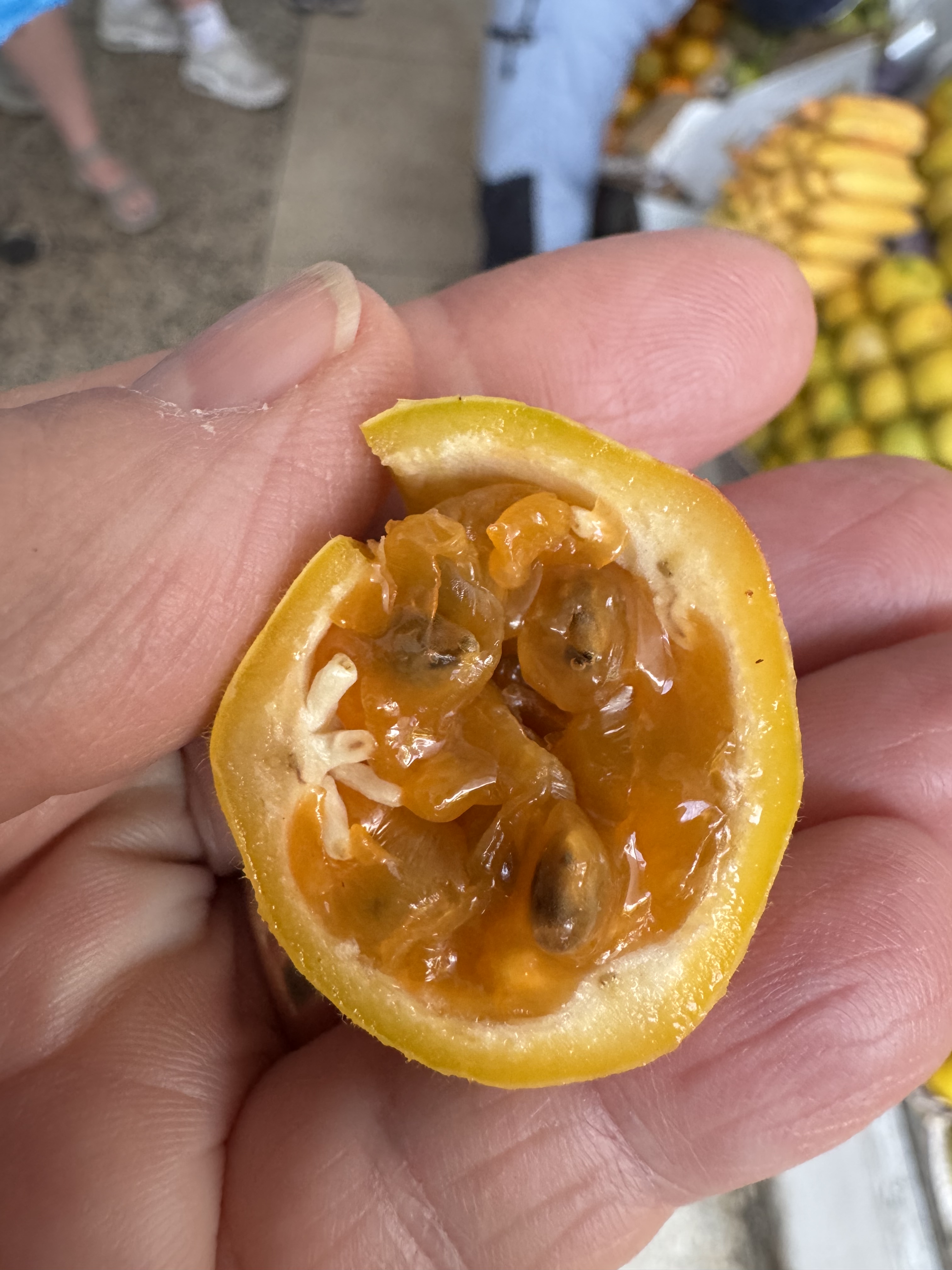
Ofelia Farmers Market
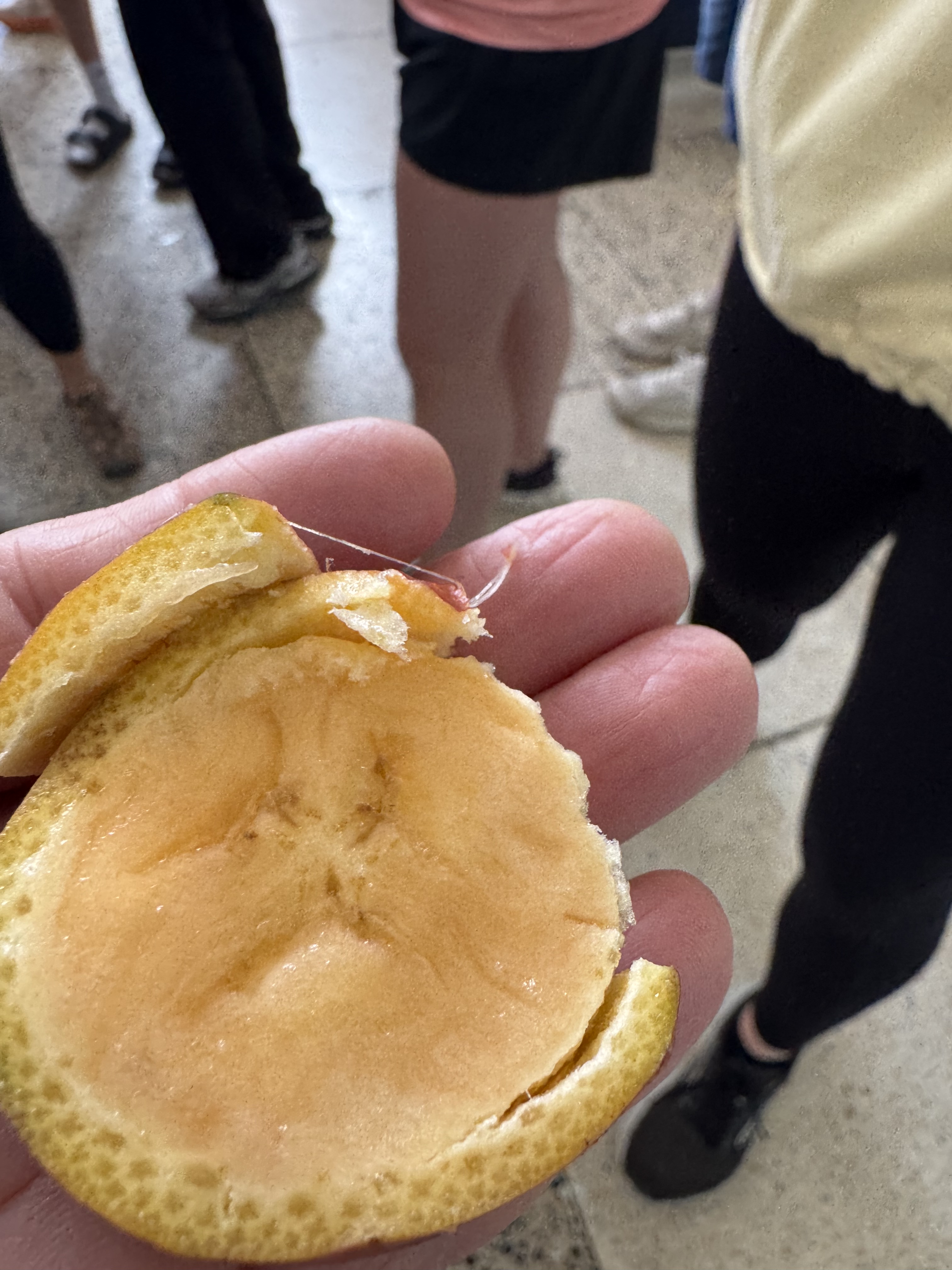
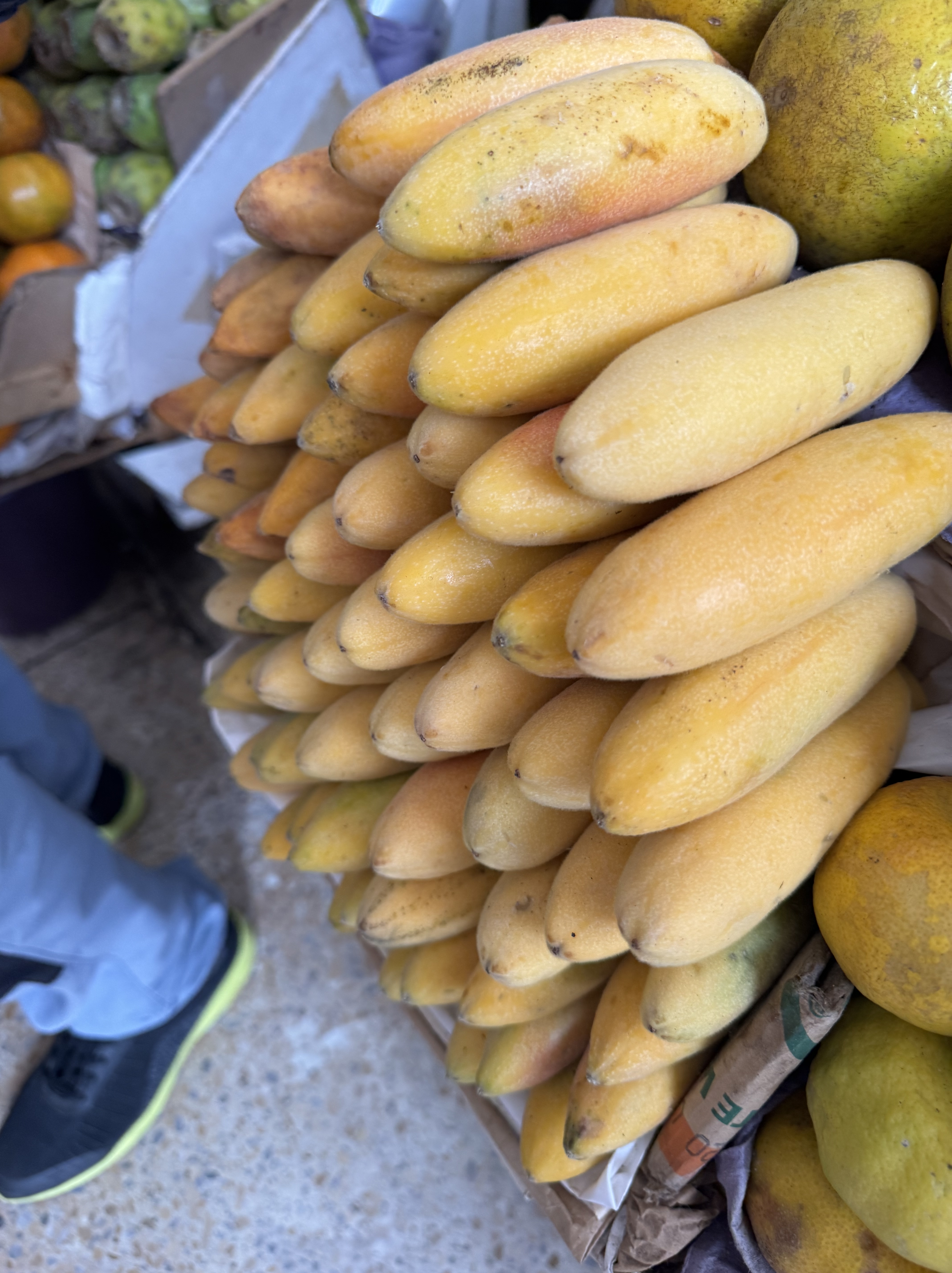
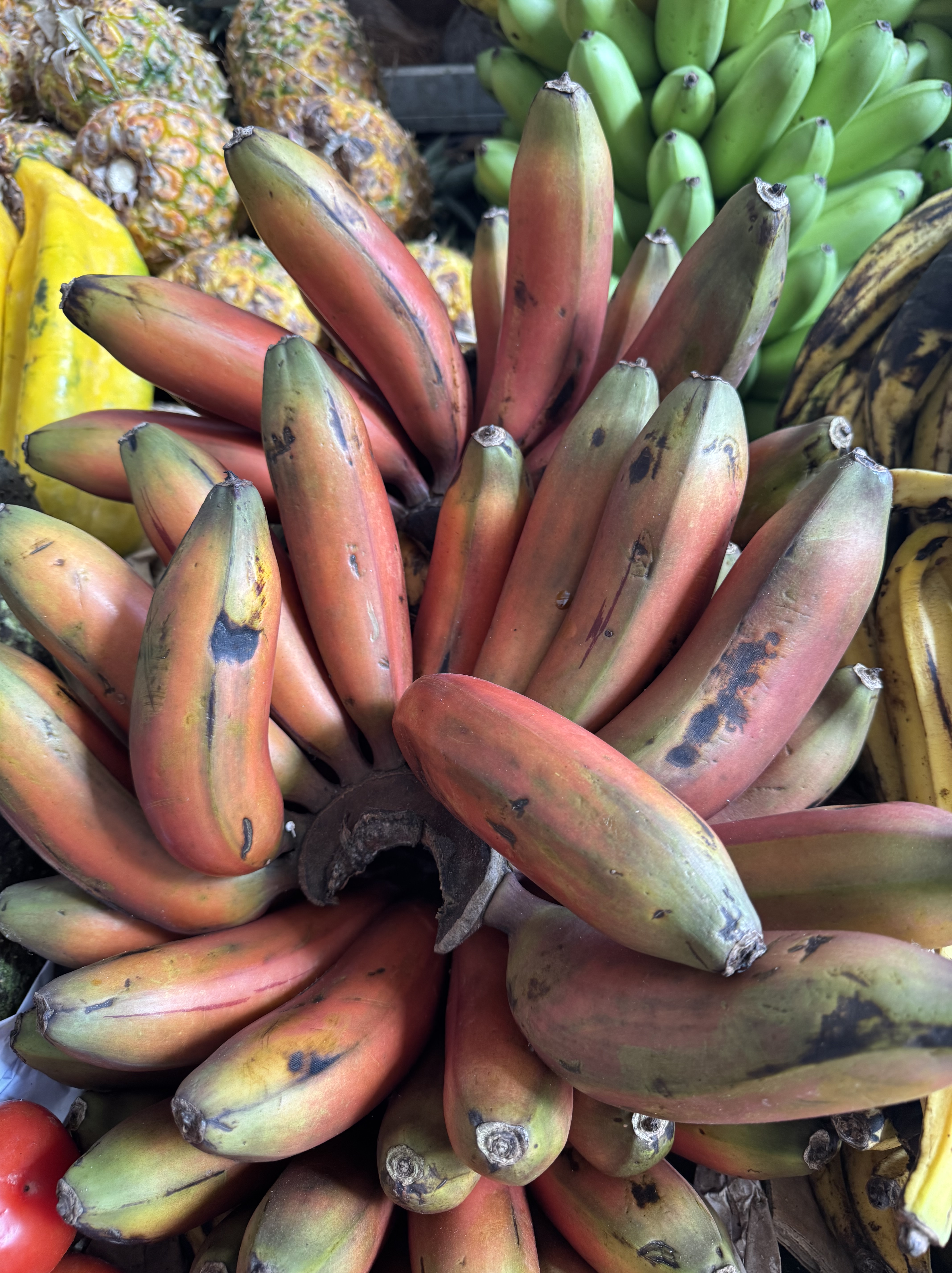
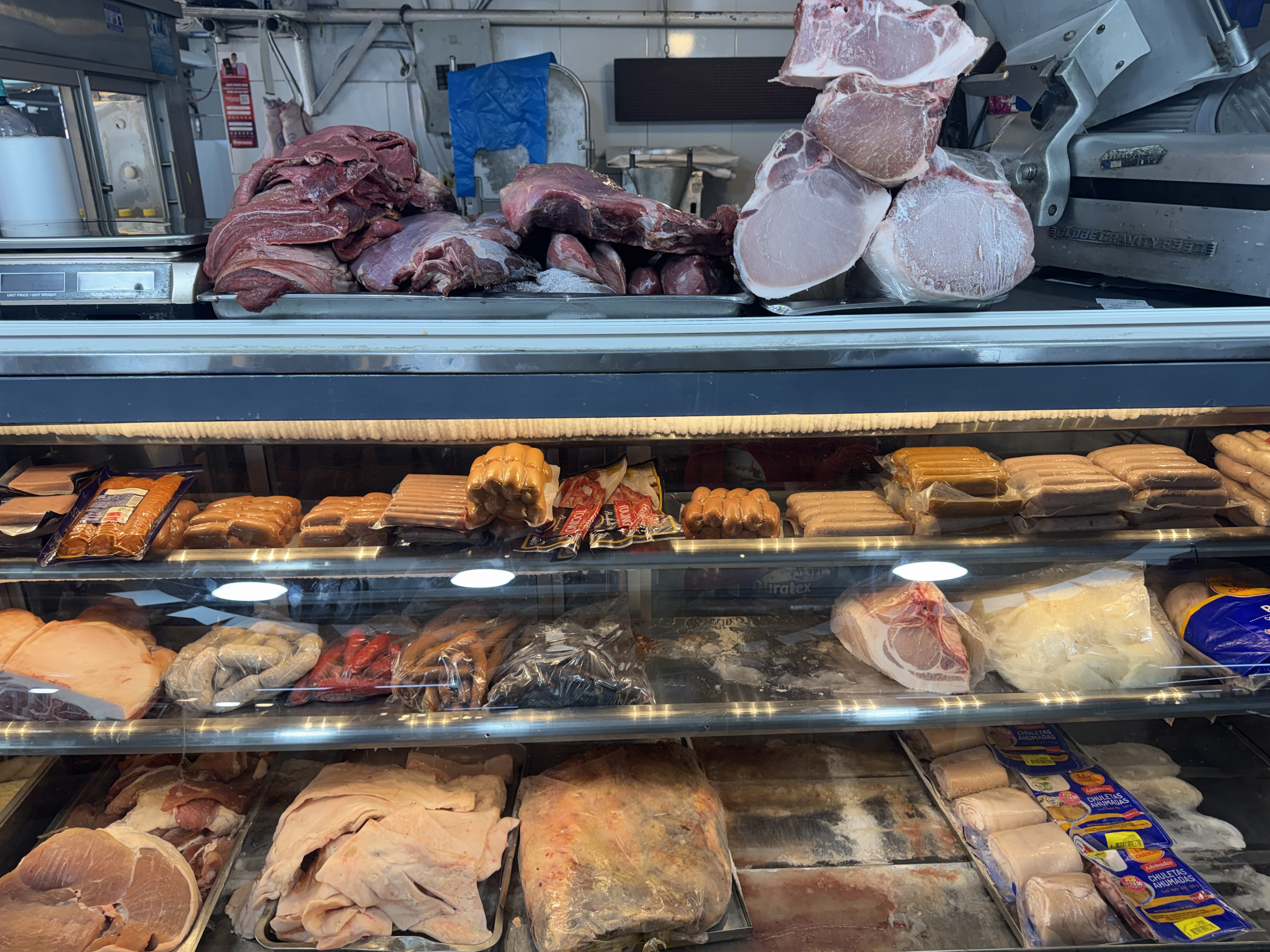
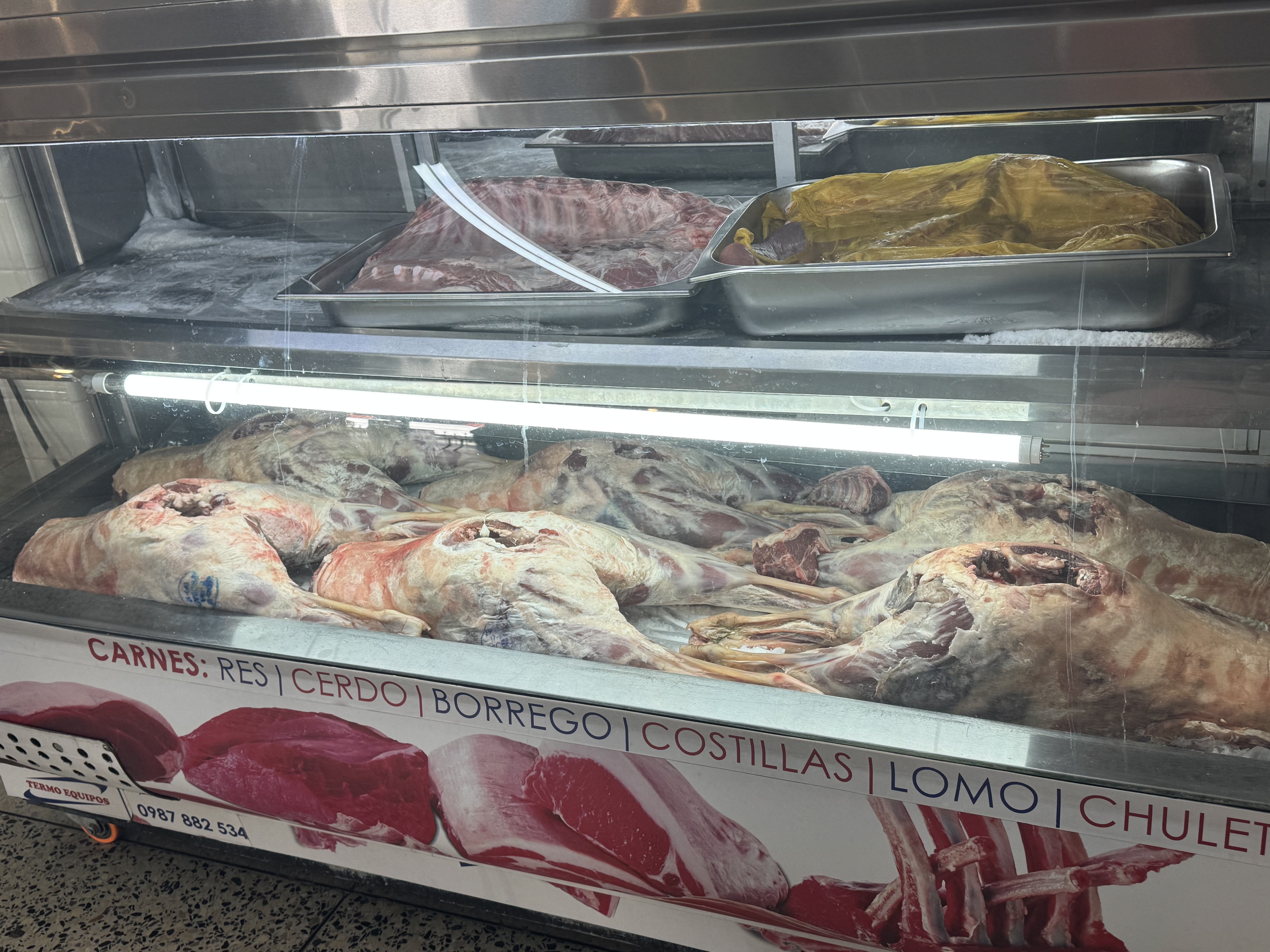
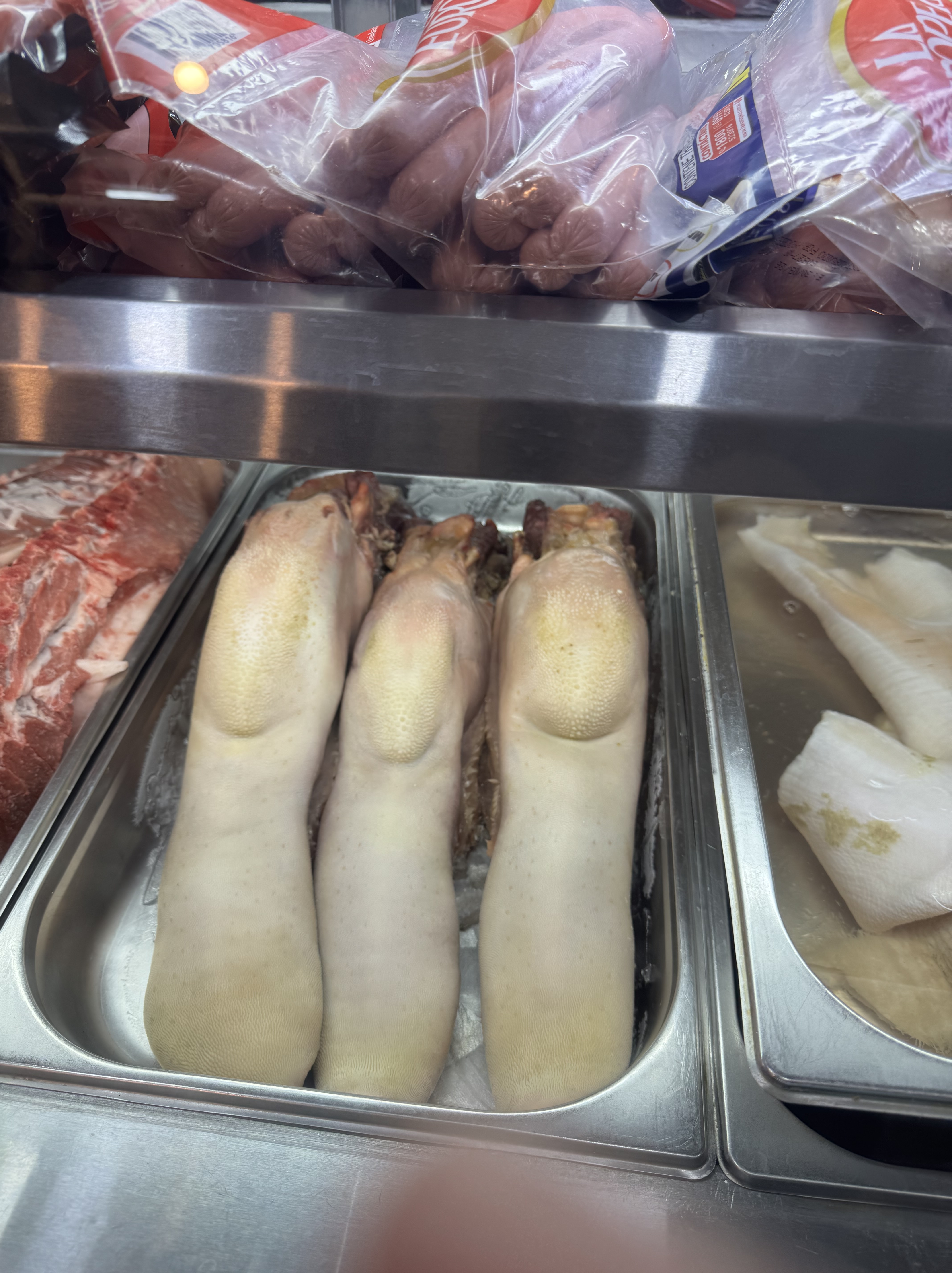
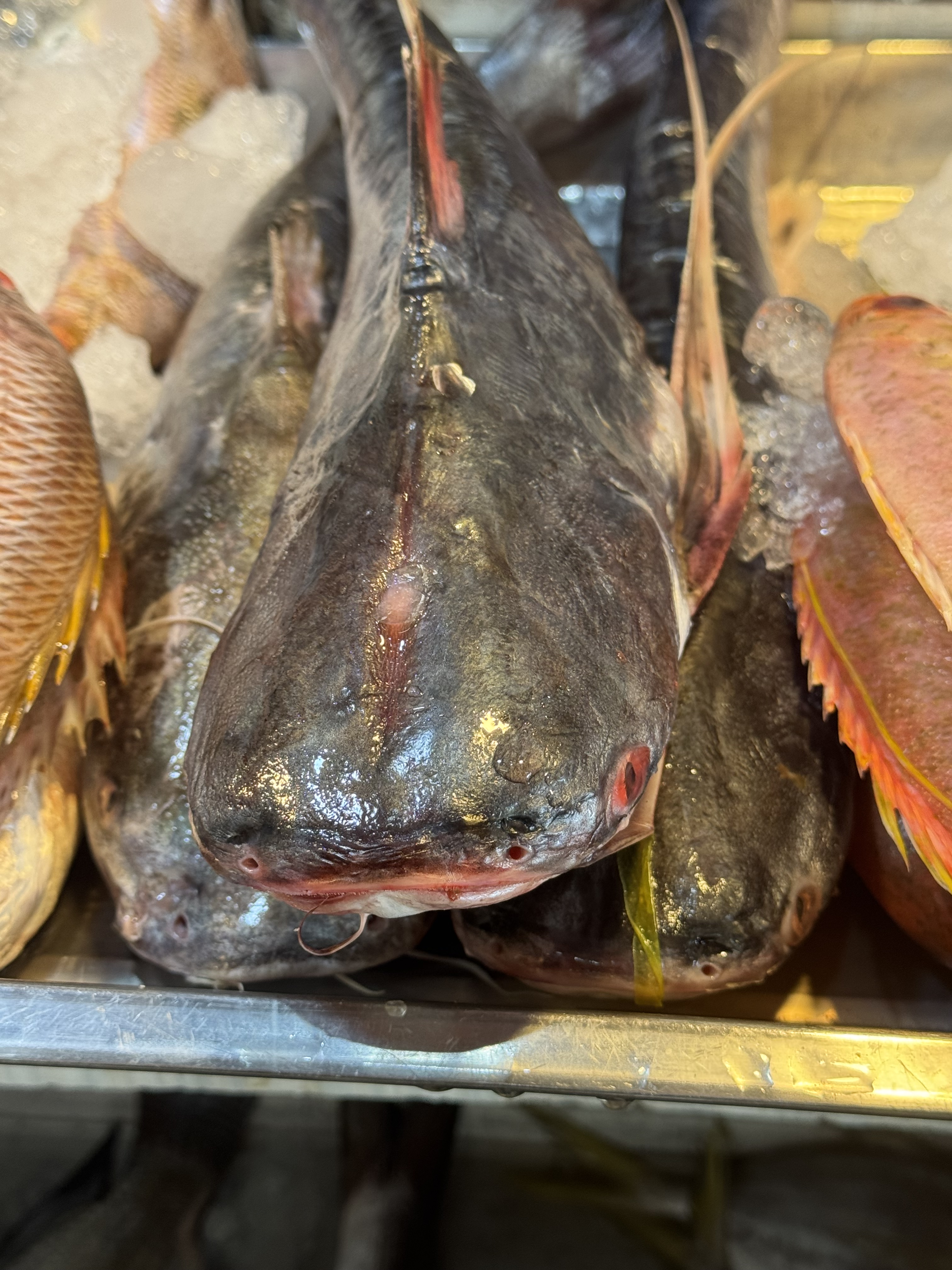
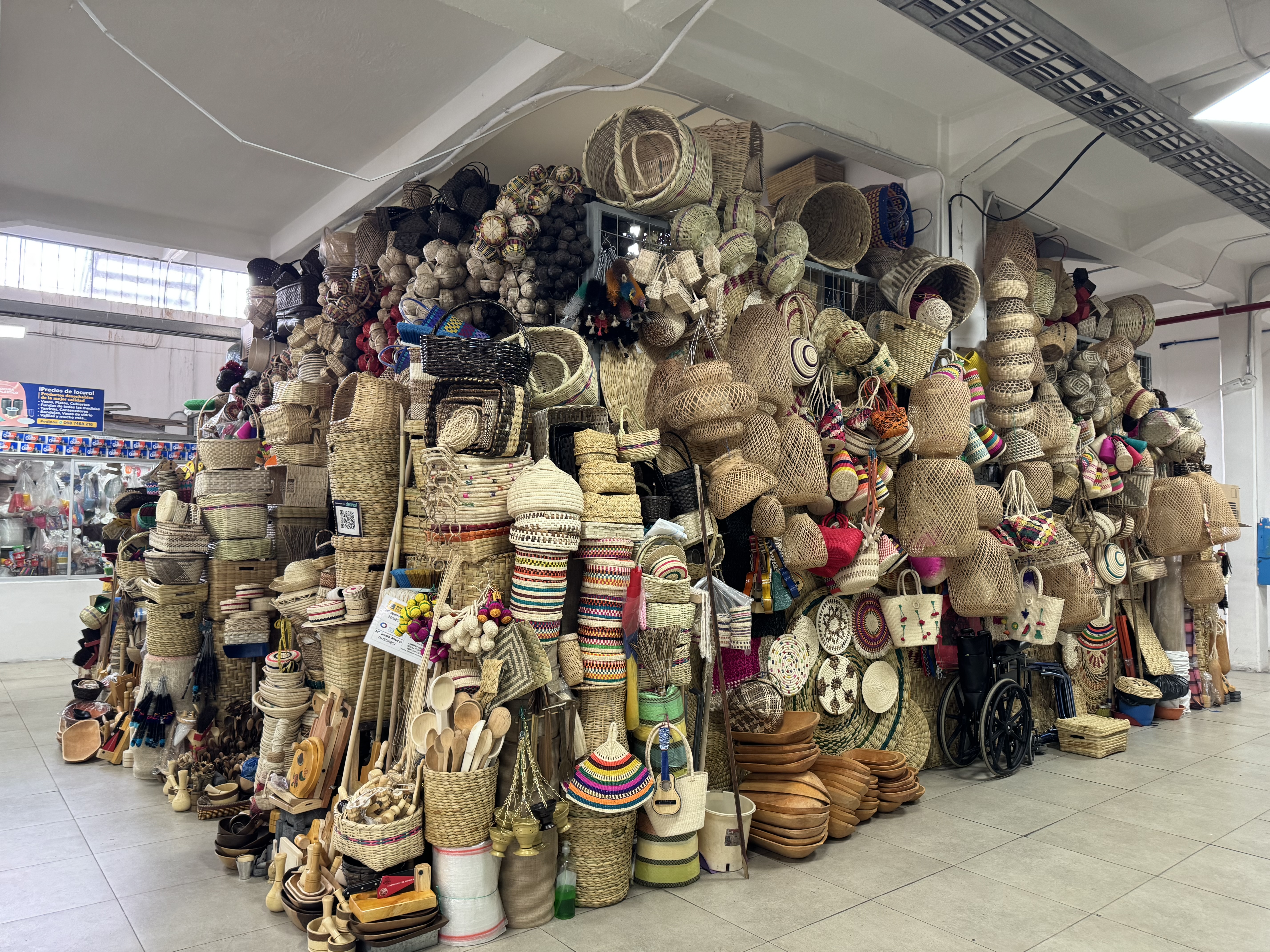
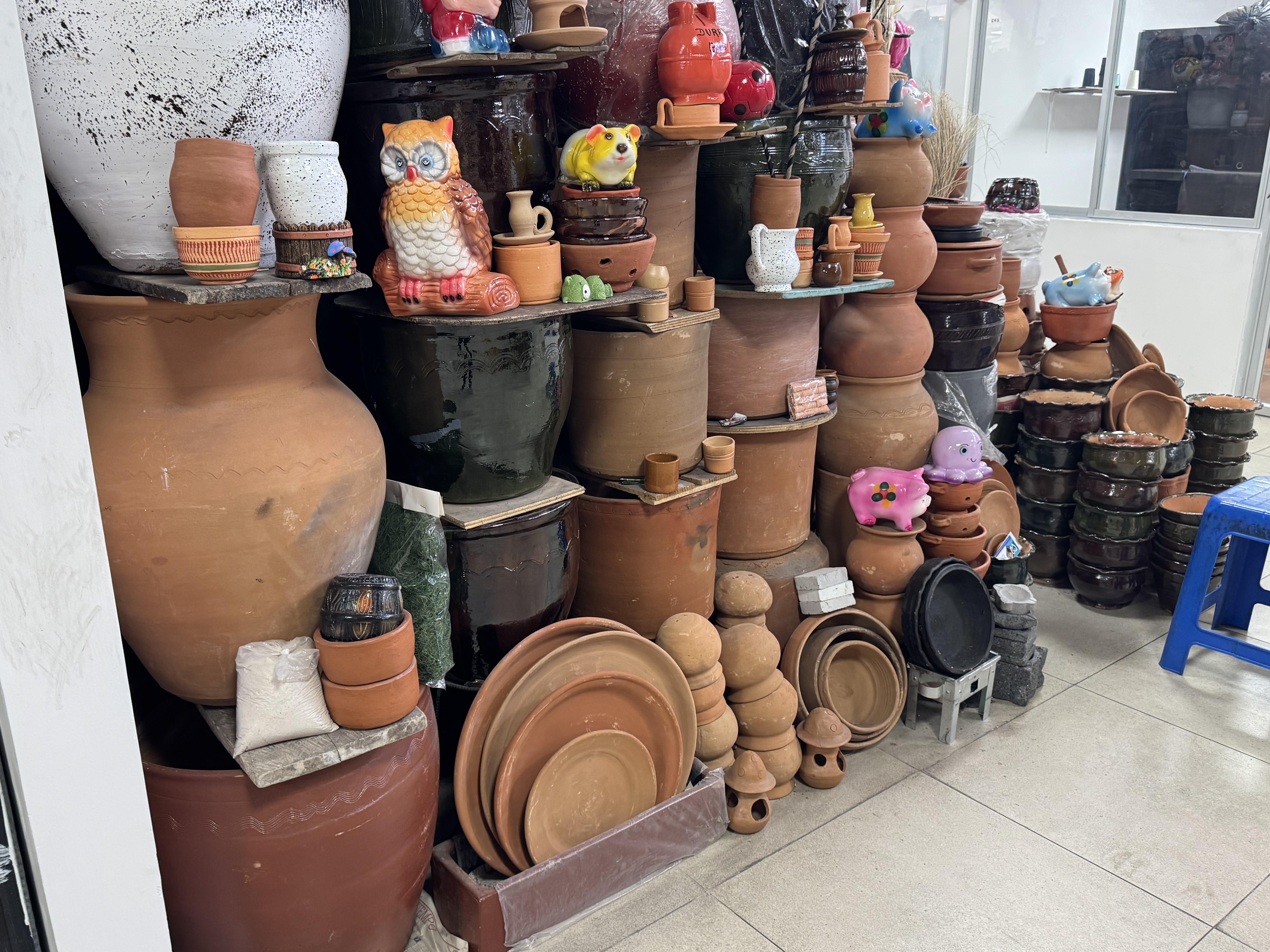
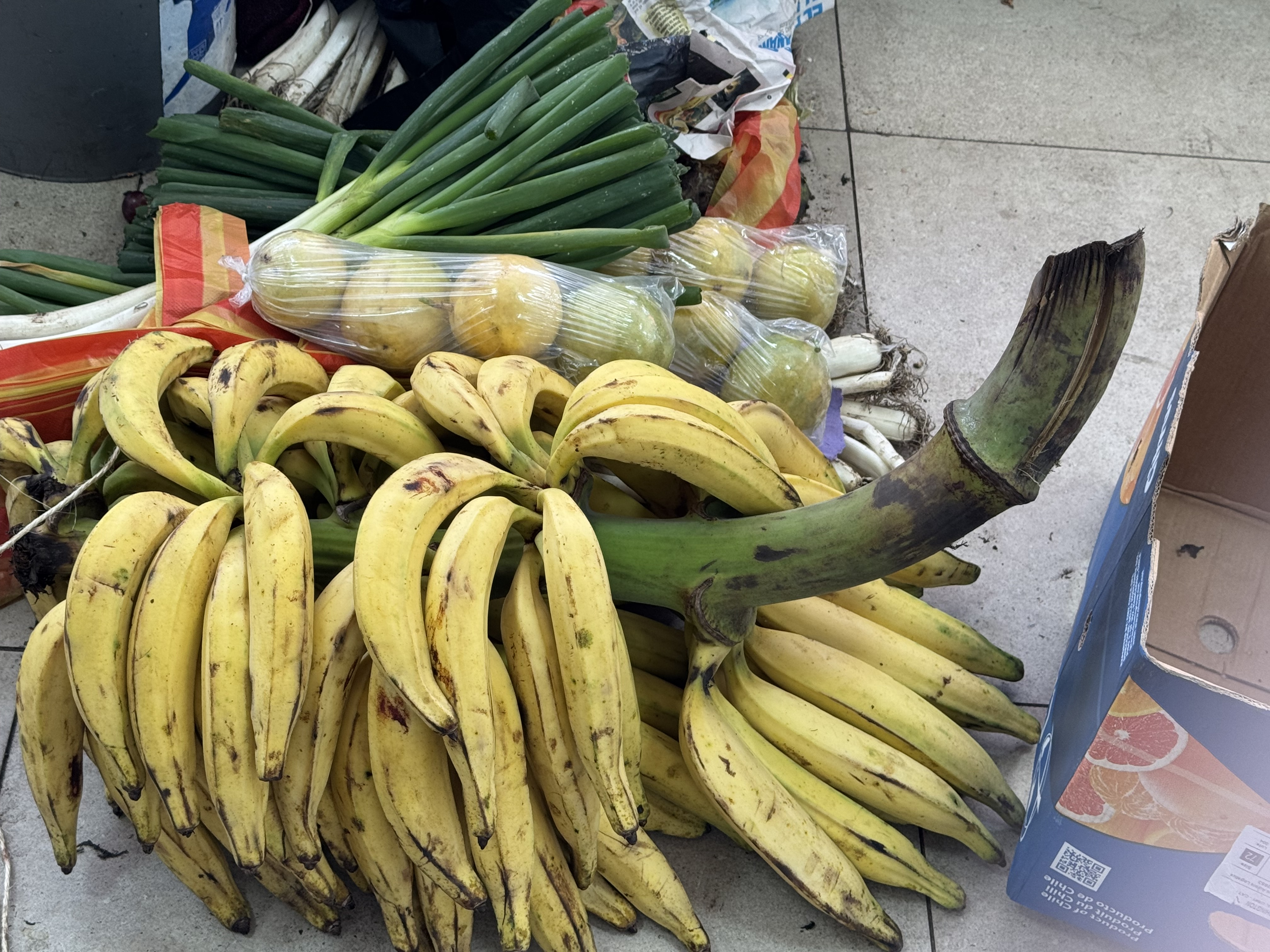
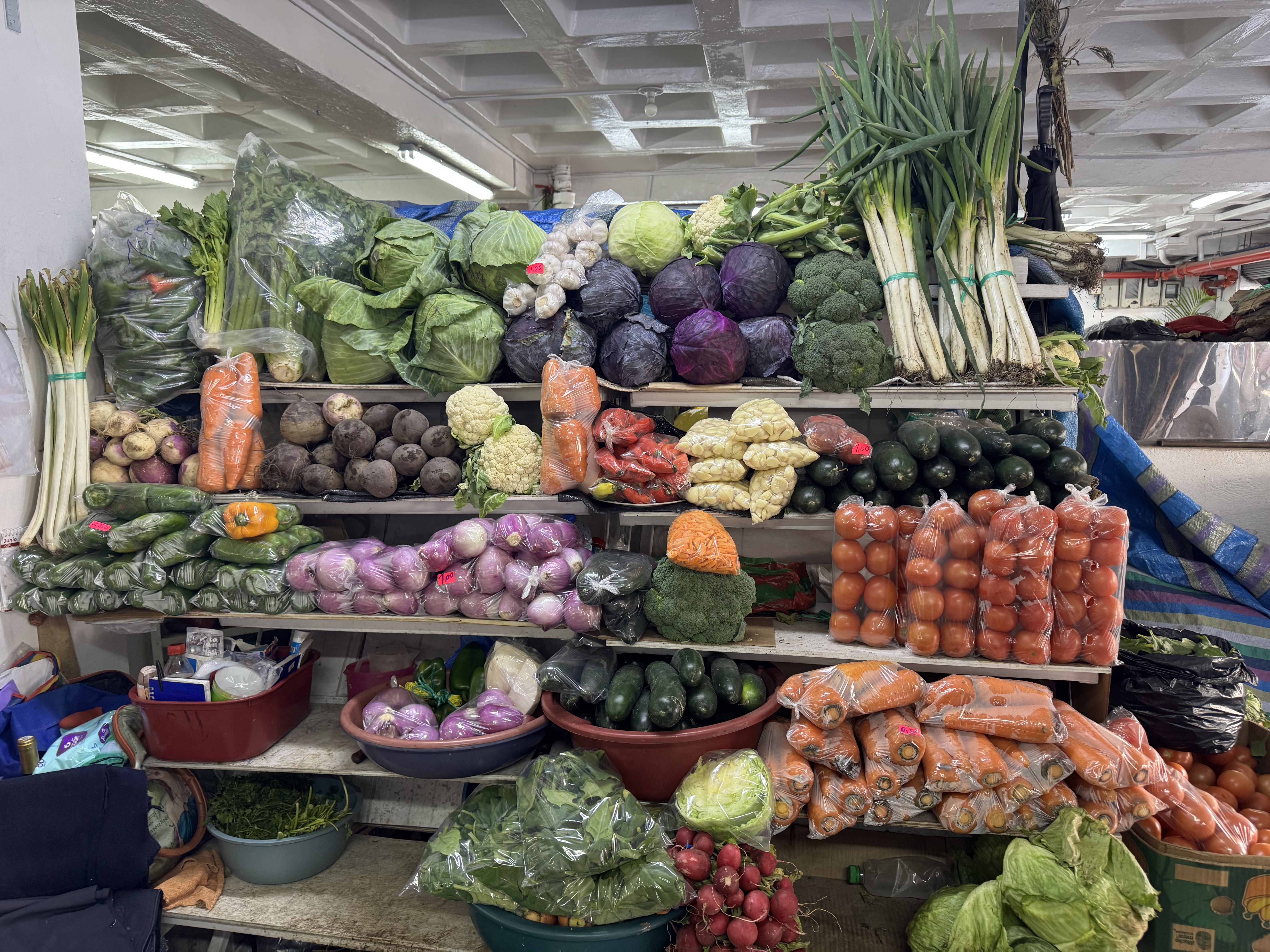
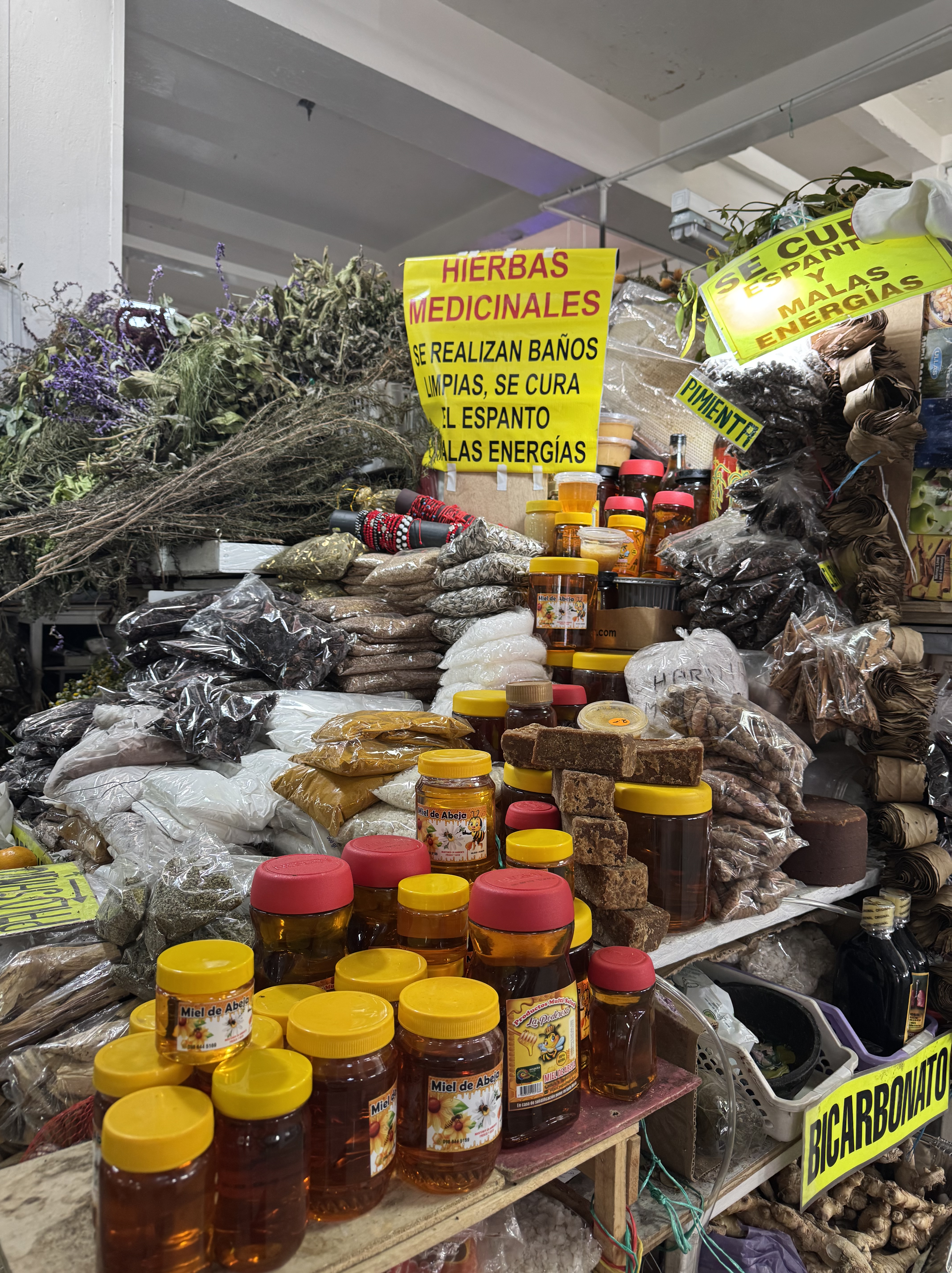
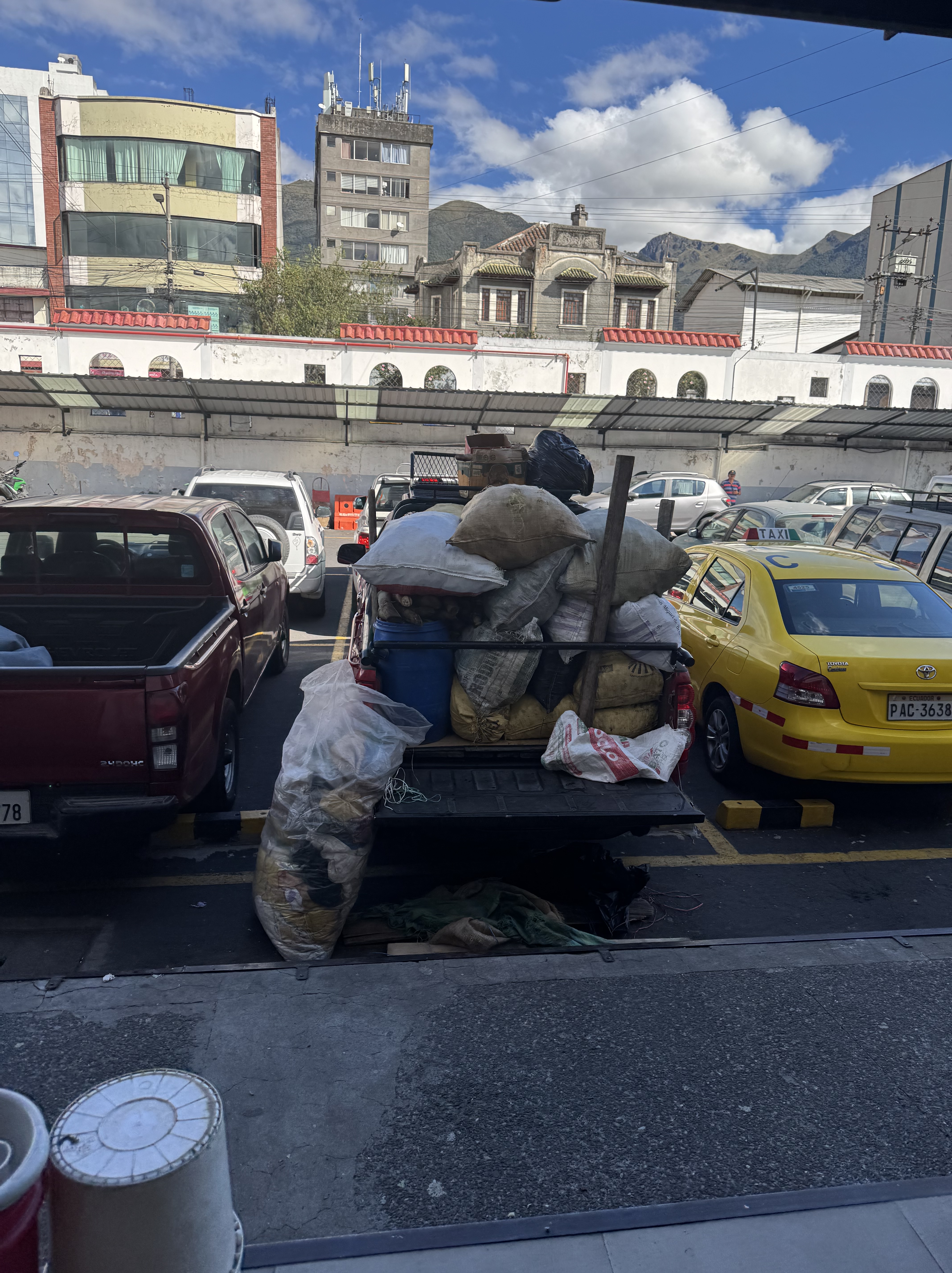
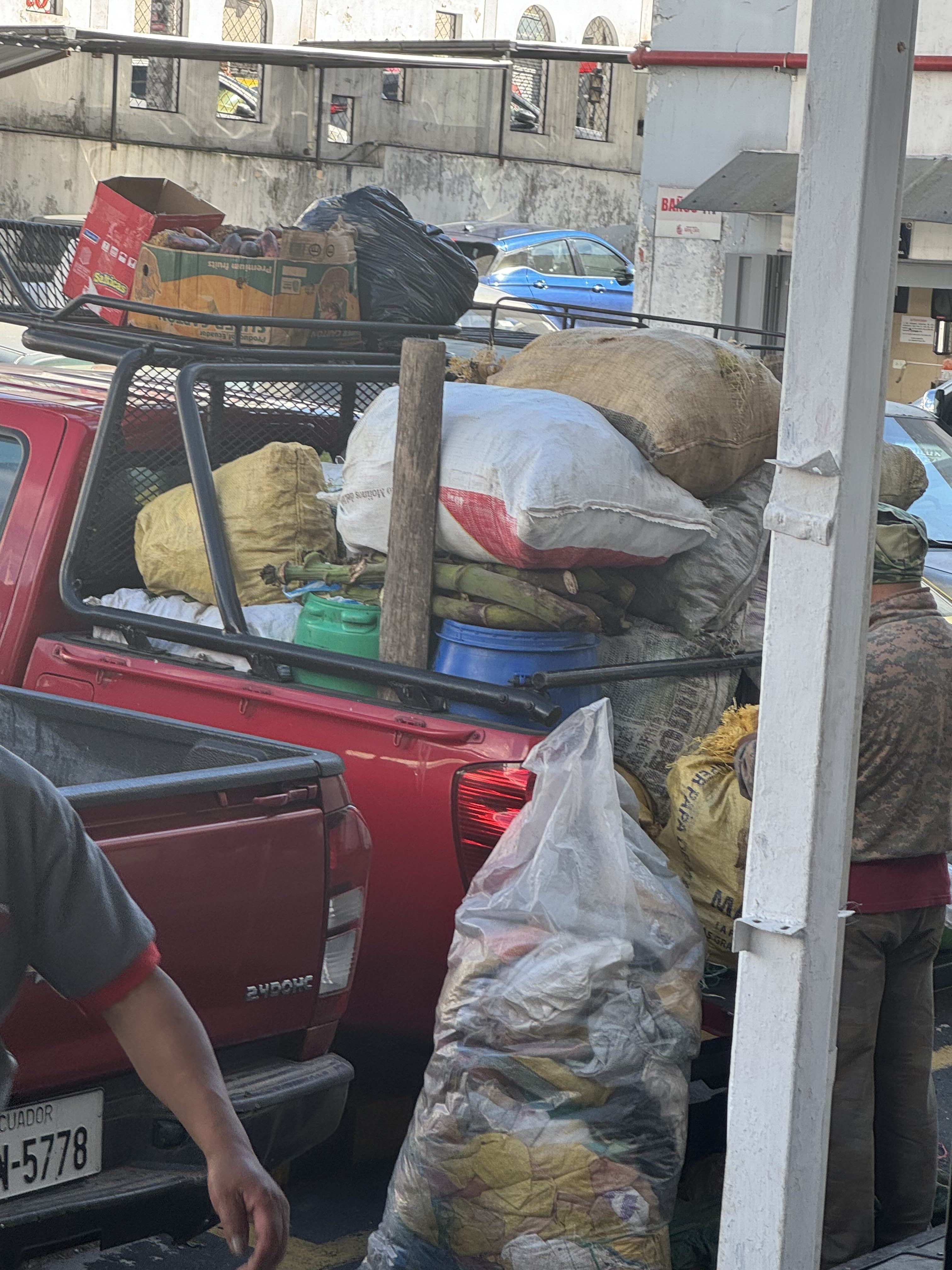
A local market since 1951 with many stalls of fresh fruits, vegetables, flowers, and meats produced in Ecuador, with some specialty products from around the world. A local vendor allowed Raul to share different produce with our group.
Rose Farm tour in Cayambe area
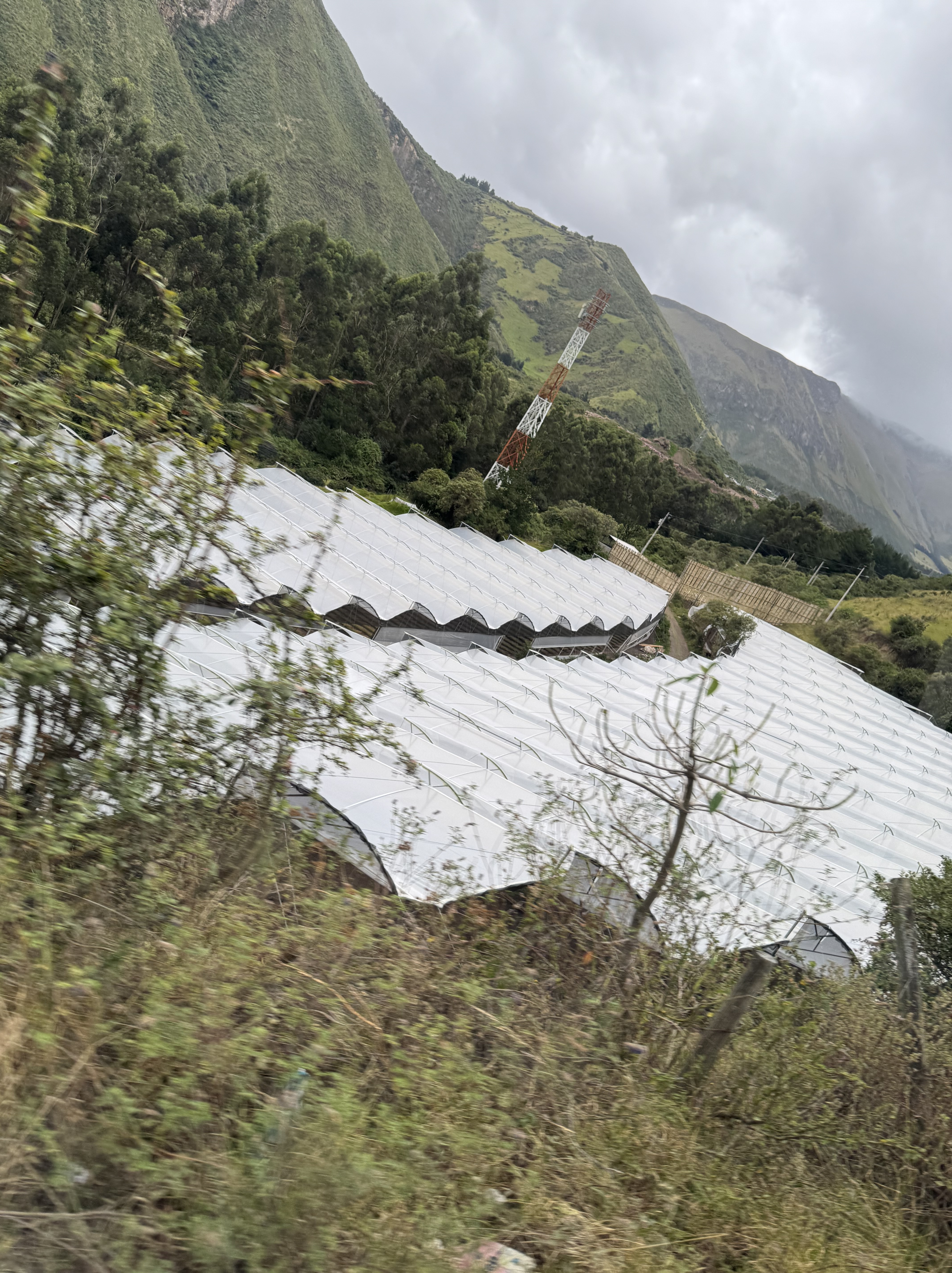
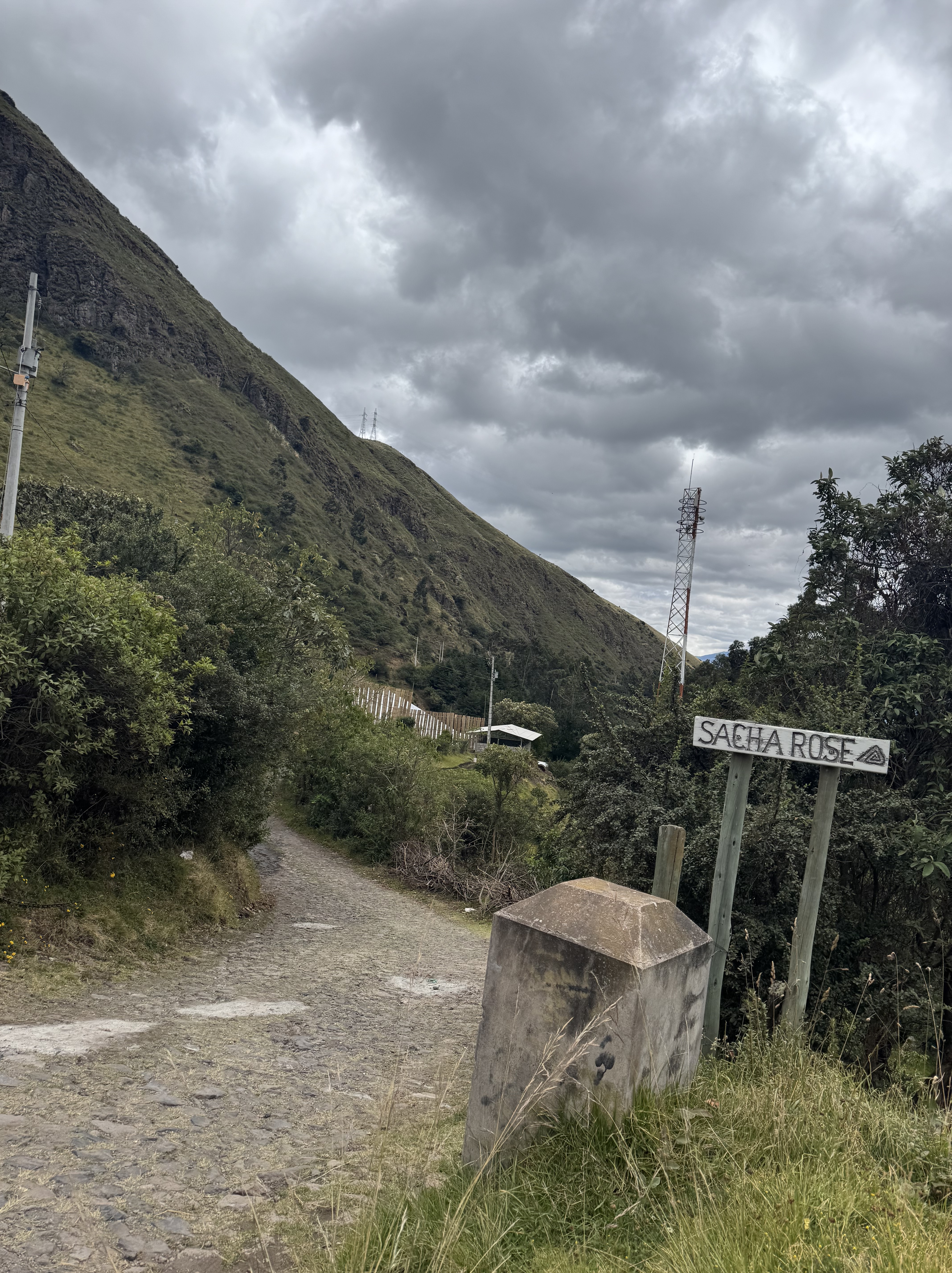 Rising 3,200 meters (10,500 feet) above sea level in the Ecuadorian Andean Region is the Sacha Rose Farm. Most roses are grown at 9,000 feet above sea level. The higher elevation produces thicker stems and larger blooms. A system of greenhouse hoop buildings in a valley between peaks harvests 20,000 roses a day, 6 days a week. Humans provide 100% of the labor. It takes 10-12 weeks for blooms to develop at this elevation.
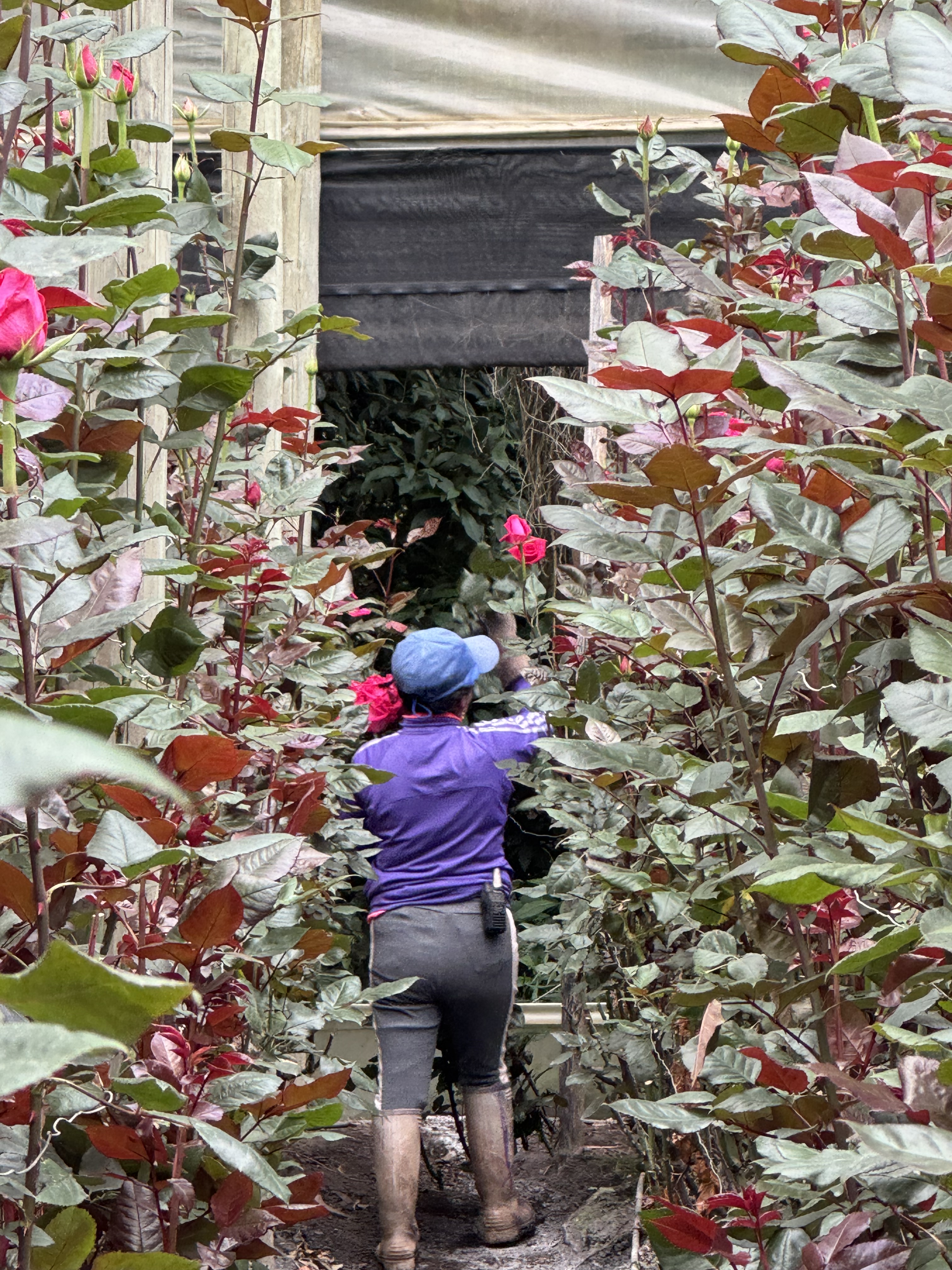
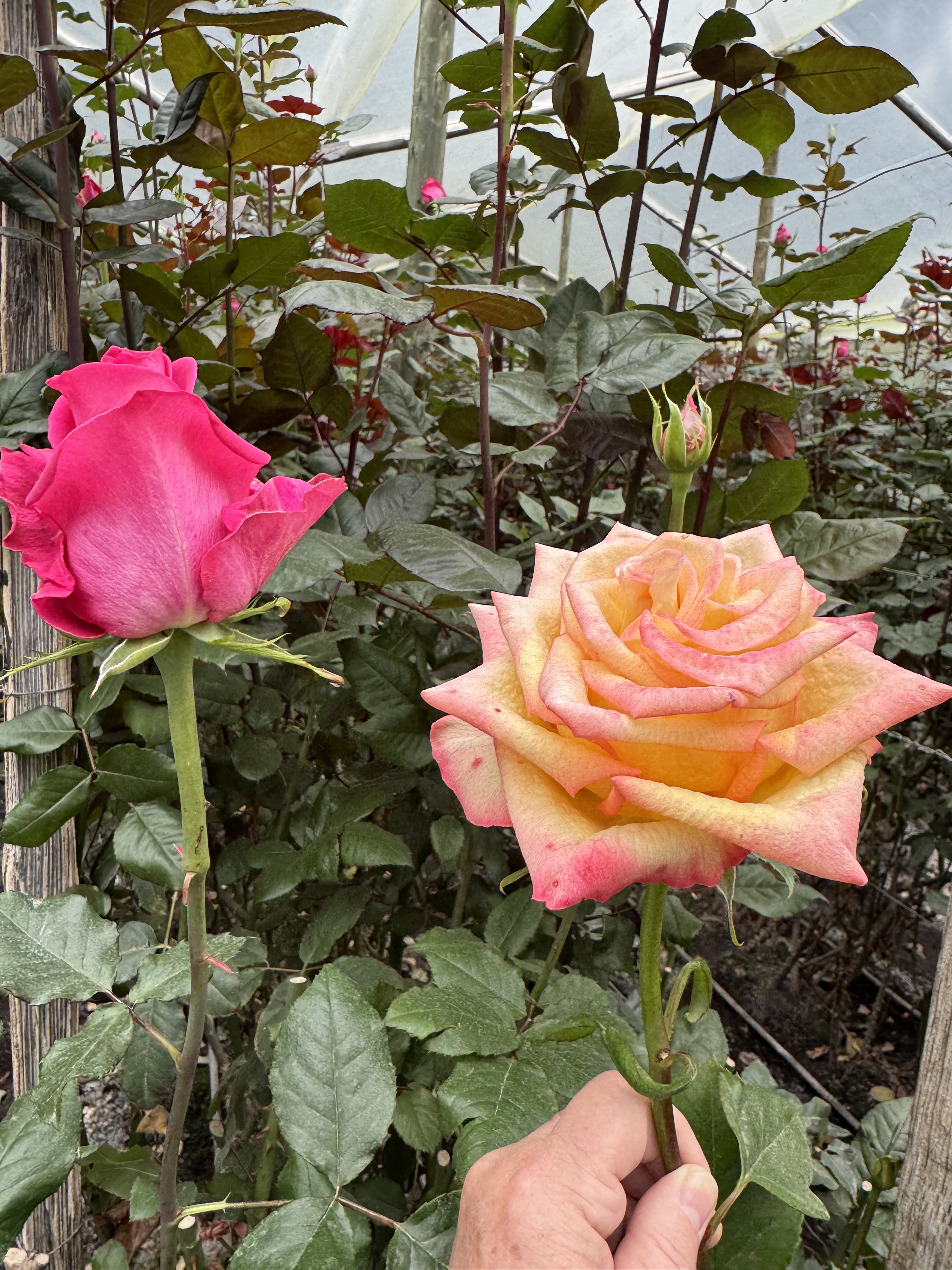
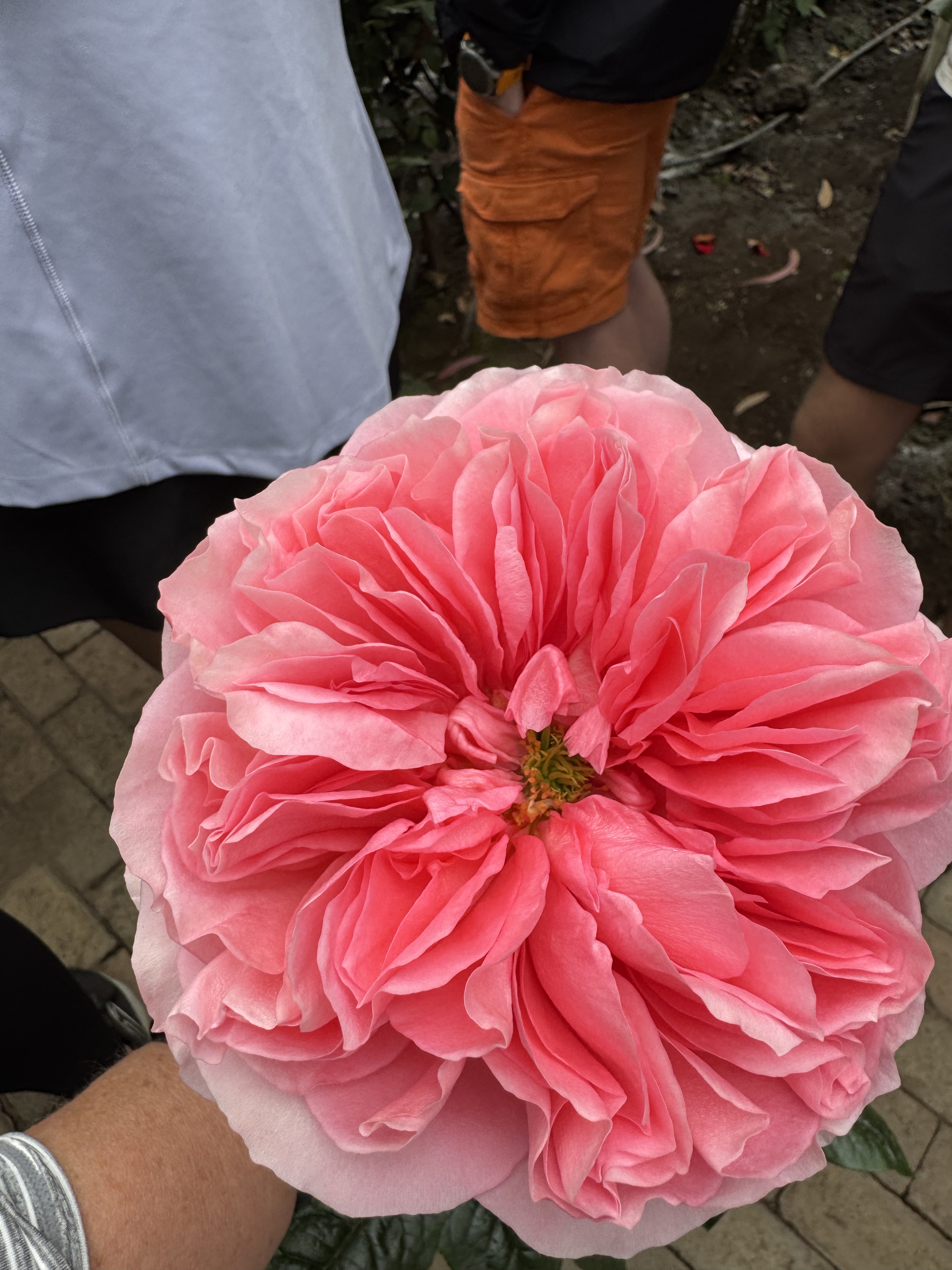
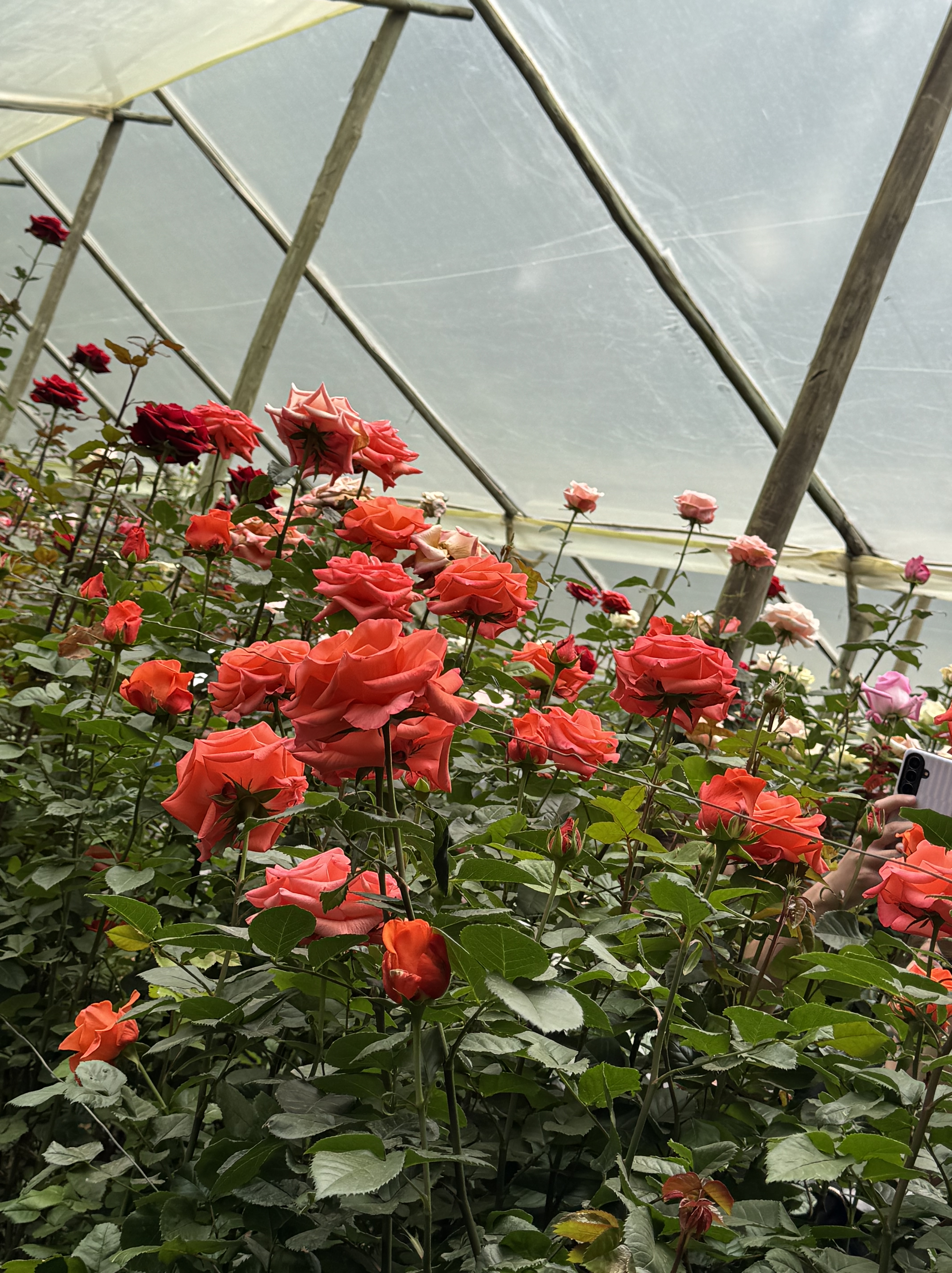
The rose canes are grafted onto a “mother” cane. The mother can be used for 10 years in commercial rose production. Only 3 varieties are scented. Most customers want unscented large blooms. This is what is preferred in Russia, where most of the roses from this farm are shipped.
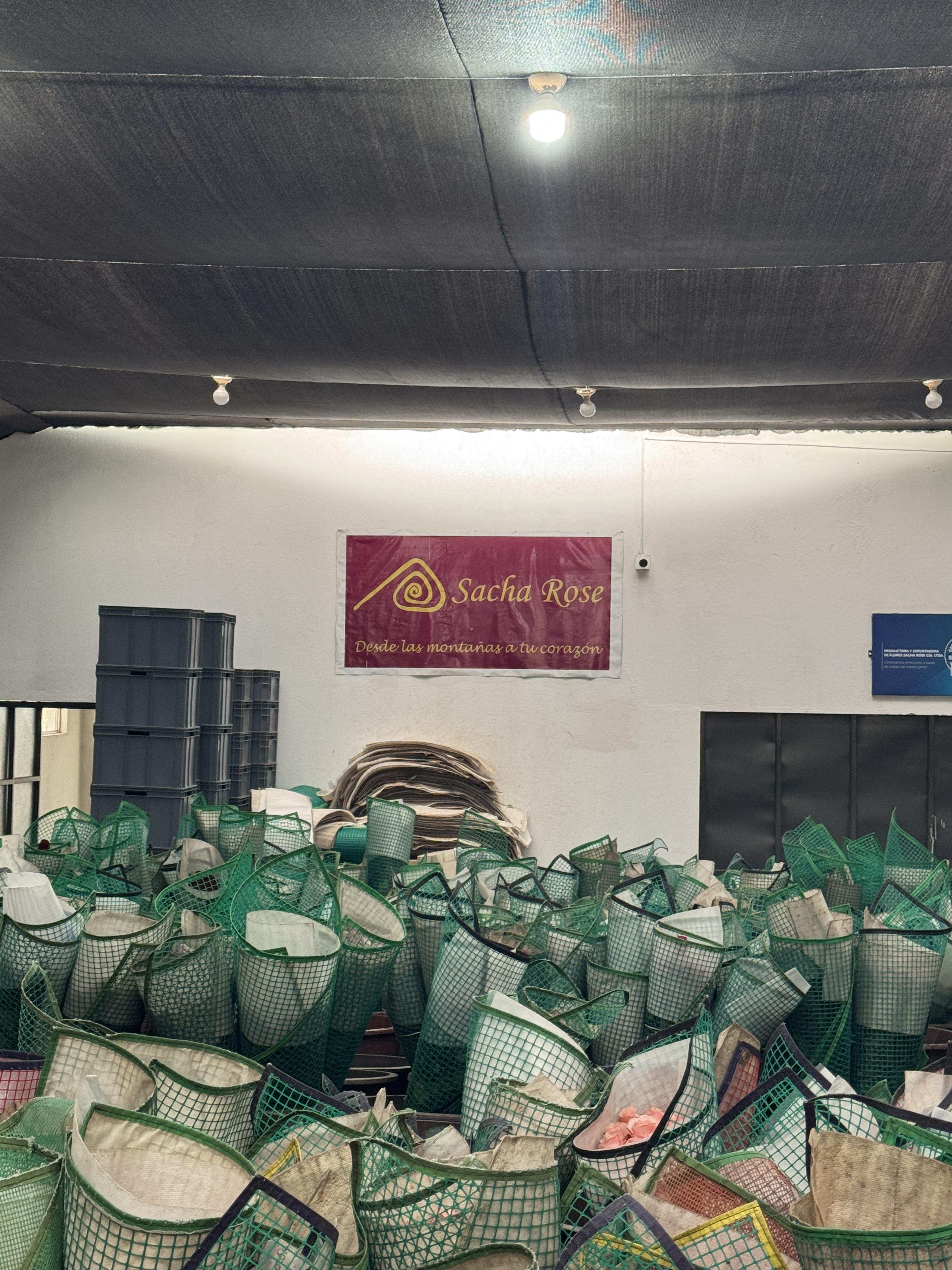
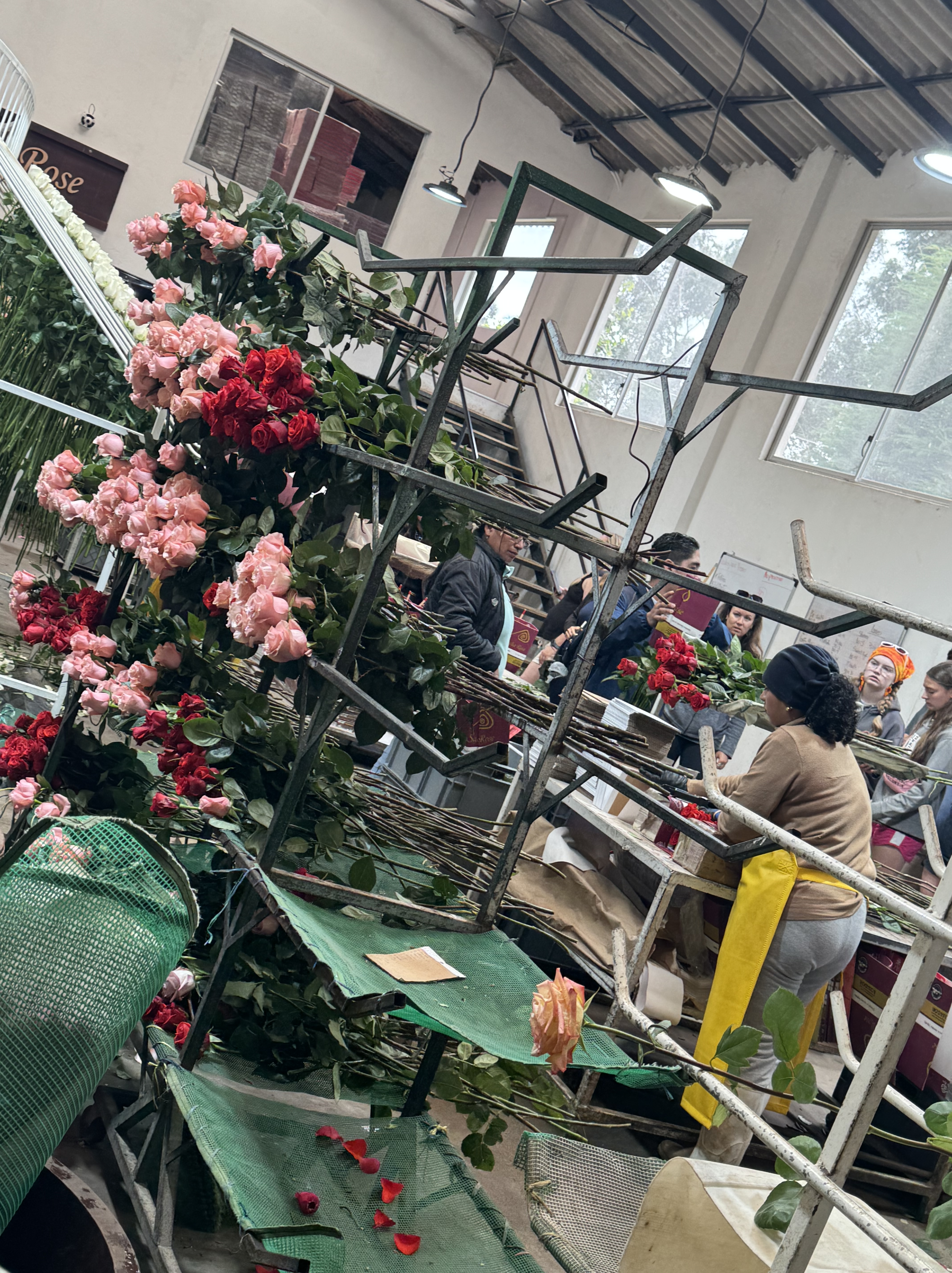
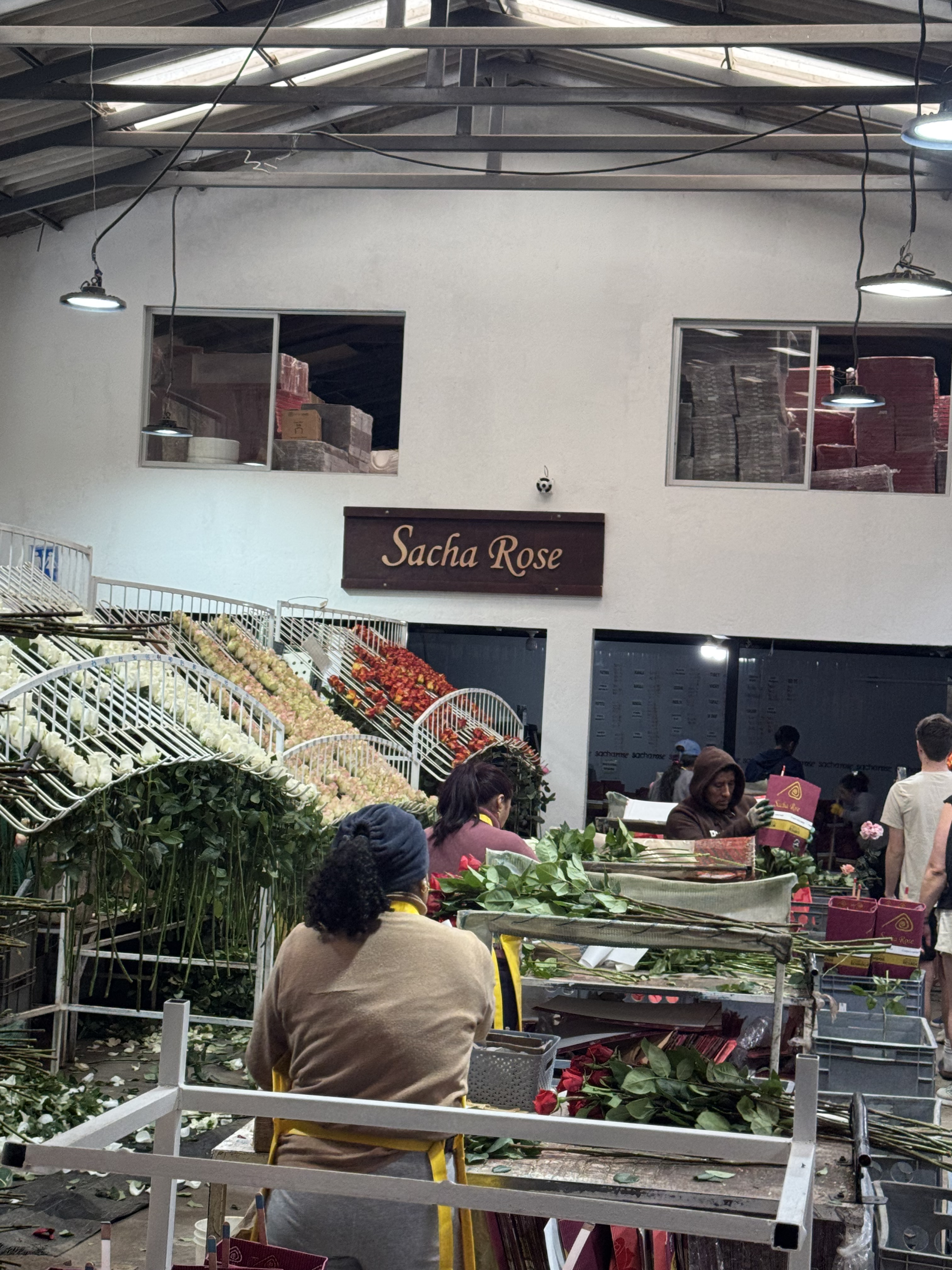
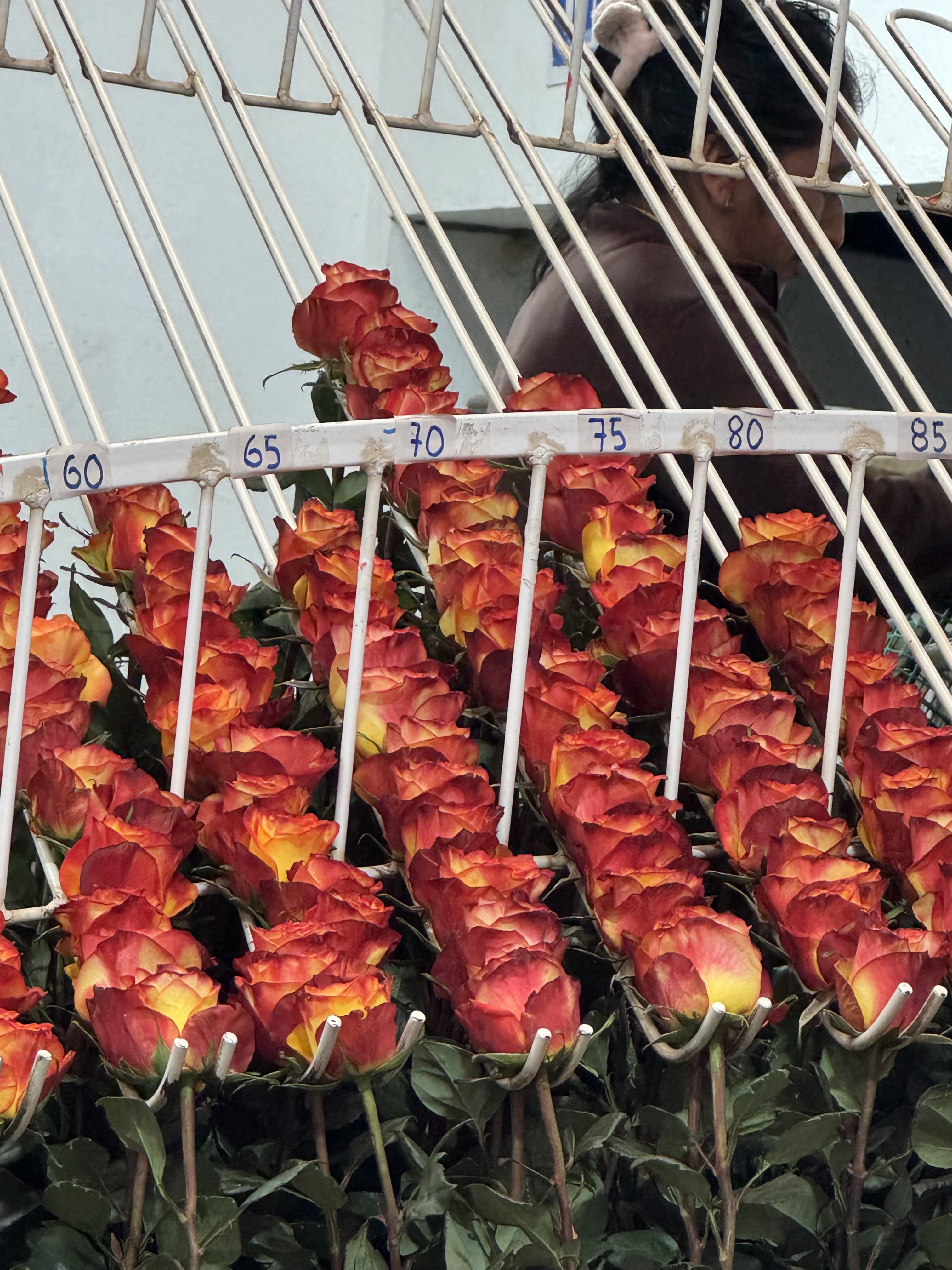
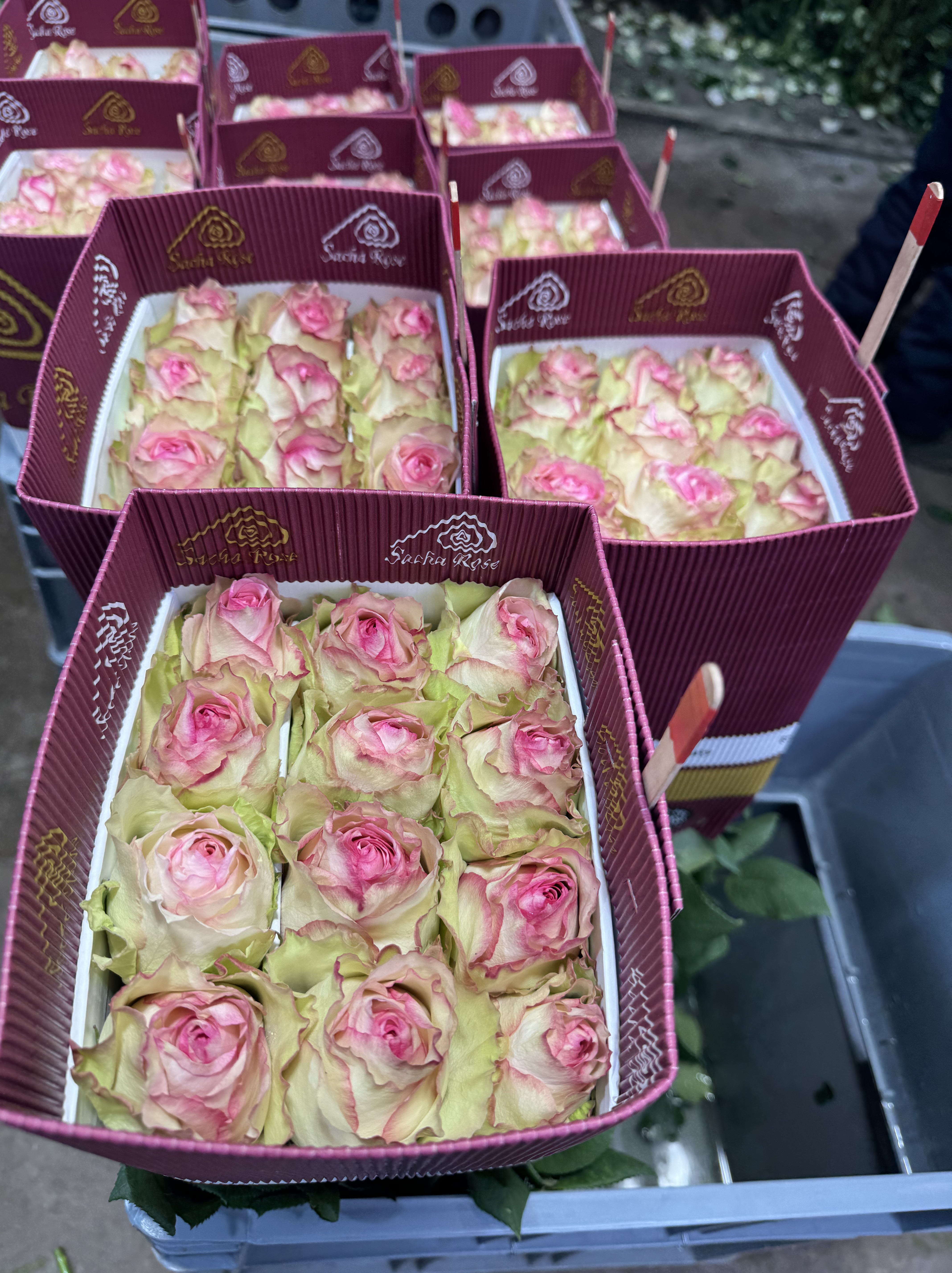
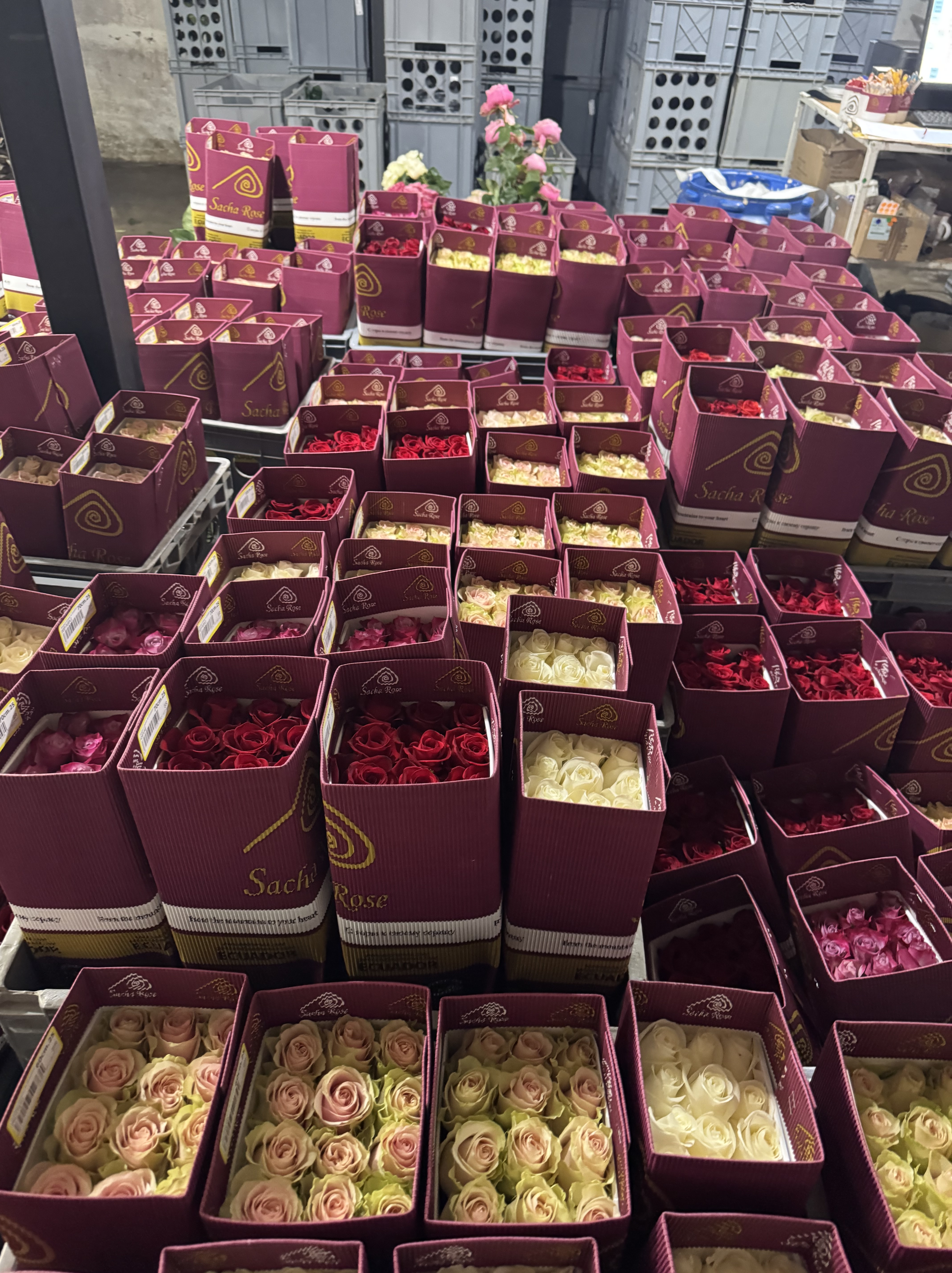
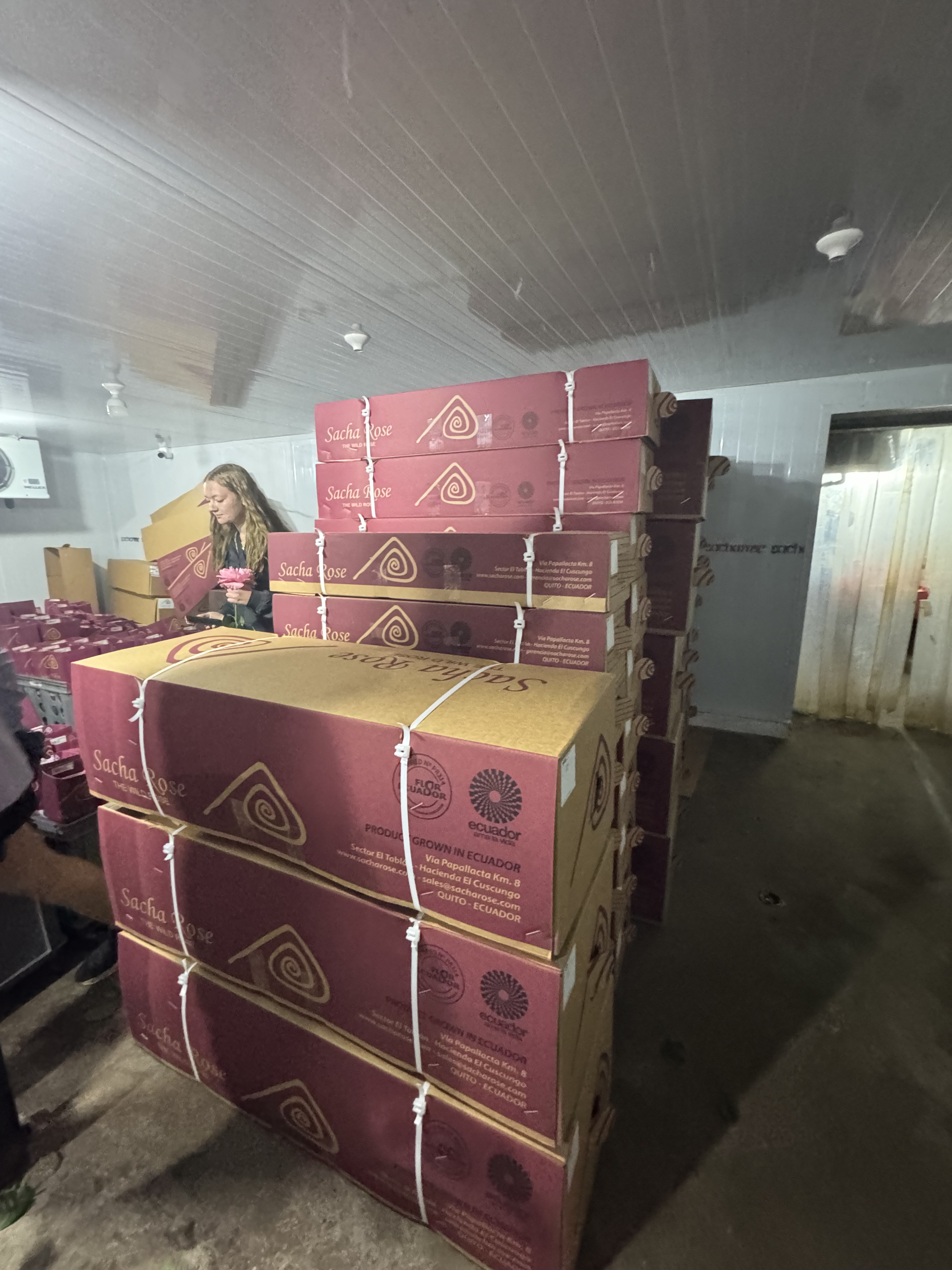
The farm completed cut-flower processing in one large building. First, flowers are dipped in a bucket of solution that smelled like bleach. Then they are sent to a room-sized walk-in cooler to be stored until packaged. Next, ladies sort and package 12 flowers into bunches. In the final room, the flower bundles are packed tightly into large boxes for shipment.
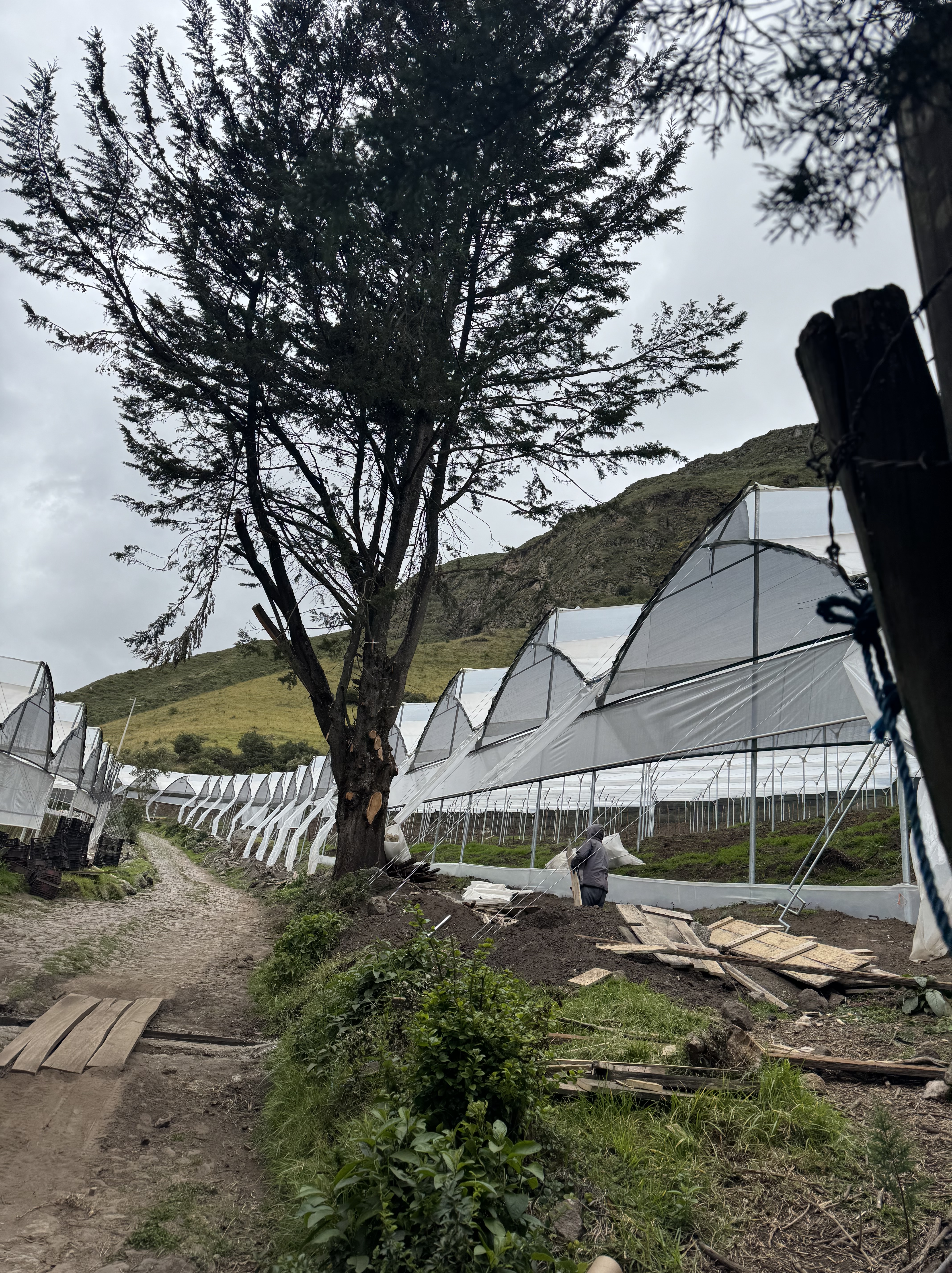
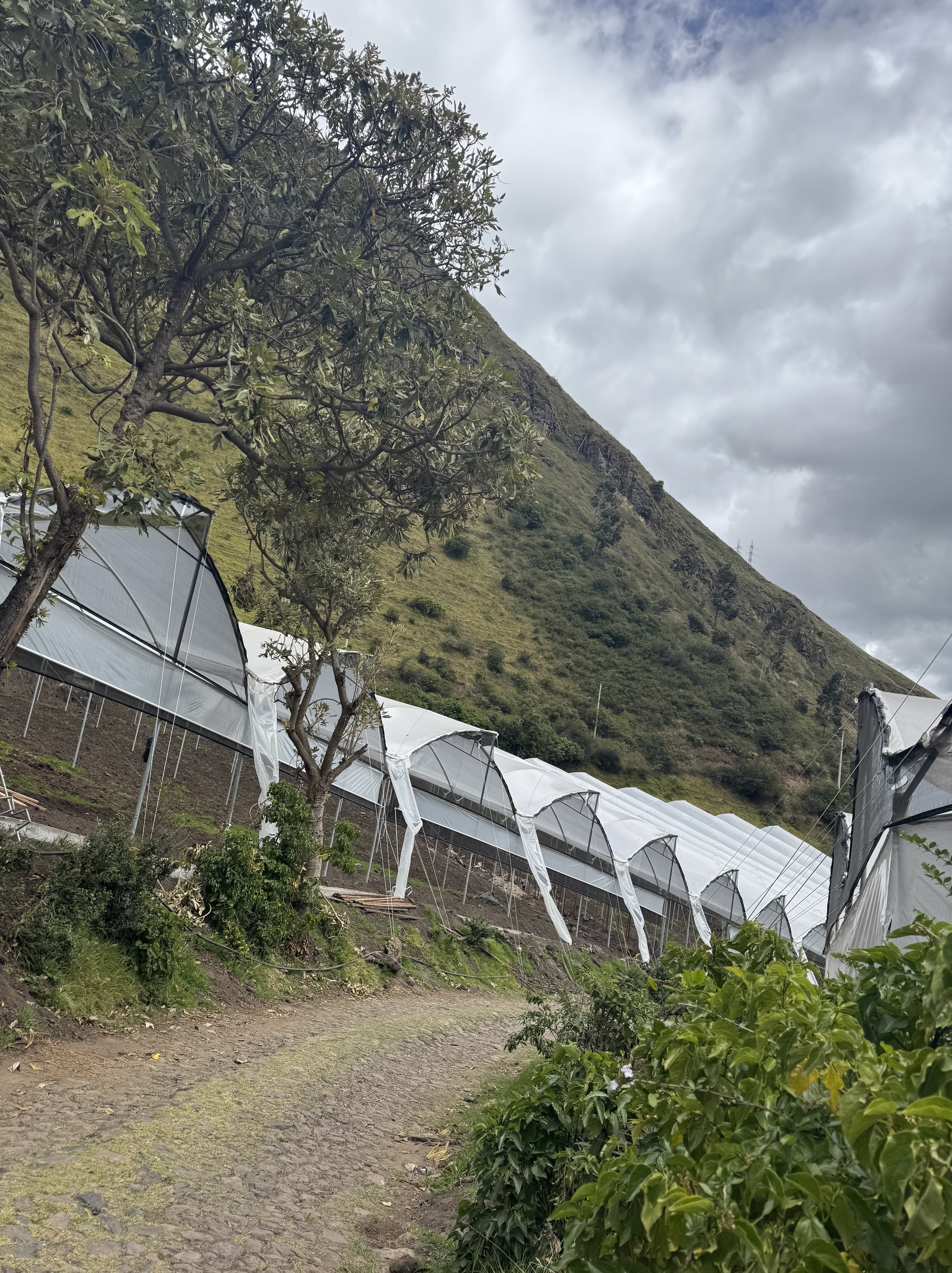
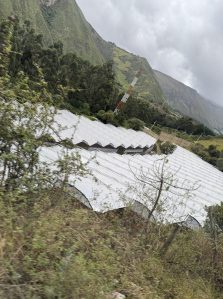
Sacha Rose Farm high tunnels from the road descending the Andean Mountains back to Quito
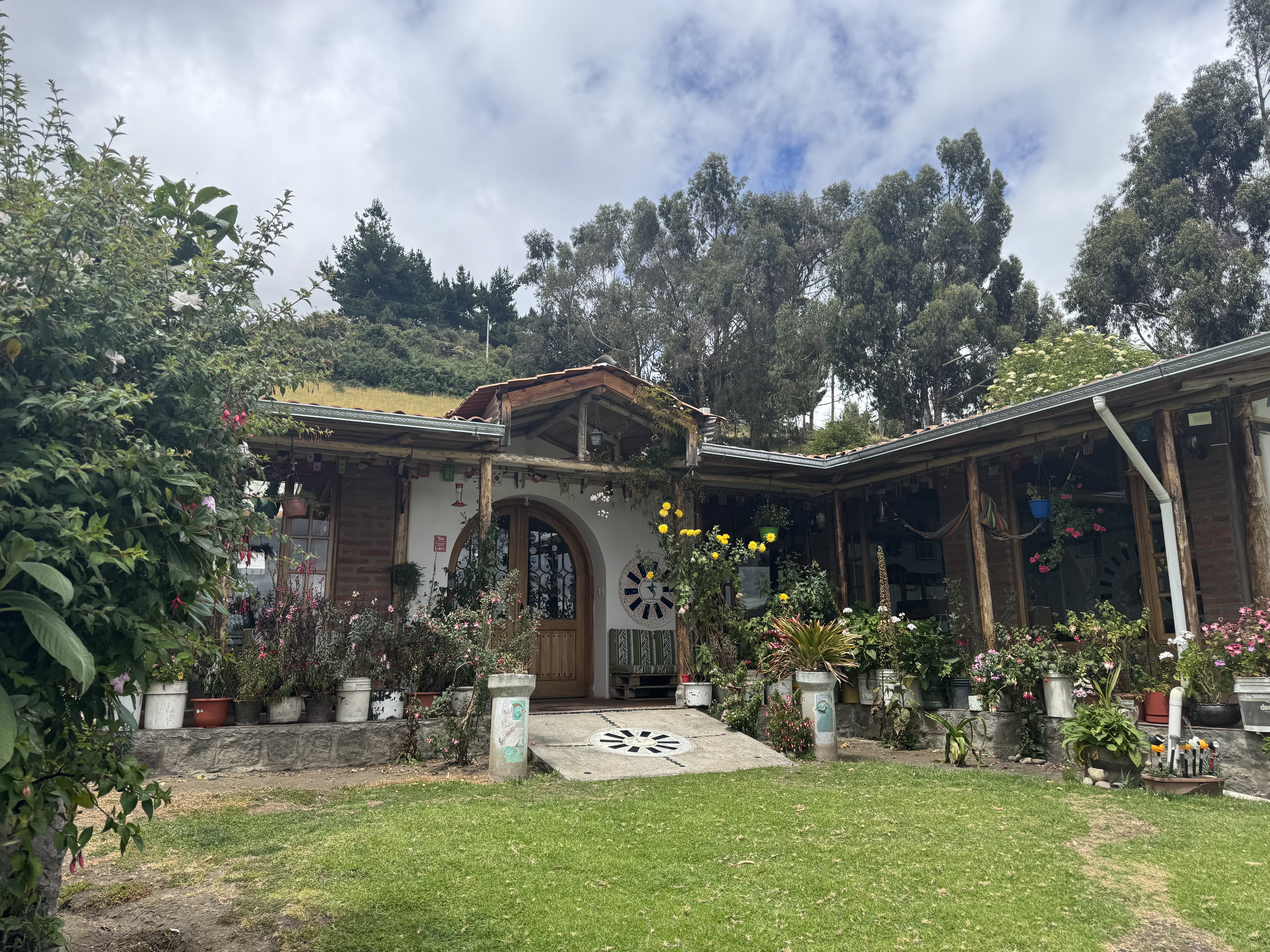
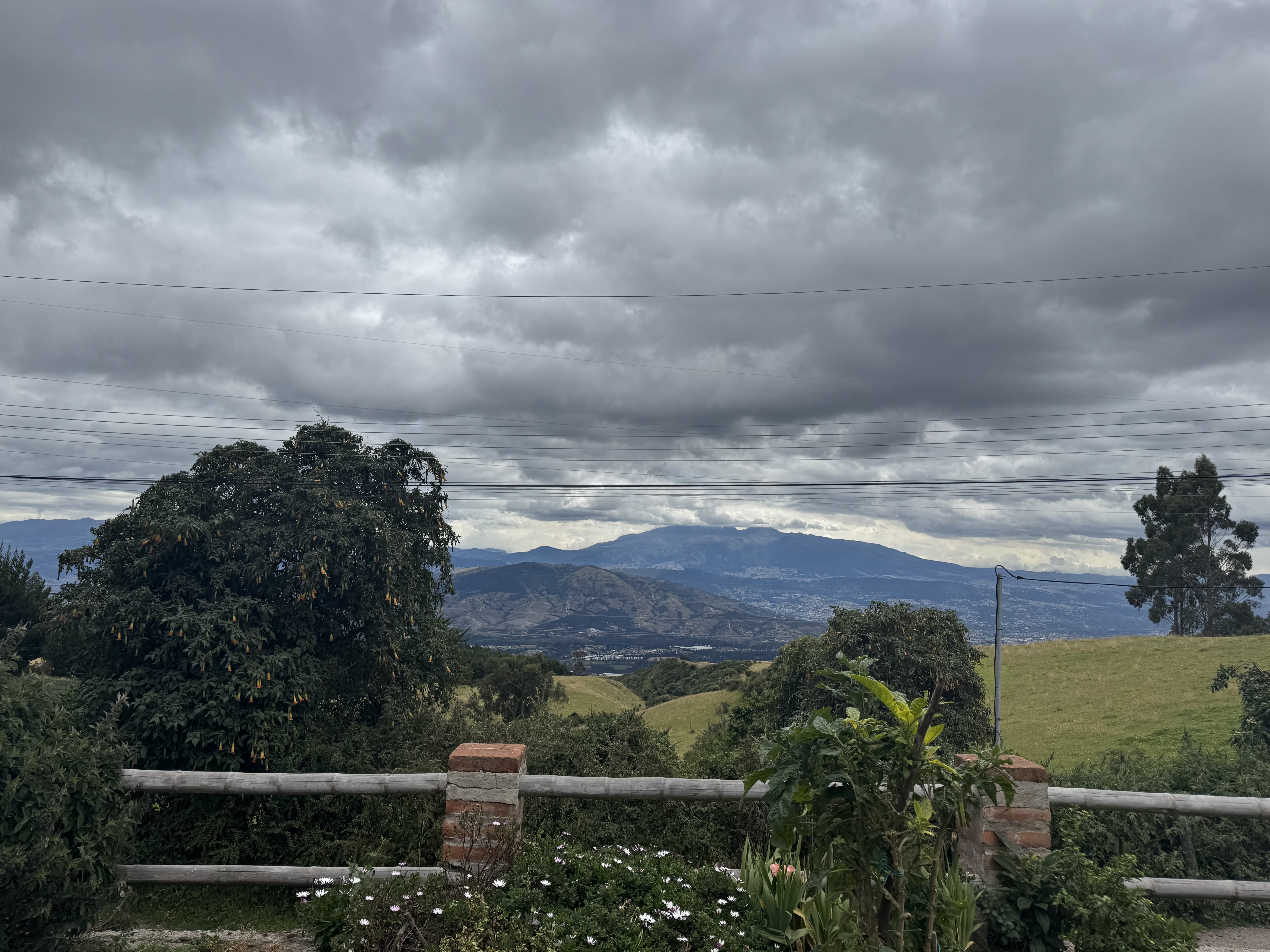
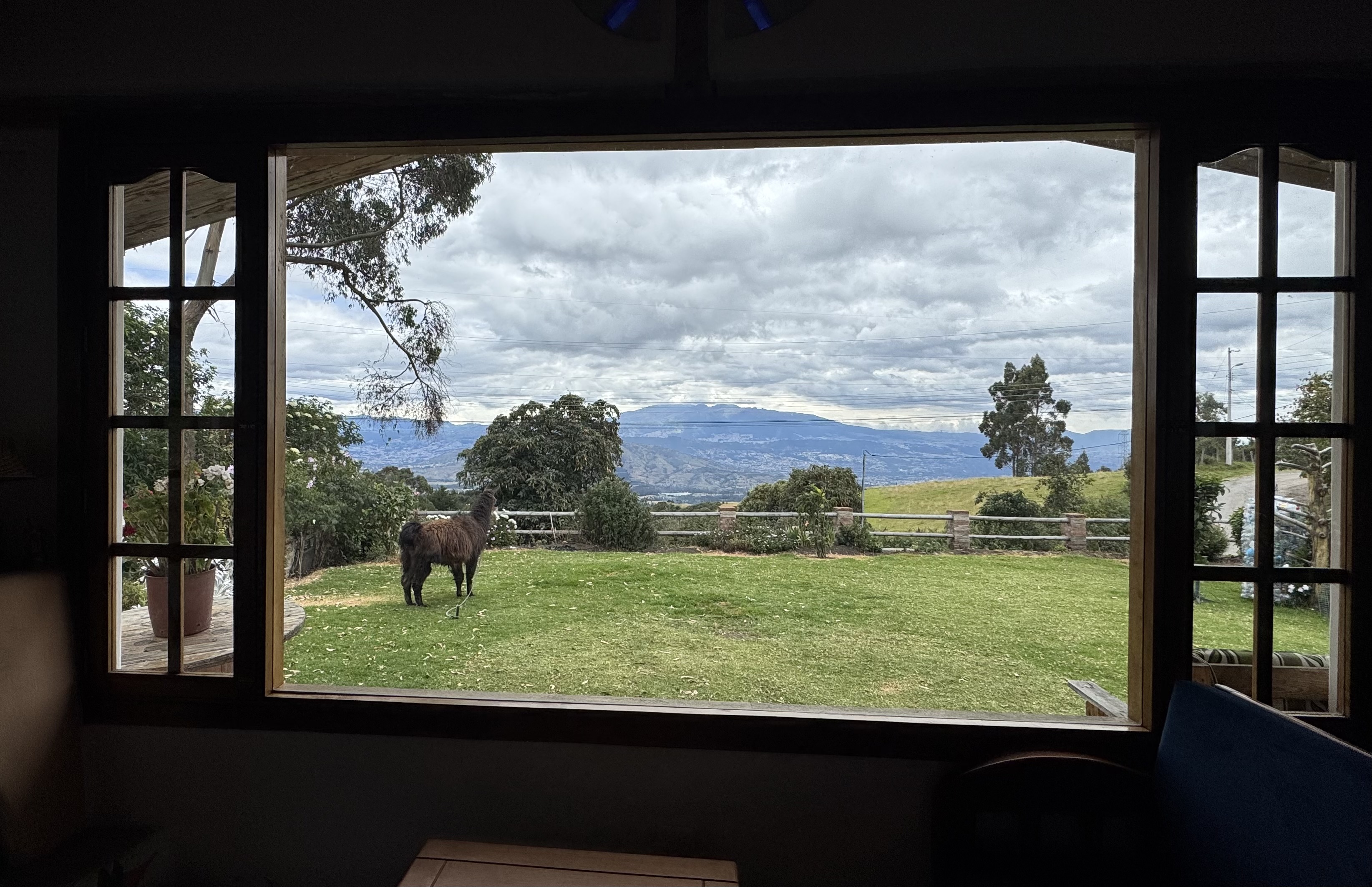
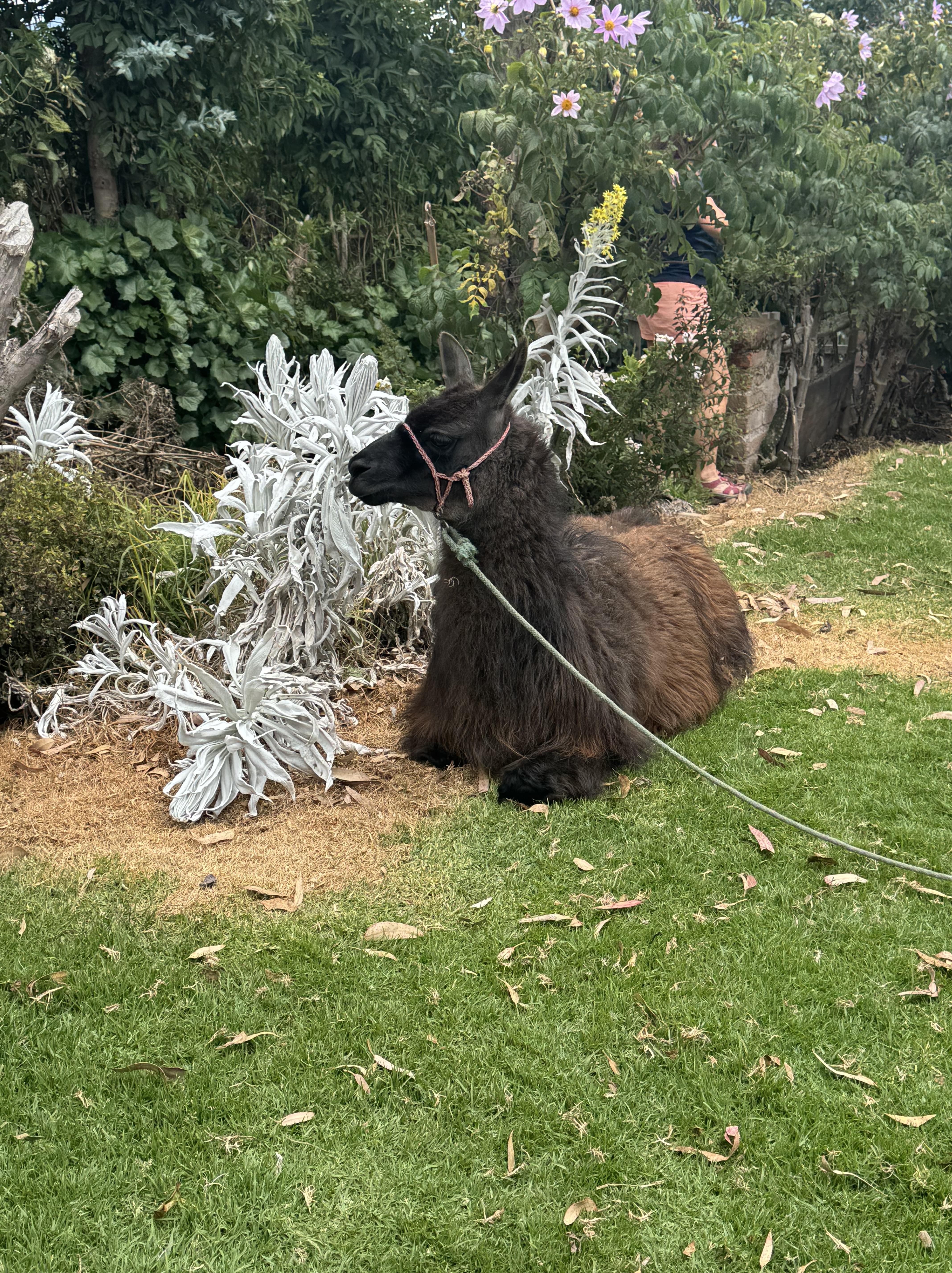
Lunch at a hacienda in the Andean Mountains. The host’s home was beautiful; part of the menu was a shocking surprise, and the four-legged host became tired of us very quickly.
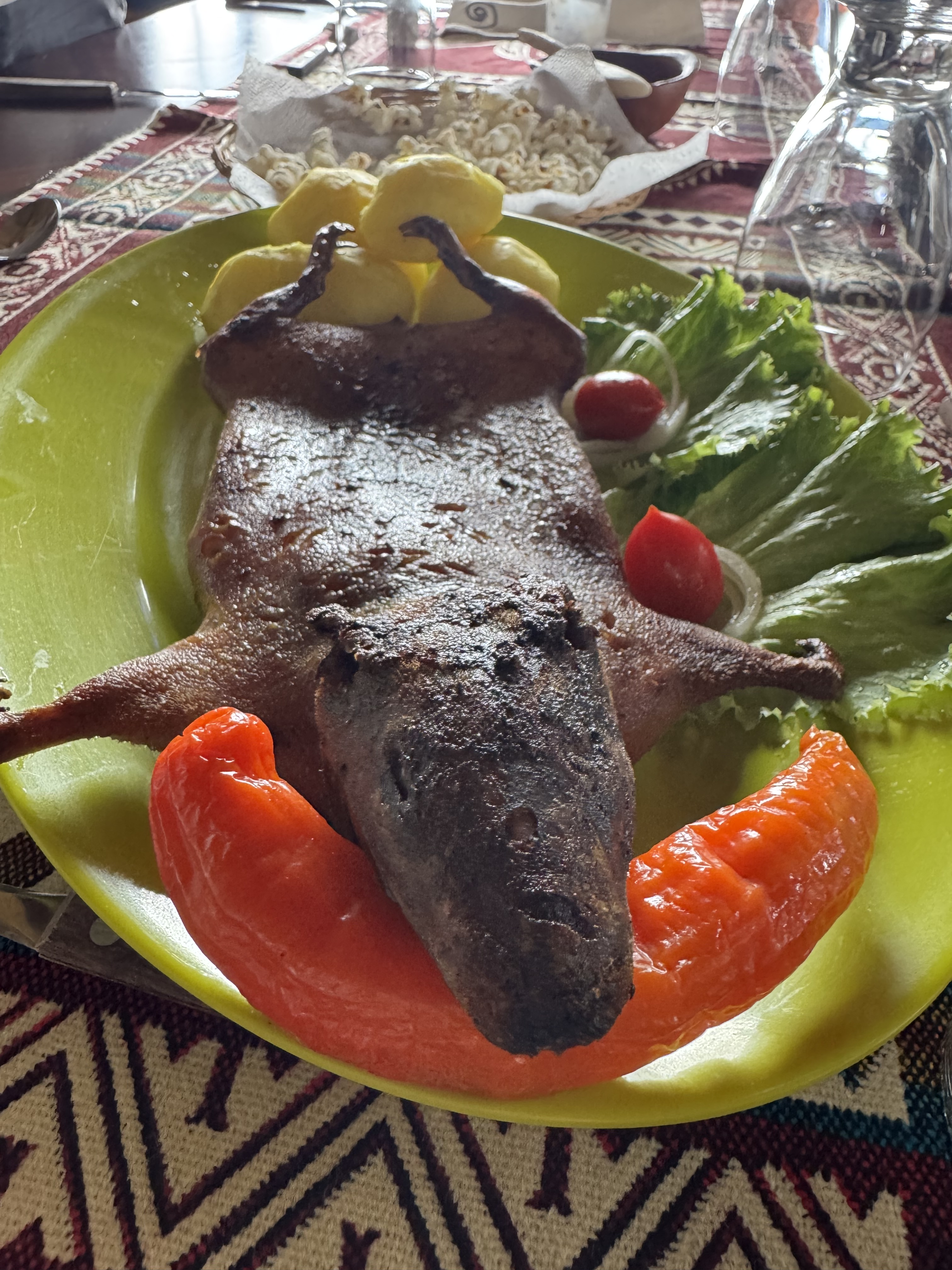
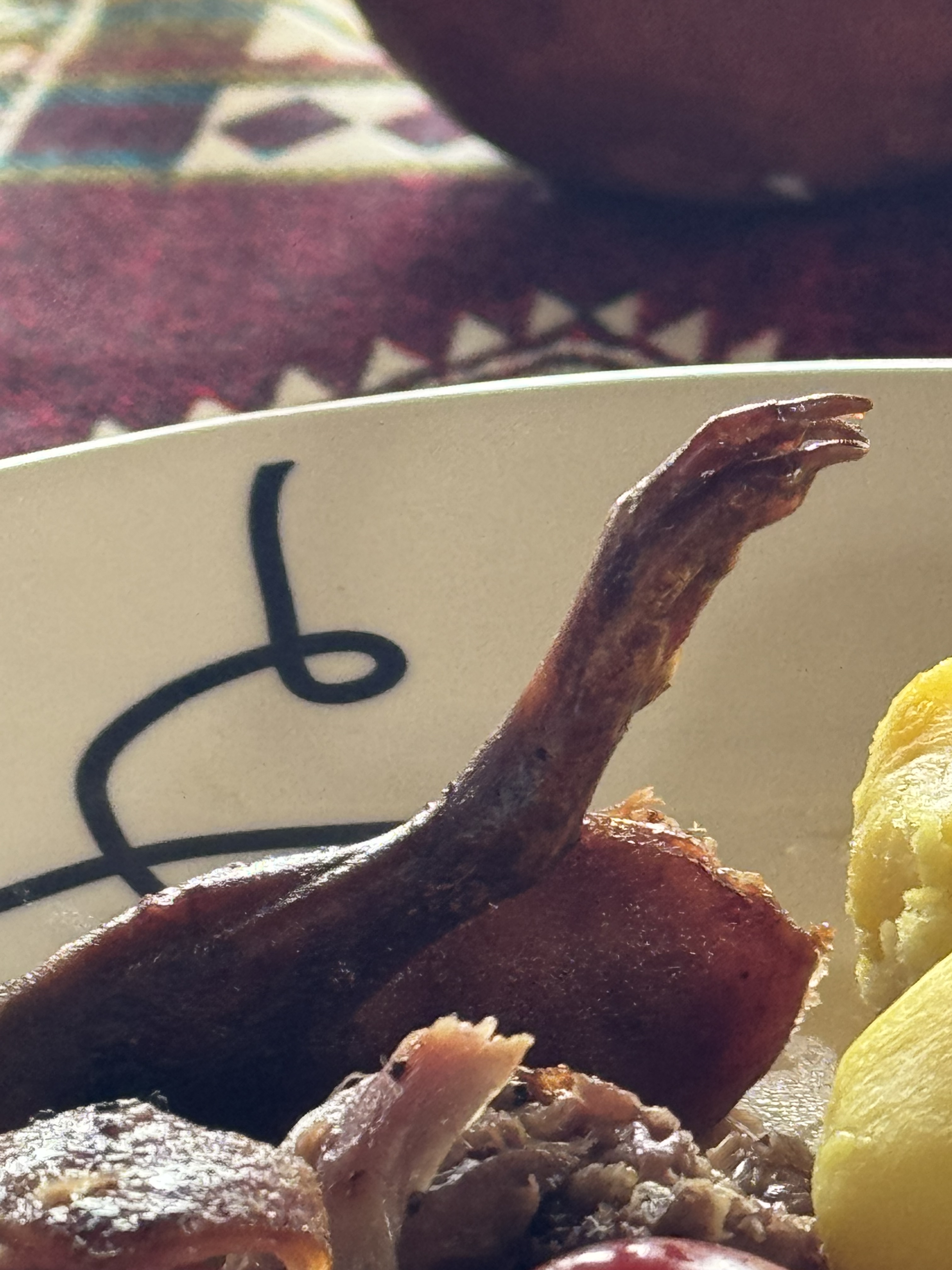
Roasted Cuy (guinea pig) as part of lunch was a big surprise. This was a delicacy I wanted to try since I visited Malawi, Africa, in 2017. How did it taste? Well, much like squirrel, a little greasy, with a small amount of stringy meat. Not bad. But also not good enough to pay $25 for a guinea pig. Yes, that is what it would cost at the meat market in Quito, Ecuador.
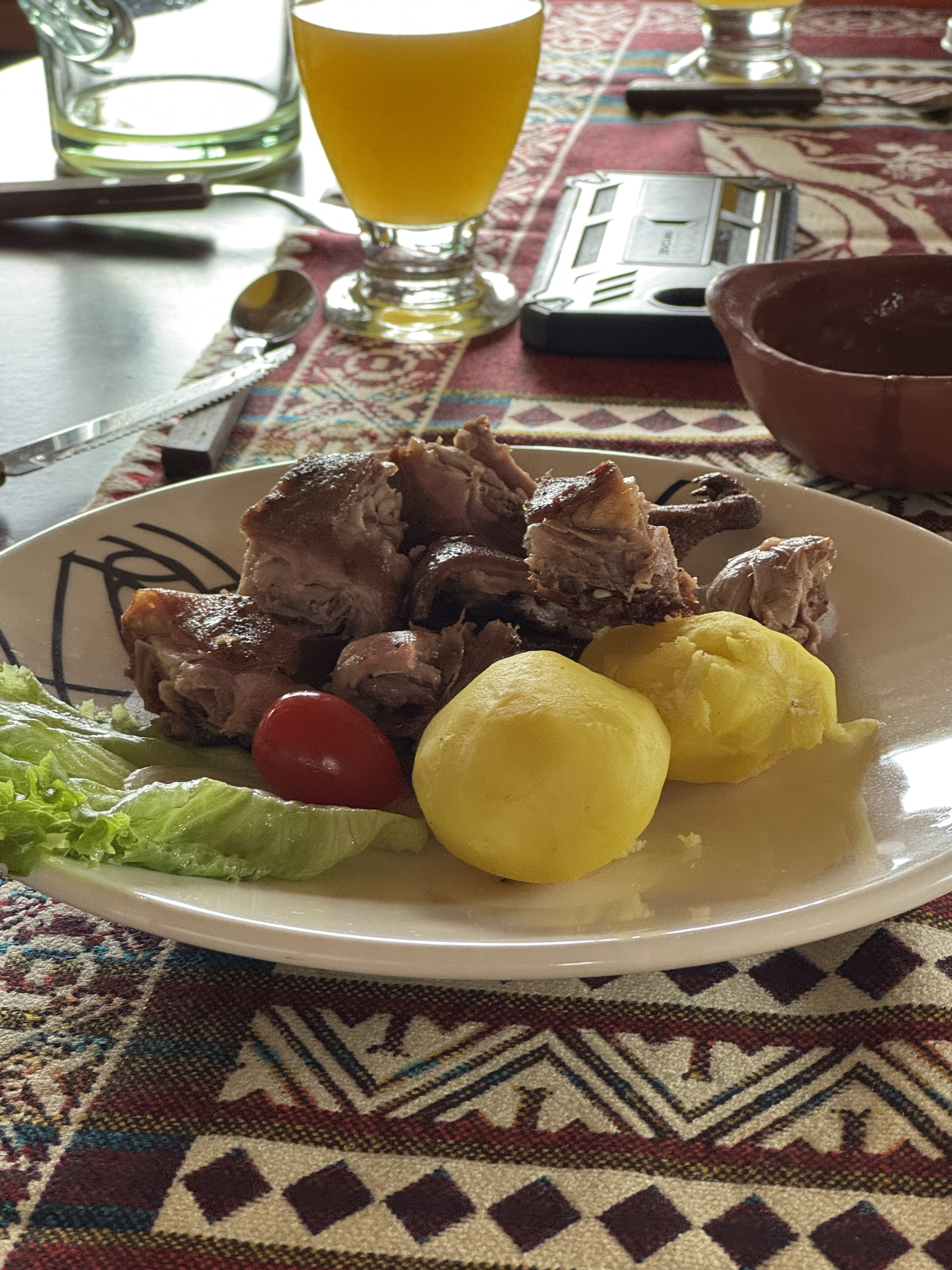
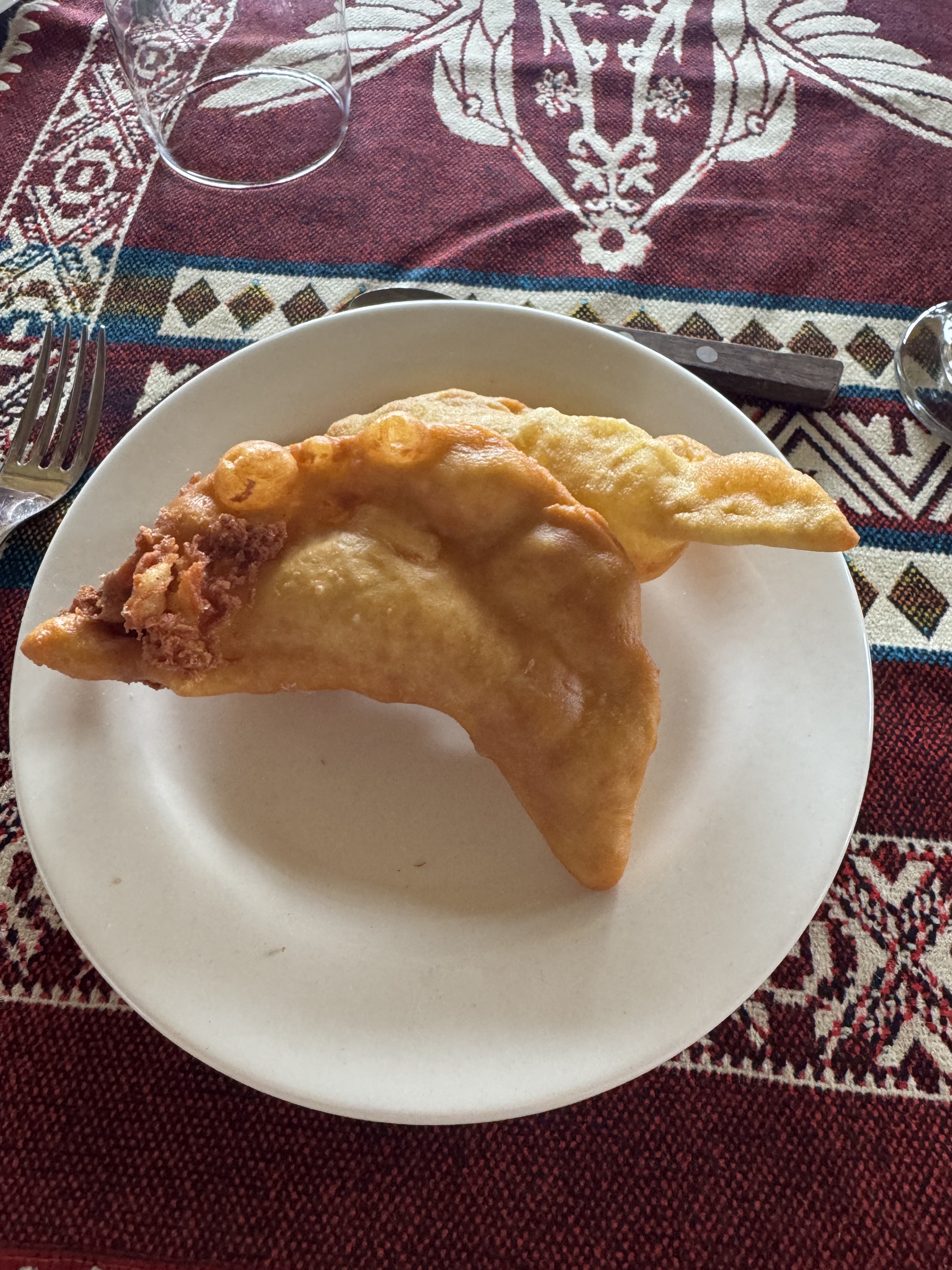
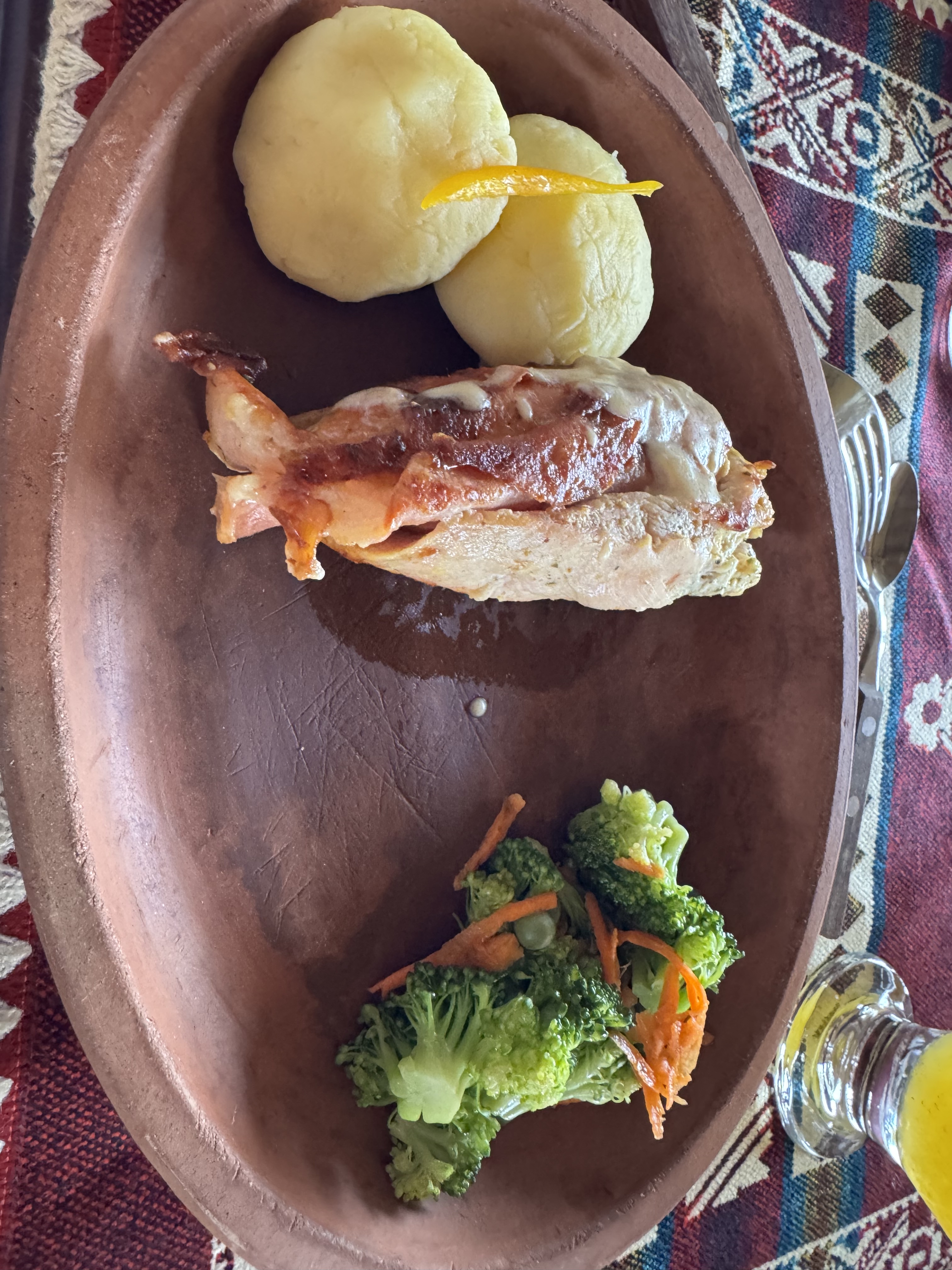
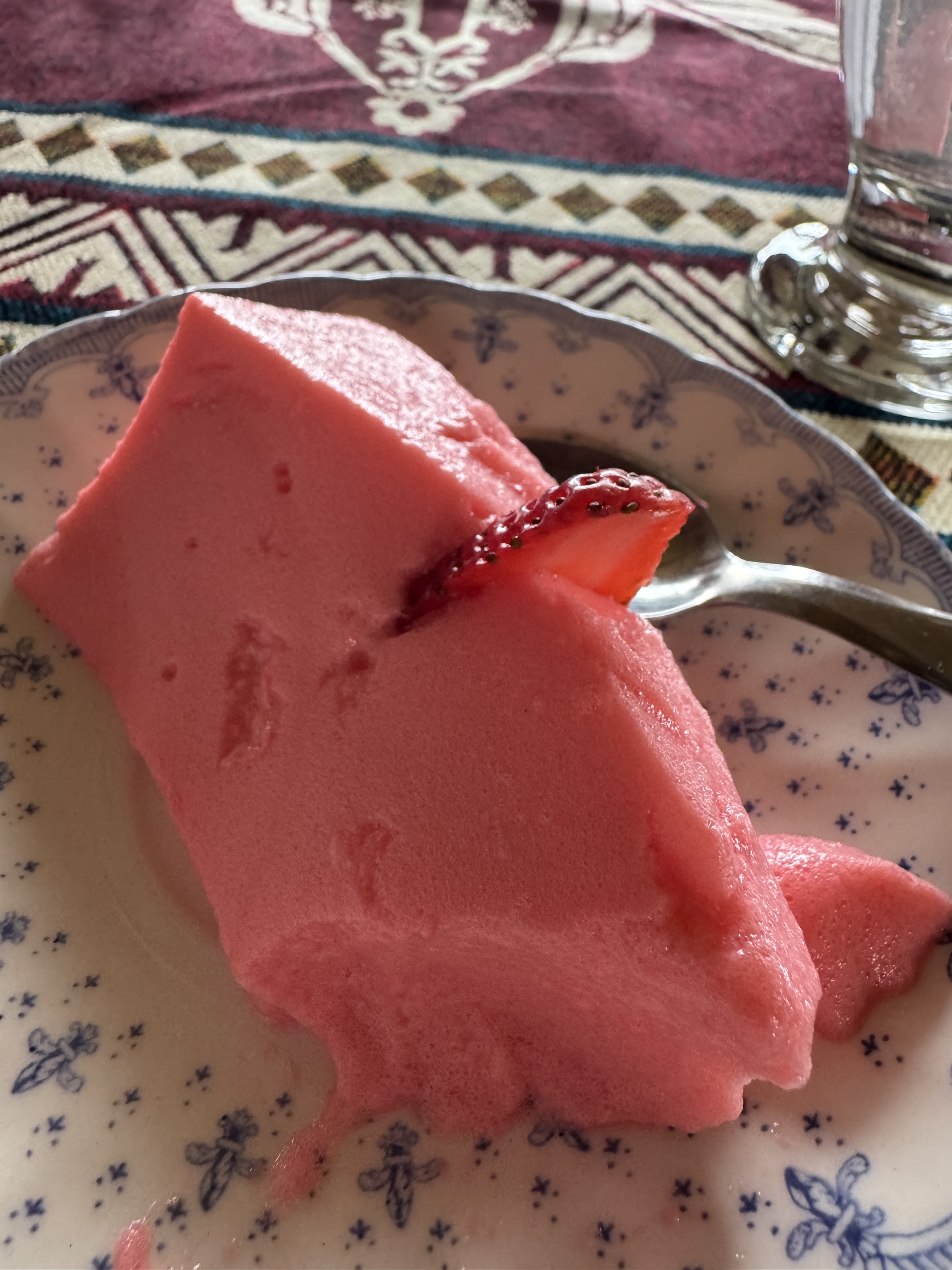
The real lunch today: homemade empanadas, chicken Kiev, and strawberry dessert
“Old” Town” Quito (city center)
Back to Quito for a guided tour of sites from the Spanish colonization period. The religious impact of Catholicism (introduced by Spain), the Jesuits (The Society of Jesus), and the Inca (advanced into Ecuador from Peru in the 1400s) can be seen in the Spanish Baroque and colonial architecture in the “old” section of Quito. 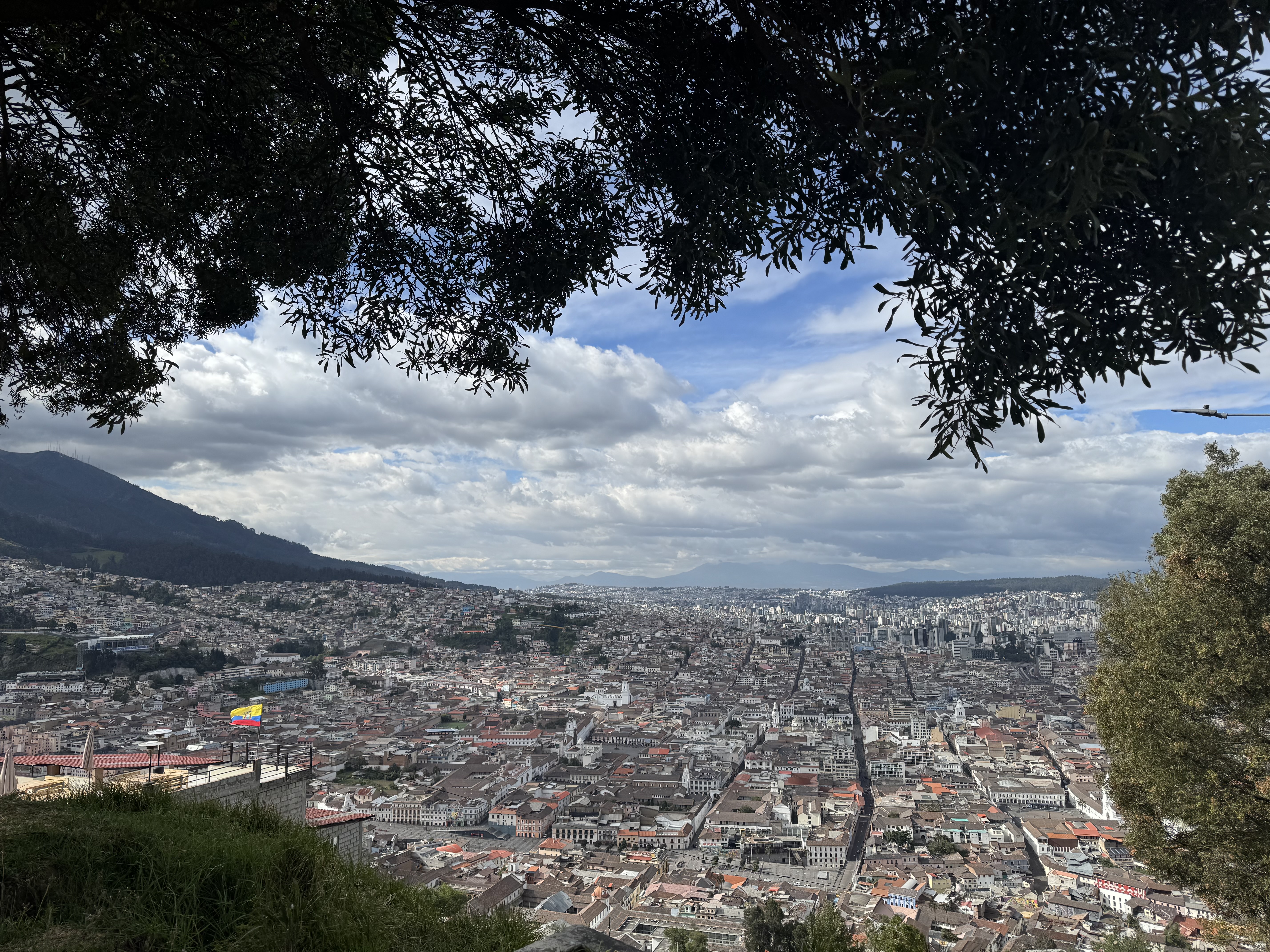
We started our tour of “old” Quito from the Virgin del Penecillo statue high above the city. This gave us a great perspective of the city center, where we did a walking tour.
Virgin del Penecillo at 41 meters (135 feet) is the tallest statue in Ecuador and one of the tallest in South America (taller than the Christ the Redeemer statue (30 meters) in Rio de Janeiro). The statue was finished in 1975. It is made of aluminum and is the world’s tallest aluminum statue. Designed by Spanish sculptor Agustín de la Herrán Matorras. From Virgin del Penecillo, there is a 180-degree view of the city.
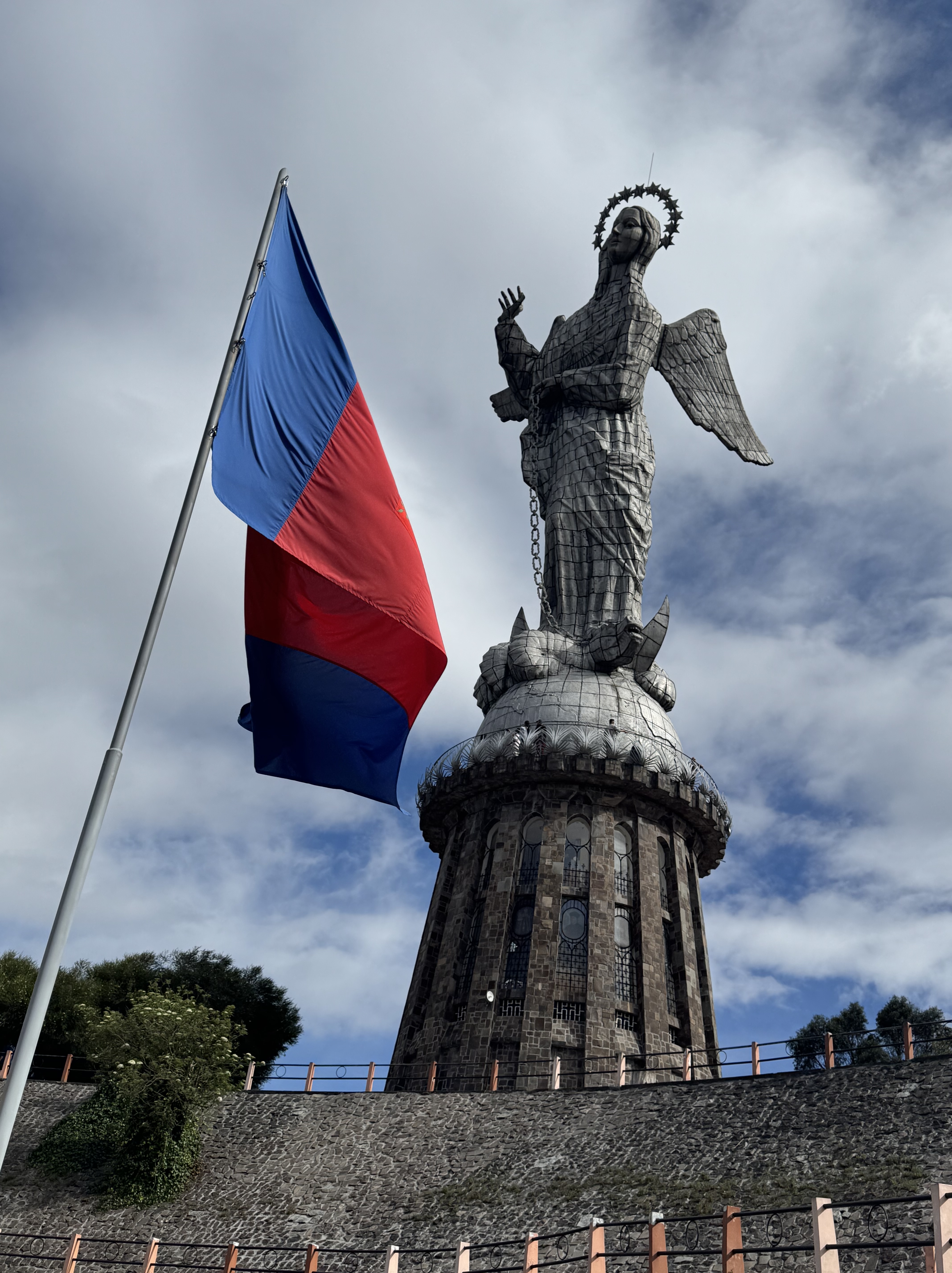
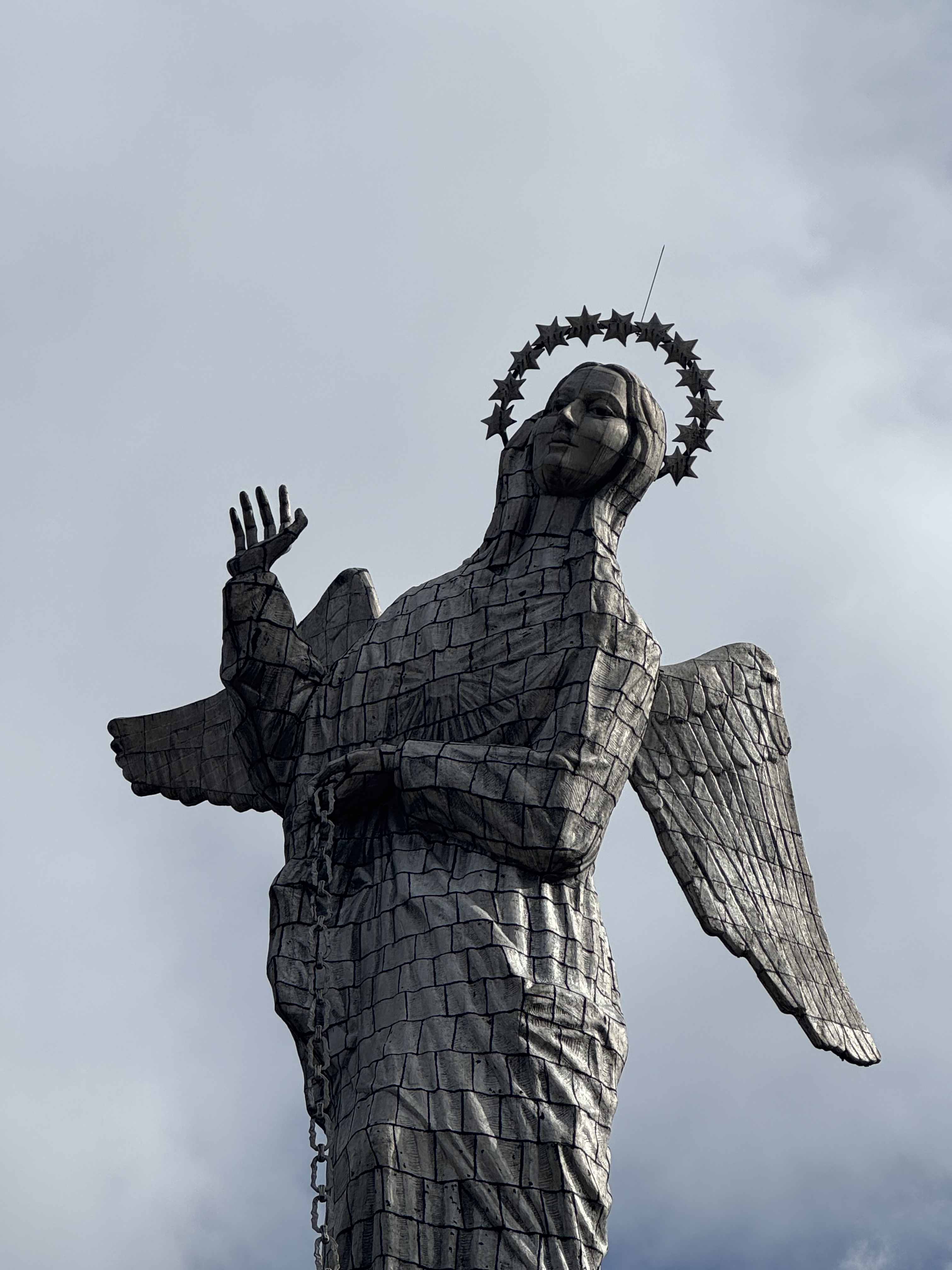
Walking tour of the city center, “Old Town” Quito
Basilica and Convent of San Francisco is the oldest church in Ecuador. The church was built between 1536 and 1560 by the Order of the Franciscan Monks. The building compound
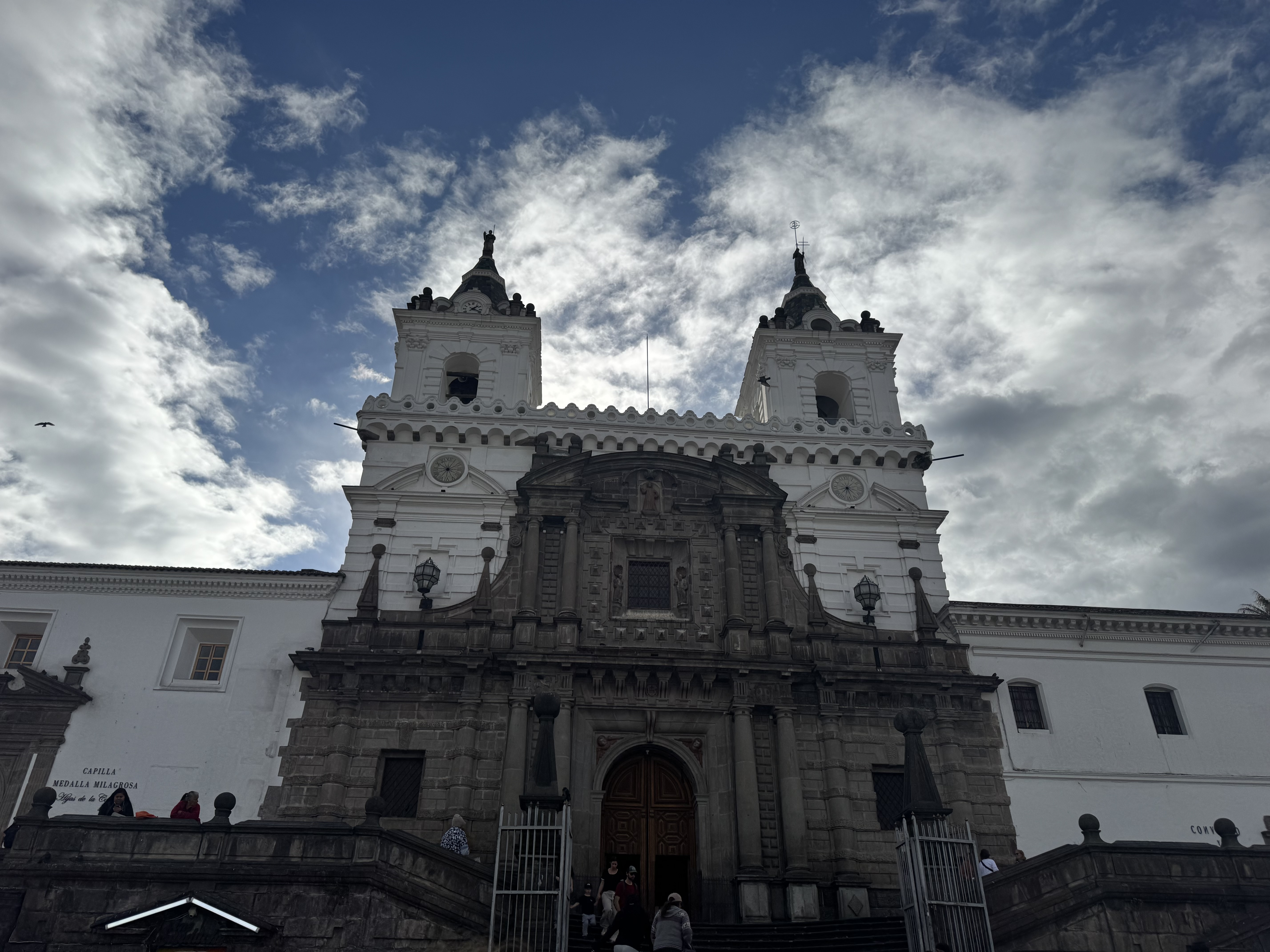
San Francisco church and convent,
including the convent, were added later. Earthquakes in 1755 and 1868 damaged the church.
The main chapel and altar have pews for worshippers. However, there was no seating in the two side chapels, which also had altars. Every wall surface is gilded or painted carved wood. Paintings of Franciscan saints and martyrs line the walls. The ceiling was completely damaged in the 1755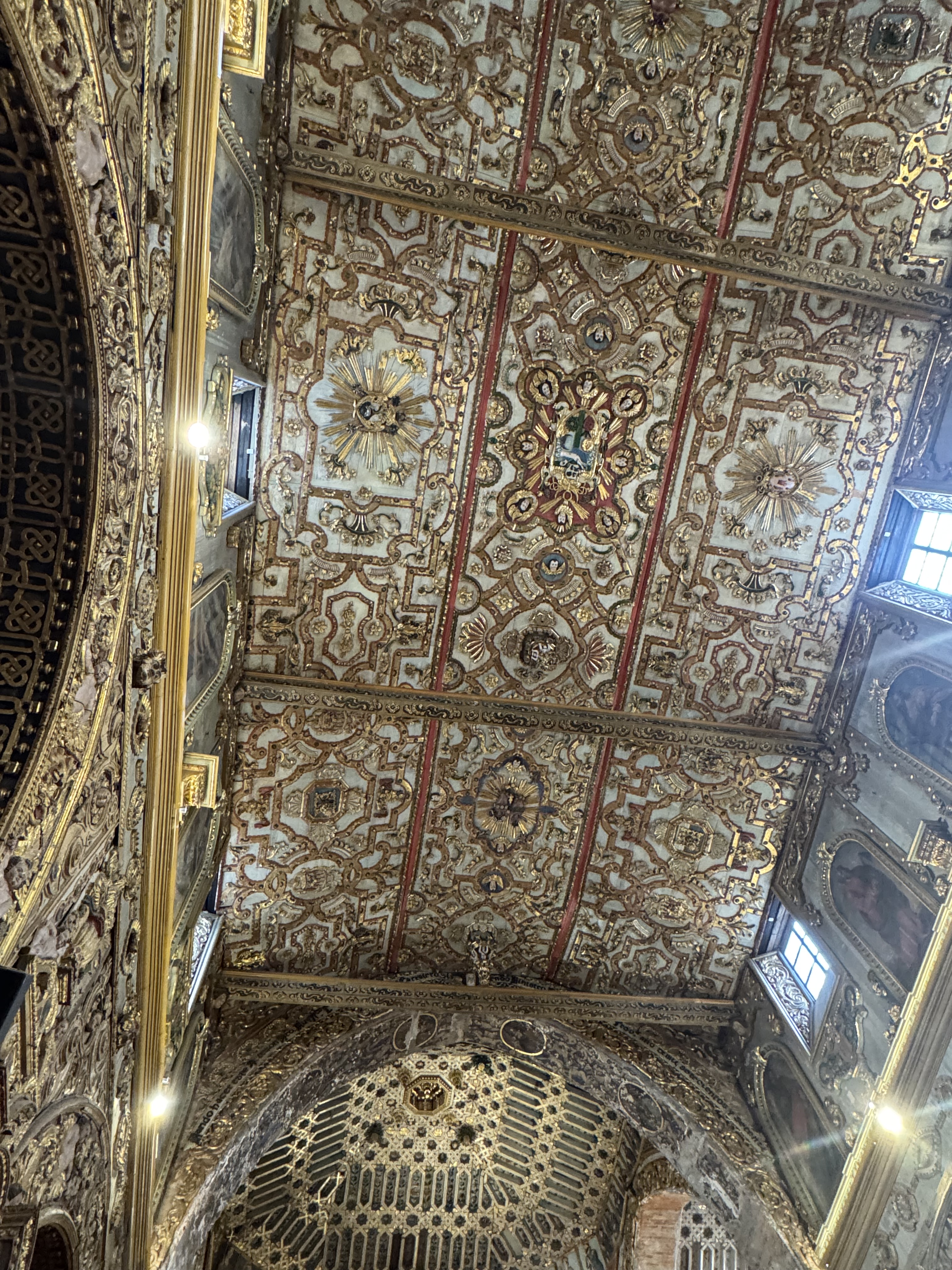 earthquake. Originally built in a Moorish style, it was reconstructed in a Baroque style.
The San Jose altar is beautiful Baroque art, and the tomb of Don Francisco Ingo, the son of Atahualpa, the last Incan Emperor.
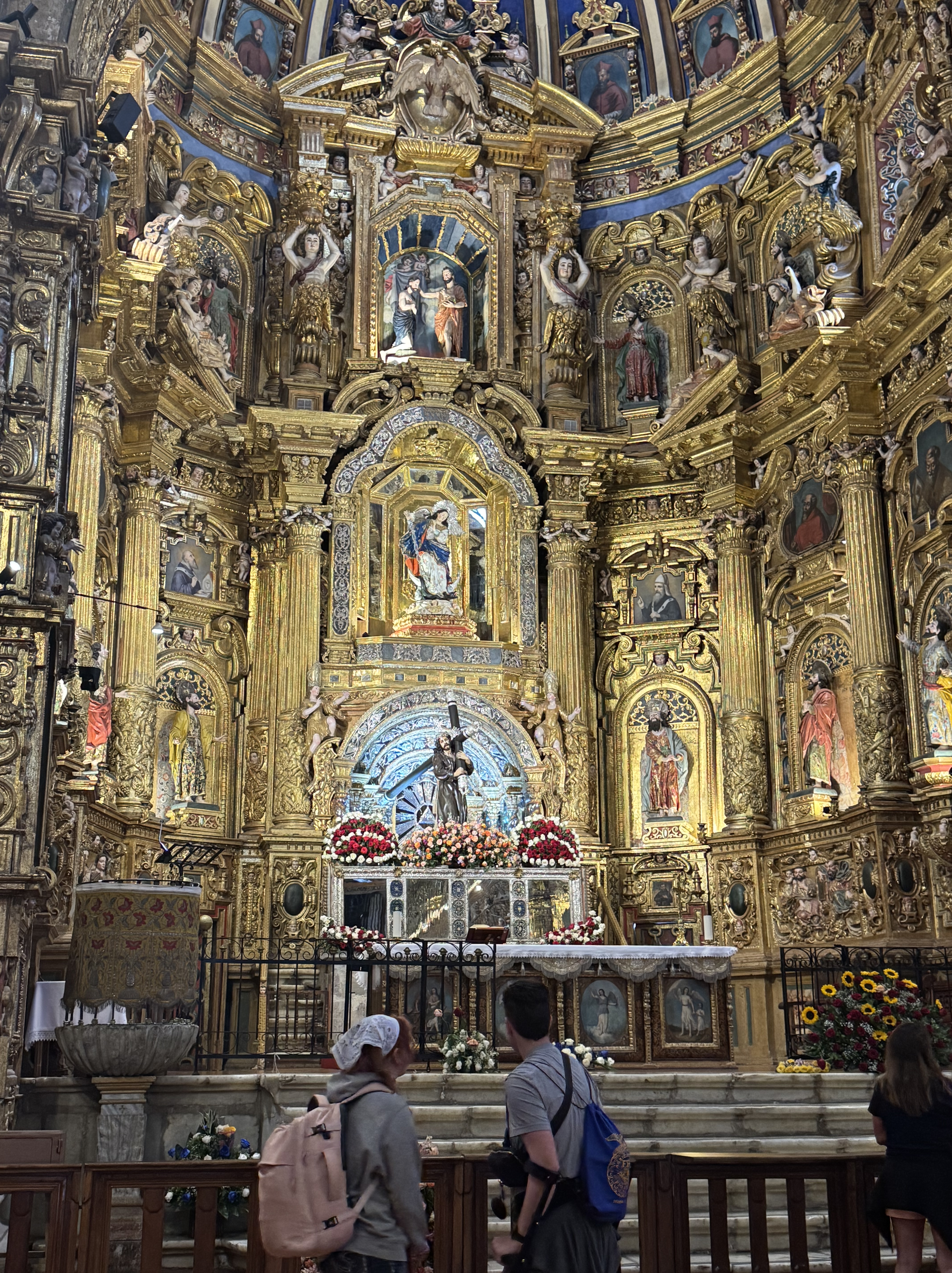
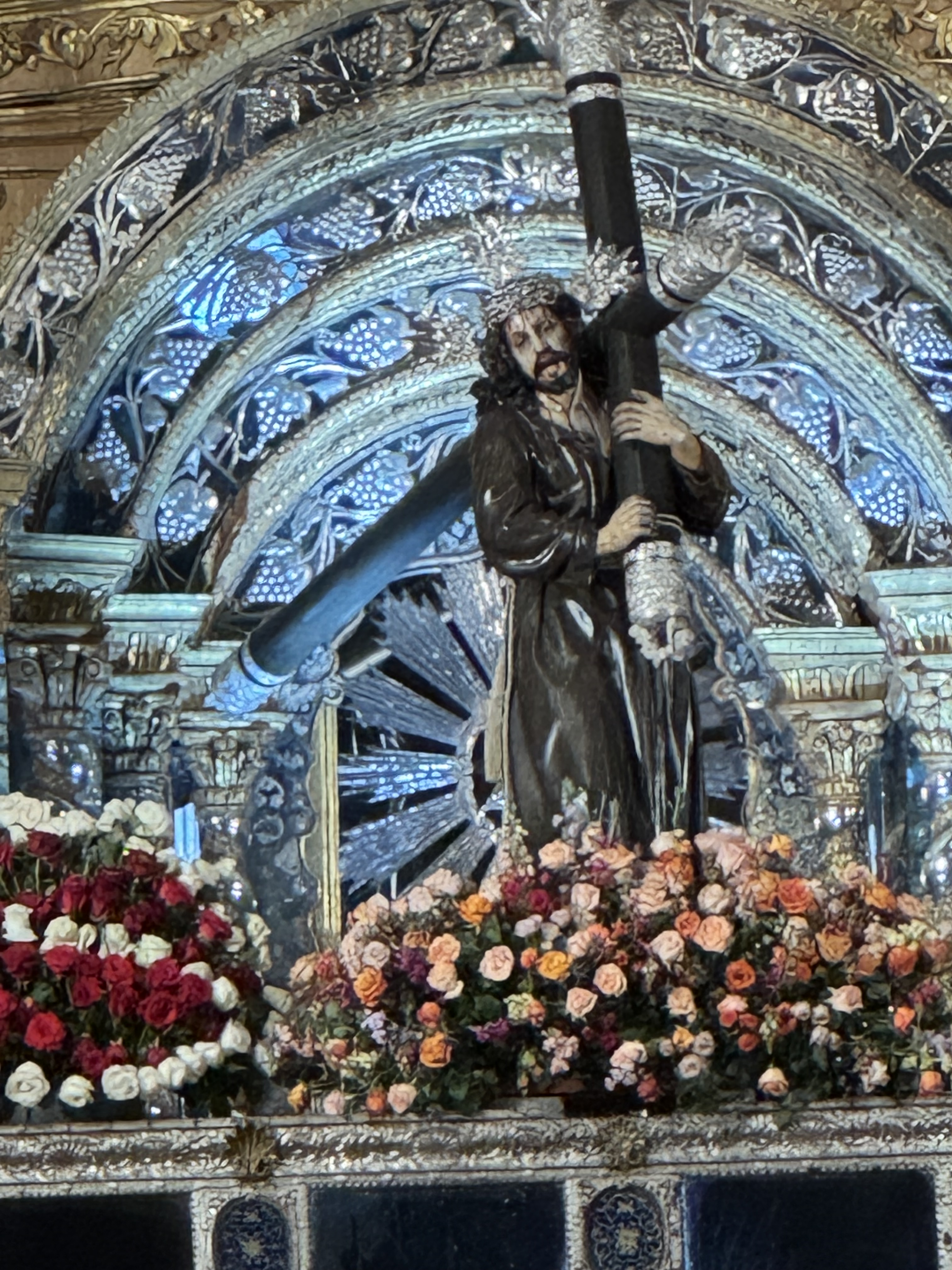
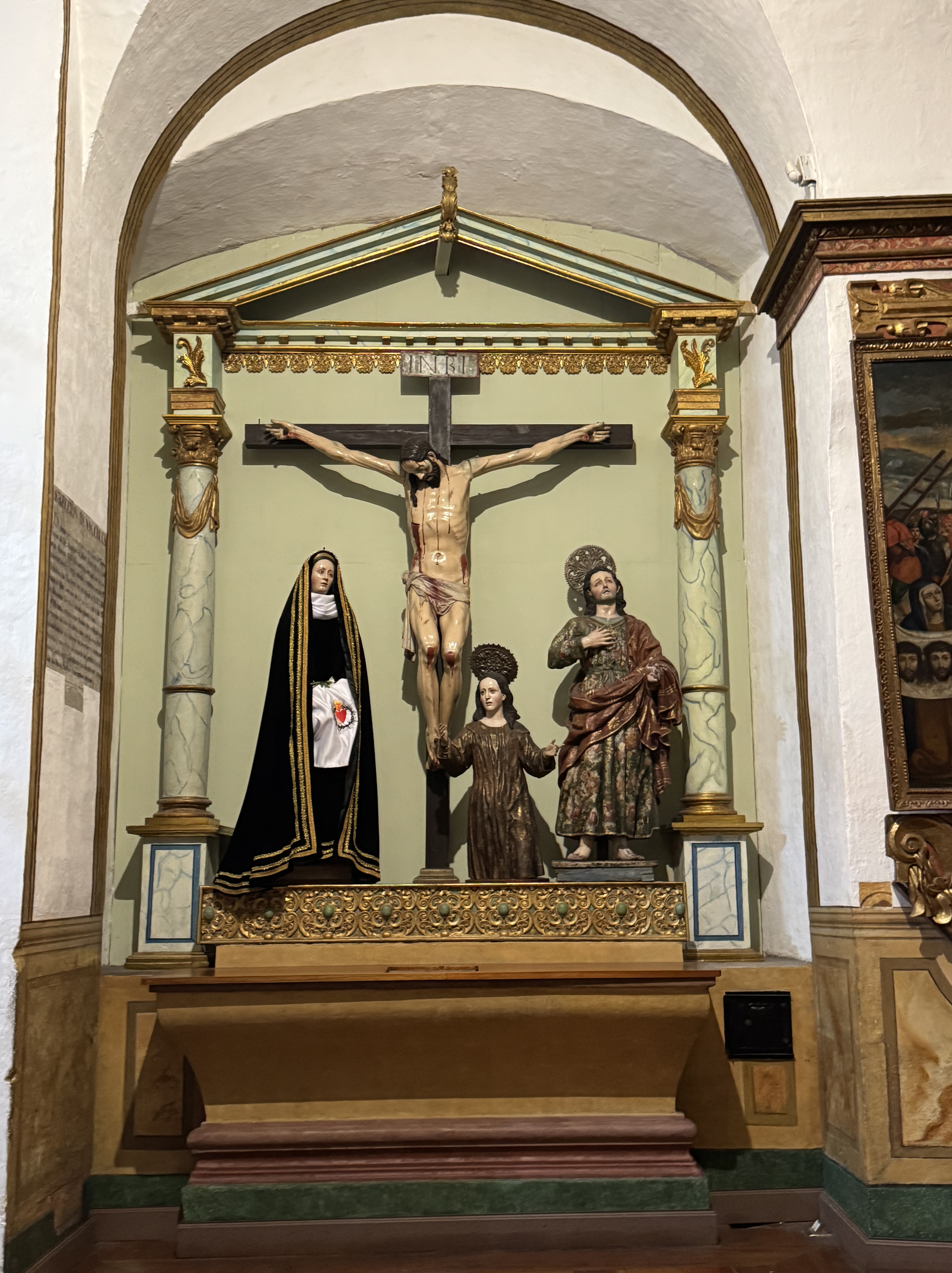

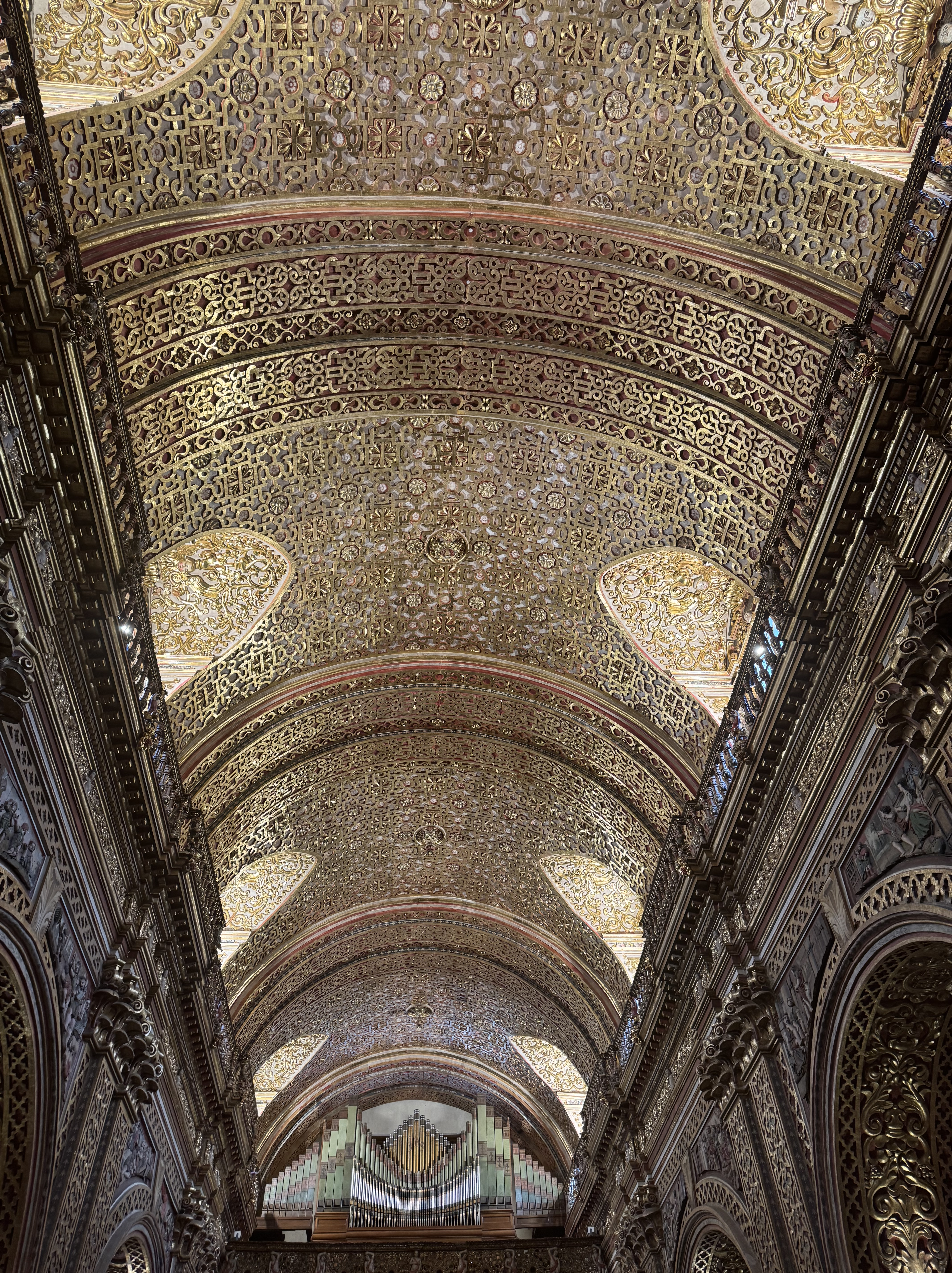
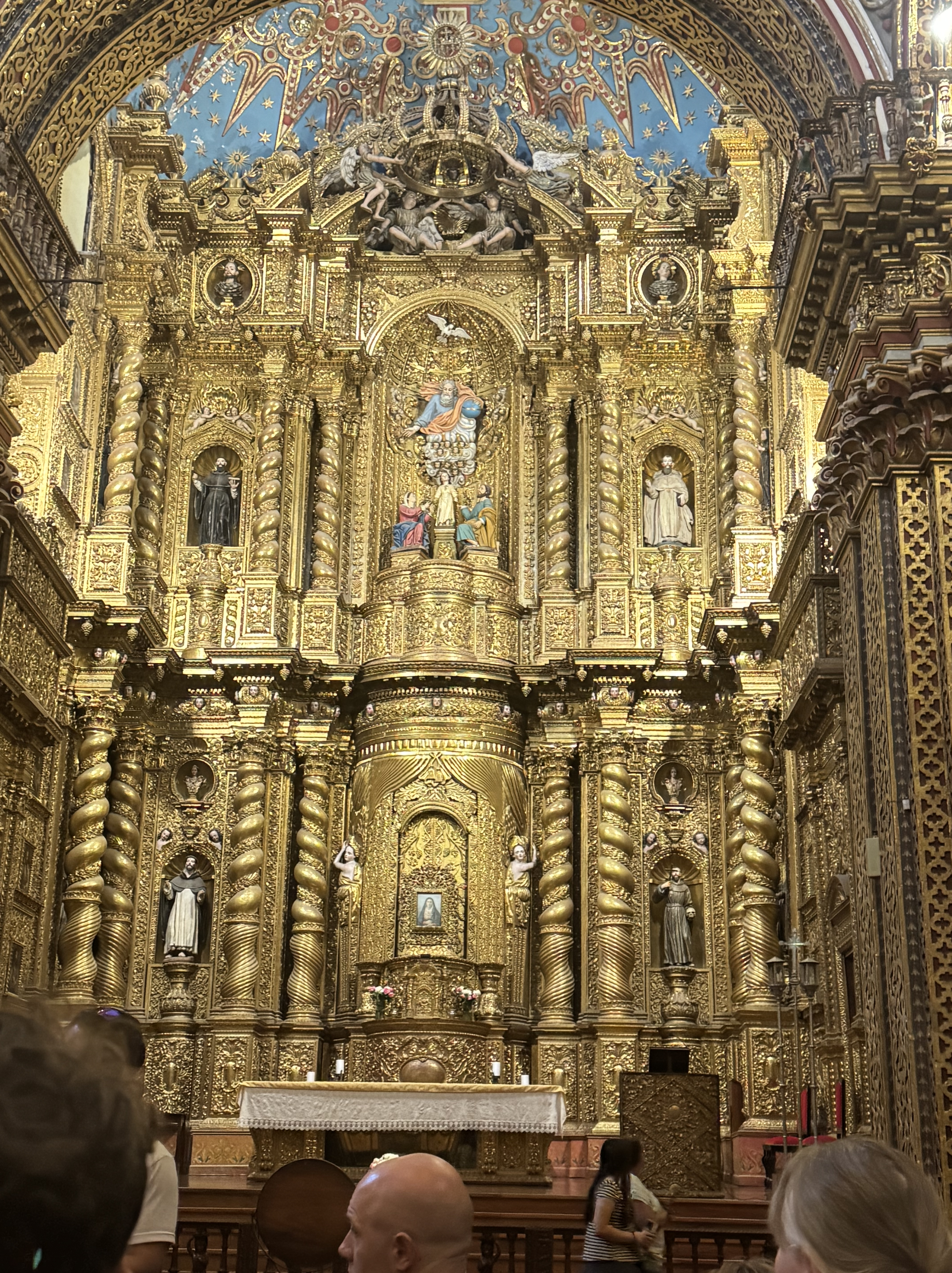
Compañía de Jesús church was built in the Baroque style between 1605 and 1765, with complete restoration completed between 1987 and 2005. The inside is covered in gold leaf. It was truly amazing and overwhelming to see so much gold.
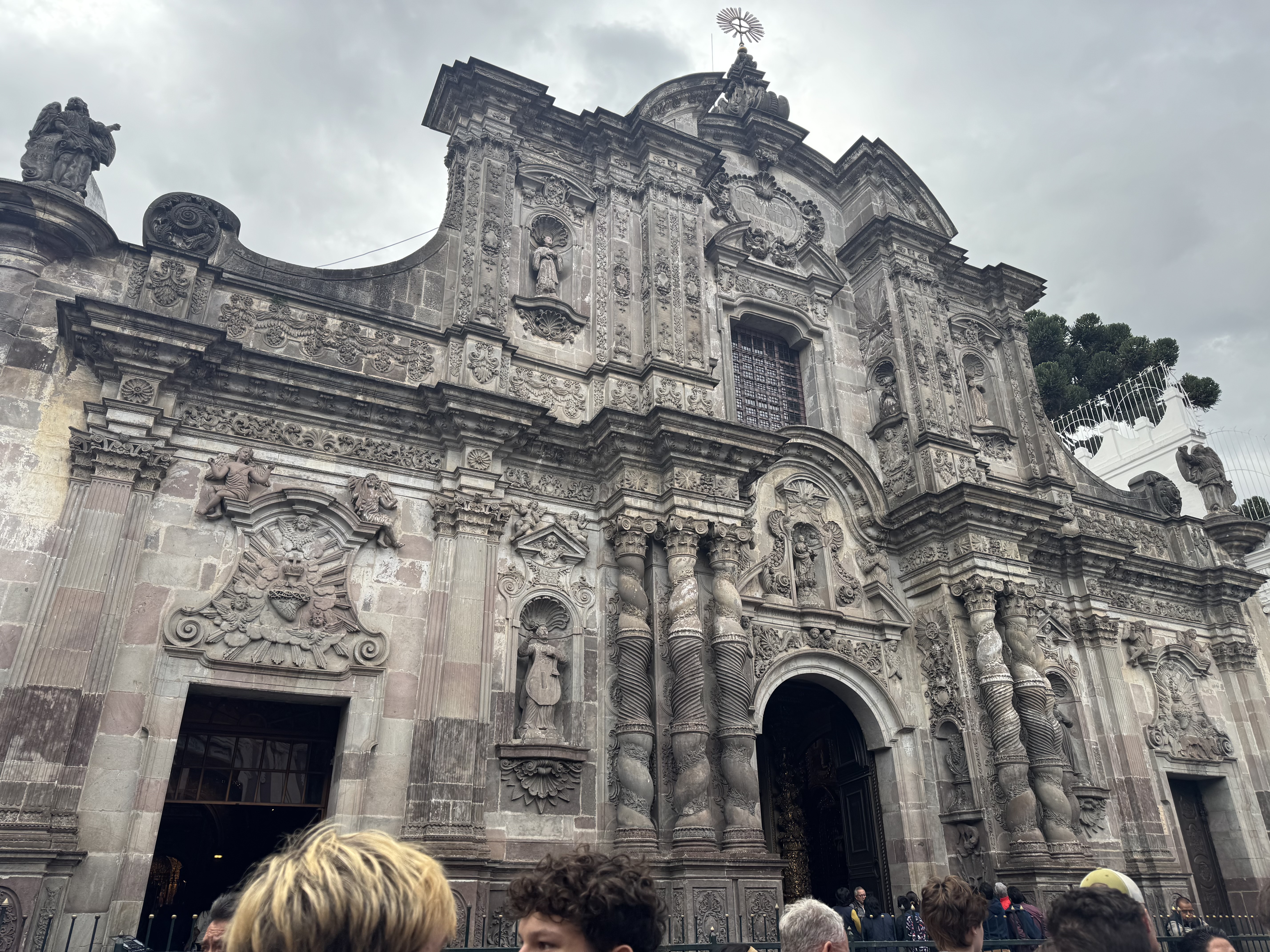
Society of Jesus church Compañía de Jesus church
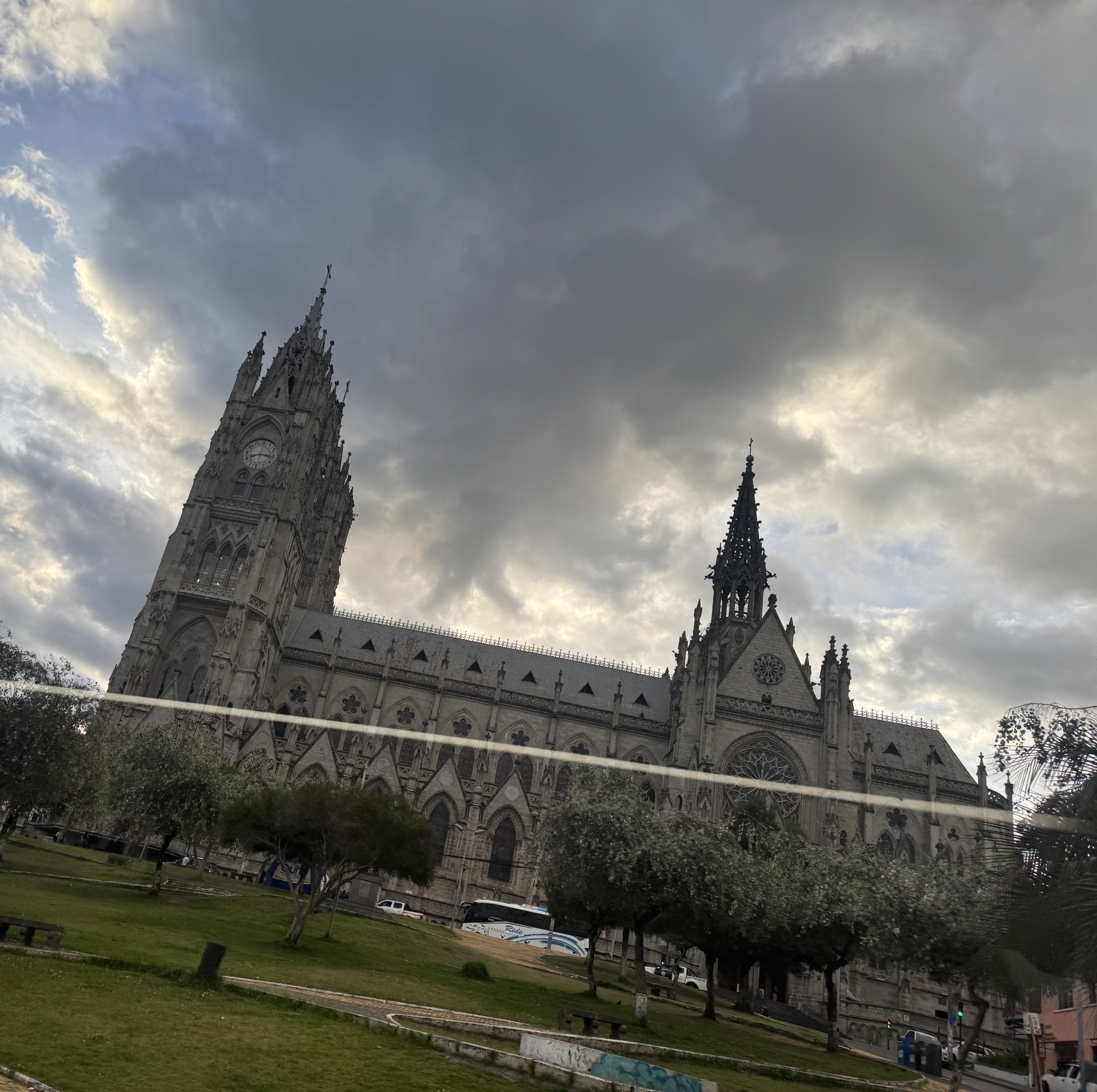
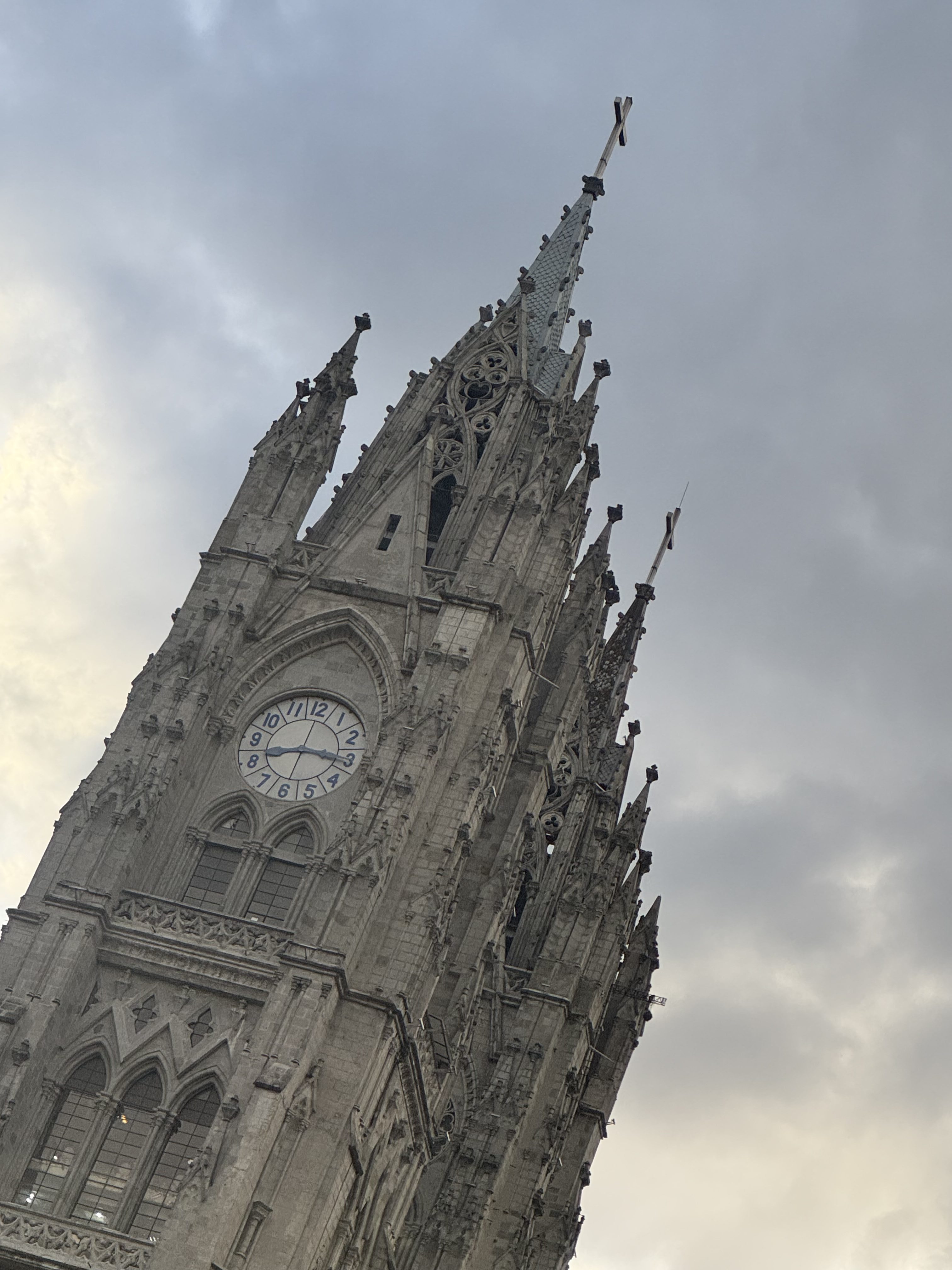
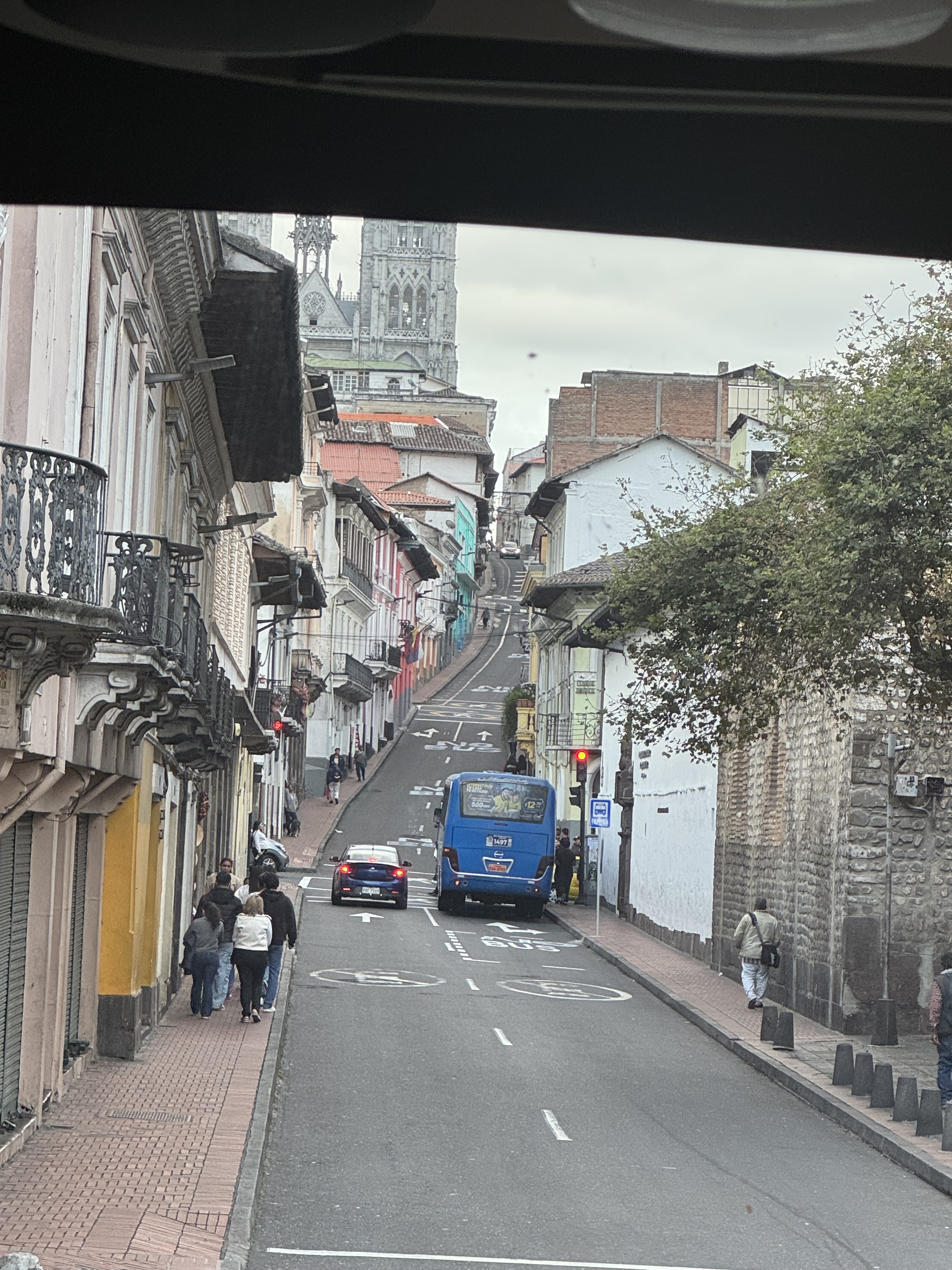
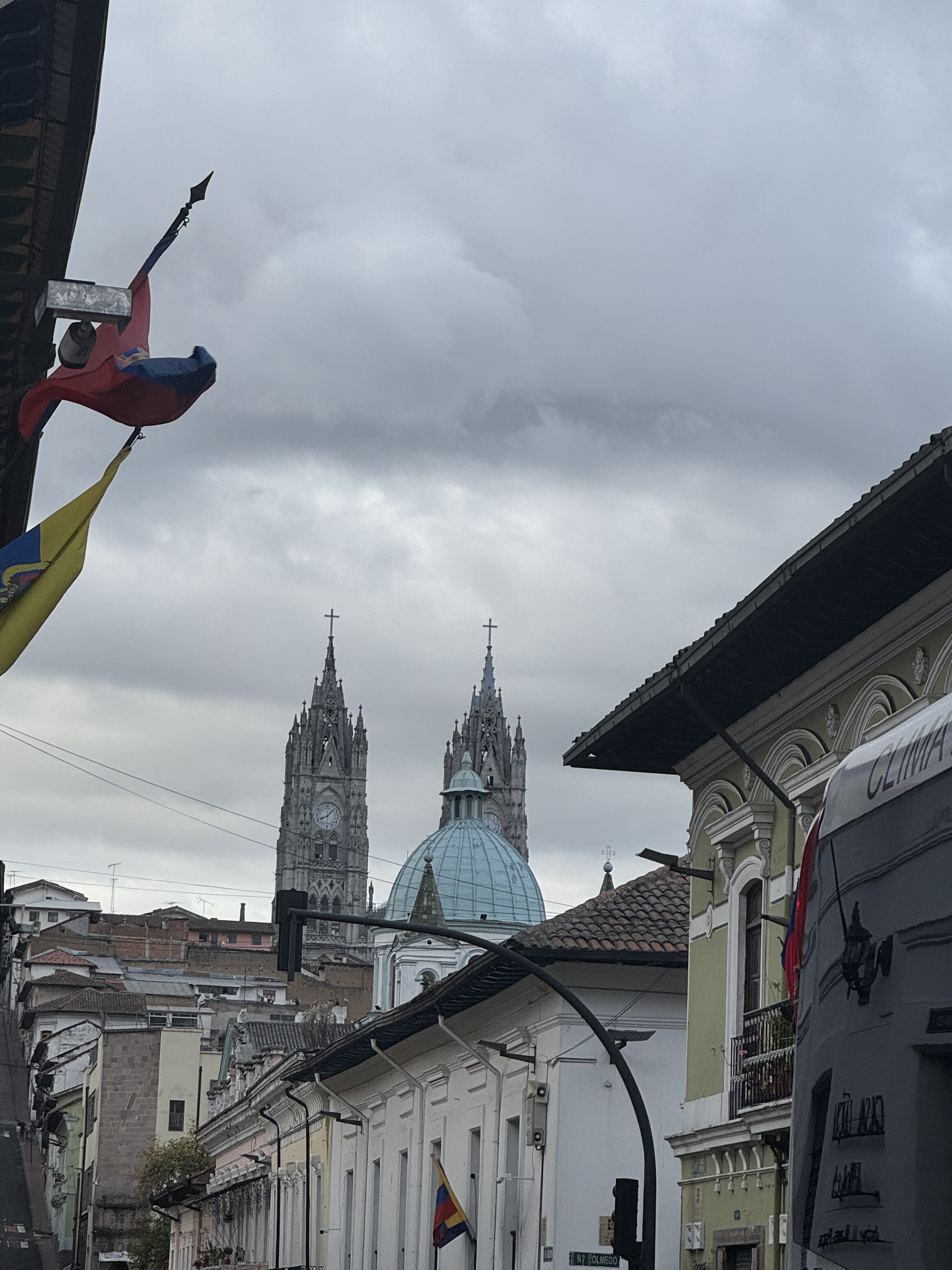
Basilica of the National Vow is built in the Neo-Gothic style. It was inspired by Notre-Dame de Paris. Construction began in 1892 but was not completed until 1988. It is known for the gargoyles and animals native to Ecuador (alligators, turtles, blue-footed boobies, monkeys, and pumas) on the exterior. (It was getting cloudy and ready to rain. Pictures from bus windows are never great.)
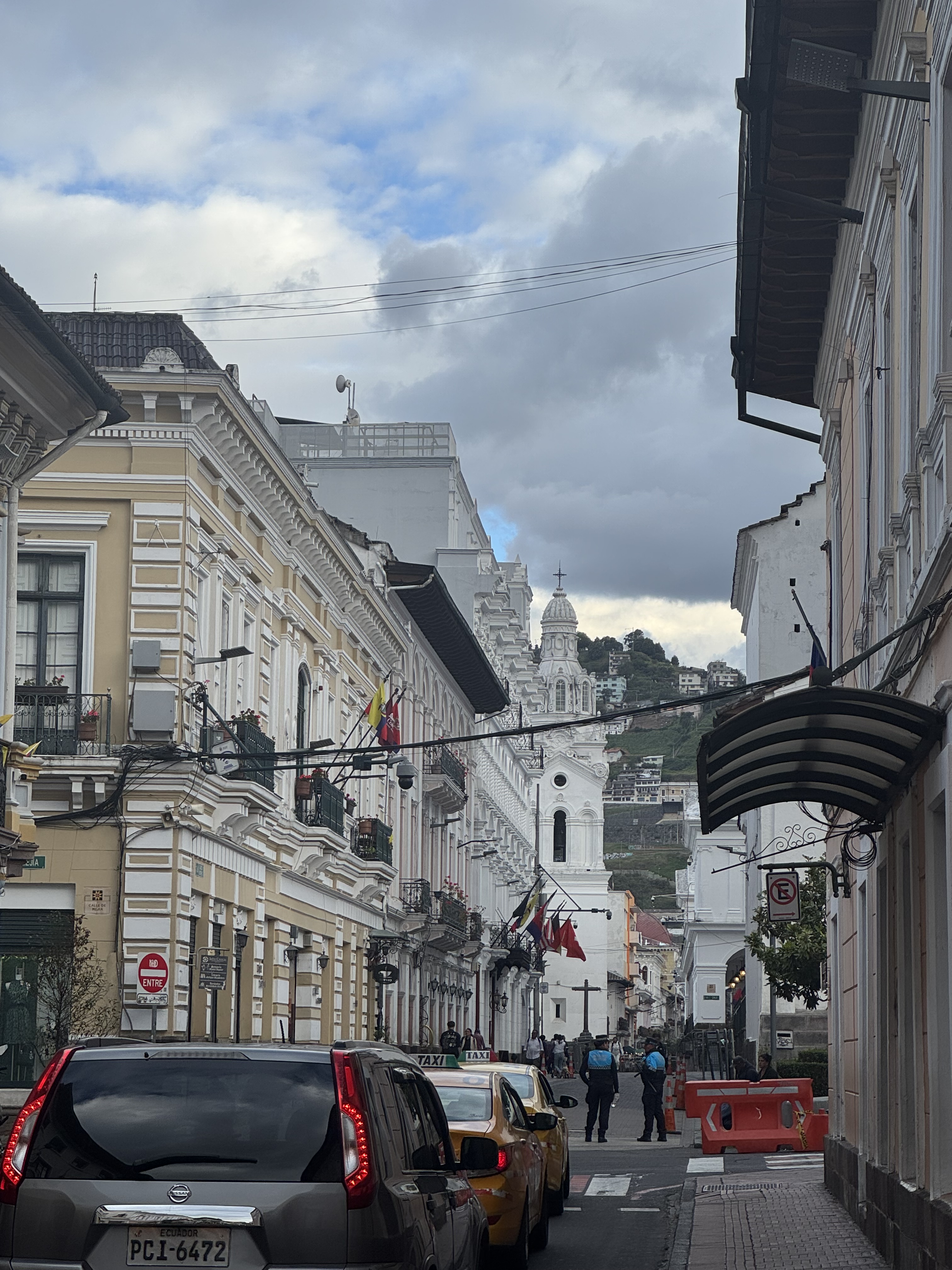
City tours are always interesting and fast-paced. Many quick street views, without always knowing exactly what you are seeing.
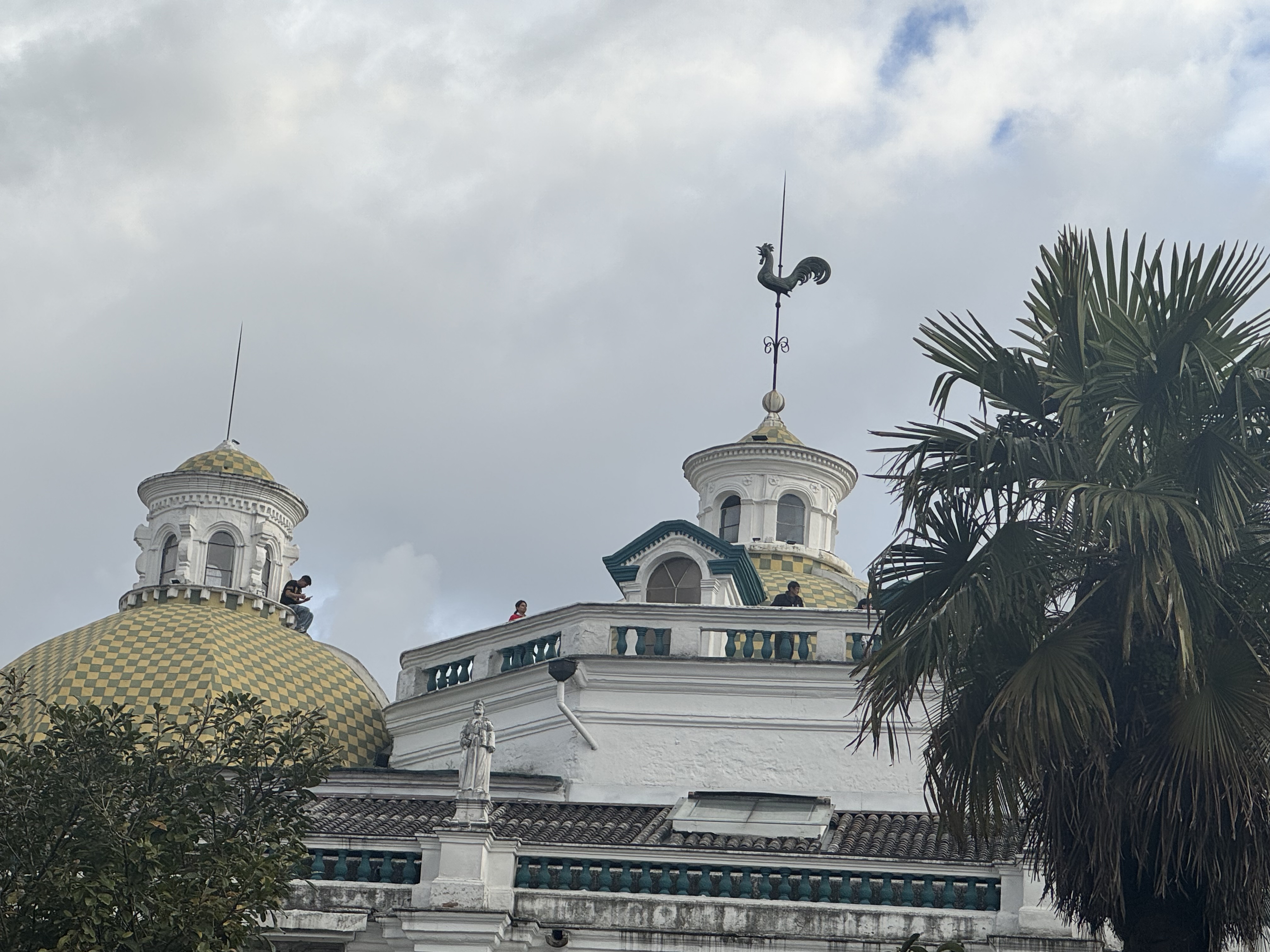
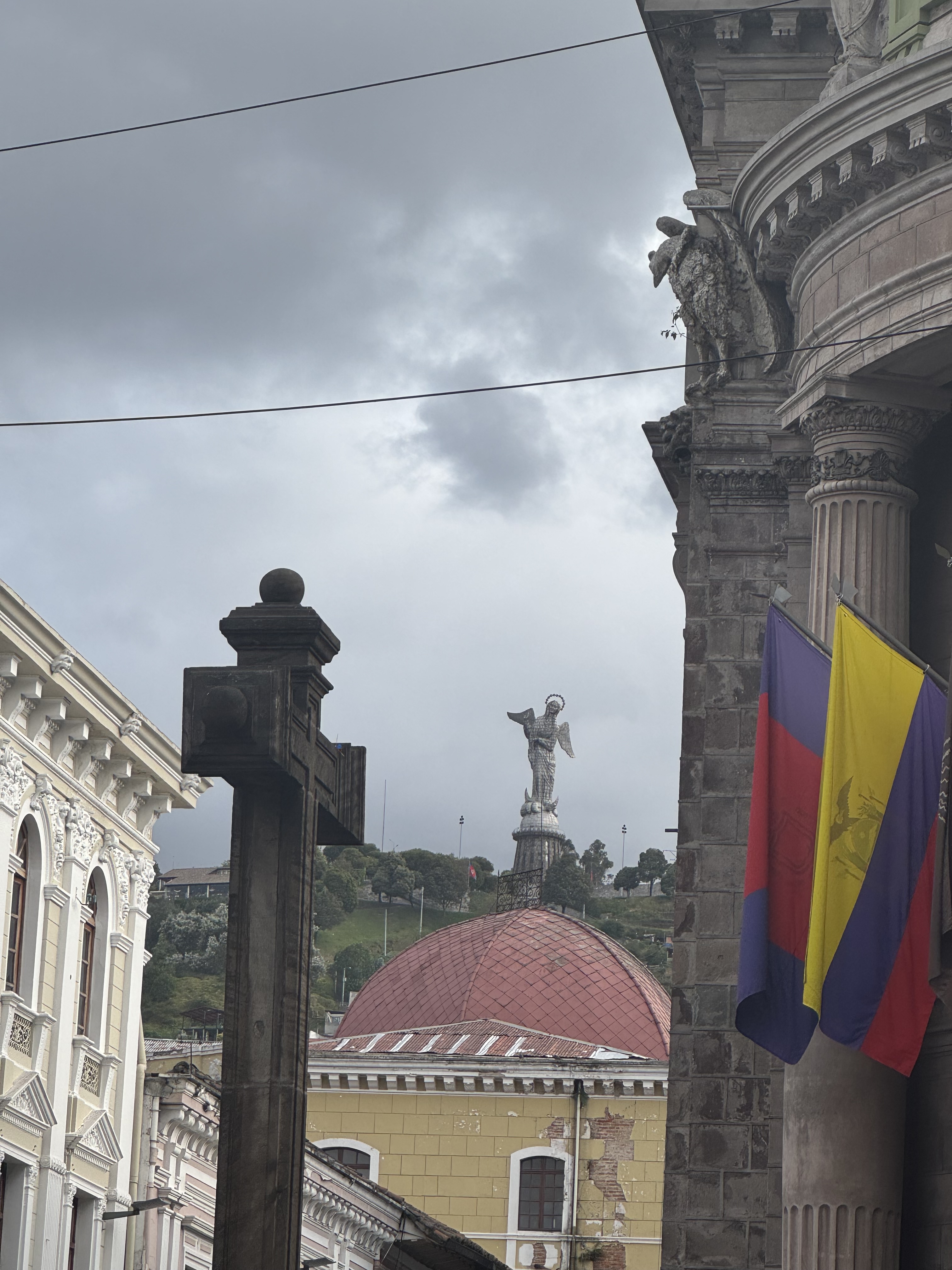
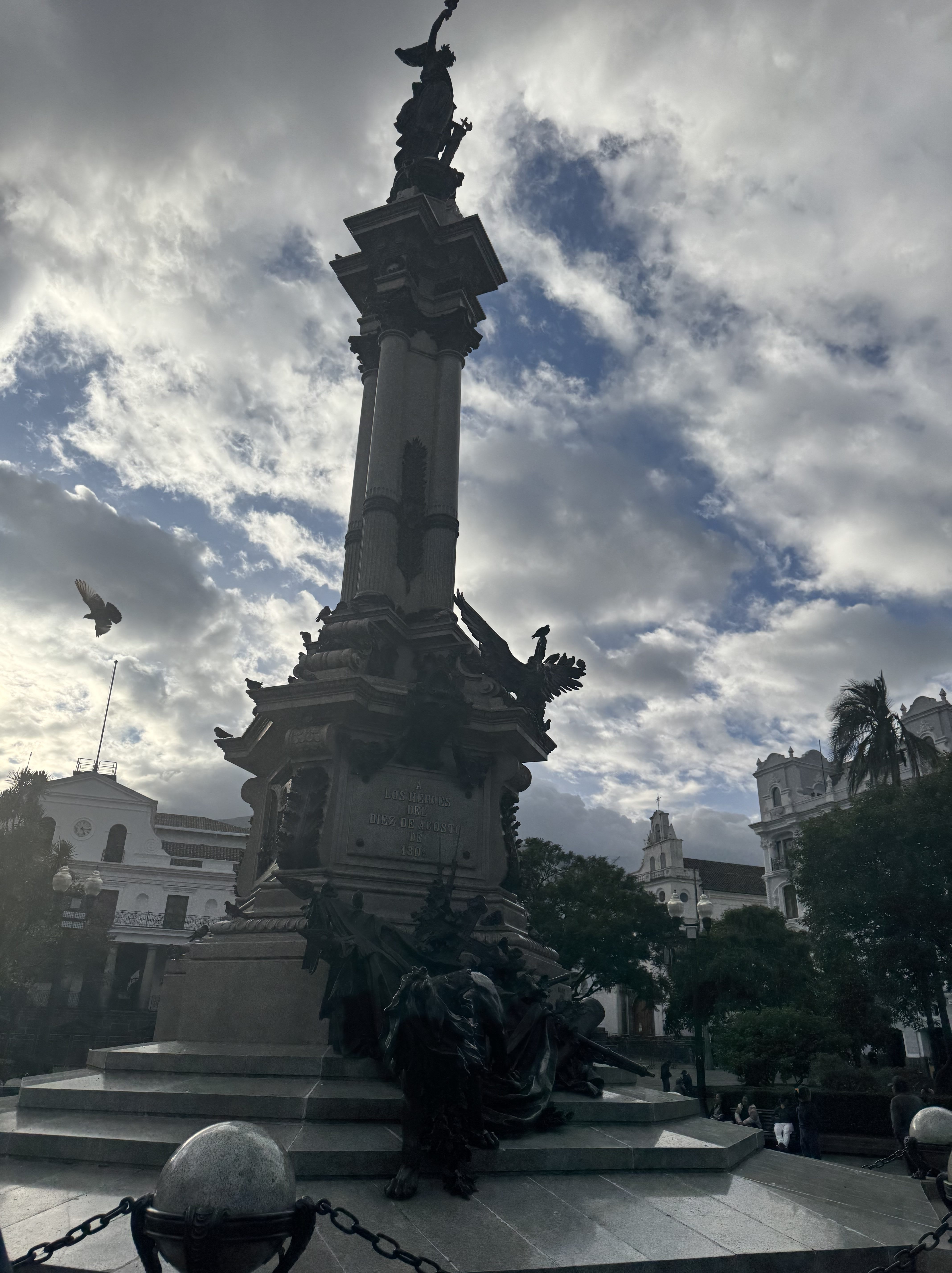
Monument of Independence in Independence Square honors the push for independence from the Spanish monarchy in 1809.
Day four – June 23, 2026
An early morning flight for our next adventure, the Galápagos Islands!
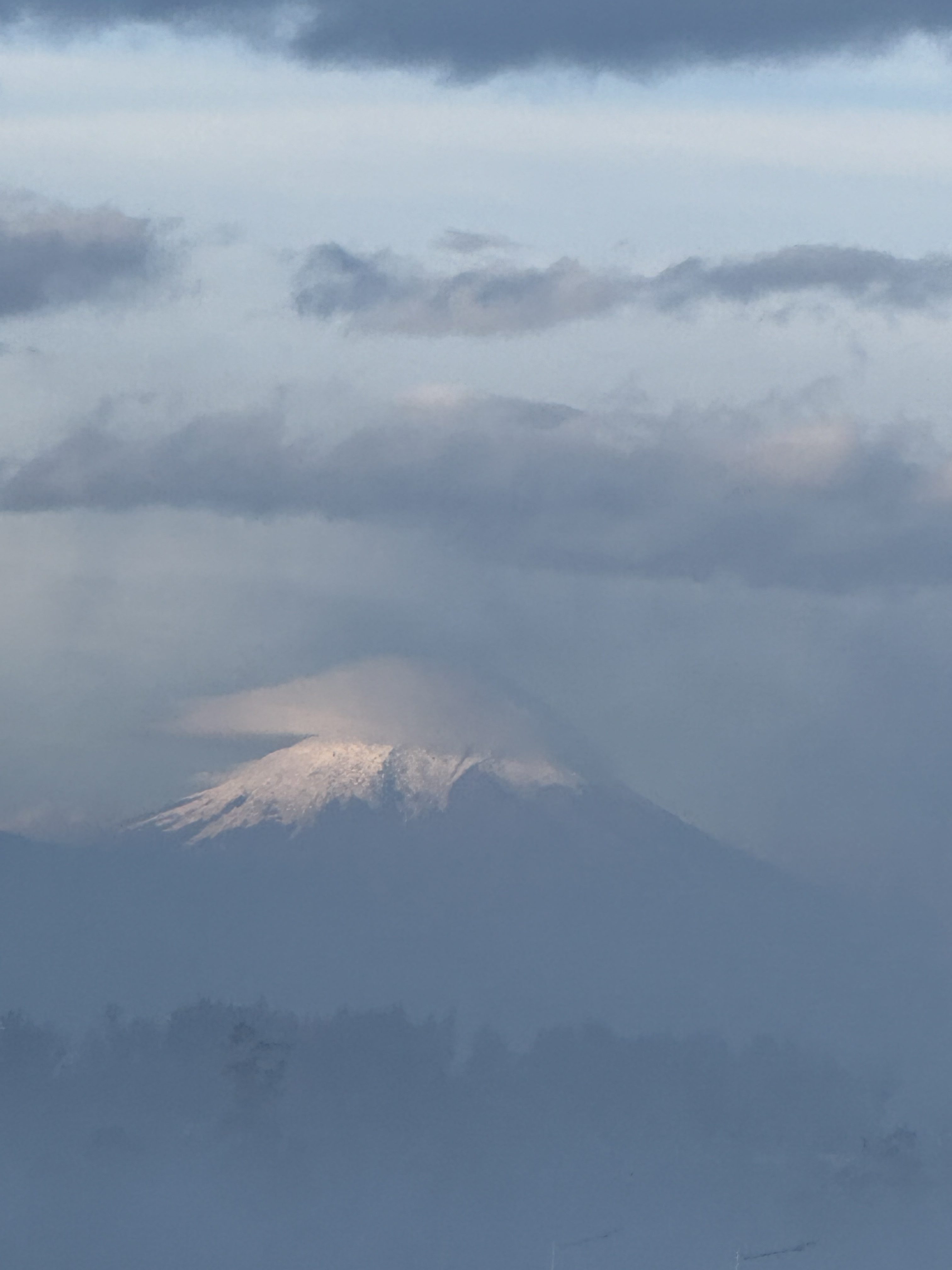
Cotopaxi Volcano – one of the world’s highest active volcanoes
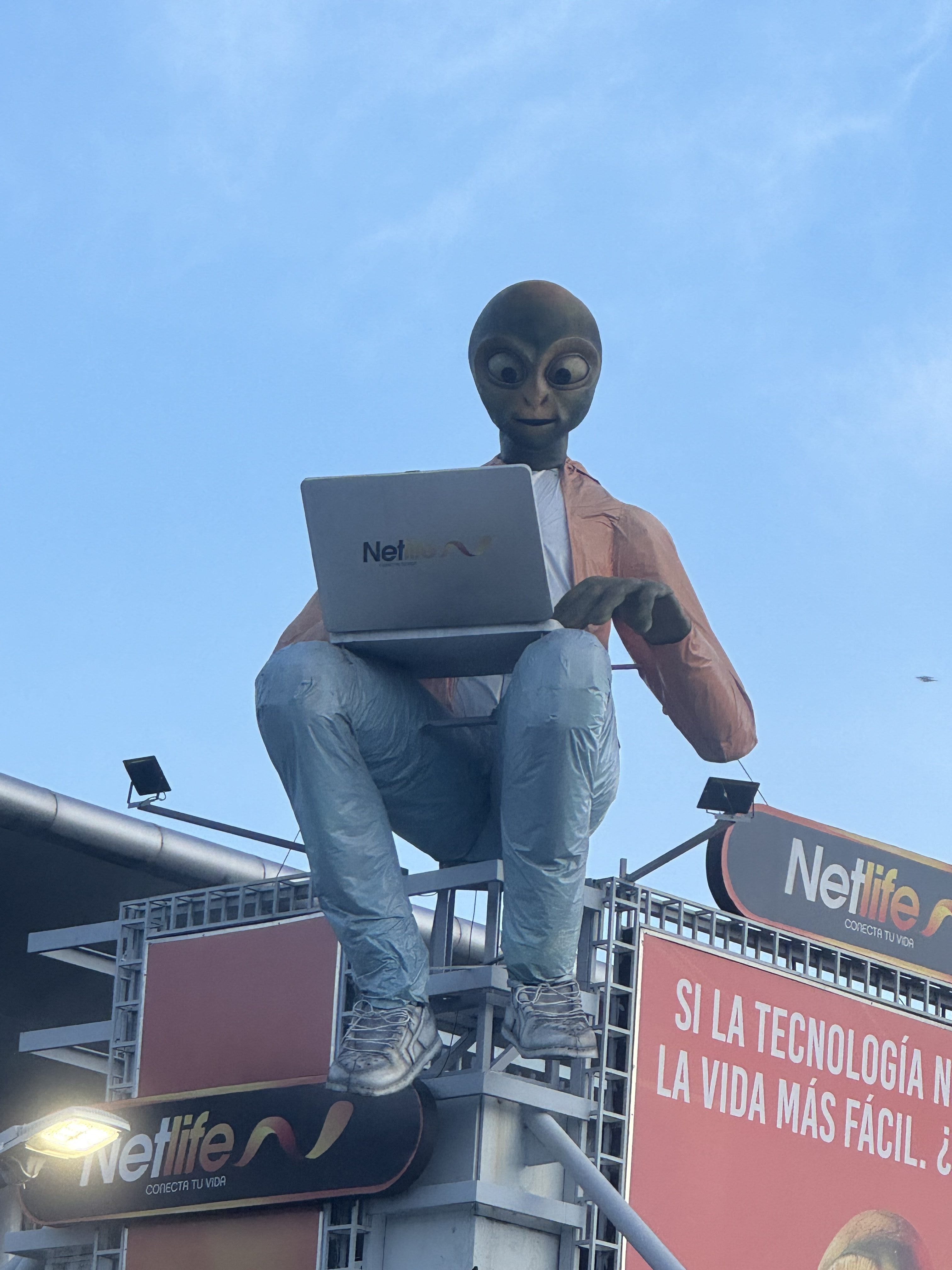
Mariscal Sucre International Airport, Tababela, Ecuador
We arrived at Baltra after a short layover in Guayaquil, where more passengers boarded. Baltra Island is a small island located in the center of the Galápagos Archipelago, which contains the Seymour Airport built by the Army Air Corps (now the United States Air Force) during World War II.
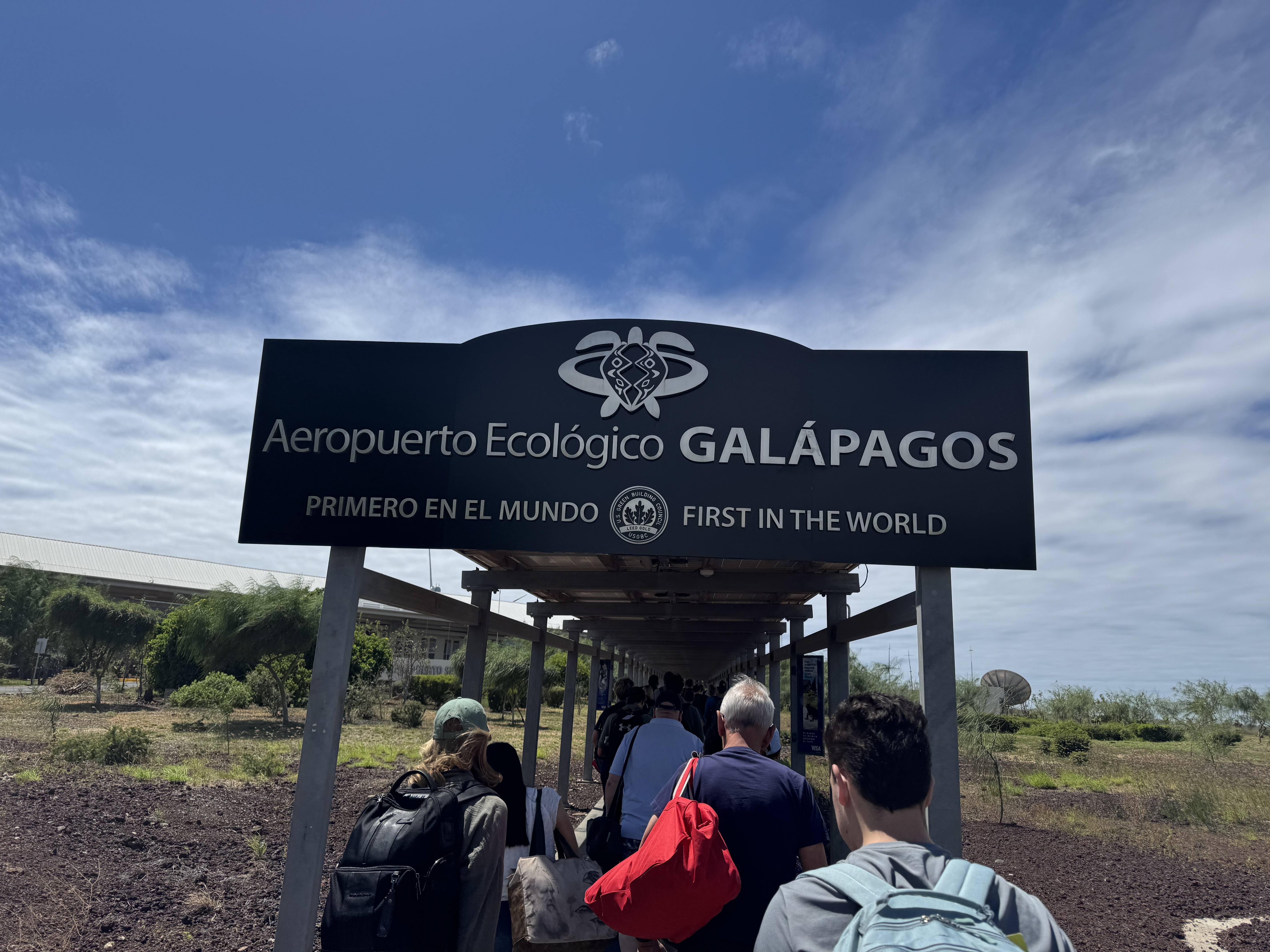
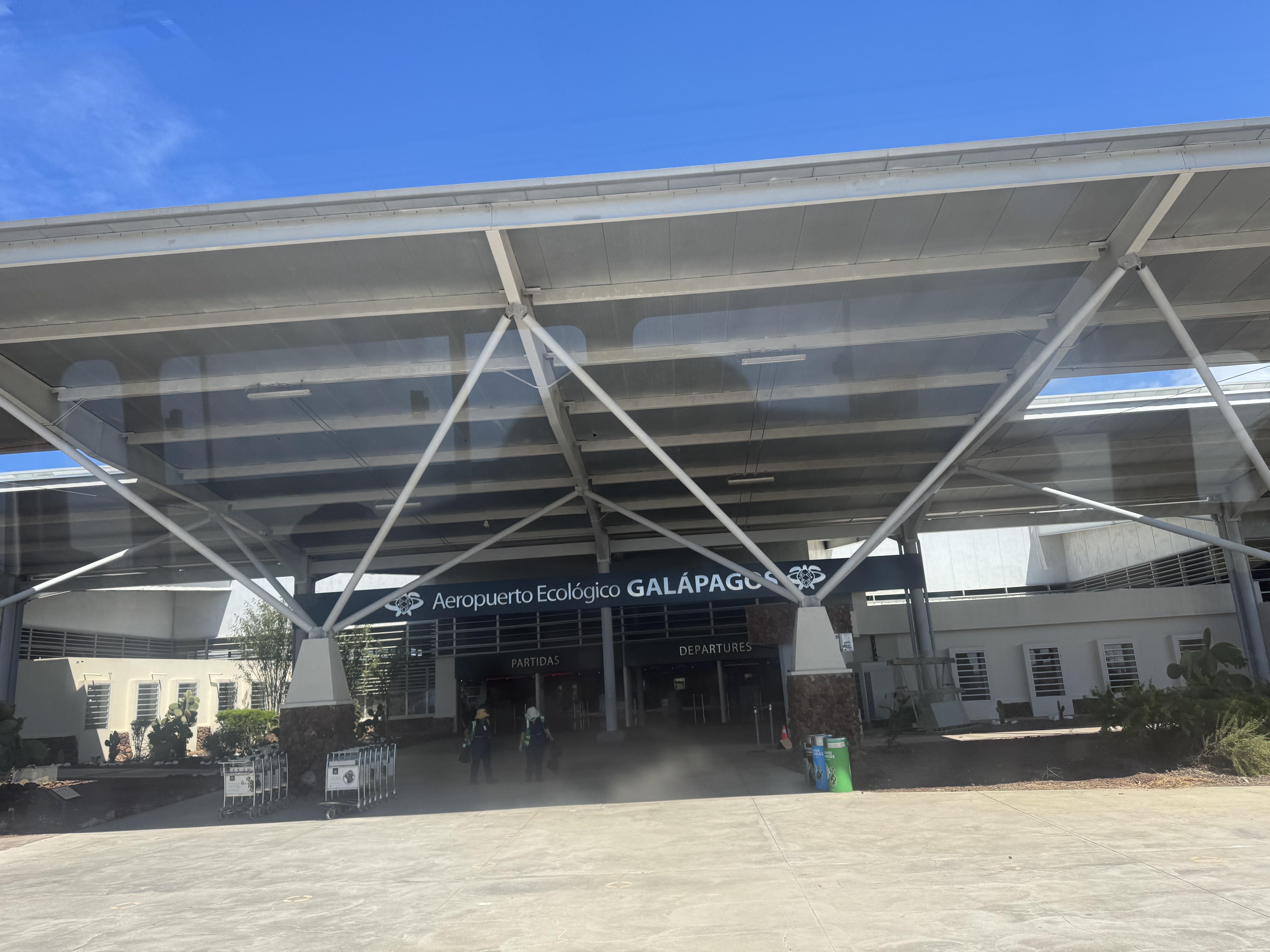
After waiting in line to have our paperwork processed and bags scanned, we boarded a shuttle taking us to a dock on the edge of the island. There is very close screening of people entering the islands. We had to complete an application much like a visa in advance of arrival. Our bags, purses, jackets, and backpacks were all X-rayed to ensure no seeds, fruits/vetegables, or meats were being brought to the islands. These precautions are so important to maintain the unique ecosystems in the Galapagos.
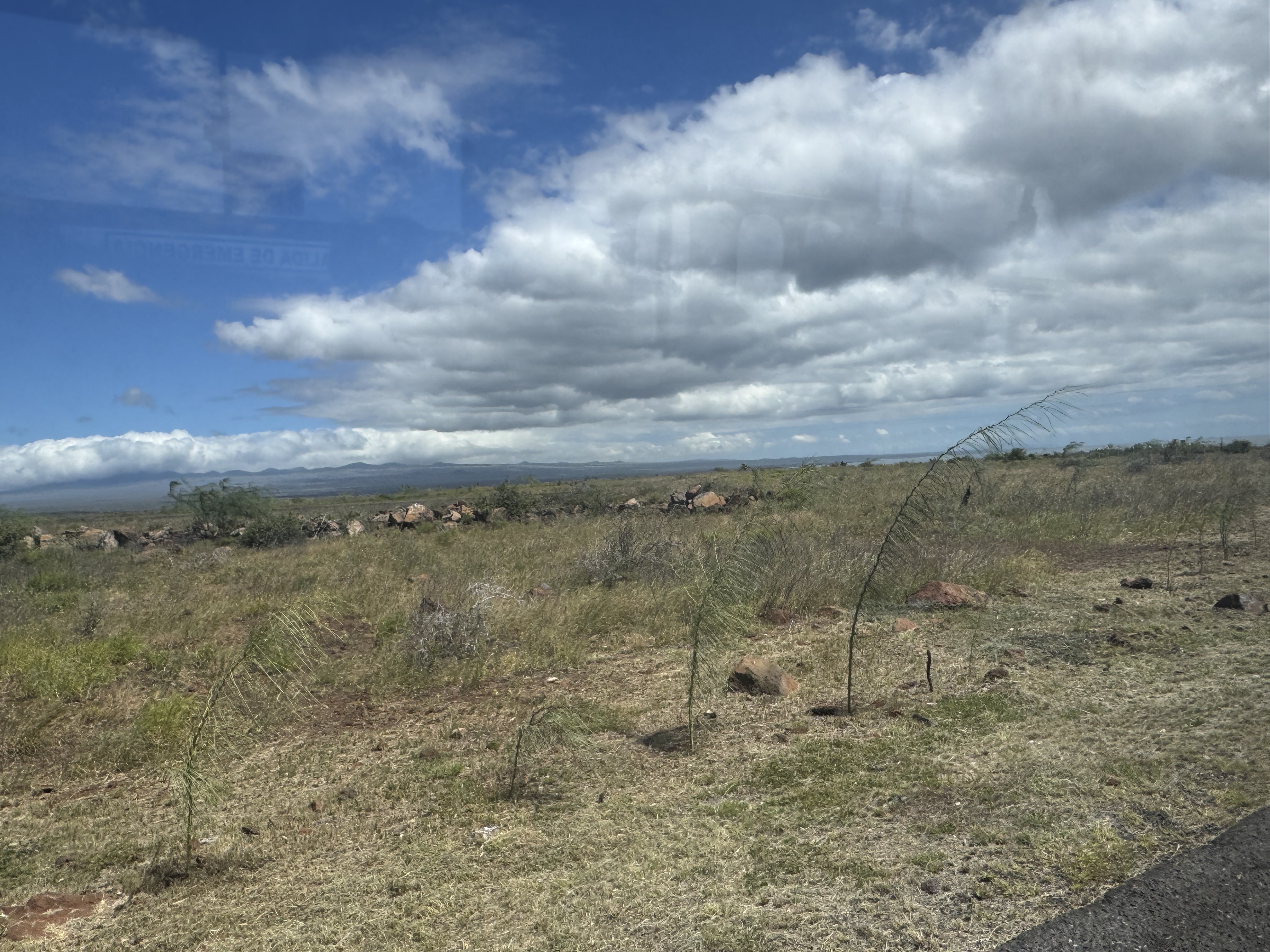
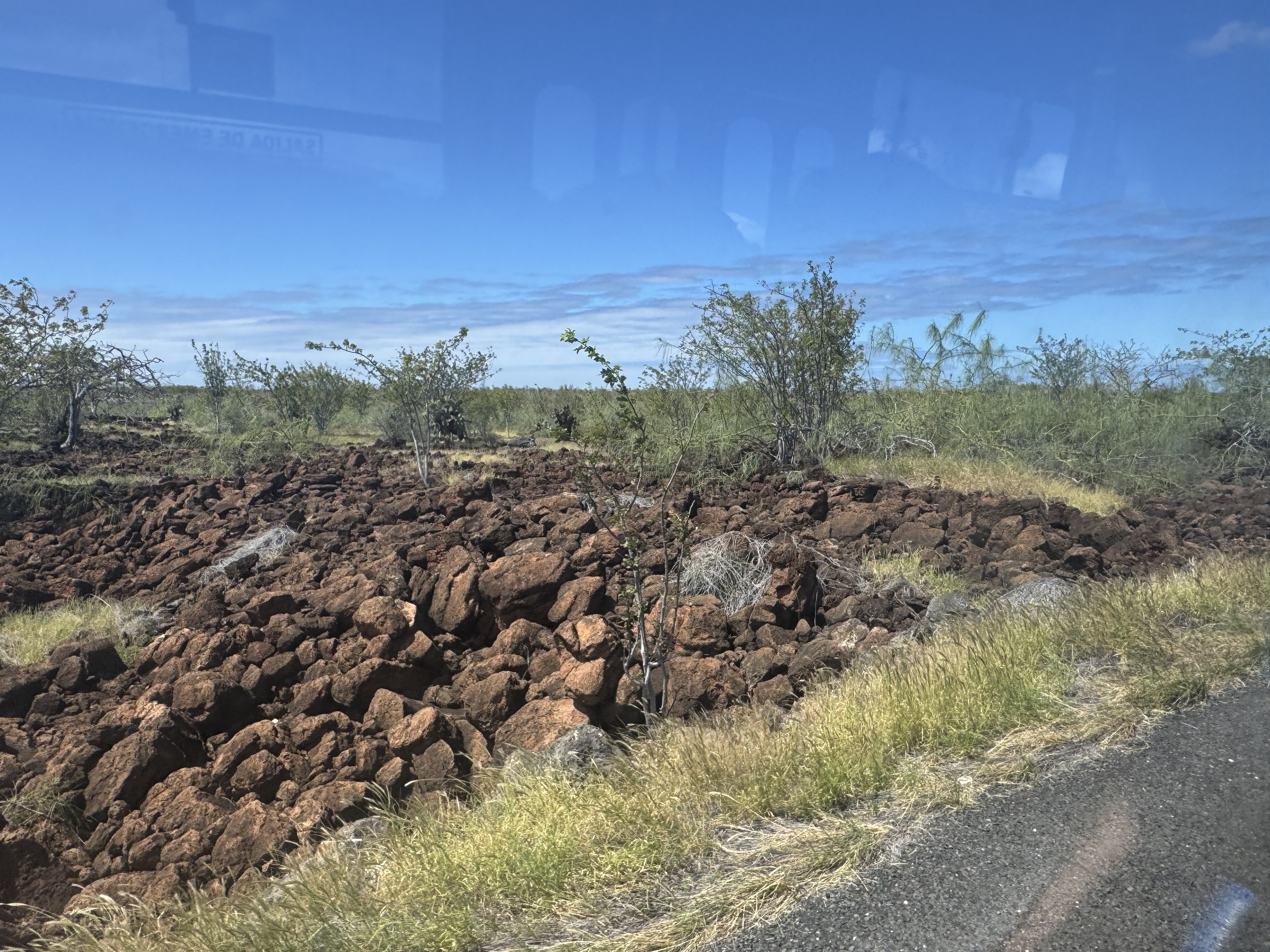
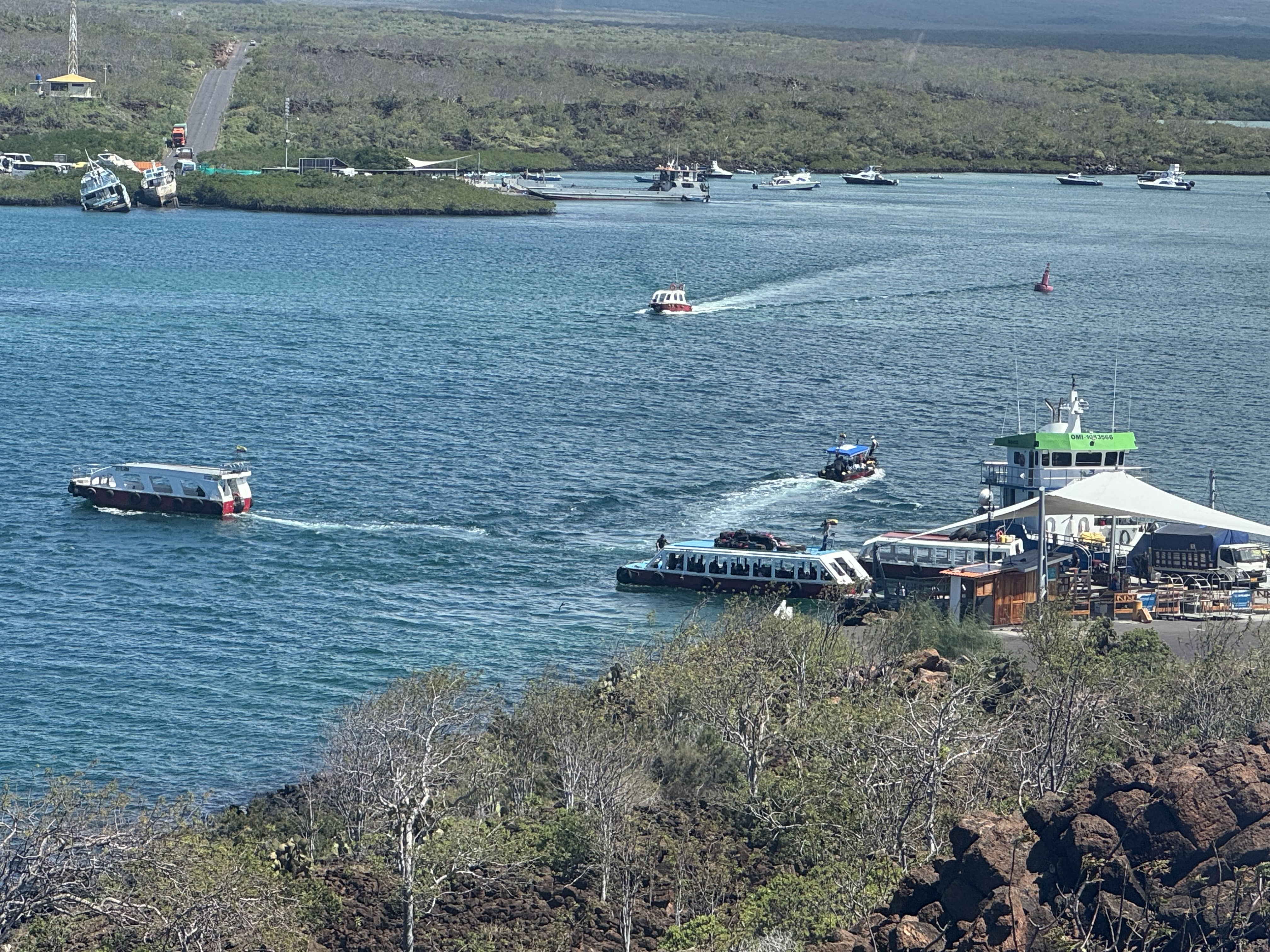
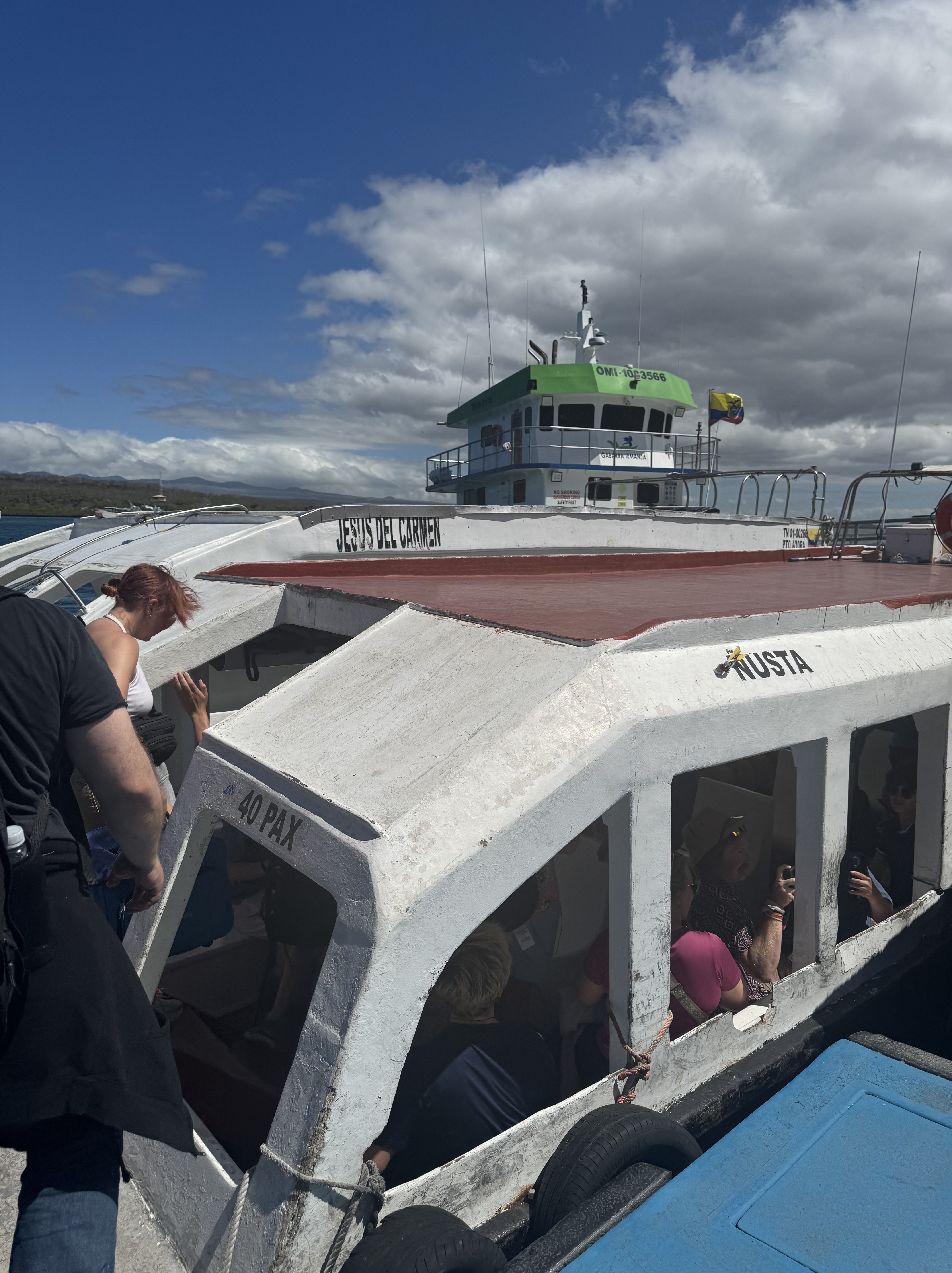
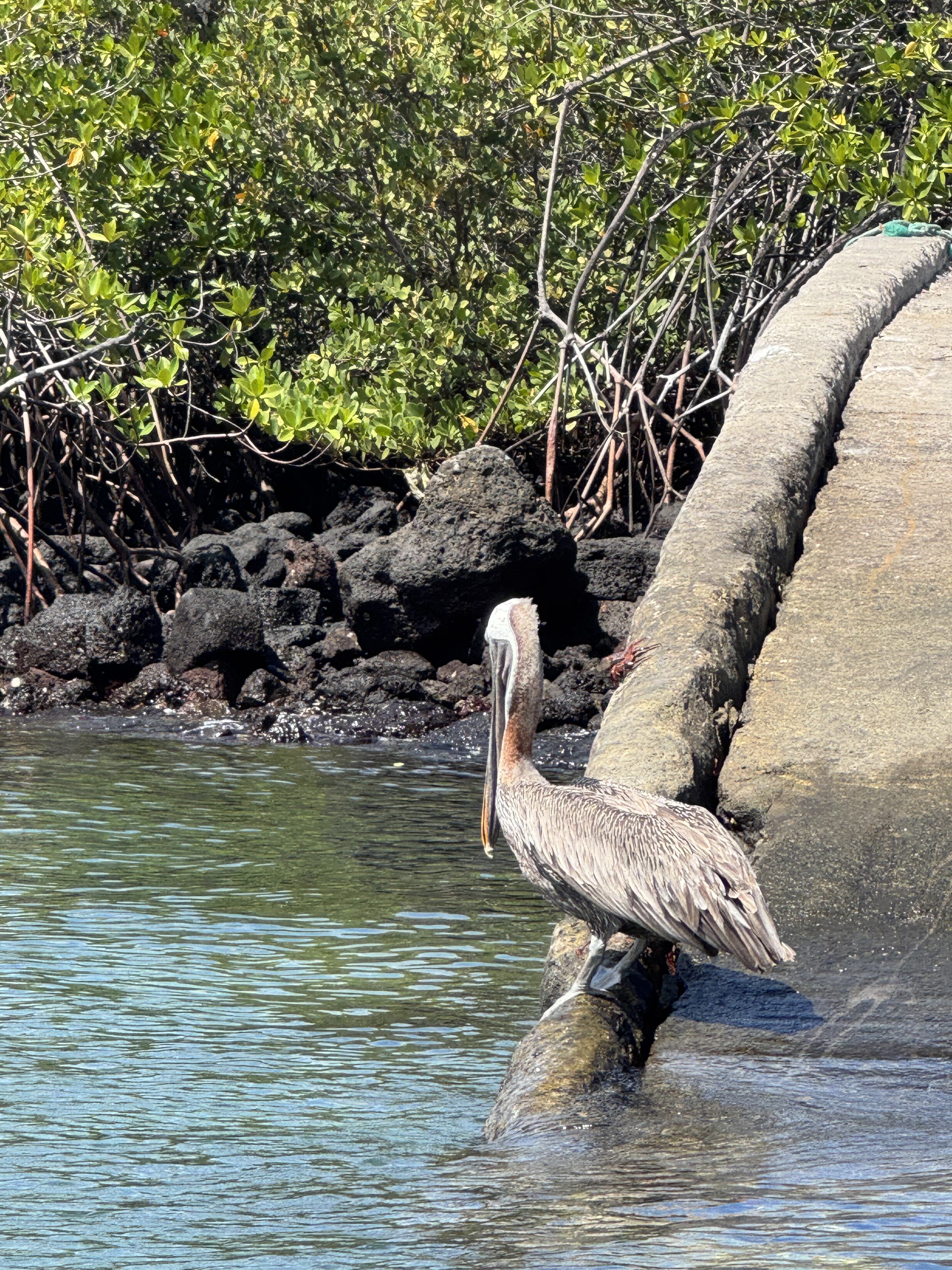
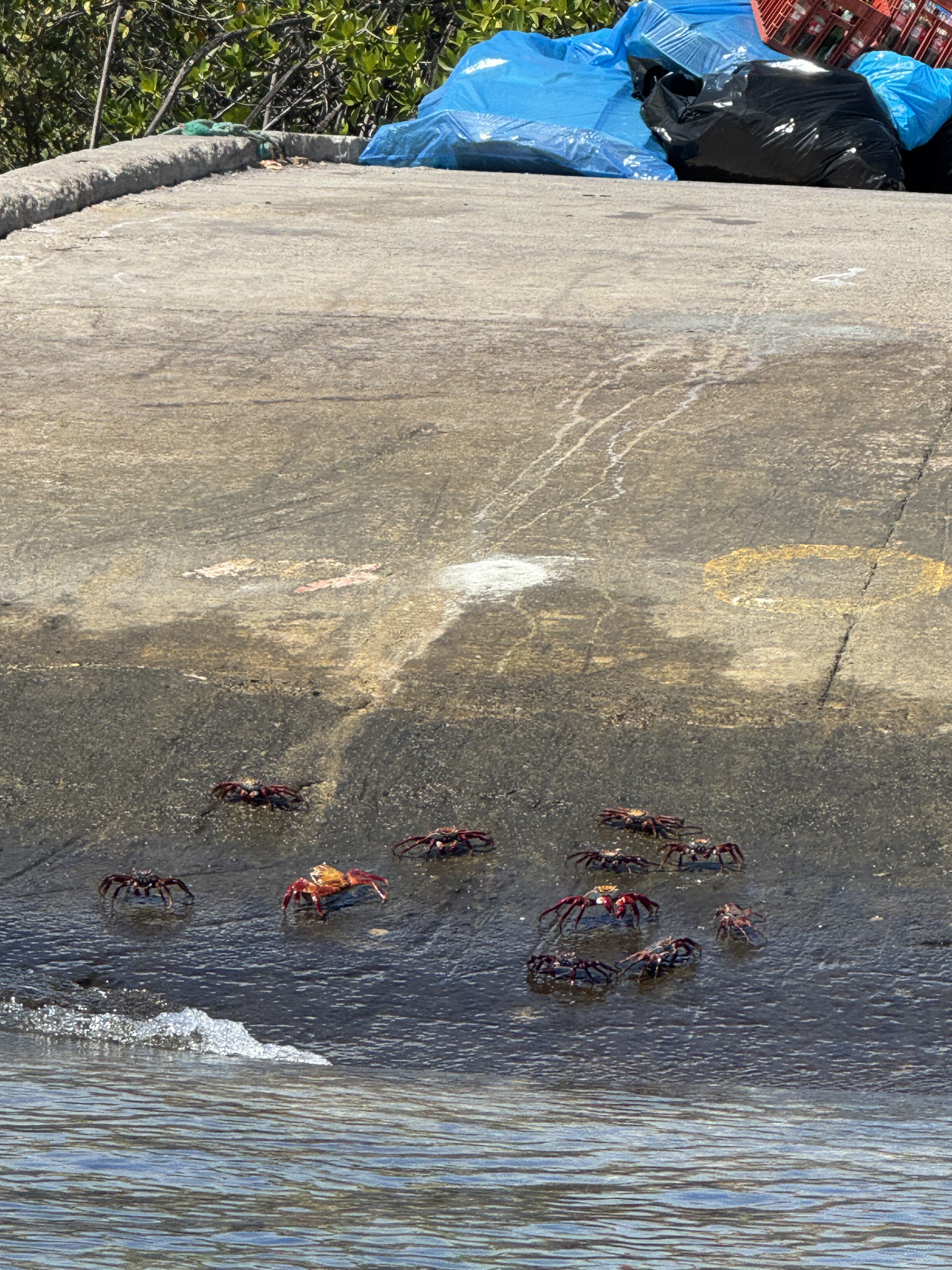
From Baltra Island, we took a ferry to Isla Santa Cruz. Then boarded a tour bus to start learning about the Galapagos Islands.
As we traveled to Primicias Ranch for lunch, we learned about how the islands were formed through volcanic activity. We viewed a volcanic crater.
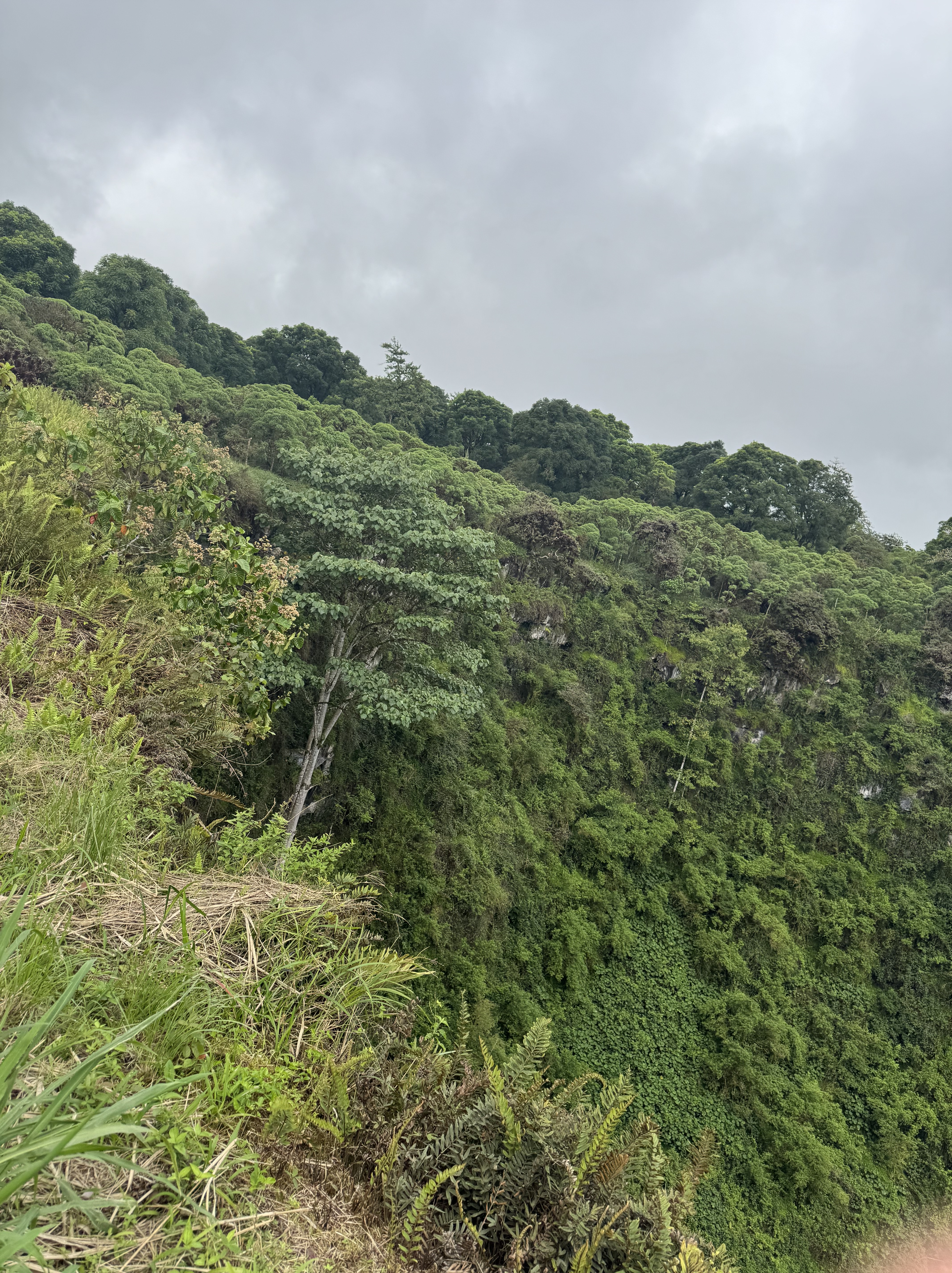
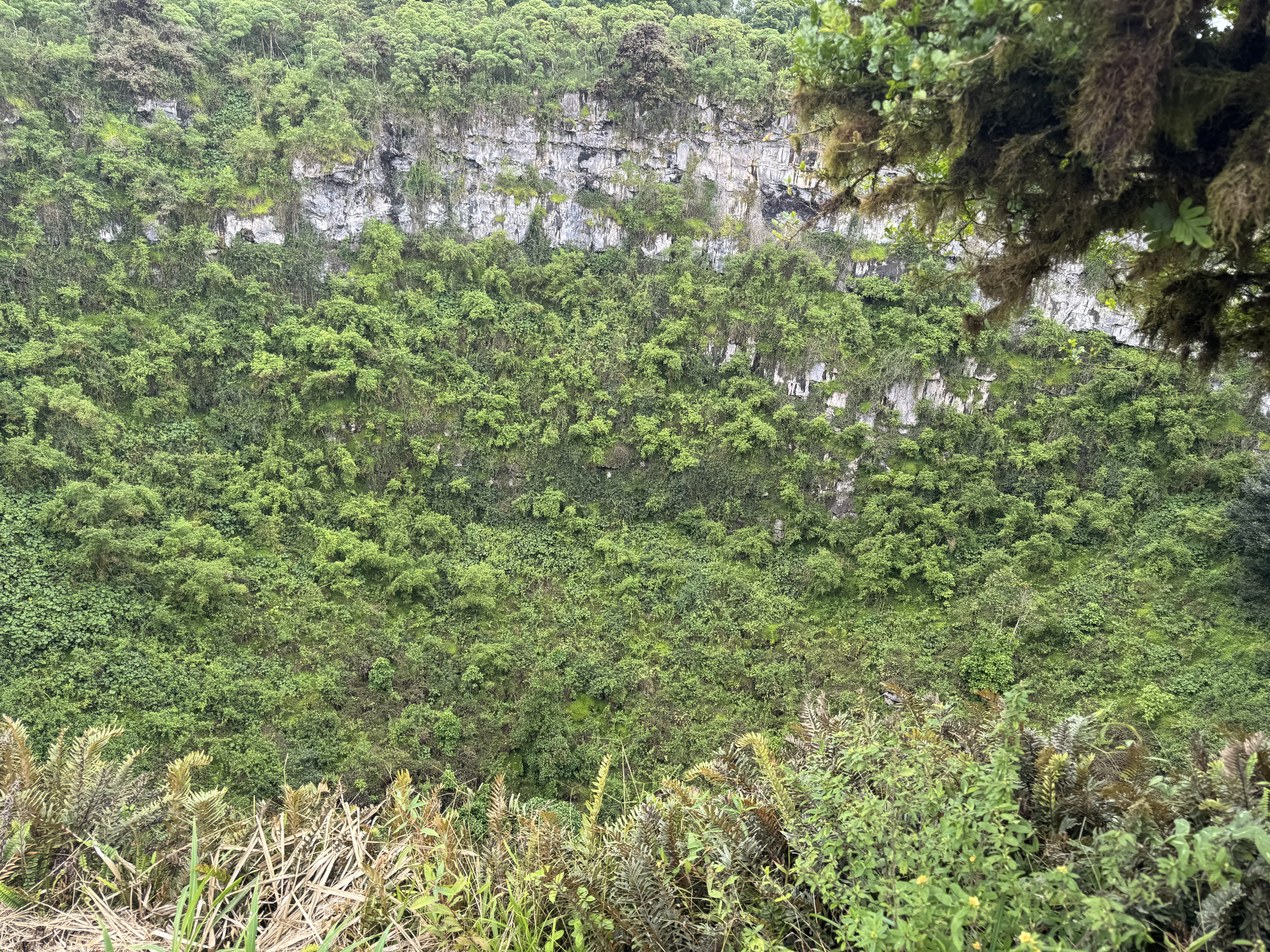
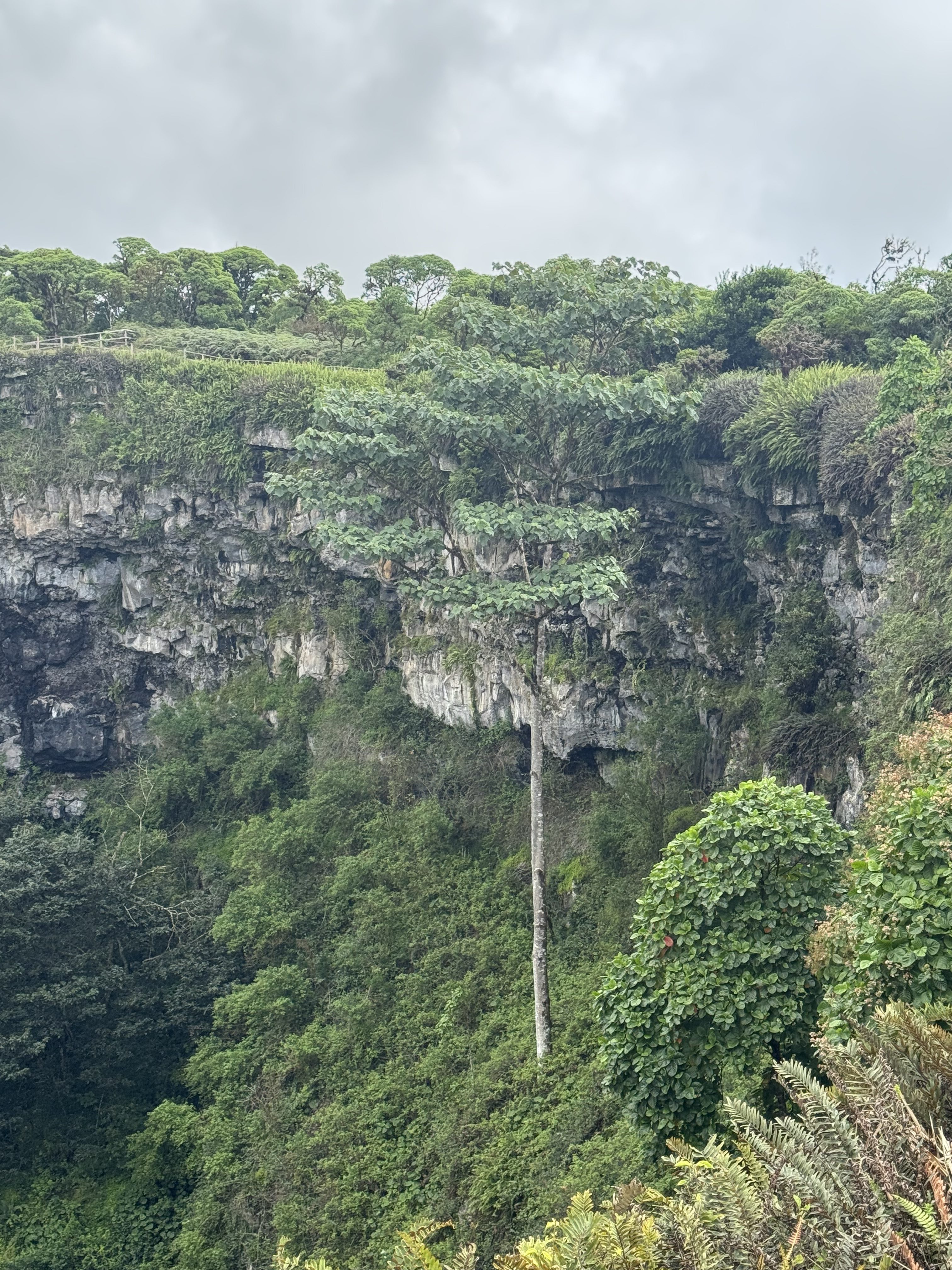
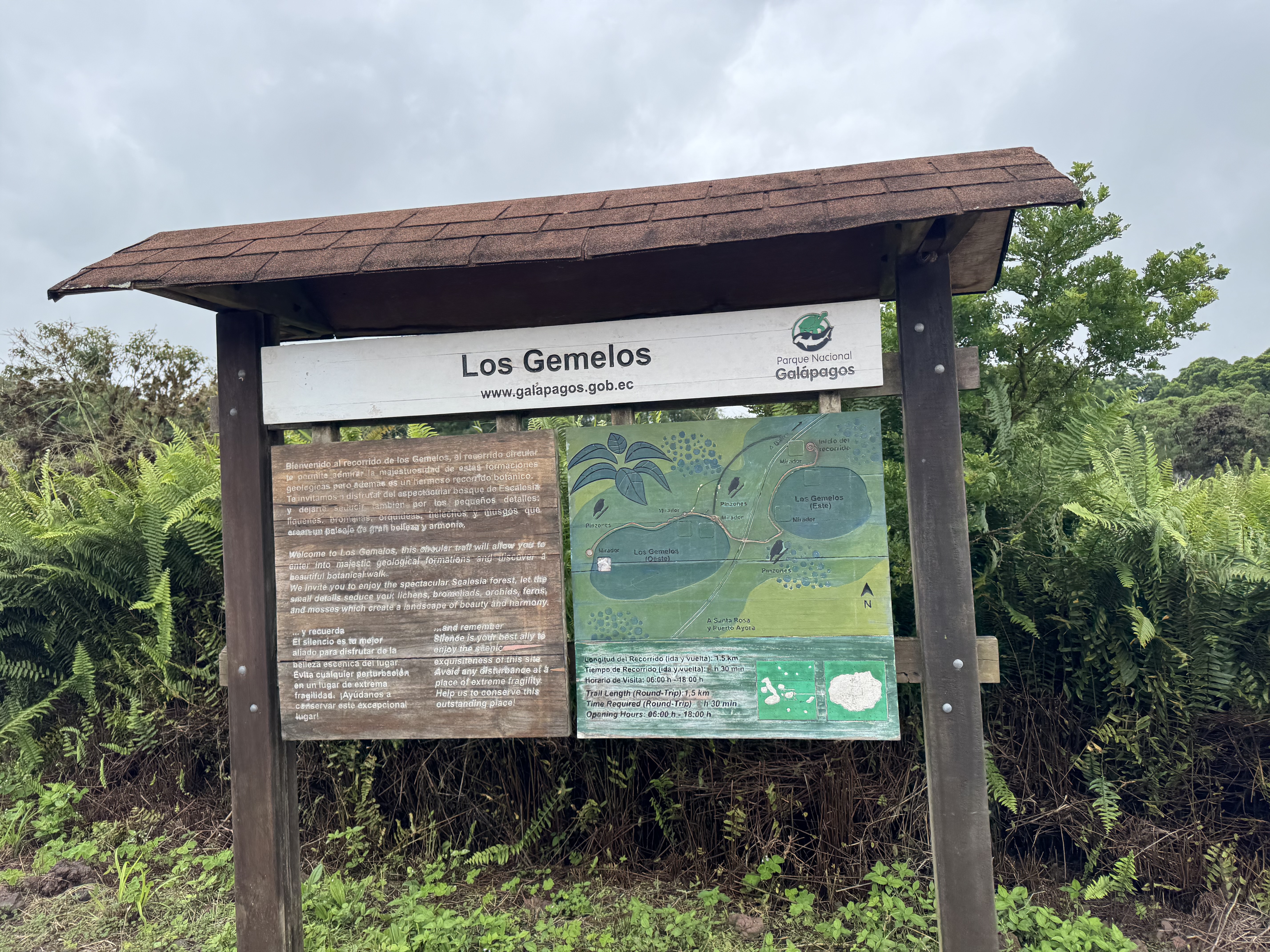
Our next stop was the Primicias Ranch for lunch and to wander the fields, observing the giant tortoise.
Lunch: pumpkin soup, tuna steak, and coffee-flavored dessert
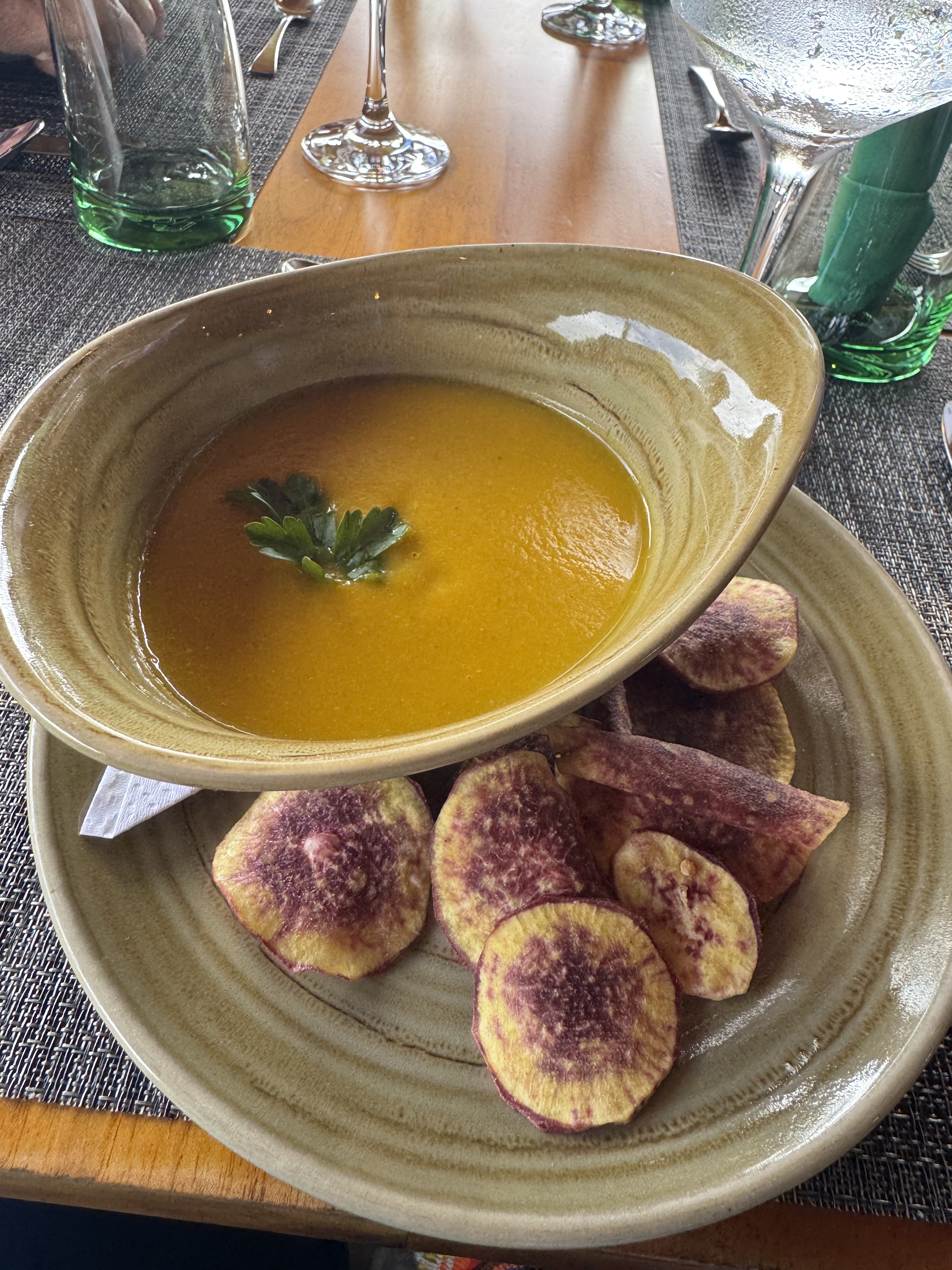
Pumpkin soup
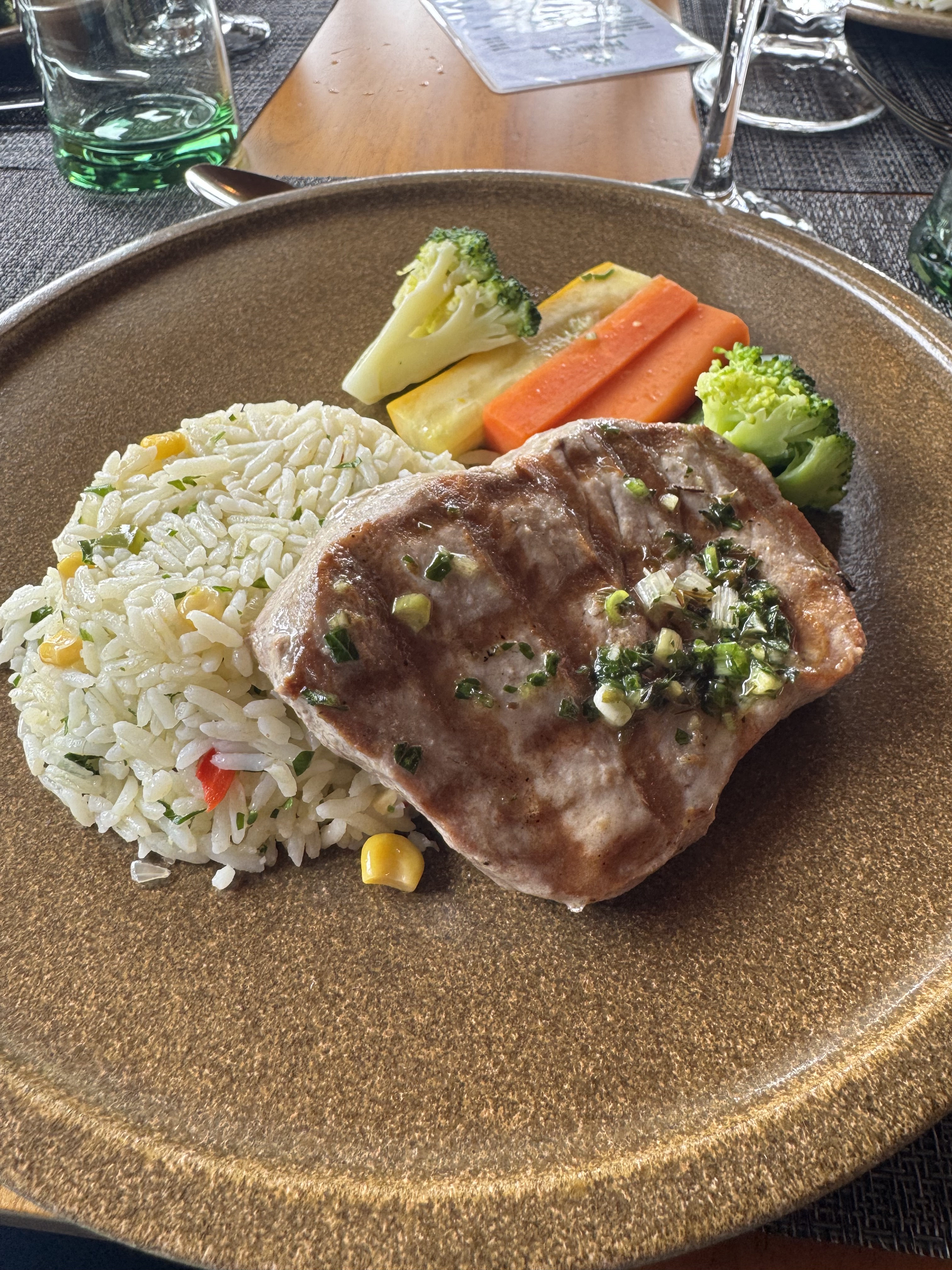
Tuna
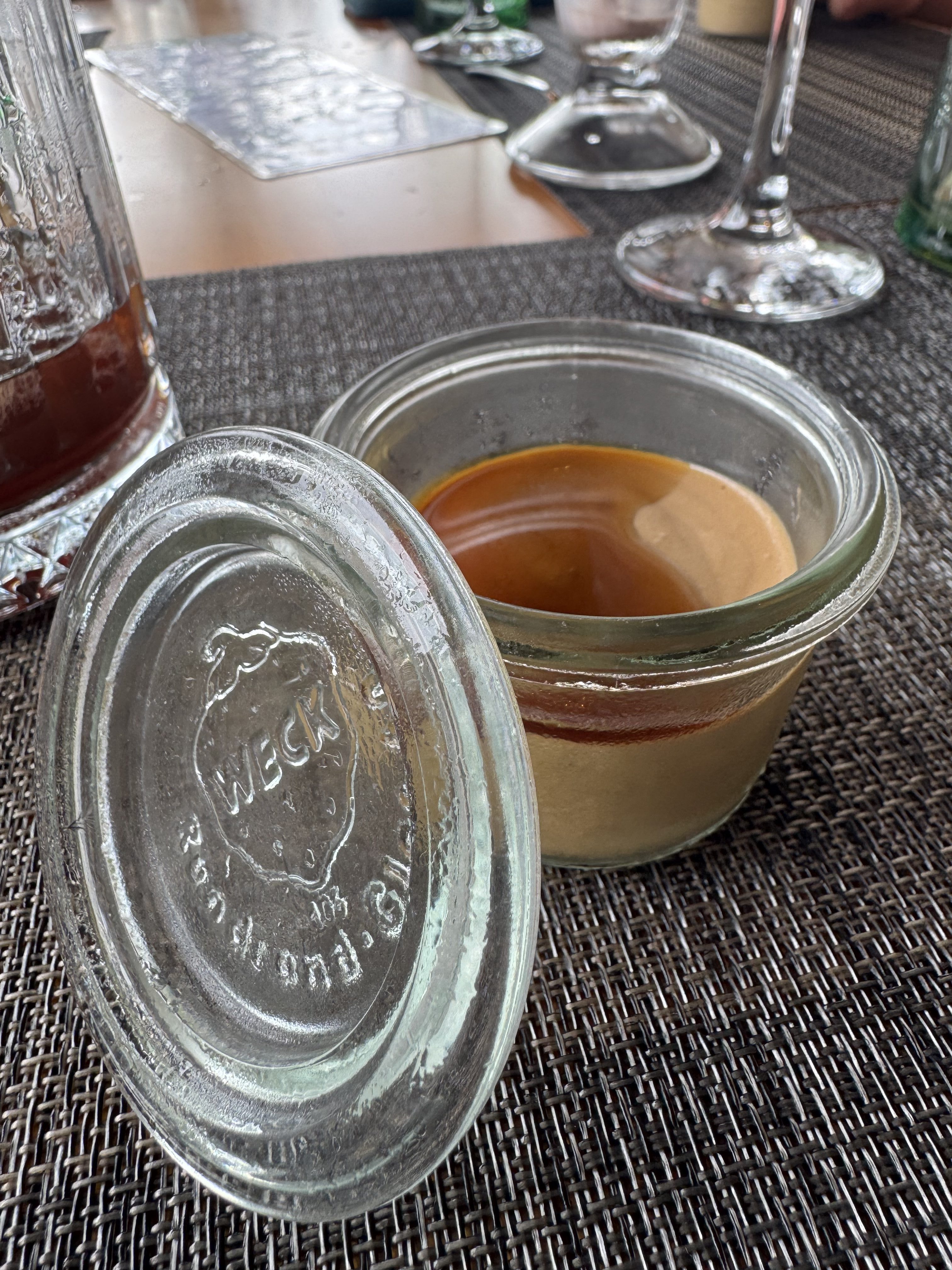
The view at lunch! 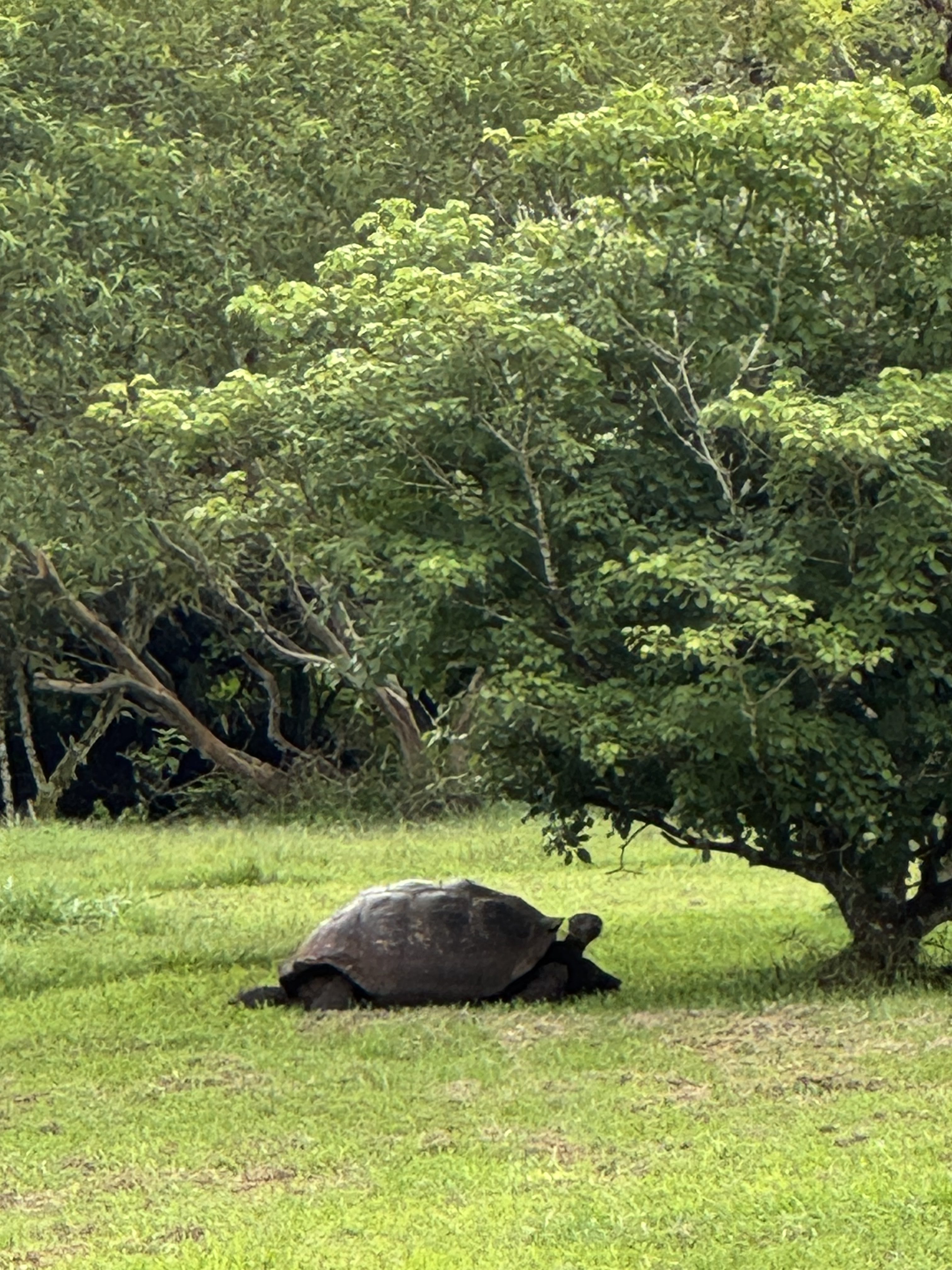
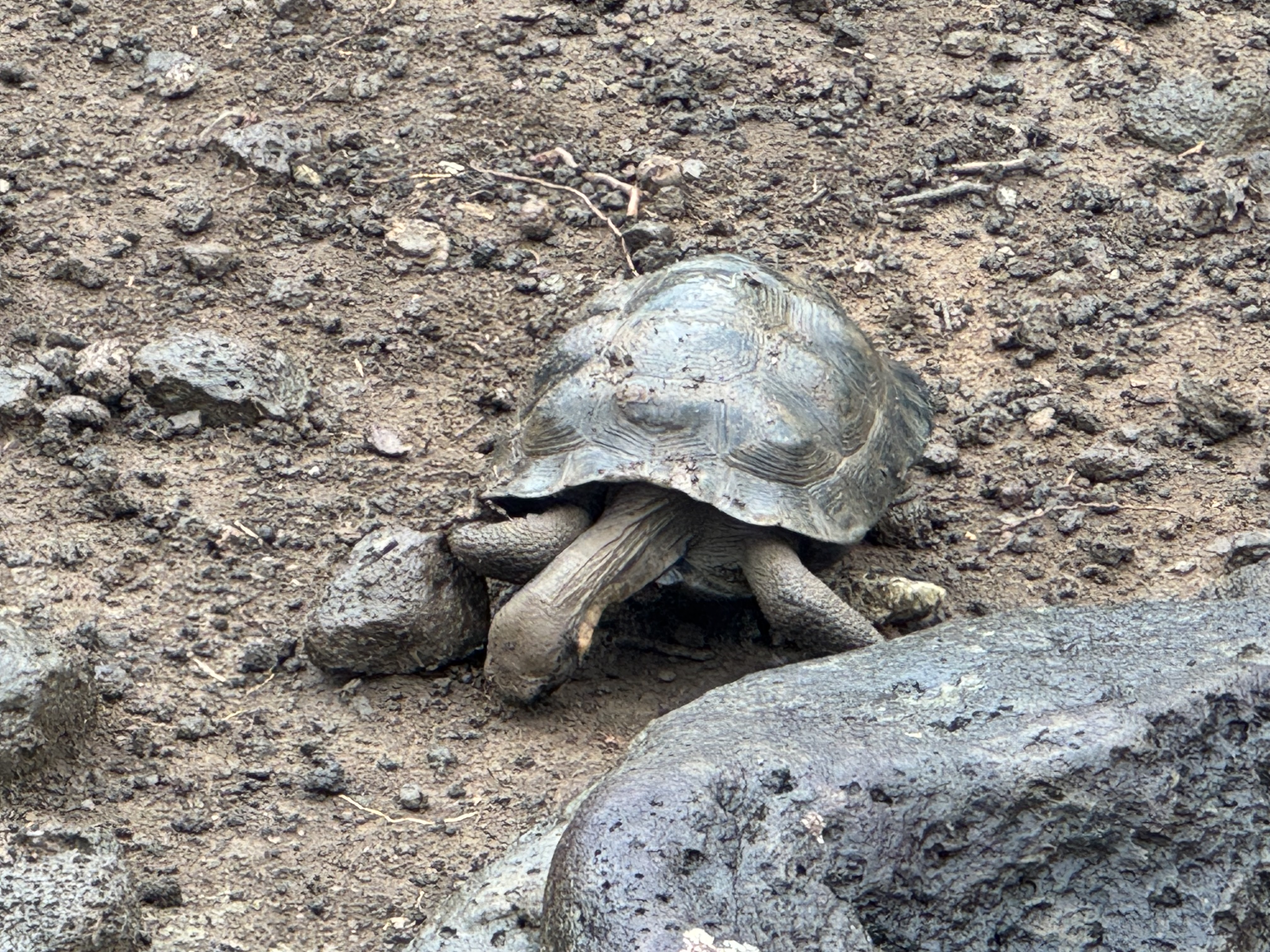
Primicias Ranch is a giant tortoise sanctuary. The tortoises just showed up on the Moreno Chapi family’s land. The tortoises roam free while visitors walk the property with a guide to learn about their habits, life cycle, and conservation. It is very important to stay at least 6 feet away from the tortoises. They are perfectly content to go about life while humans hang out and watch them. It was truly an incredible experience to be so close to such large reptiles.
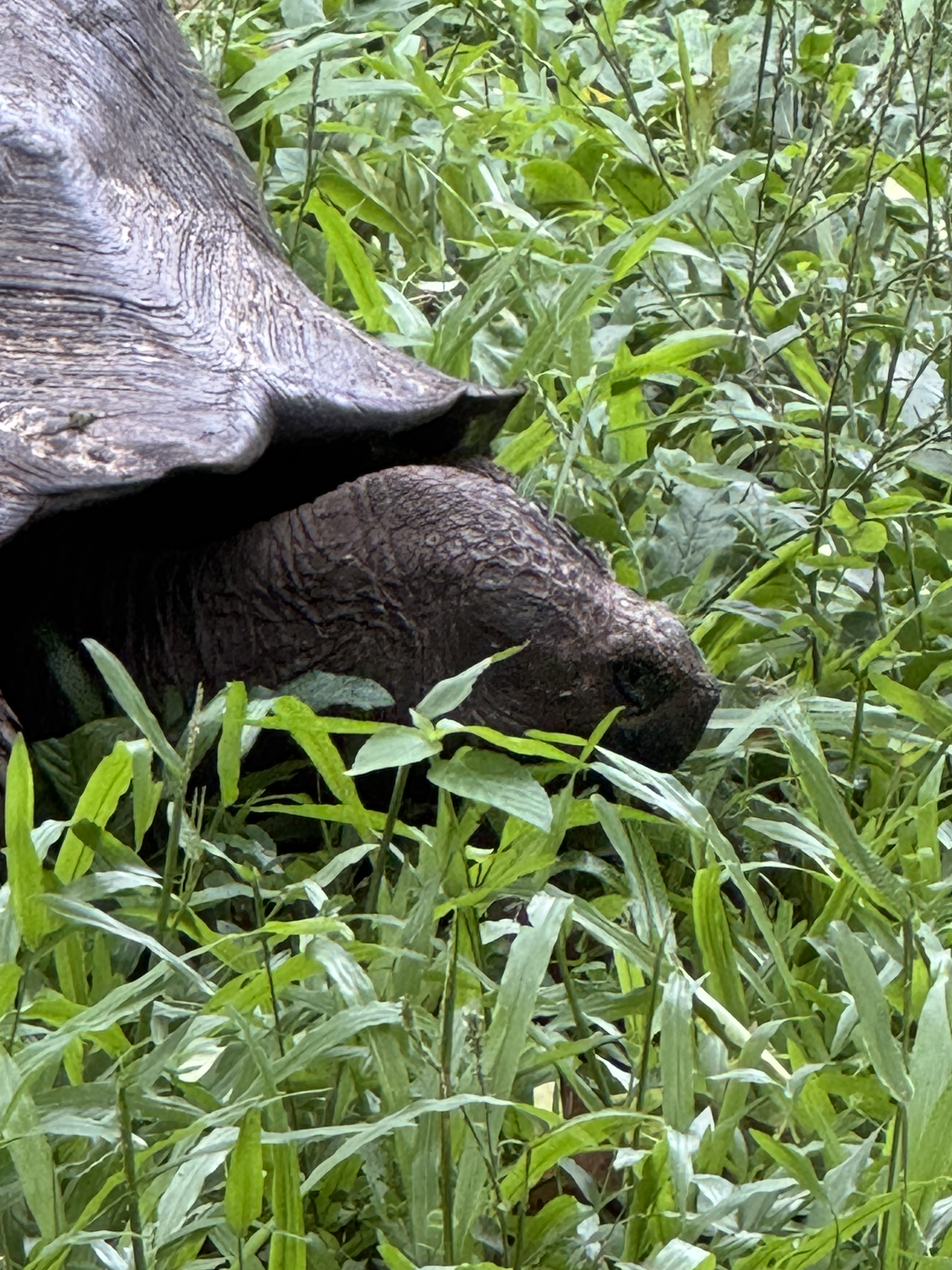
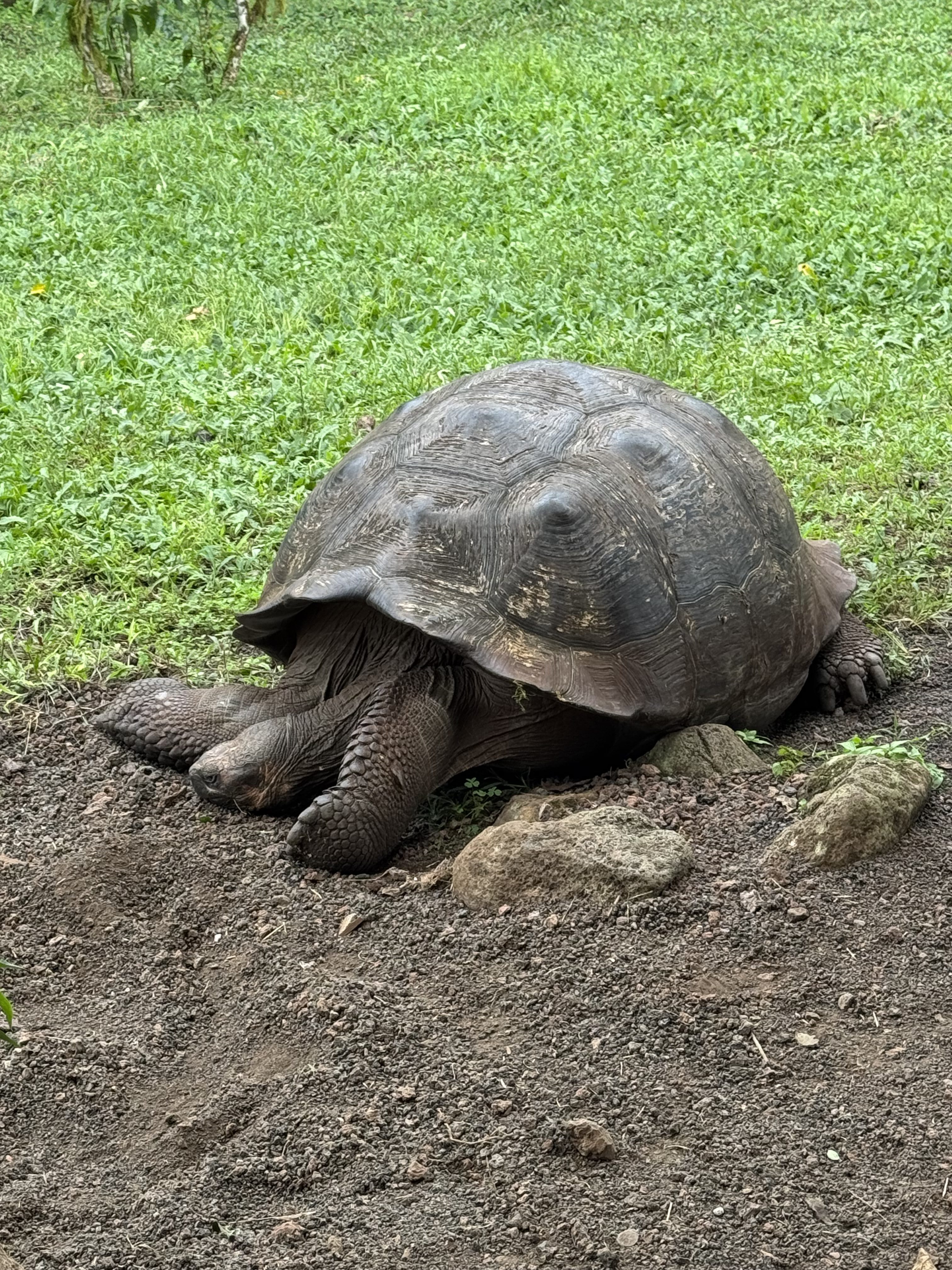
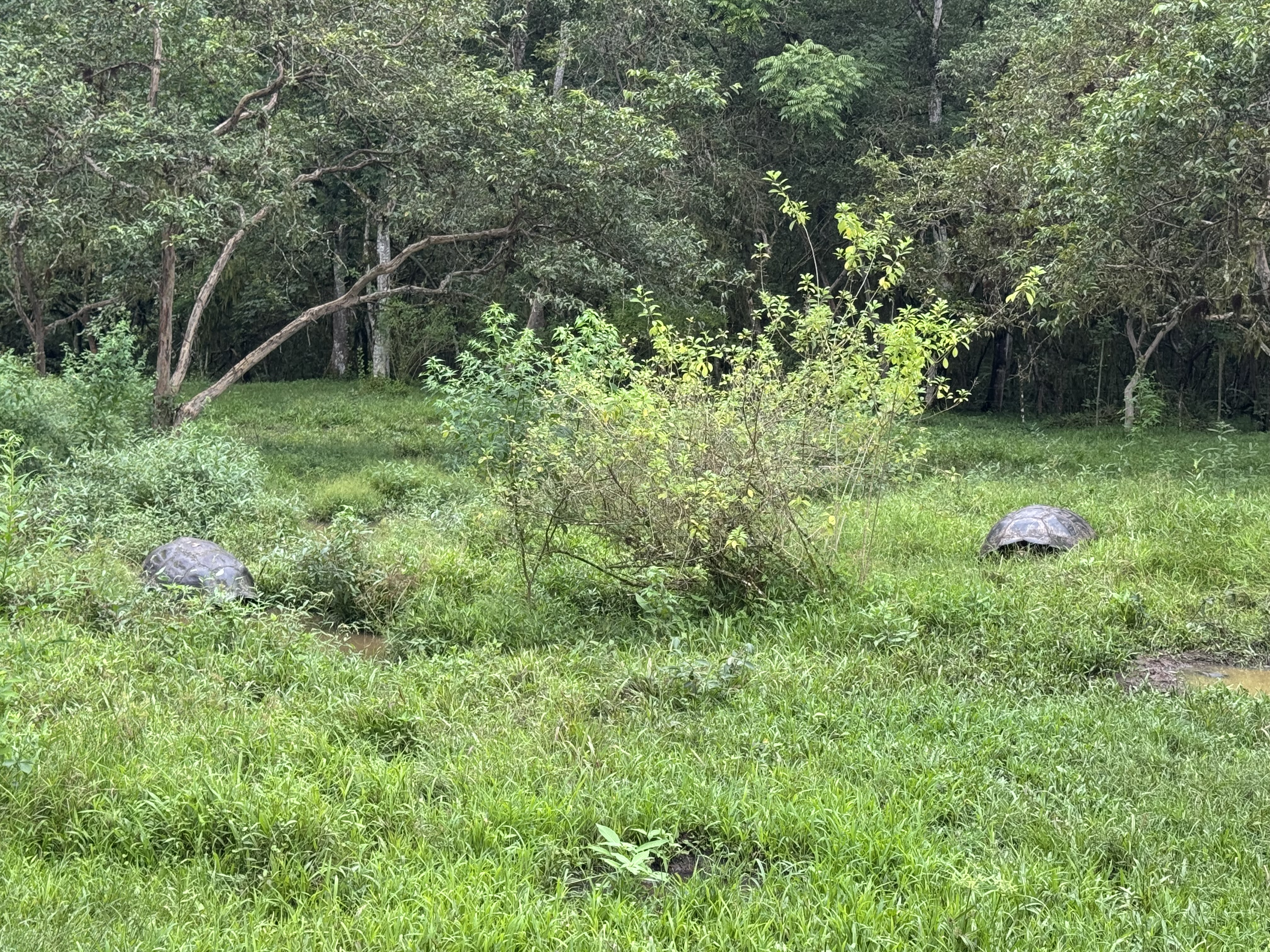
The giant tortoise lives to be 150+ years old. They start laying eggs at age 20 to 25. They continue to lay eggs until they are 120-130 years old. A female will travel 6 miles or more from wetlands to the coast to lay her eggs. Adult males, weighing 500-700 pounds, are much larger than females, who weigh only 250-400 pounds.
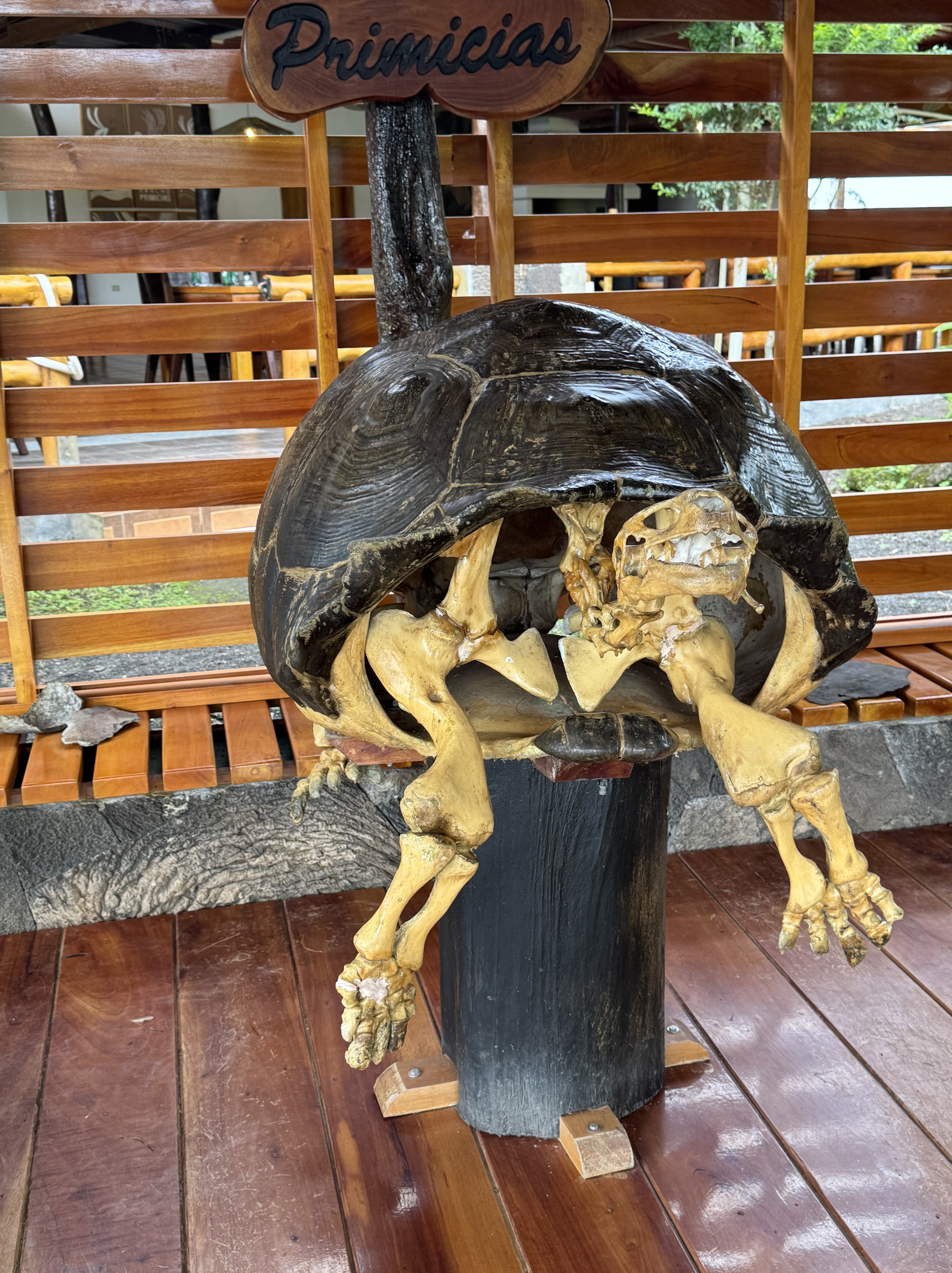
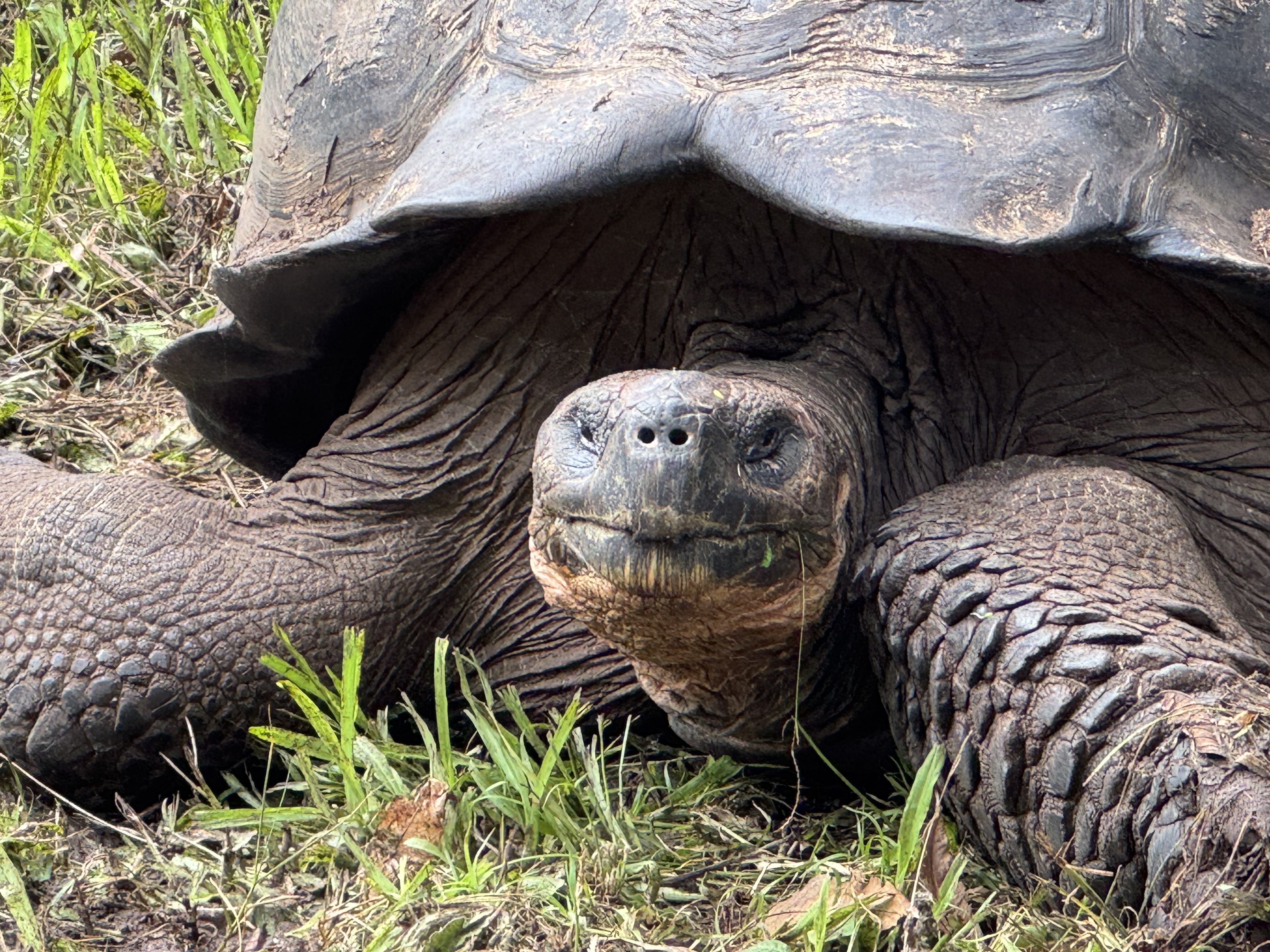
Tortoises are vegetarians. They eat grasses, leaves, cactus pads, and fruit. They can survive up to a year without food or water. They do this by slowing down their metabolism and using stored internal reserves slowly. They spend an average of 16 hours a day resting or basking in the sun to regulate body temperature.
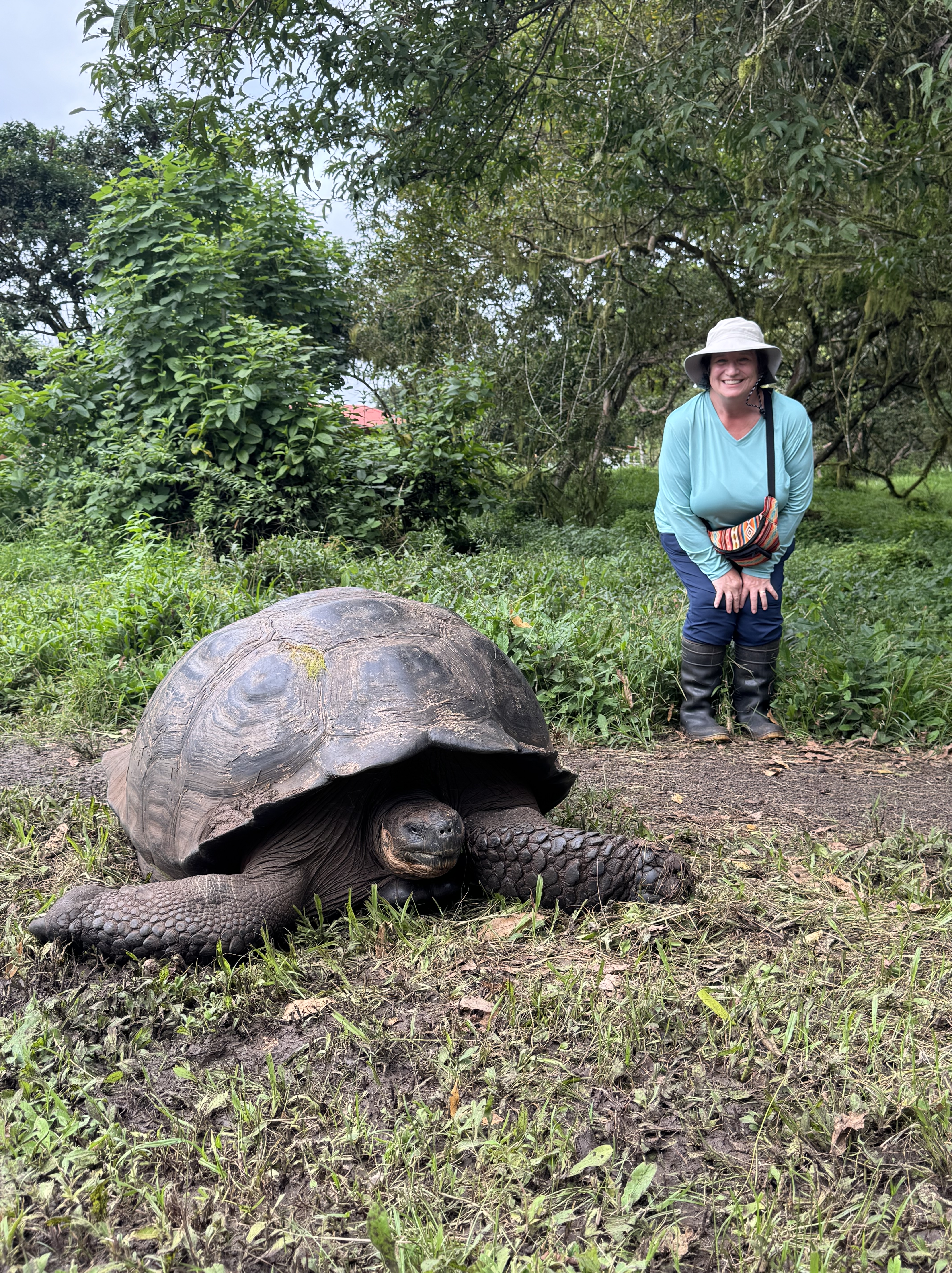
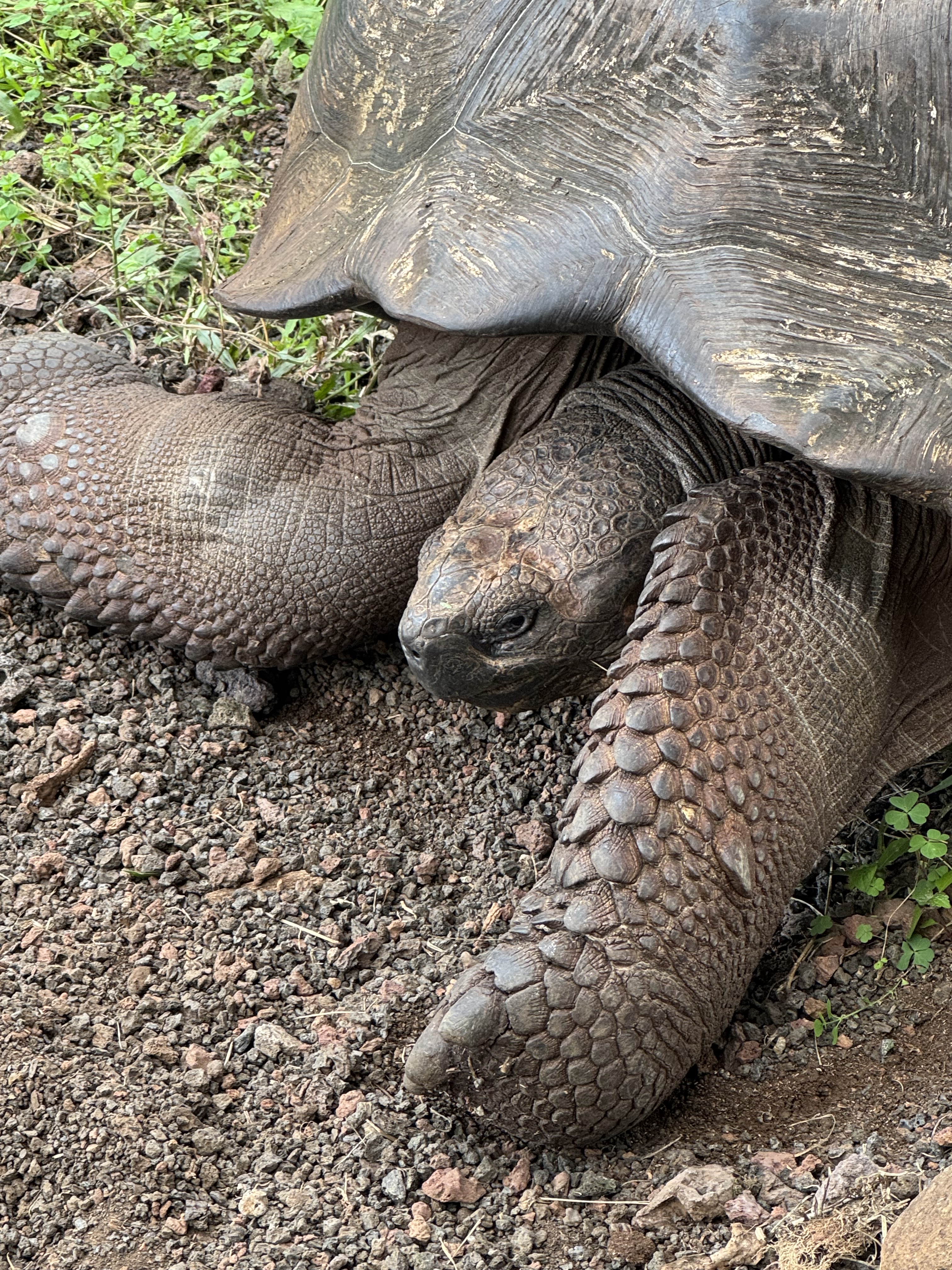
The giant tortoise has a huge impact on the ecosystem. A tortoise will pass through dense vegetation, eating a path for smaller species. They disperse seeds as they wander because the seeds pass intact through their digestive tract. This has helped to replant native vegetation across the Galapagos Islands.
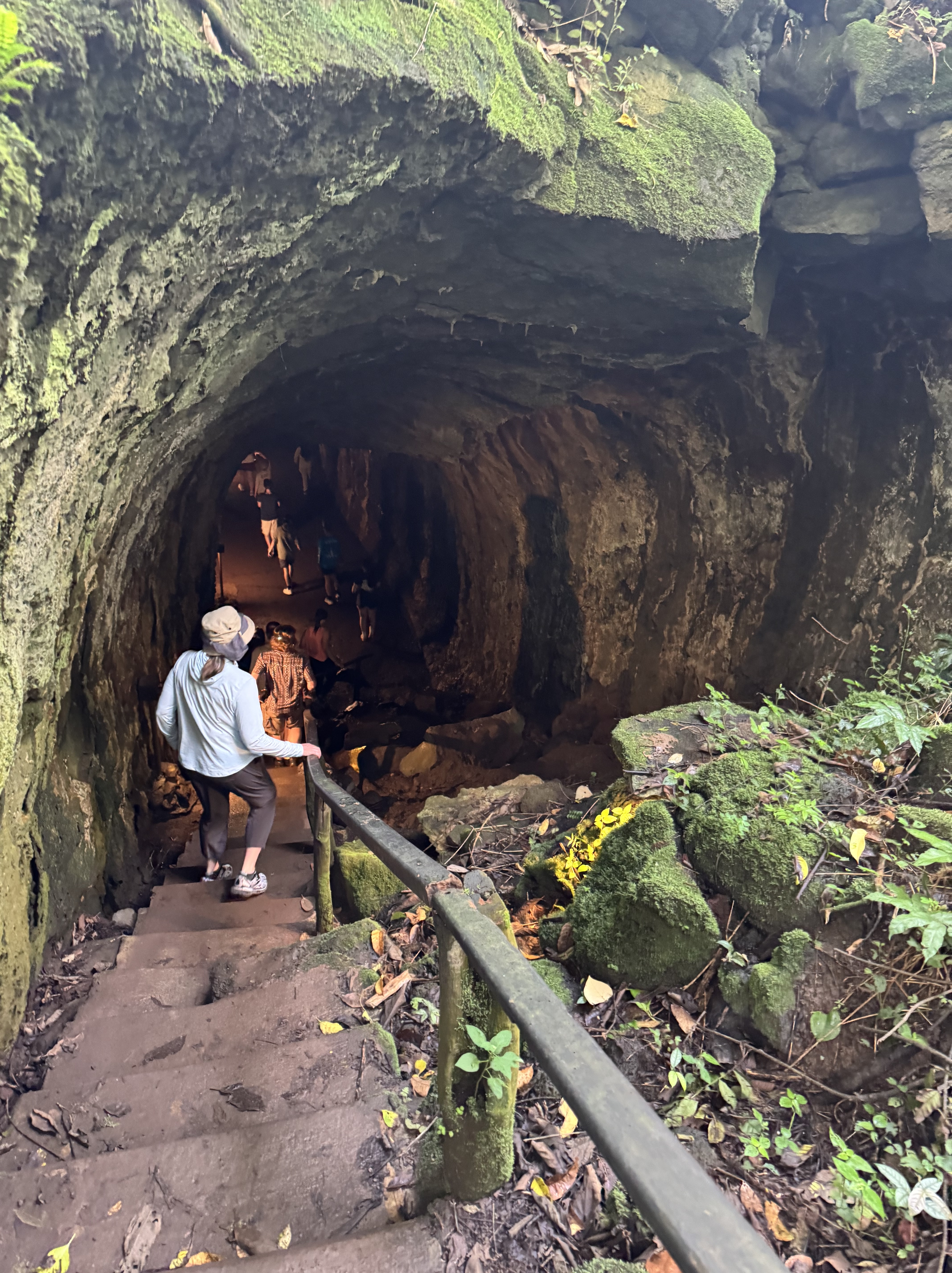
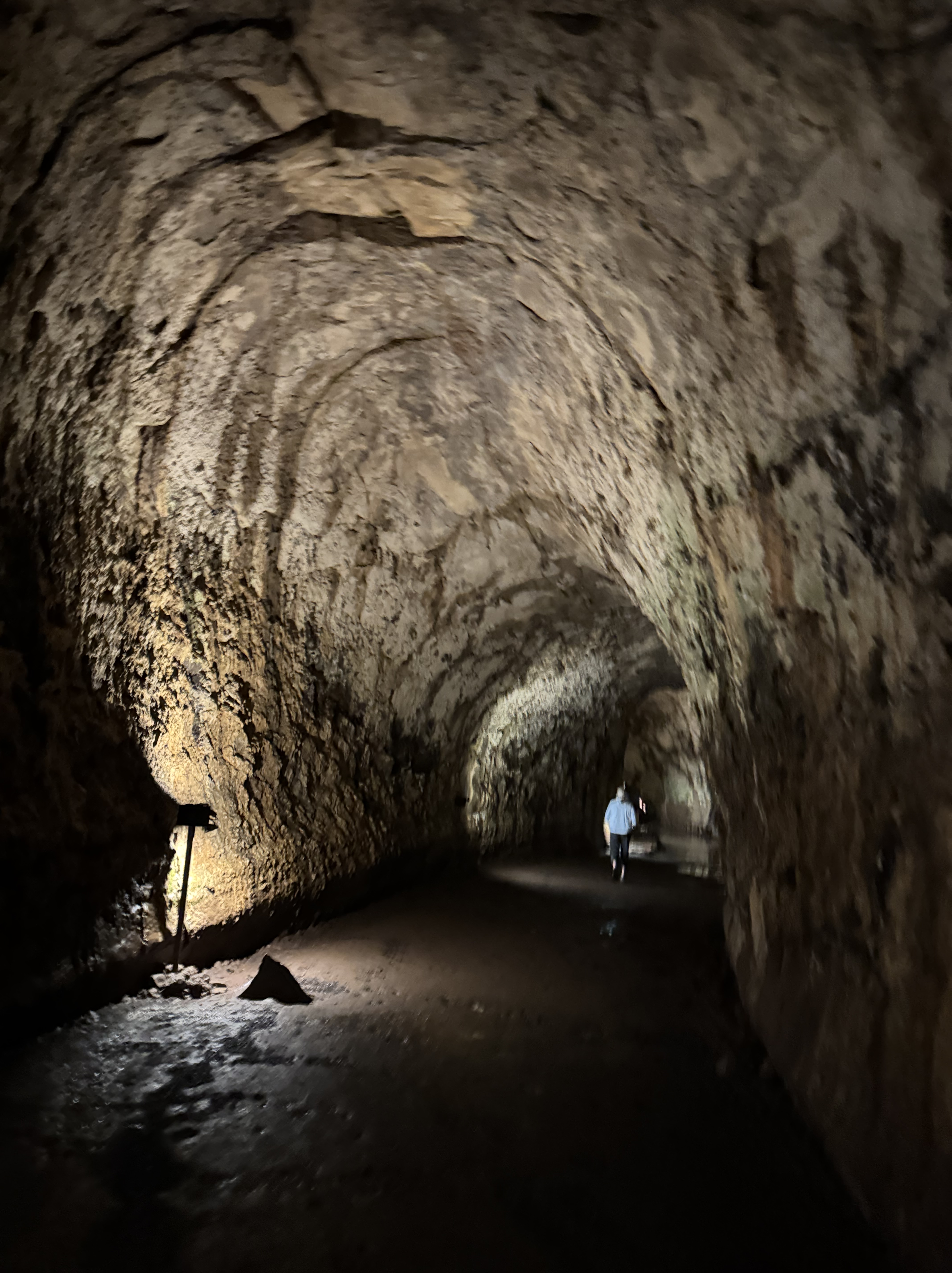
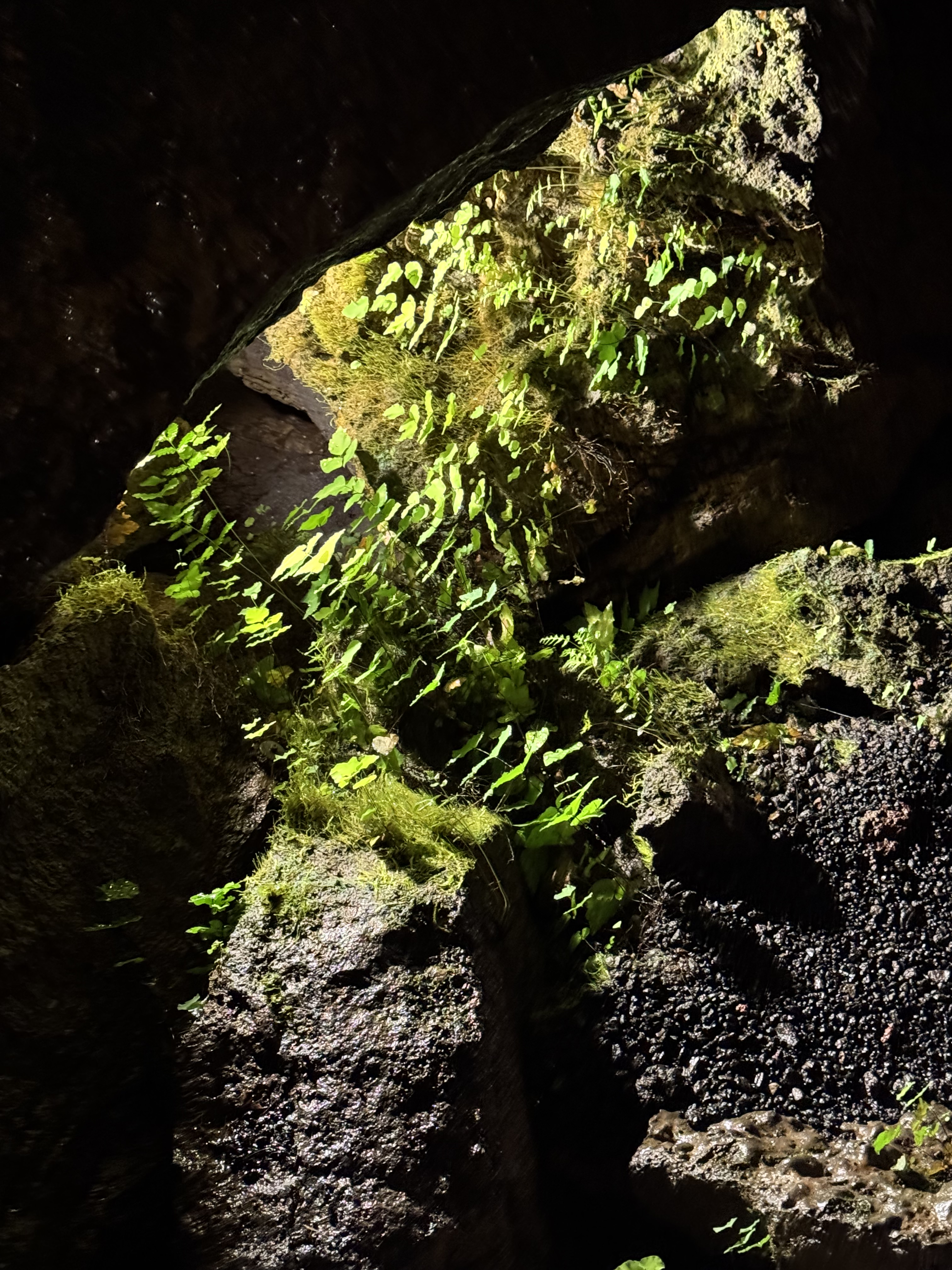
Lava tunnels
The last activity for the day before going to the hotel was the lava tunnels. The tunnels can range from 3 to 40 feet high. When a volcano was active, lava flowed through the tubes or tunnels to form the islands. As the lava cooled, tunnels were left behind.
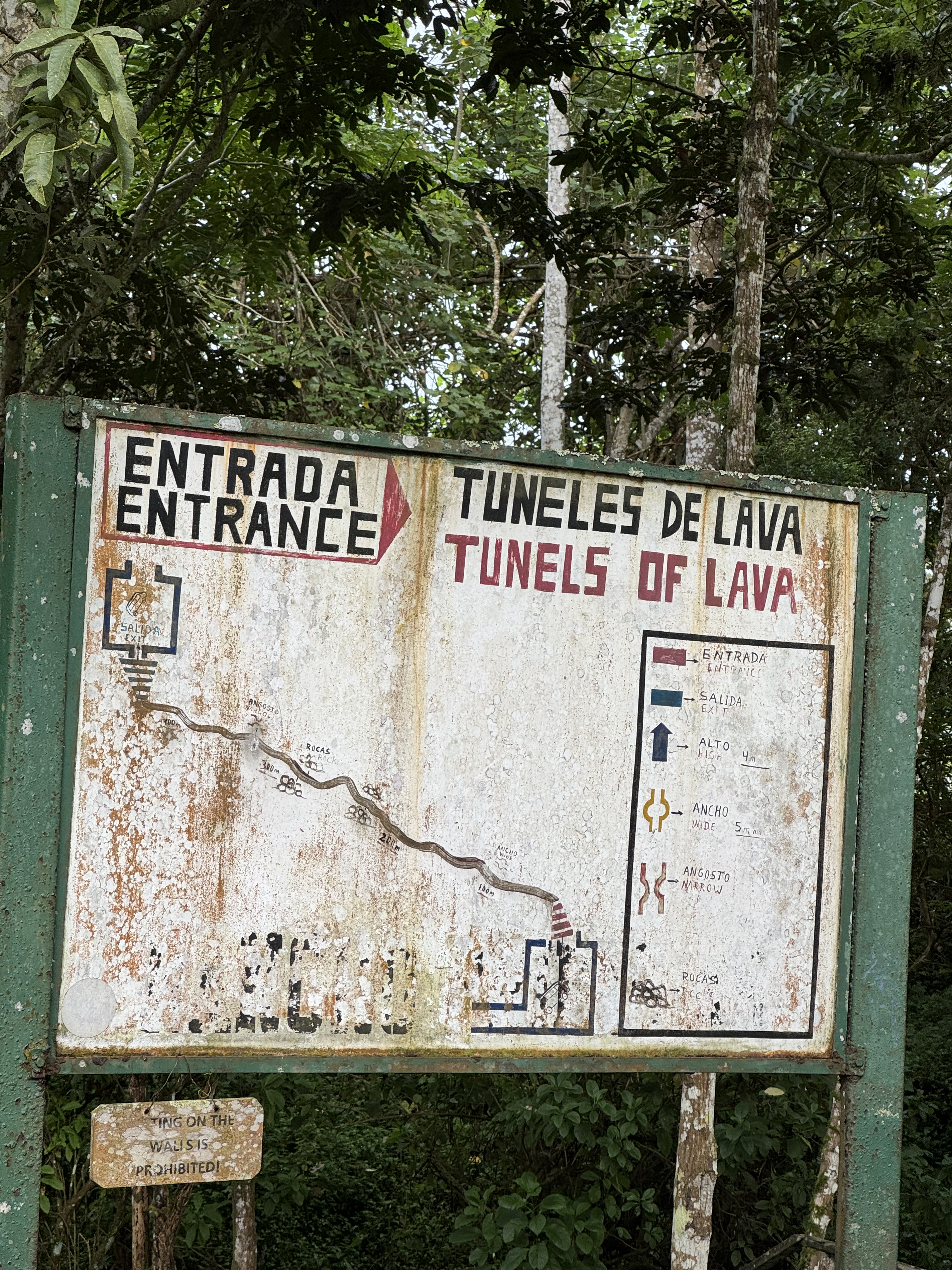
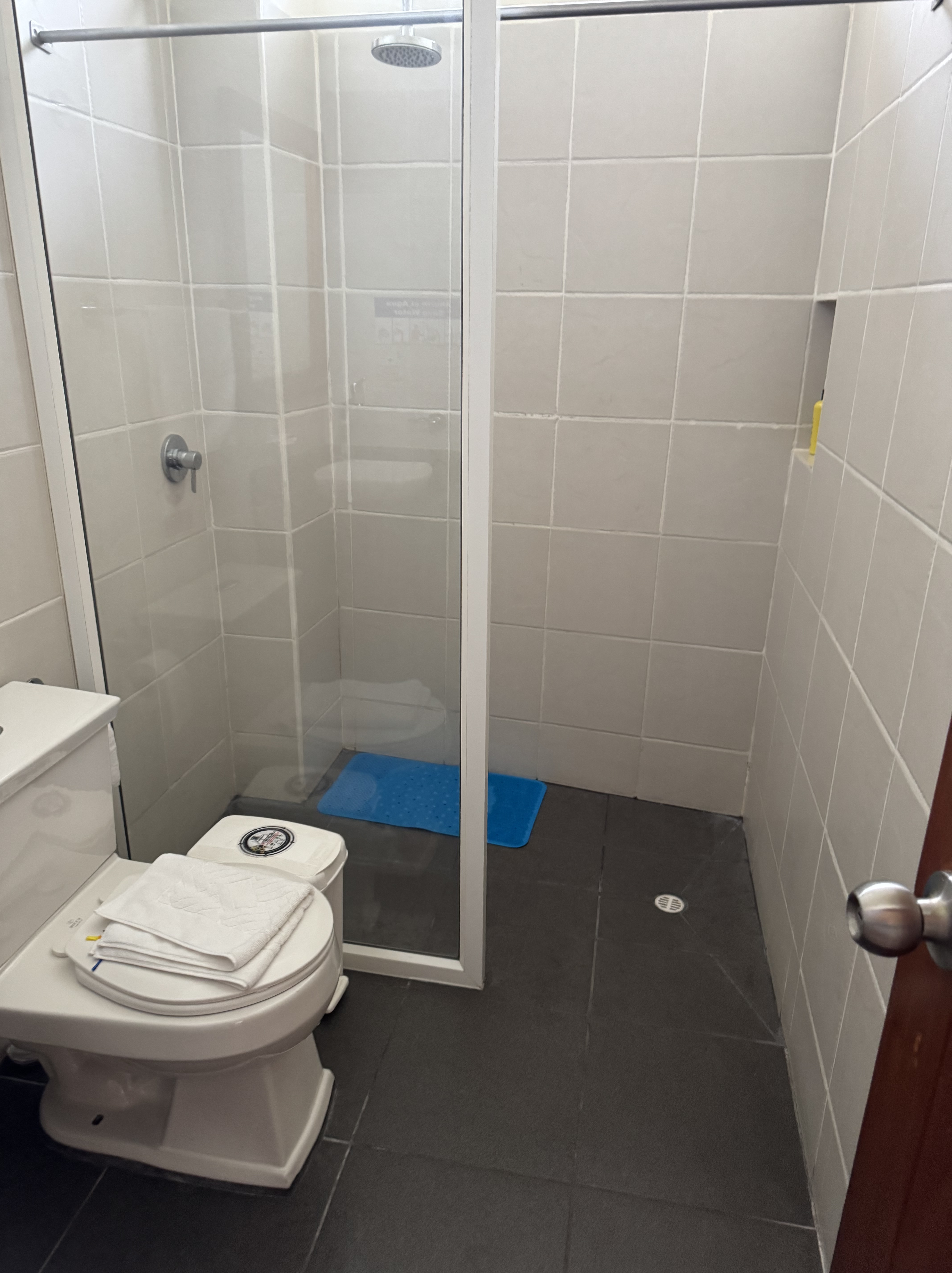
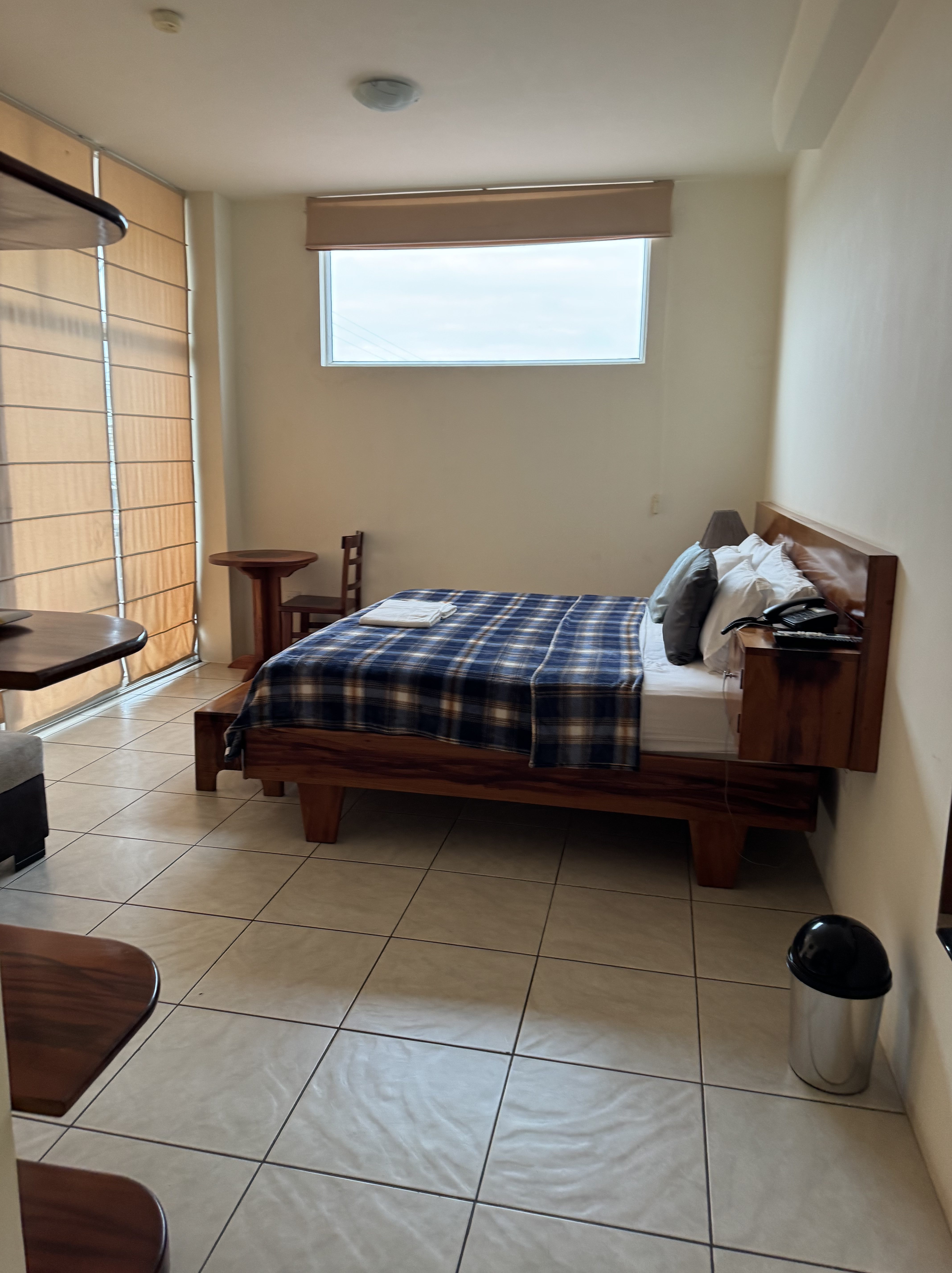
Our hotel for the next couple of nights is located near Puerto Ayora Pier, where we saw our first sea lions sleeping on the pier. It seemed very odd to us that the sea lions were sleeping all over the pier. They didn’t seem bothered by humans standing around talking about them and snapping pictures.
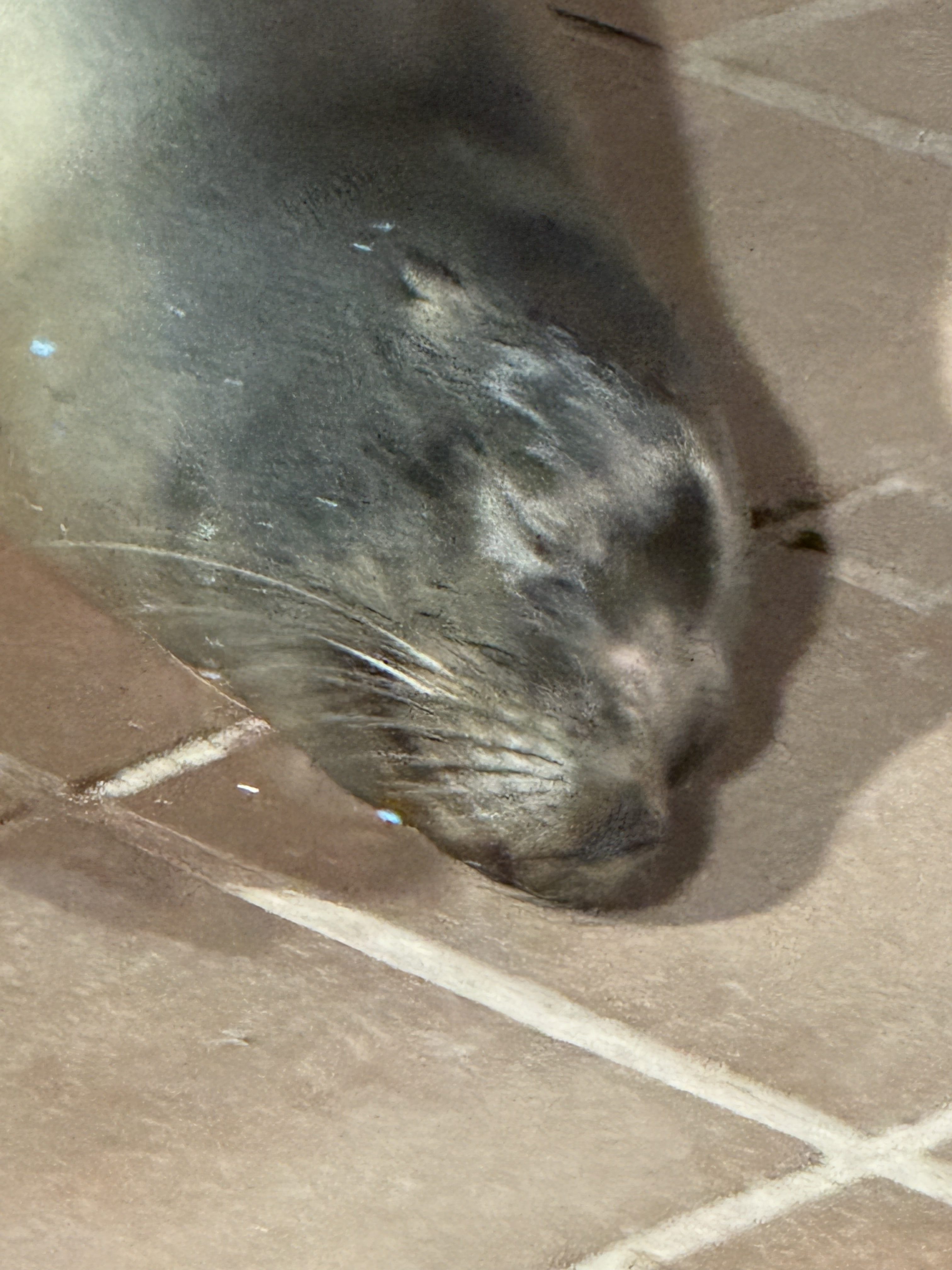
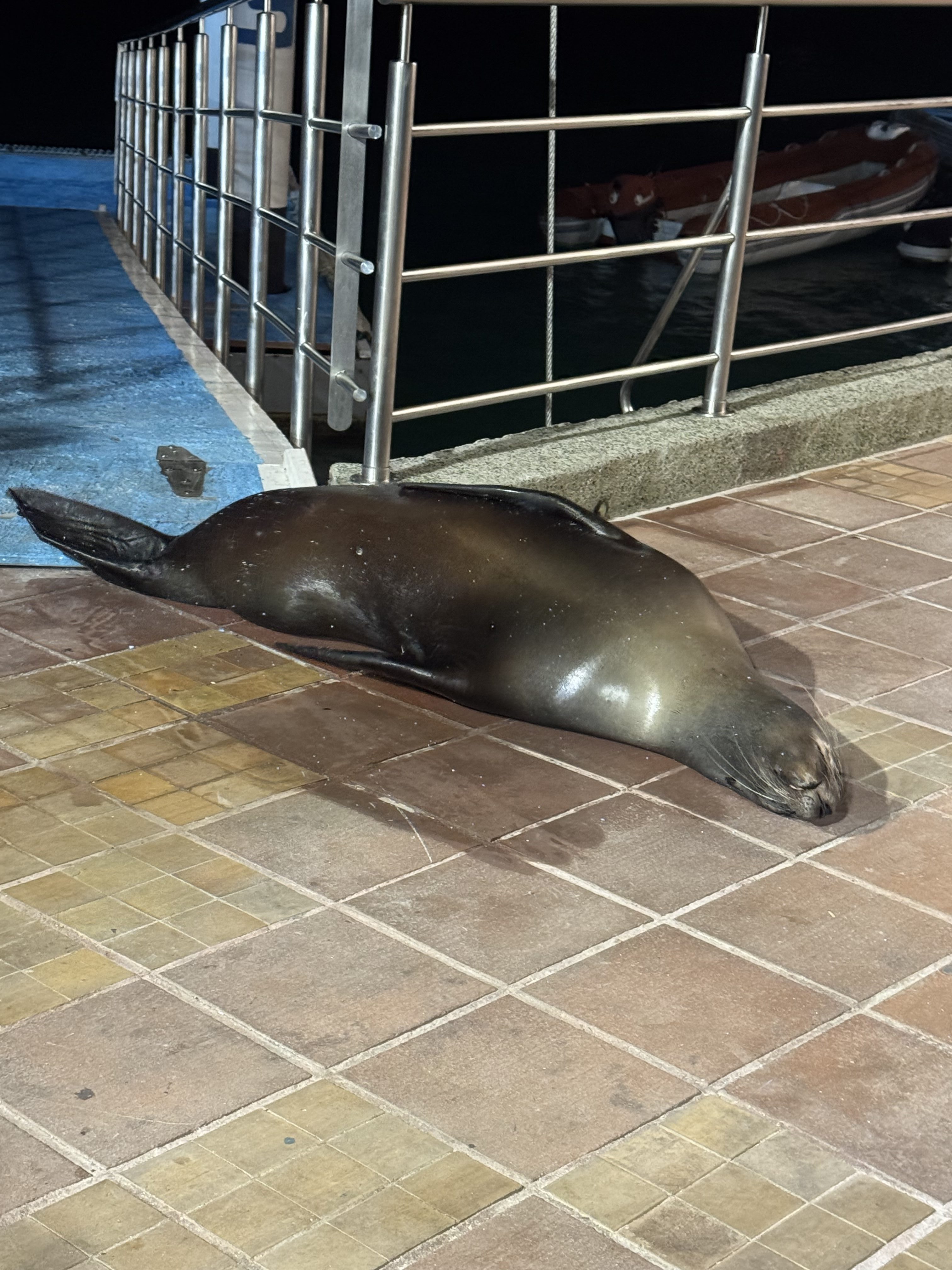
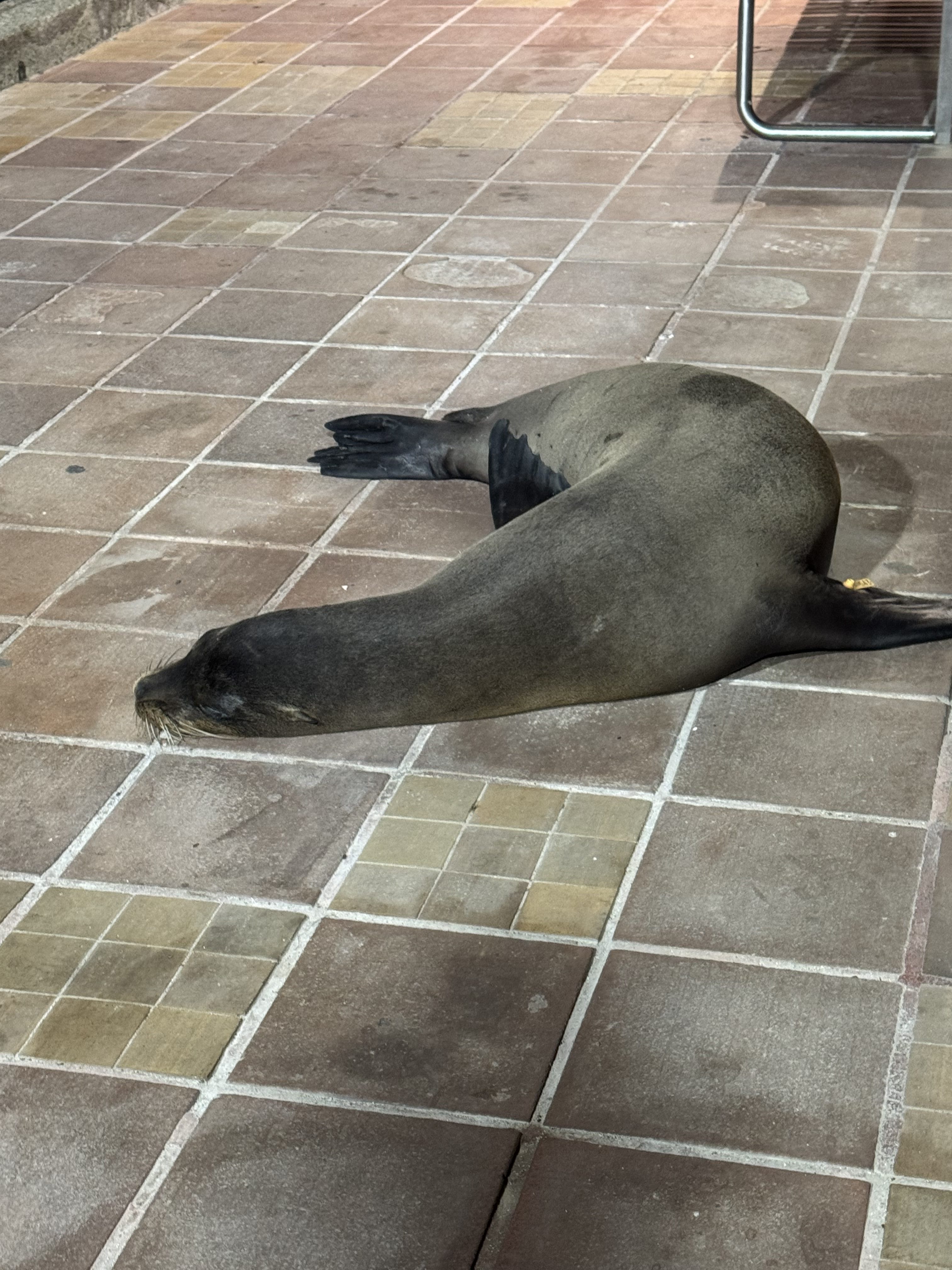
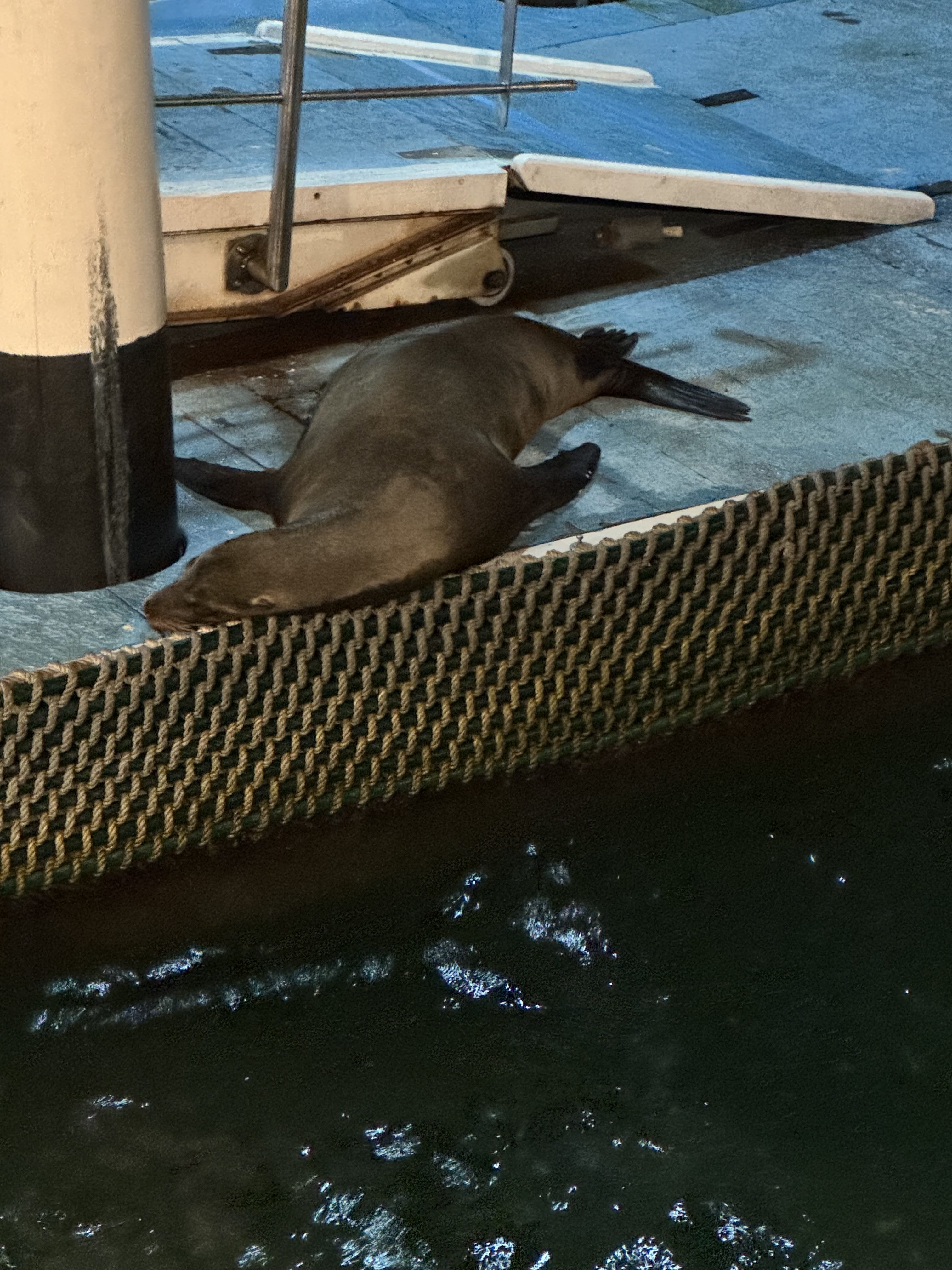
A busy day ends with dinner, a shower, and a comfortable bed. The highlight of dinner was pumpkin soup with popcorn.
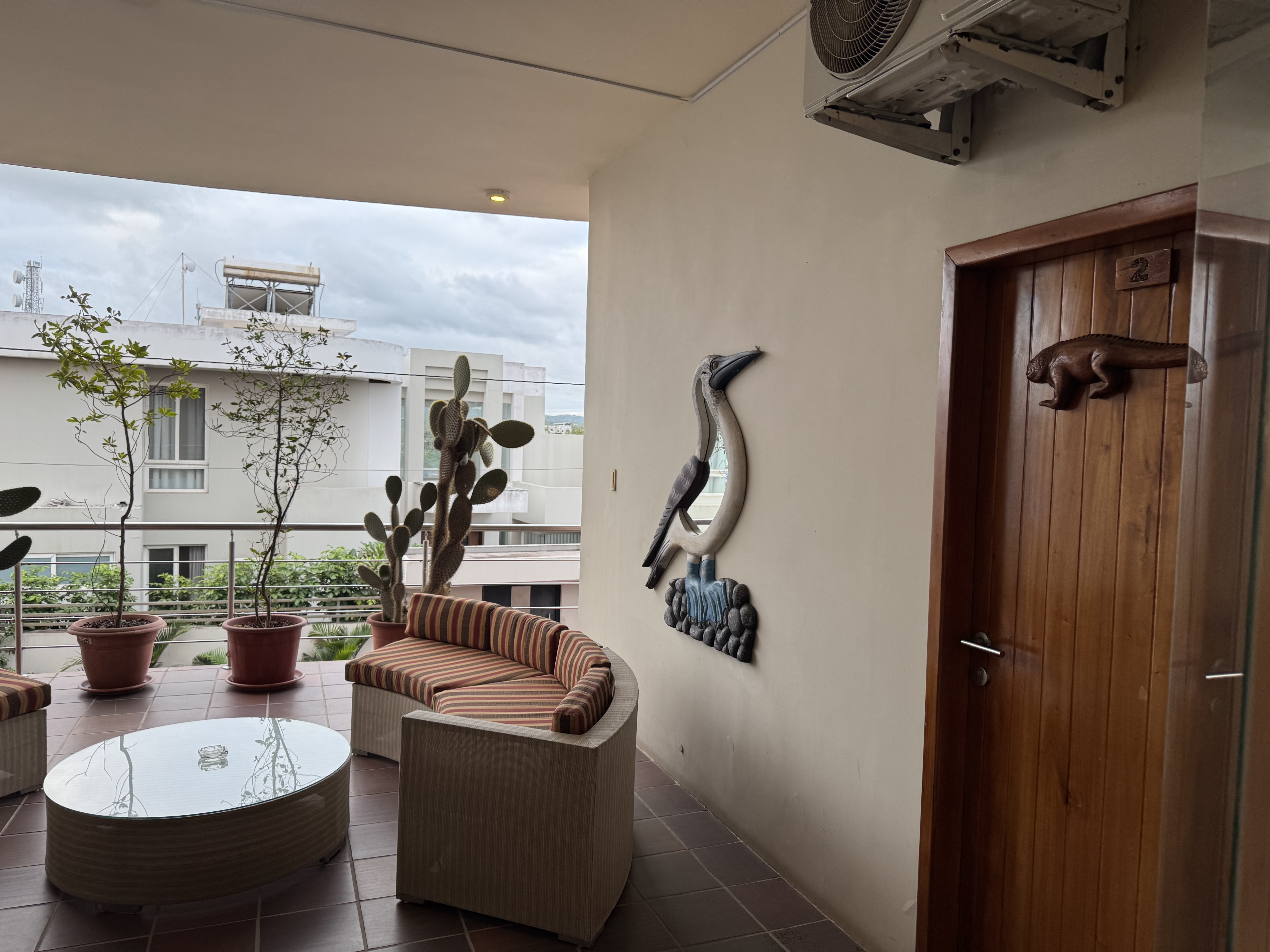
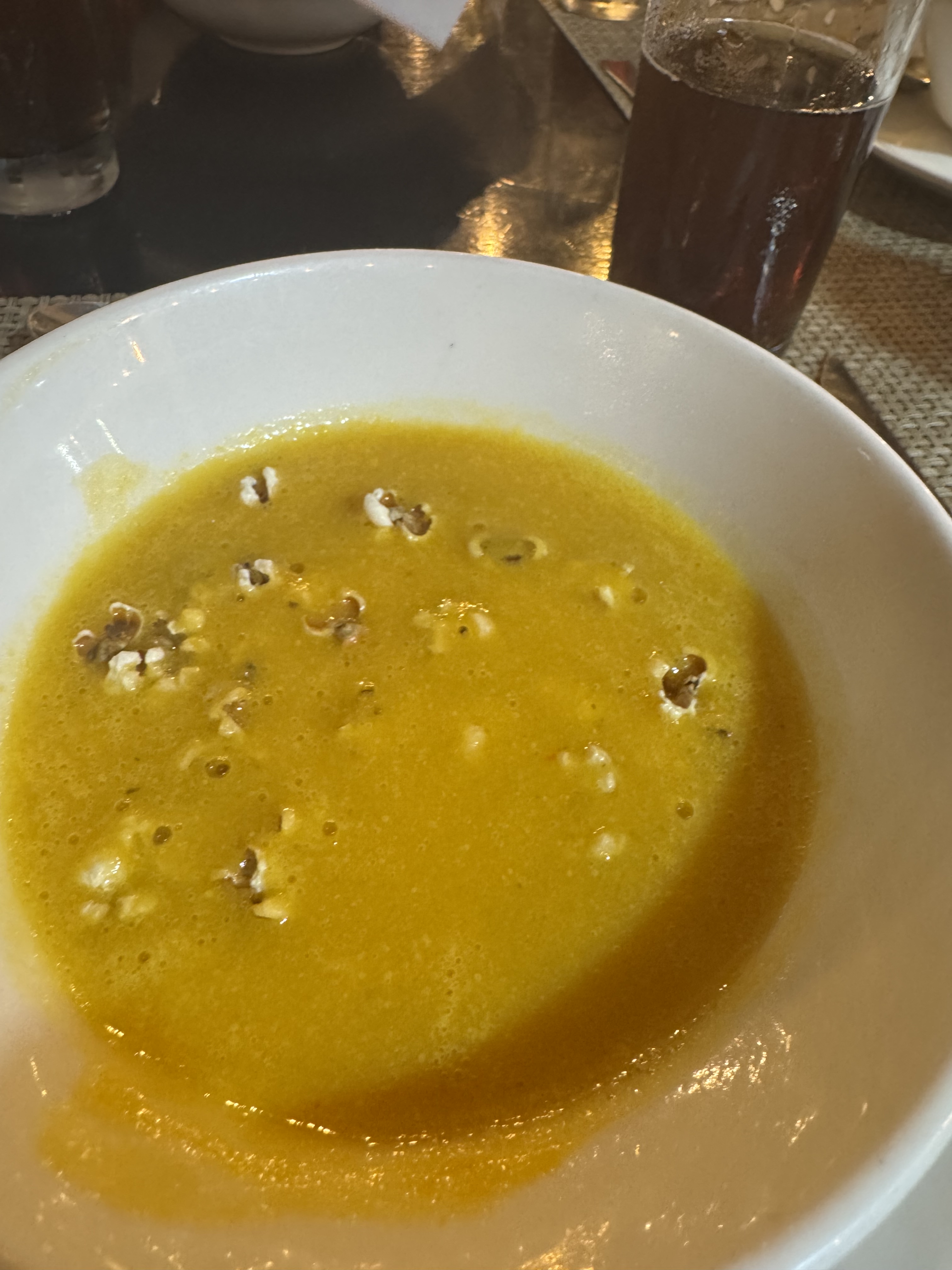
Pumpkin soup with popcorn
Day five – June 24, 2026
Tortuga Bay
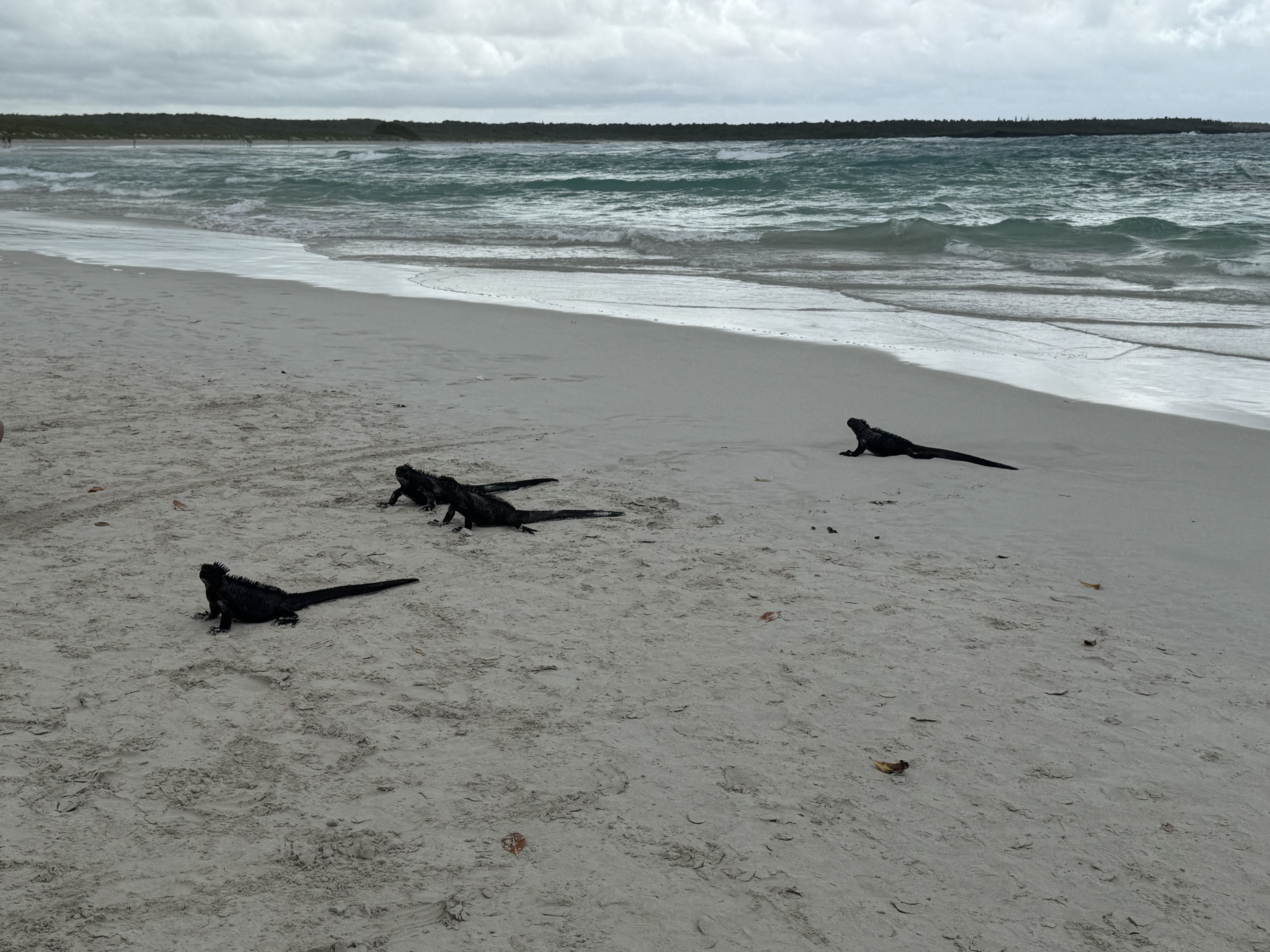
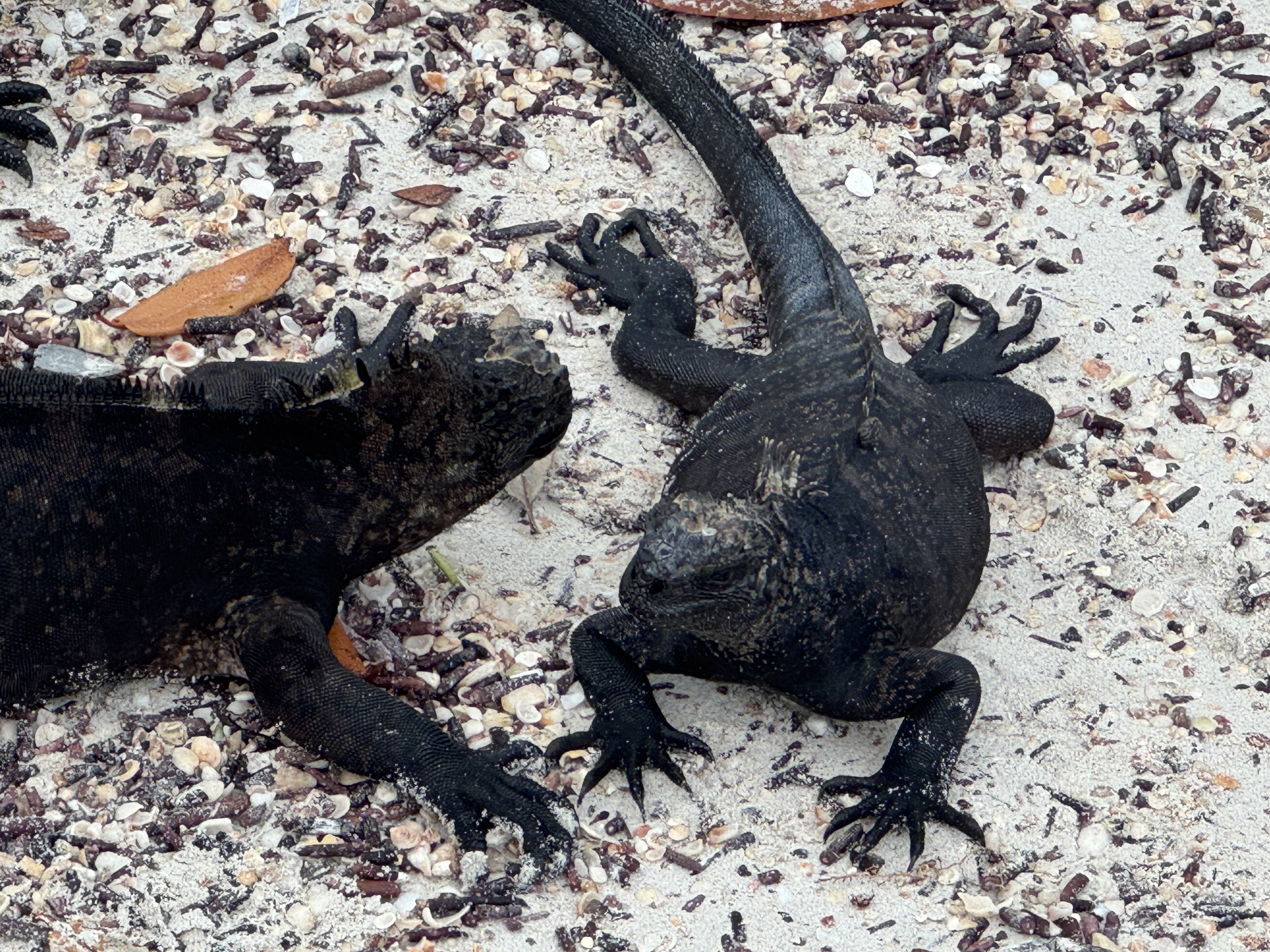
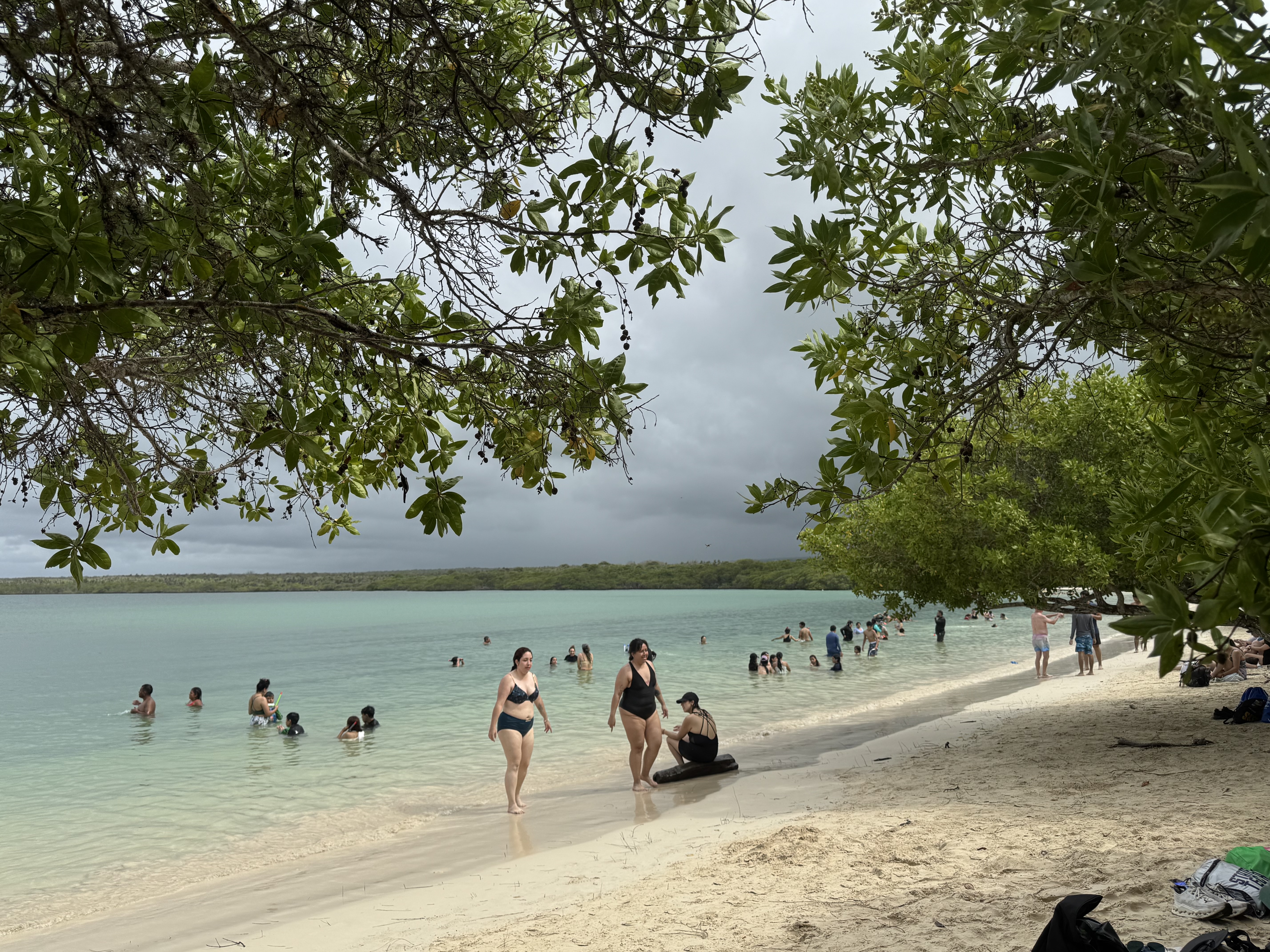
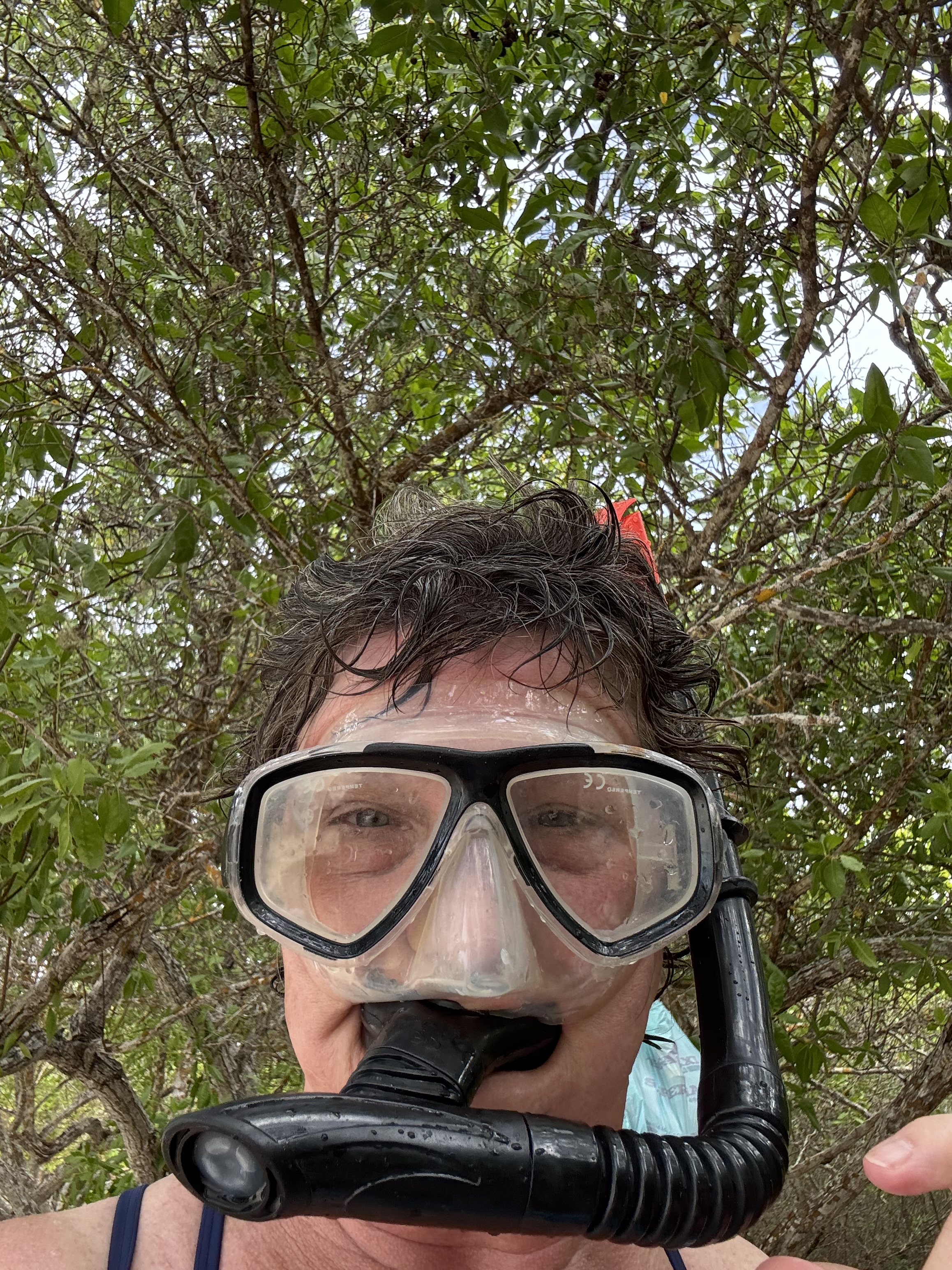
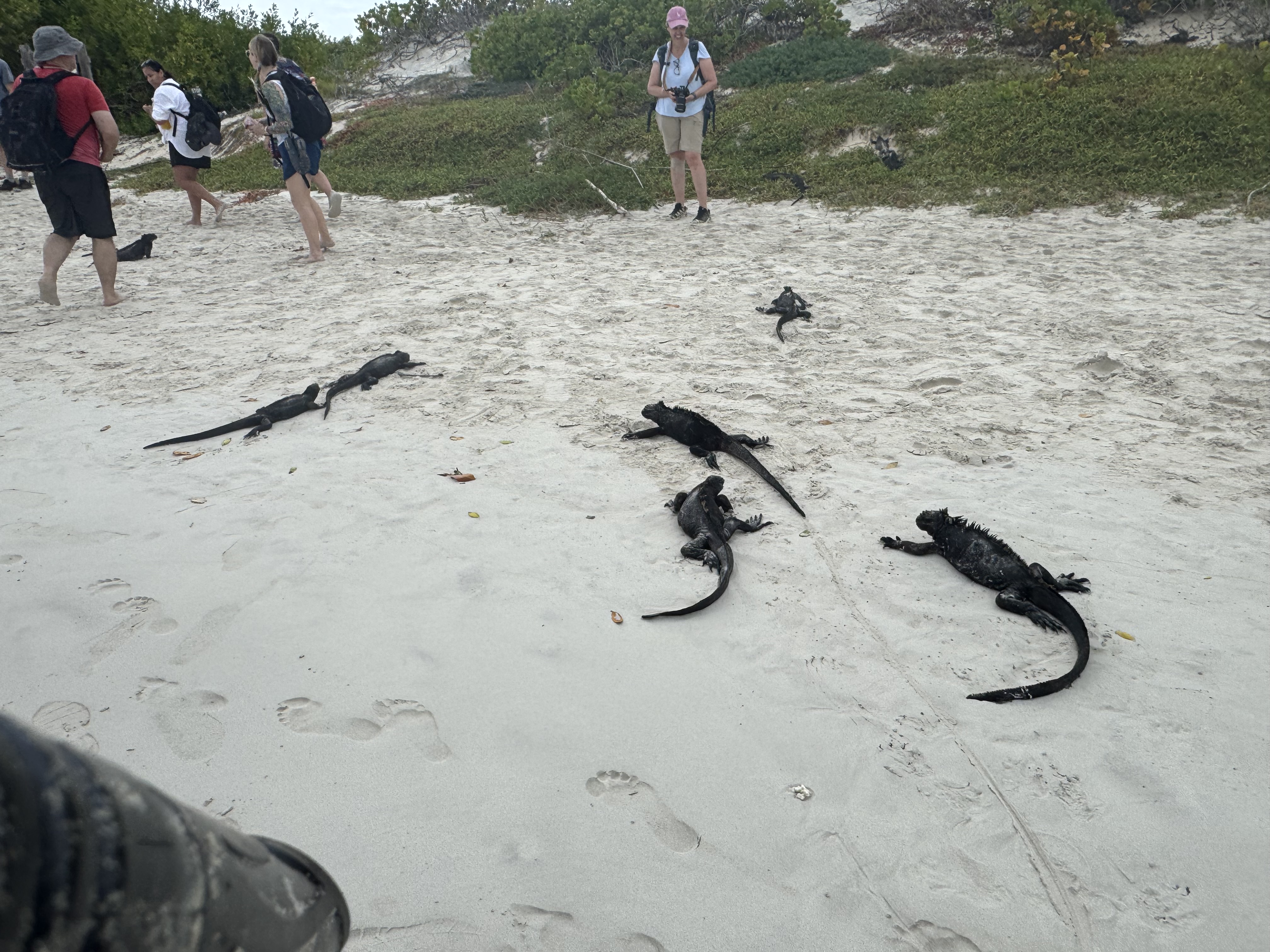
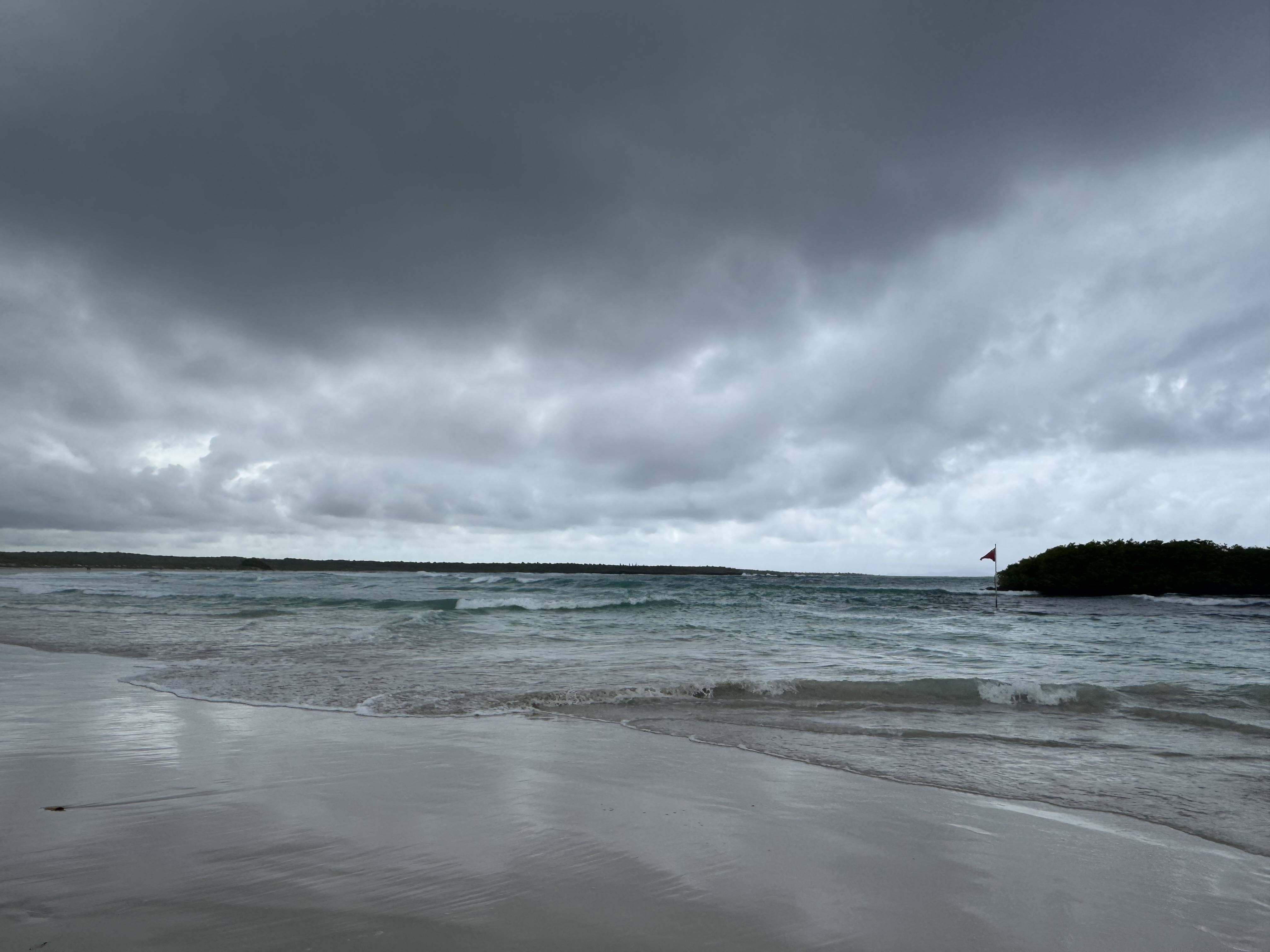
Beach and snorkeling were on the agenda today. There was a 2-mile hike to get to the beach. The first mile was on rock pavers up and down hills. The second mile was across loose sand, trying to avoid the incoming waves. Wildlife sightings on our excursion: black sea iguanas, sea lions, and small fish. It was a great time at the beach. The hike there and back was arduous.
I finished the athletic test and came in dead last! The high school students and much younger chaperones were so patient and encouraging. Travel is always an adventure. At times, the adventure also challenges you both physically and mentally. Yes, I would do it again!
Darwin Research Station, Puerto Ayora, Santa Cruz Island – learn about local conservation, habitats, and the tortoise breeding center
Day six – June 25, 2026
Today is goodbye to Santa Cruz Island and transfer to San Cristobal Island by boat. This sounds like an easy adventure. I had envisioned a beautiful day on a charter cruise, enjoying the sun, and watching for marine life. That is not how the boat ride turned out.
Our journey started with walking to the pier, dragging our luggage, which is now getting a little heavier because of the shopping we have done along the way, and making sure to avoid stepping on any sea lions sunbathing on the pier. Really! How much can t-shirts weigh?
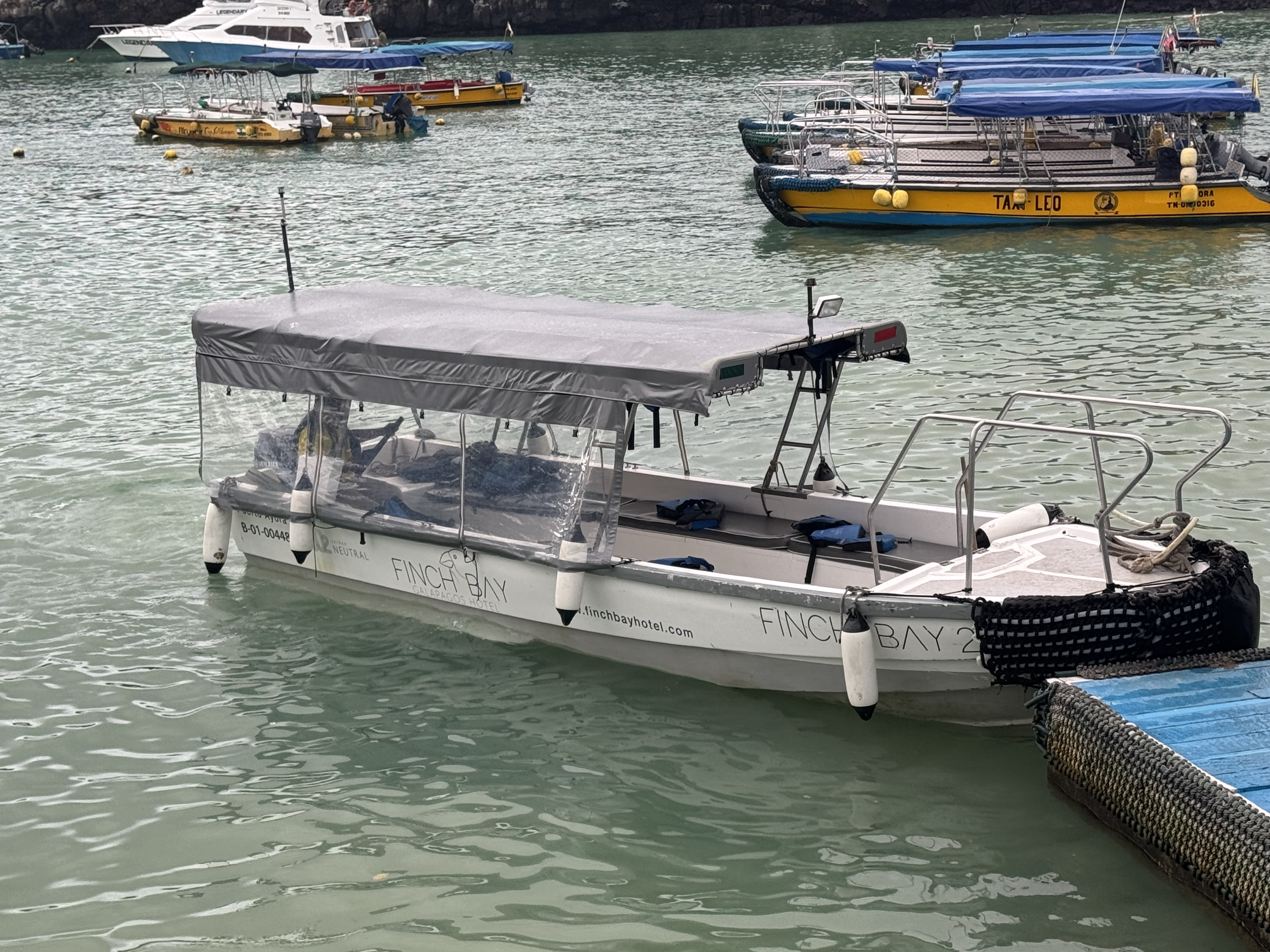
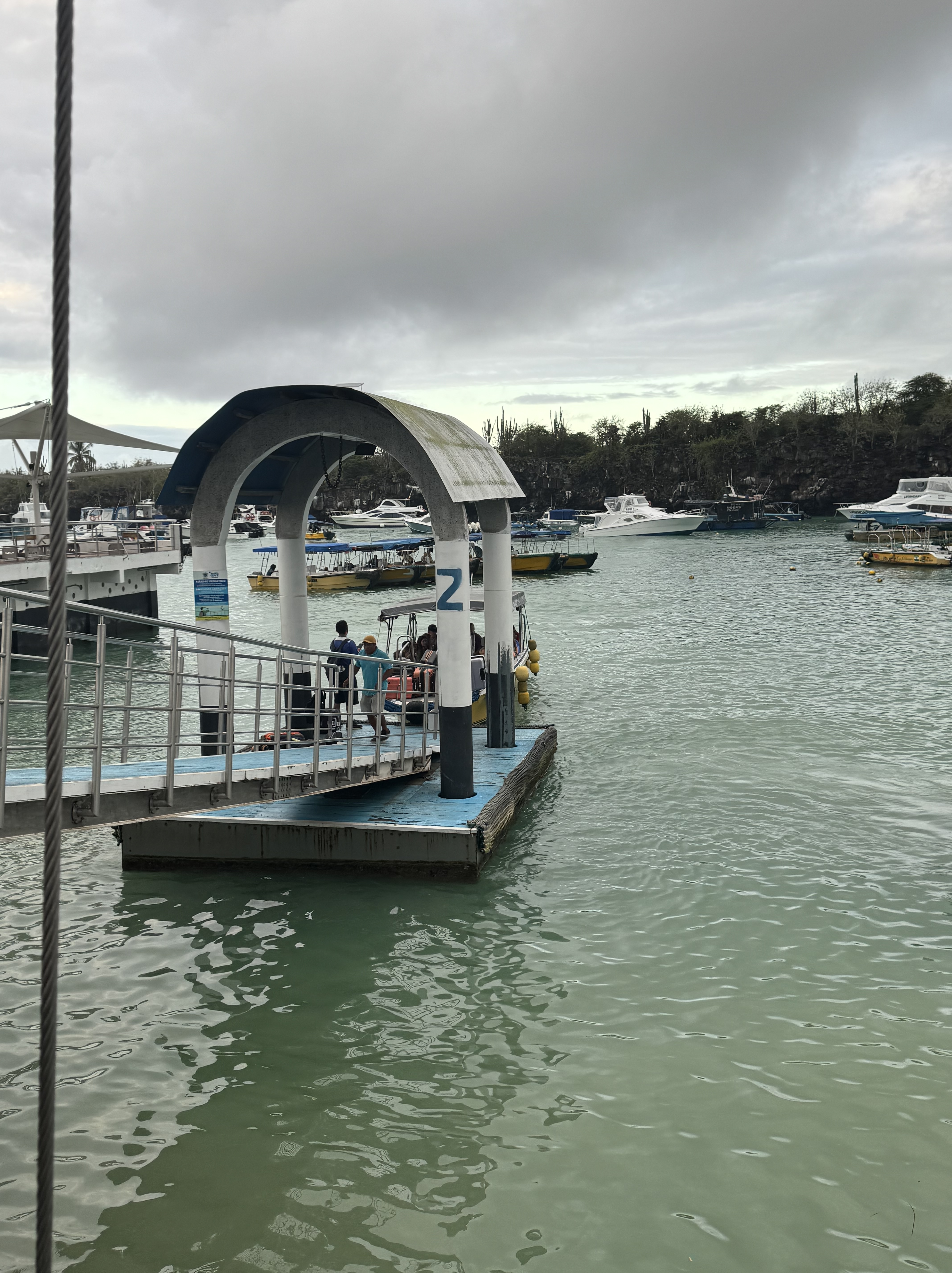
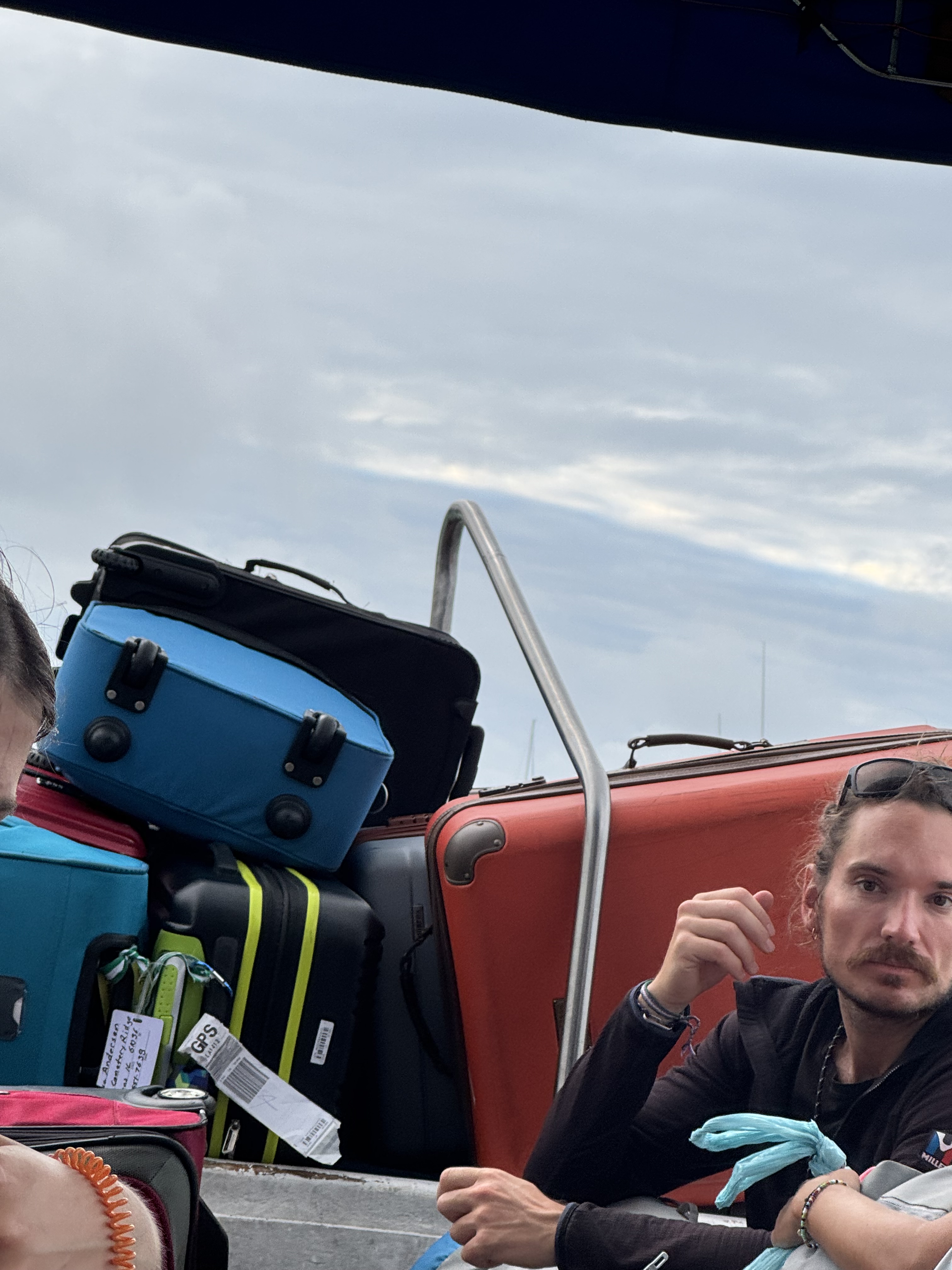
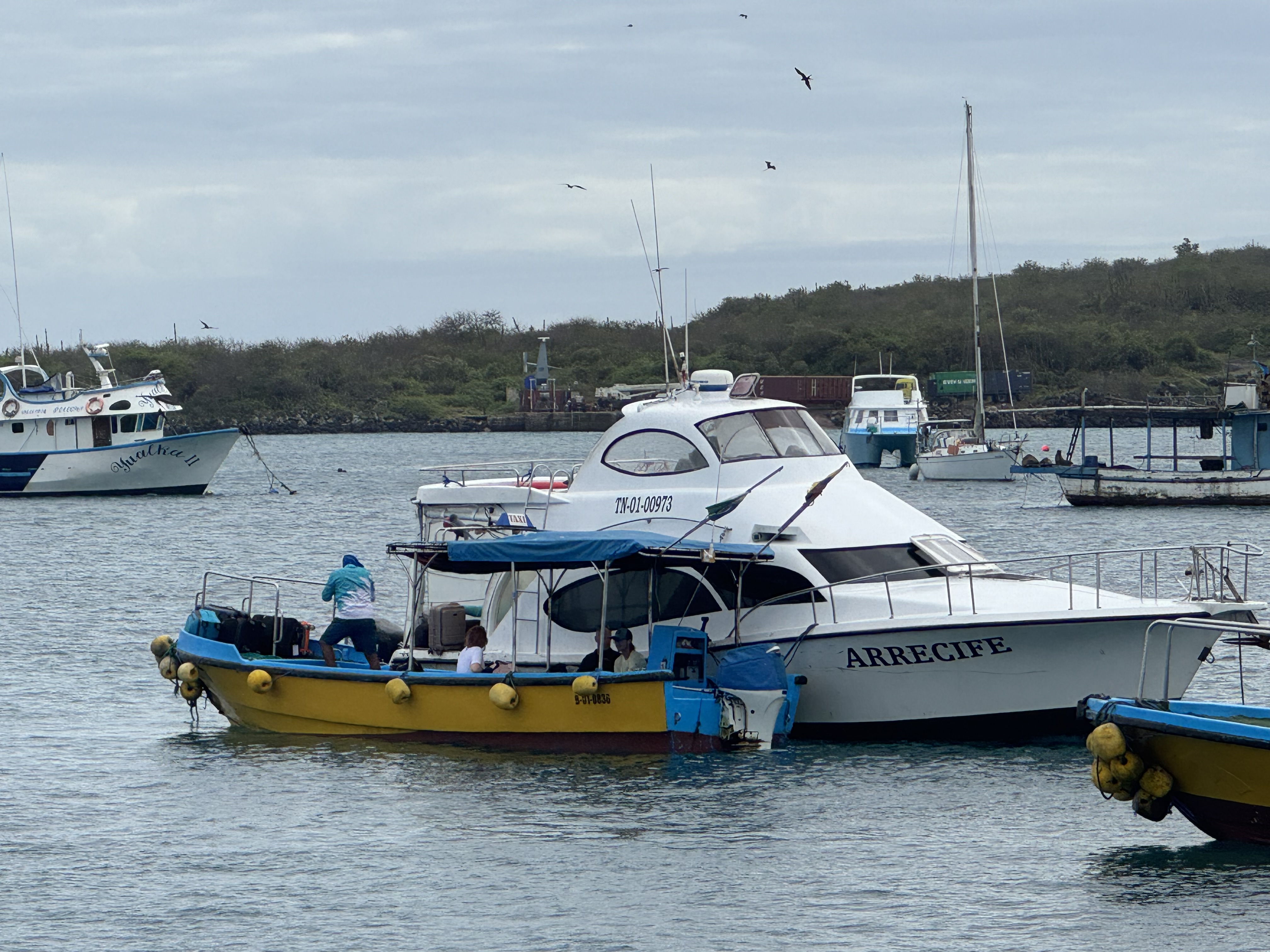
Next, we boarded a water taxi, really just a small boat, with our luggage stacked on the flat part on the back of the boat. Just as a passenger asked, “Does the luggage ever fall in”a suitcase fell into the water. Yes, it was her suitcase. I would have been devastated. Surprisingly, the suitcase floated. A person on another boat fished it out of the water and delivered it to our boat. When we got to the hotel, all the clothing had to be hung to dry. Hotels do not have dryers as we do in the U.S.
After the transfer excitement, we arrived at our transport boat. We had to stand on the side of the taxi boat and step over to the transport boat. Then go down very steep, wet steps to the lower part of the boat with rows of very uncomfortable seats. The only windows were narrow ones high up on the sides of the boat, and they didn’t open. The only airflow came from a few small fans and a hatch opened on the bow. This hatch was above the luggage storage, and water splashed in. Yep! All our luggage was damp when we arrived. Wish I had used a hard-sided suitcase.
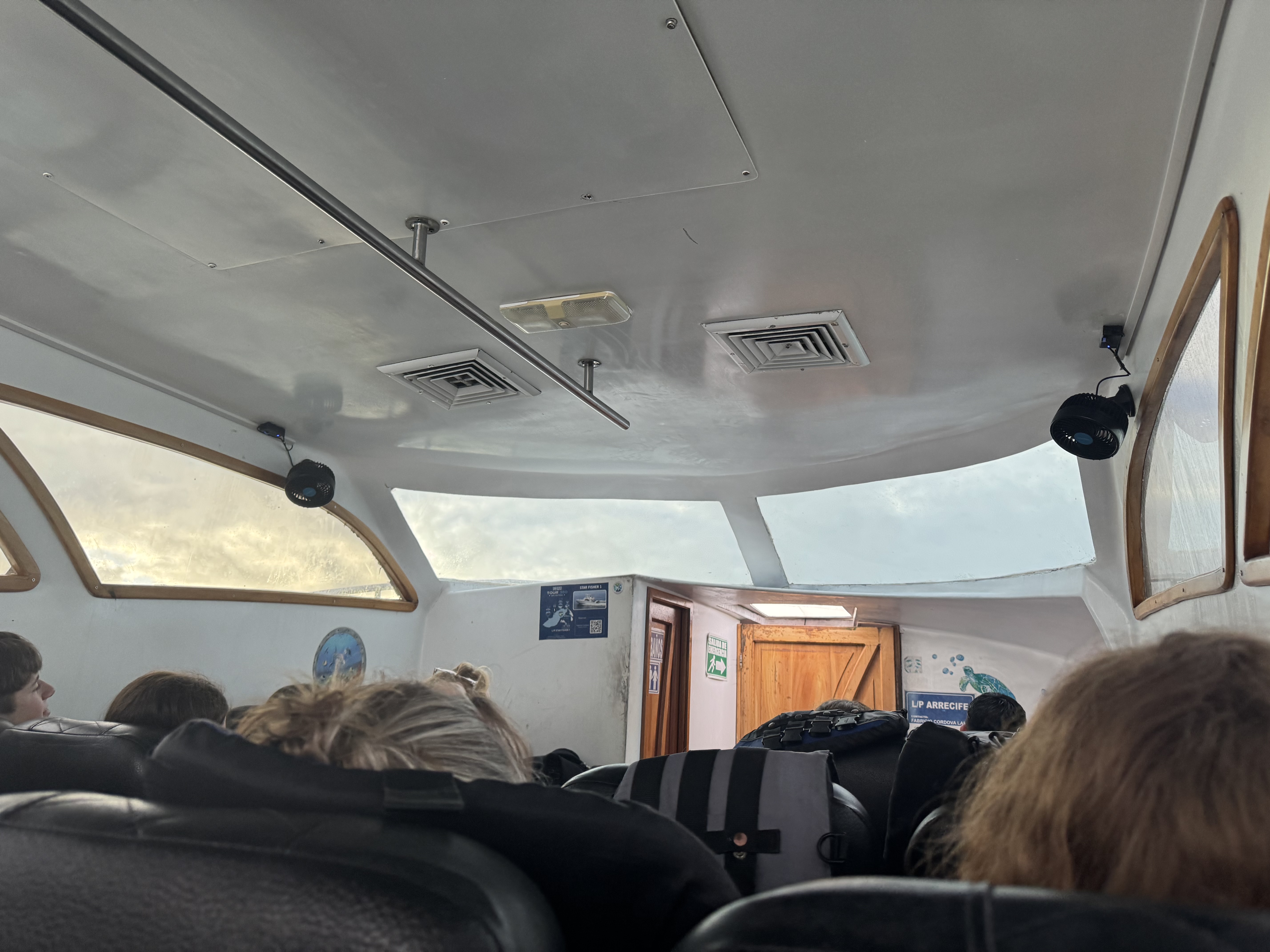
For two hours we rode the rough ocean waves up and down, hitting some waves hard. Many people experienced severe motion sickness. So glad I did not have problems. I did keep a plastic bag in my hand just in case. How to sum up the journey? Hot, salty, still air. Sick passengers. Uncomfortable seats. The young man sitting next to me slept most of the time. When we arrived, I woke him up. The first thing he said was, “I’m hungry. Do you know when we are eating lunch?” This was hysterical. He was thinking about lunch while so many passengers had been throwing up for the last two hours.
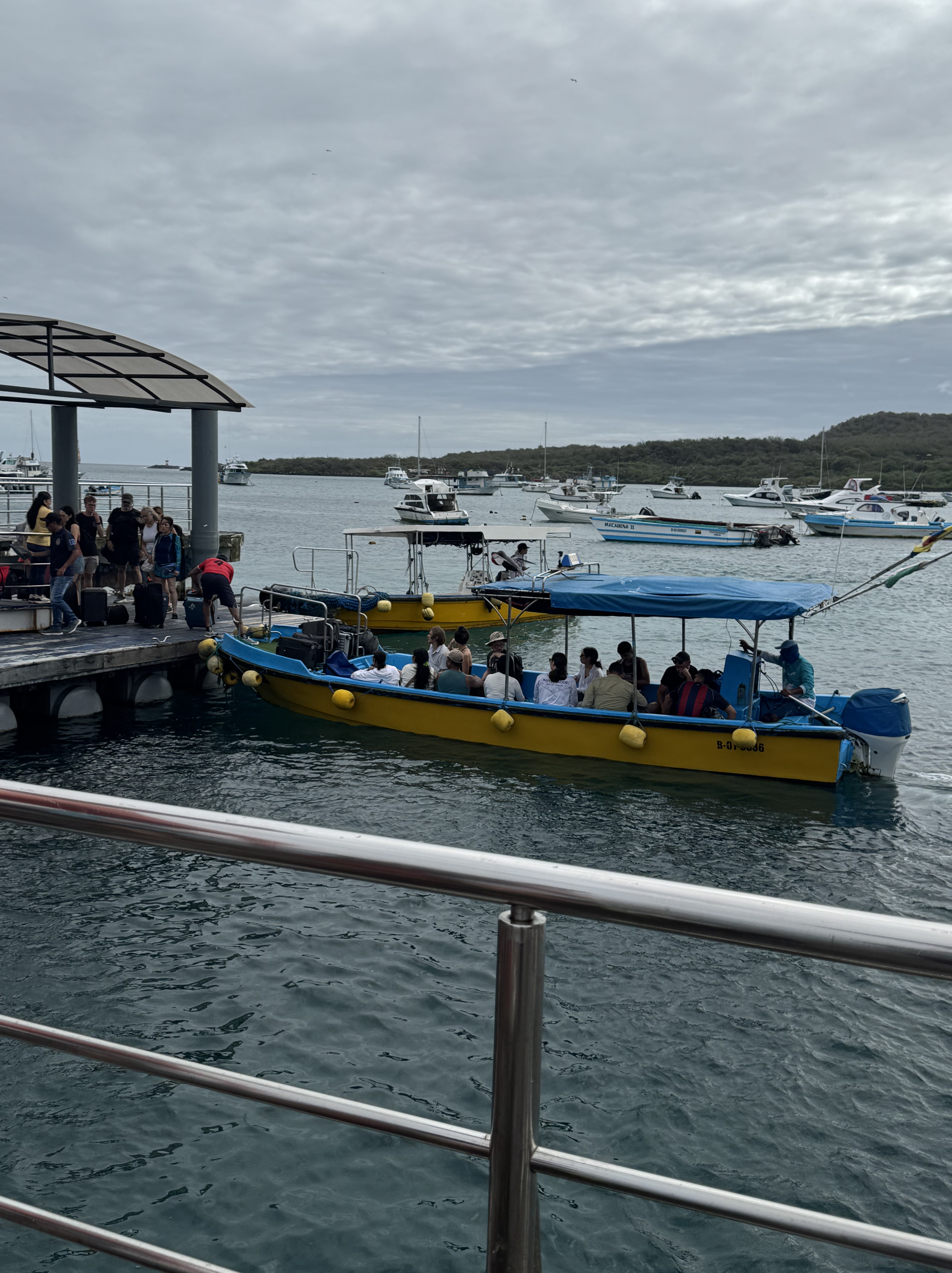
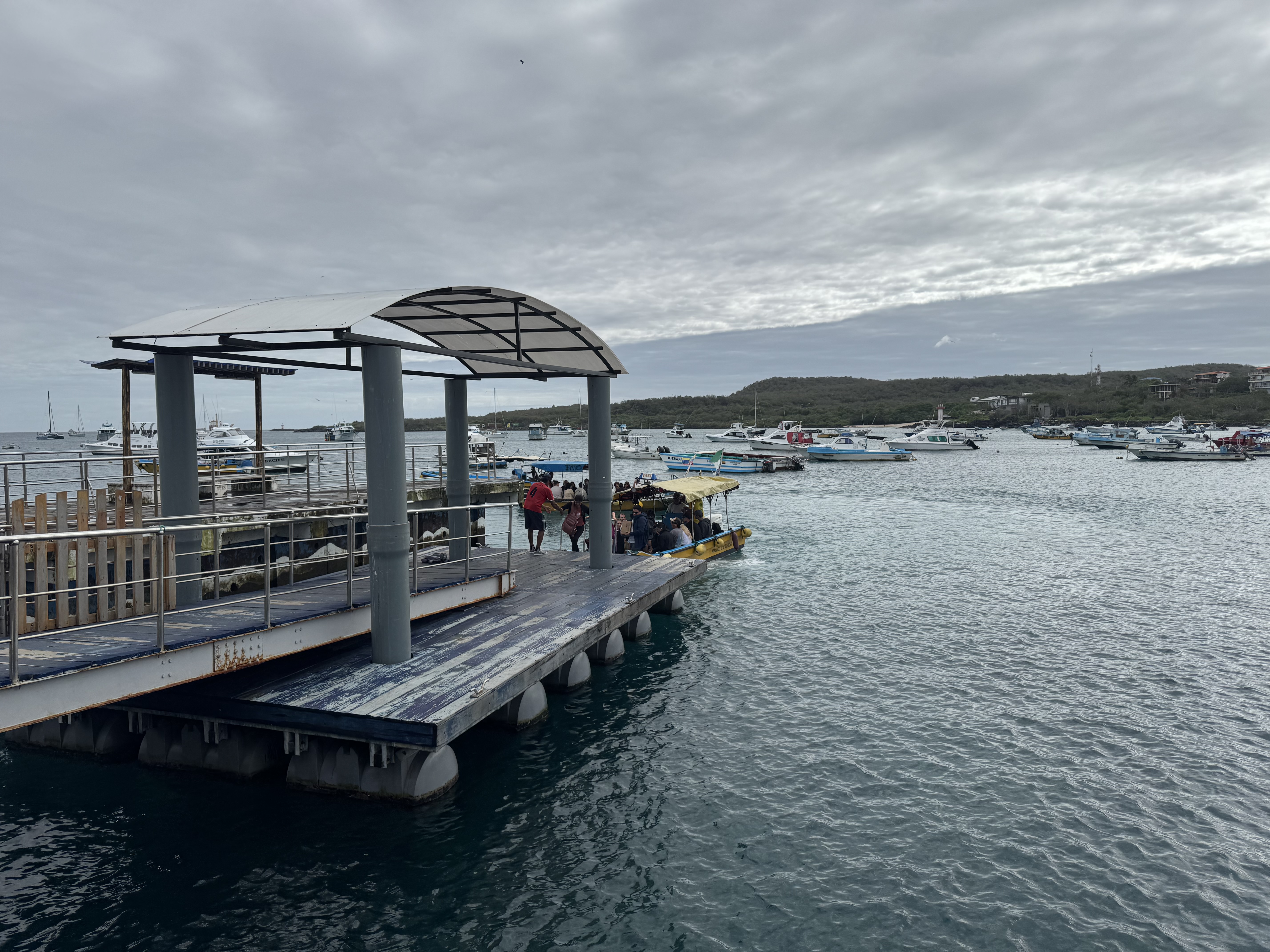
When we arrived at San Cristobal Island, we had to ride a water taxi to the pier. Then wait for another boat to bring us our luggage. The sea lions did a great job entertaining us while we waited. Then we walked to the hotel dragging our luggage. Not all rooms were ready; some of us had to store our luggage in other people’s rooms. Then we were off for our next Galápagos adventure.
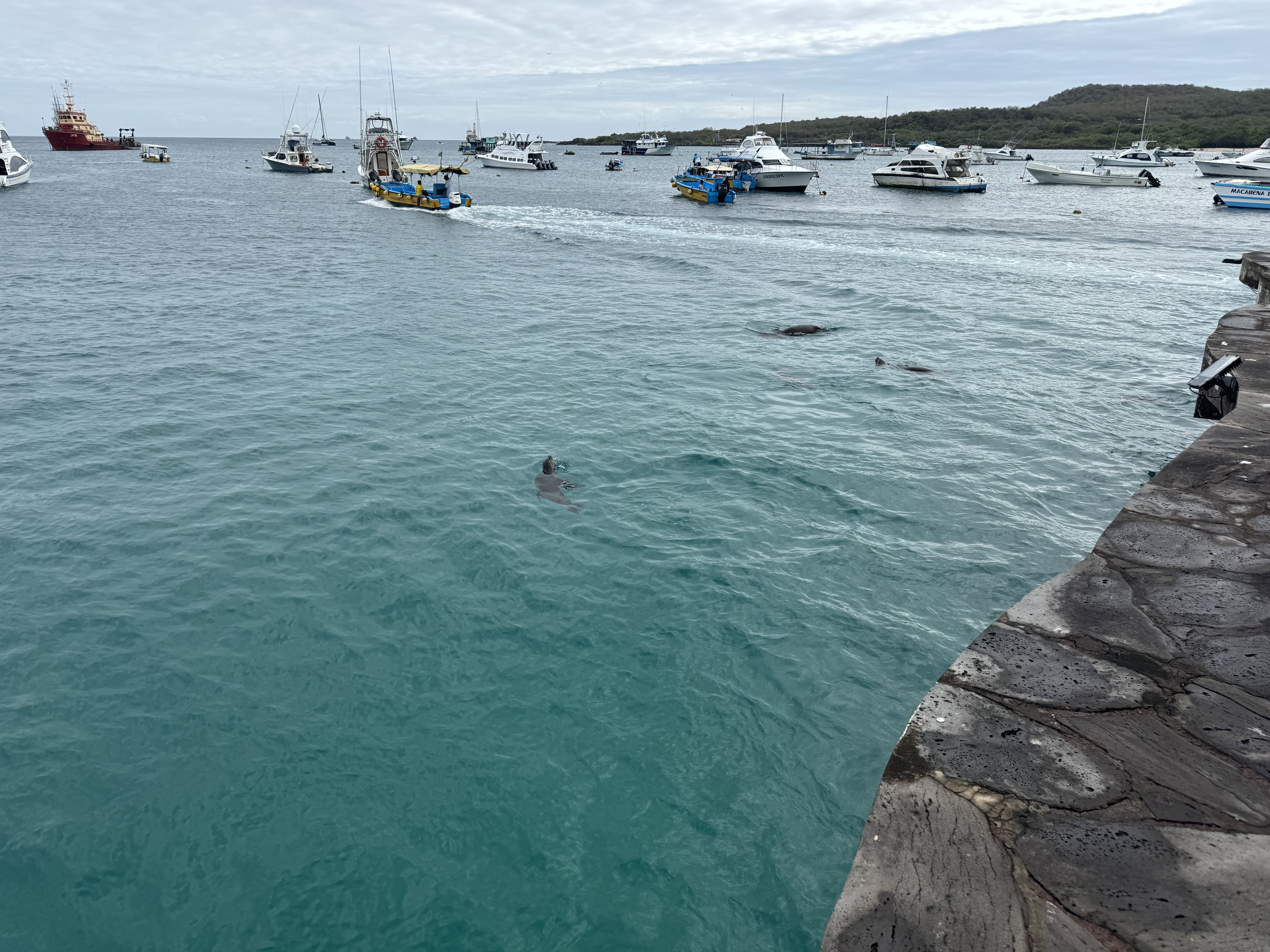
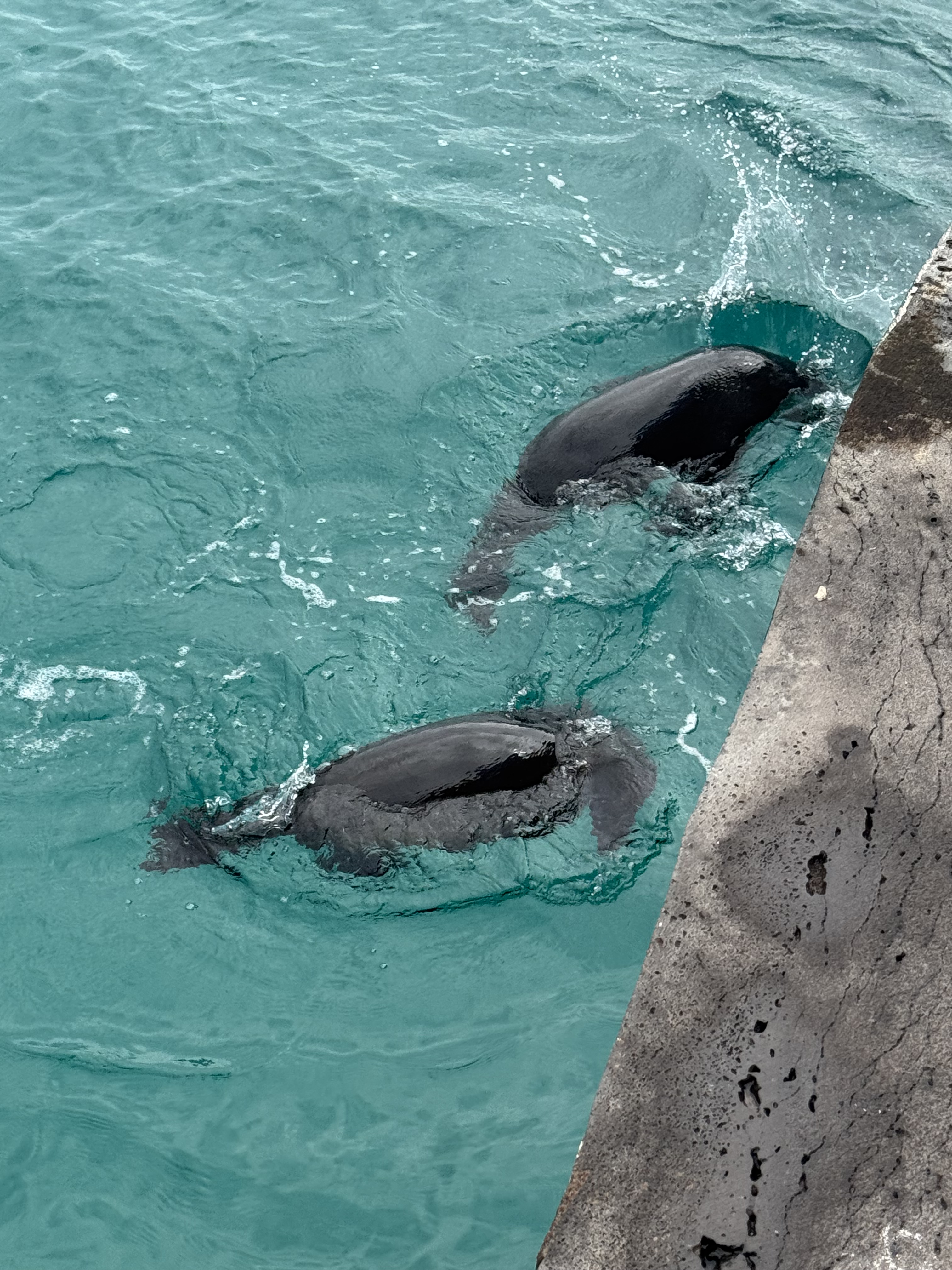
La Galapaguera visit – giant tortoise breeding and conservation center.
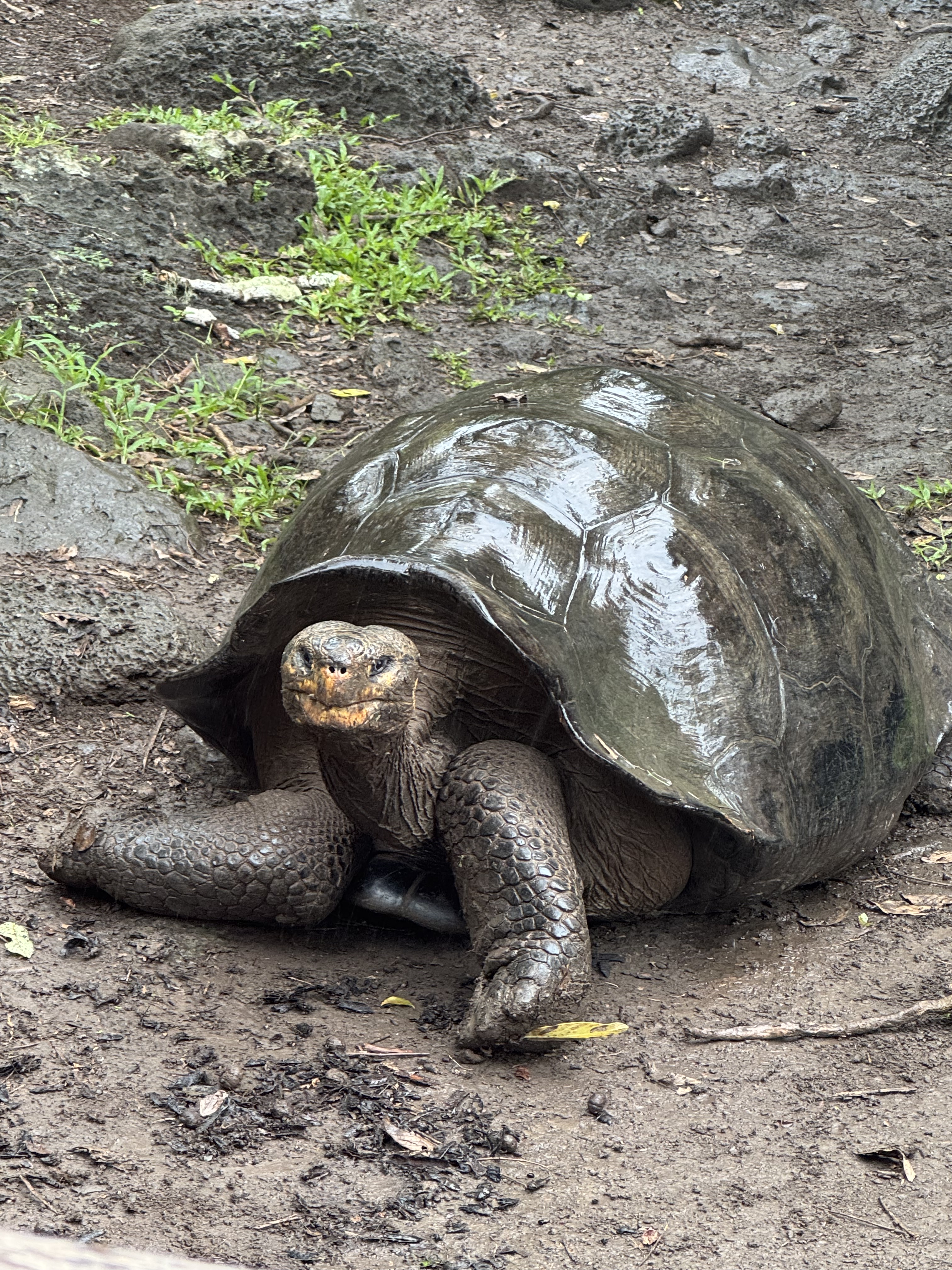
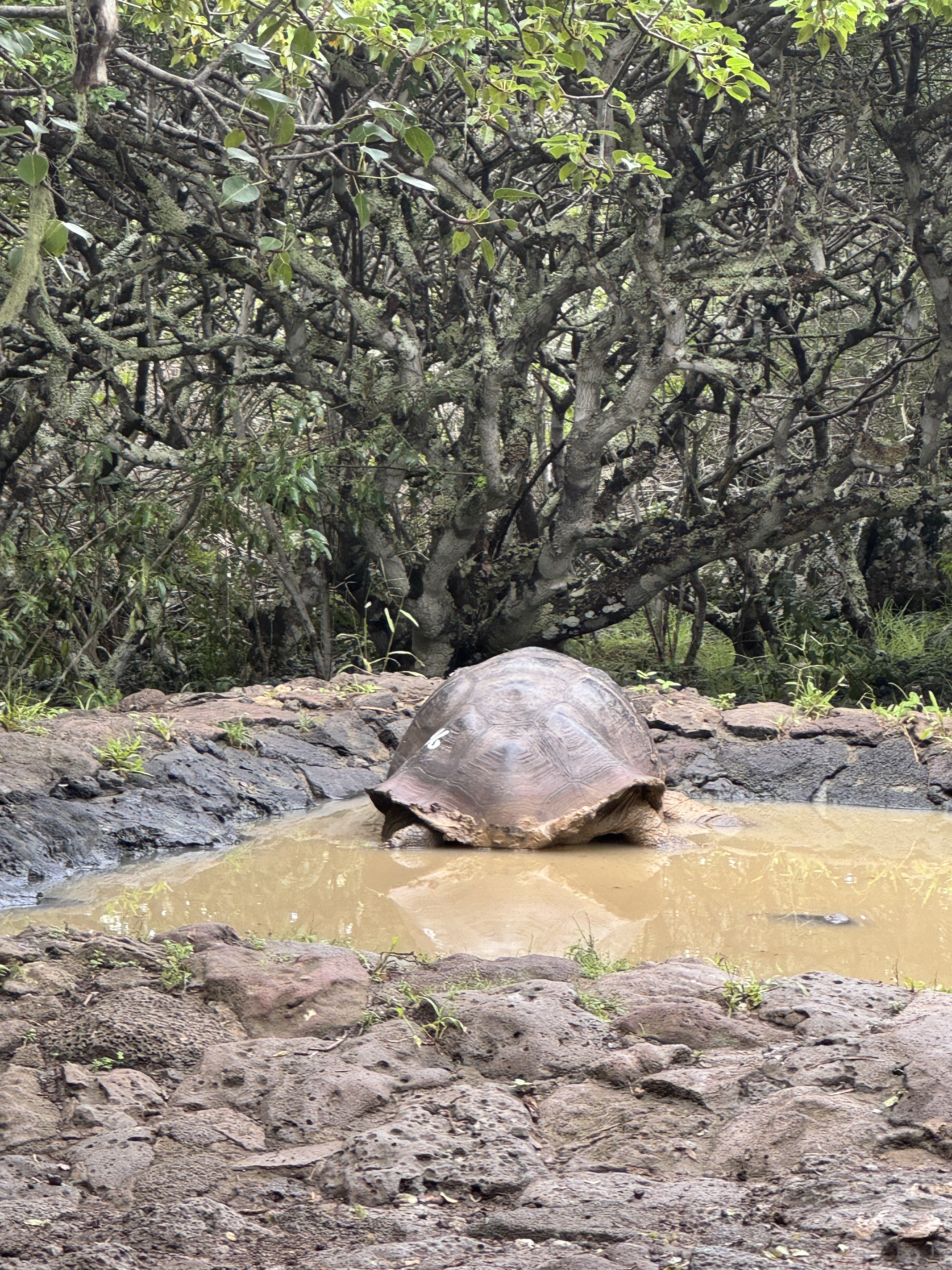
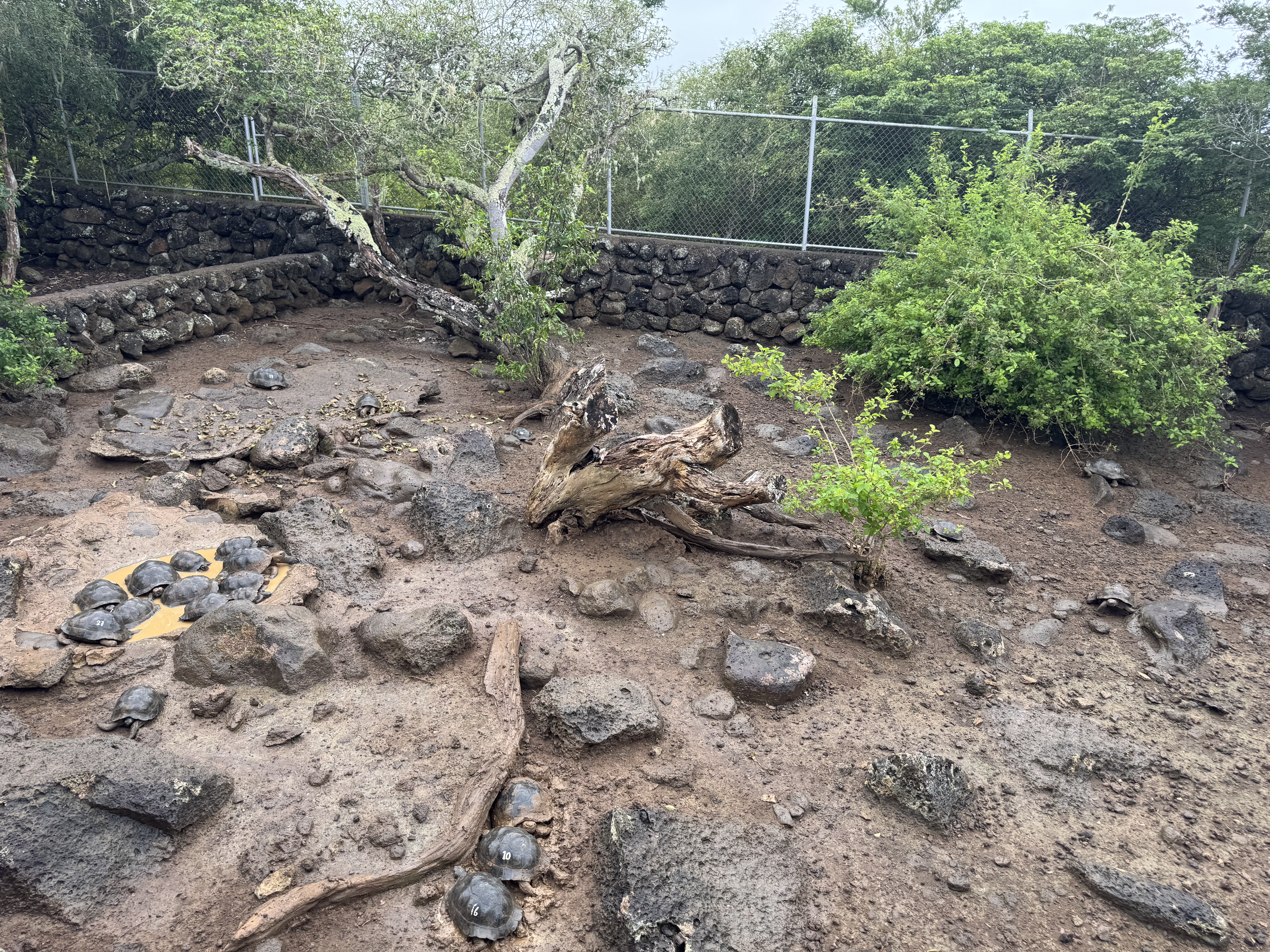
This afternoon we learned about the San Cristóbal tortoise at the conservation center, La Galapaguera. These tortoises have adapted to the conditions specific to this island. They are a combination of the Galápagos tortoise and the Saddleback tortoise. They nest naturally in the conservation area. The biologists build fences around the nests to prevent predators from stealing the eggs. Hatchlings are moved to the research center until around 7 years old. Then they are released back into the wild. The conservation center has been very successful in helping increase the population of tortoises on San Cristobal Island.
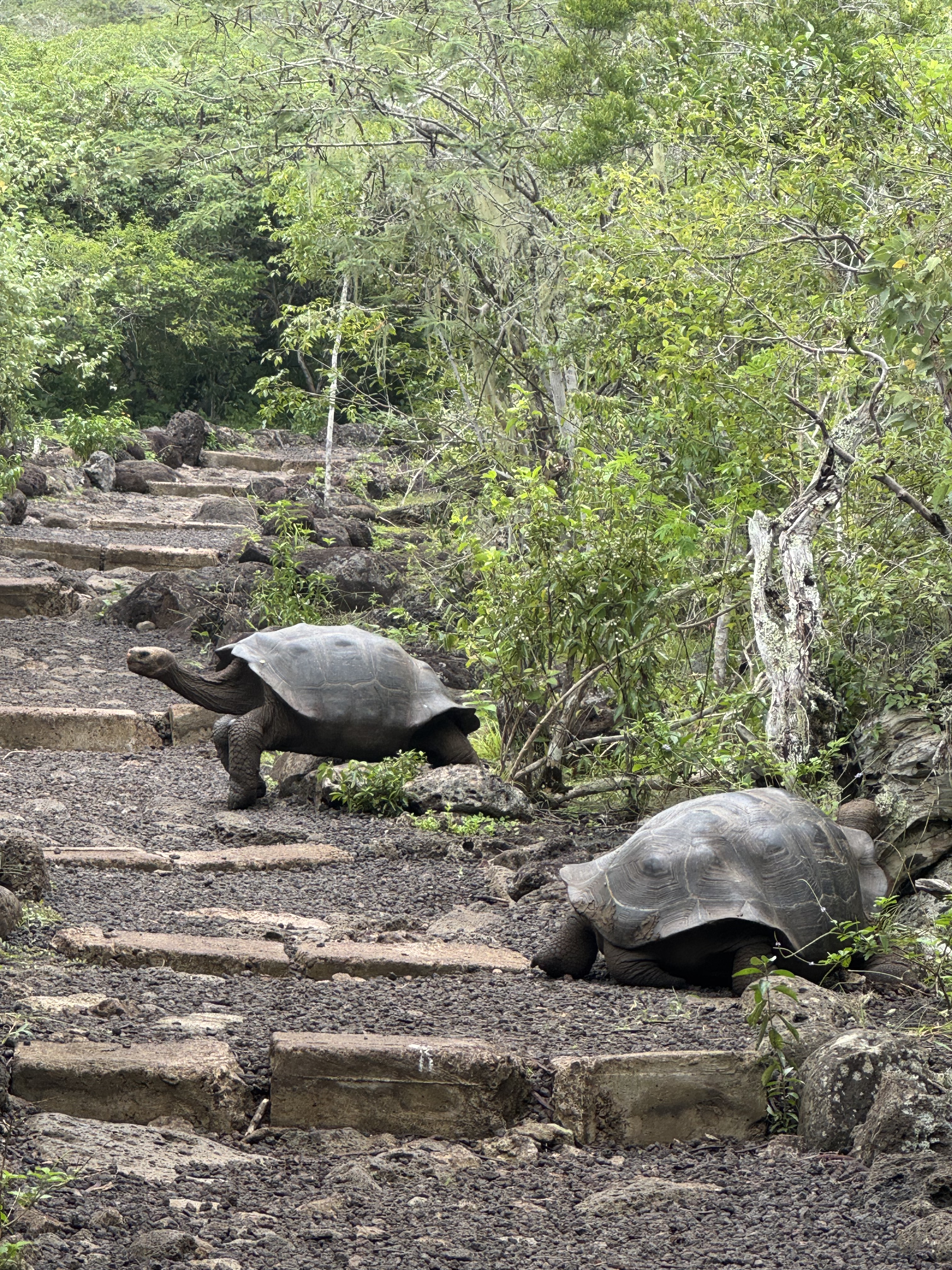
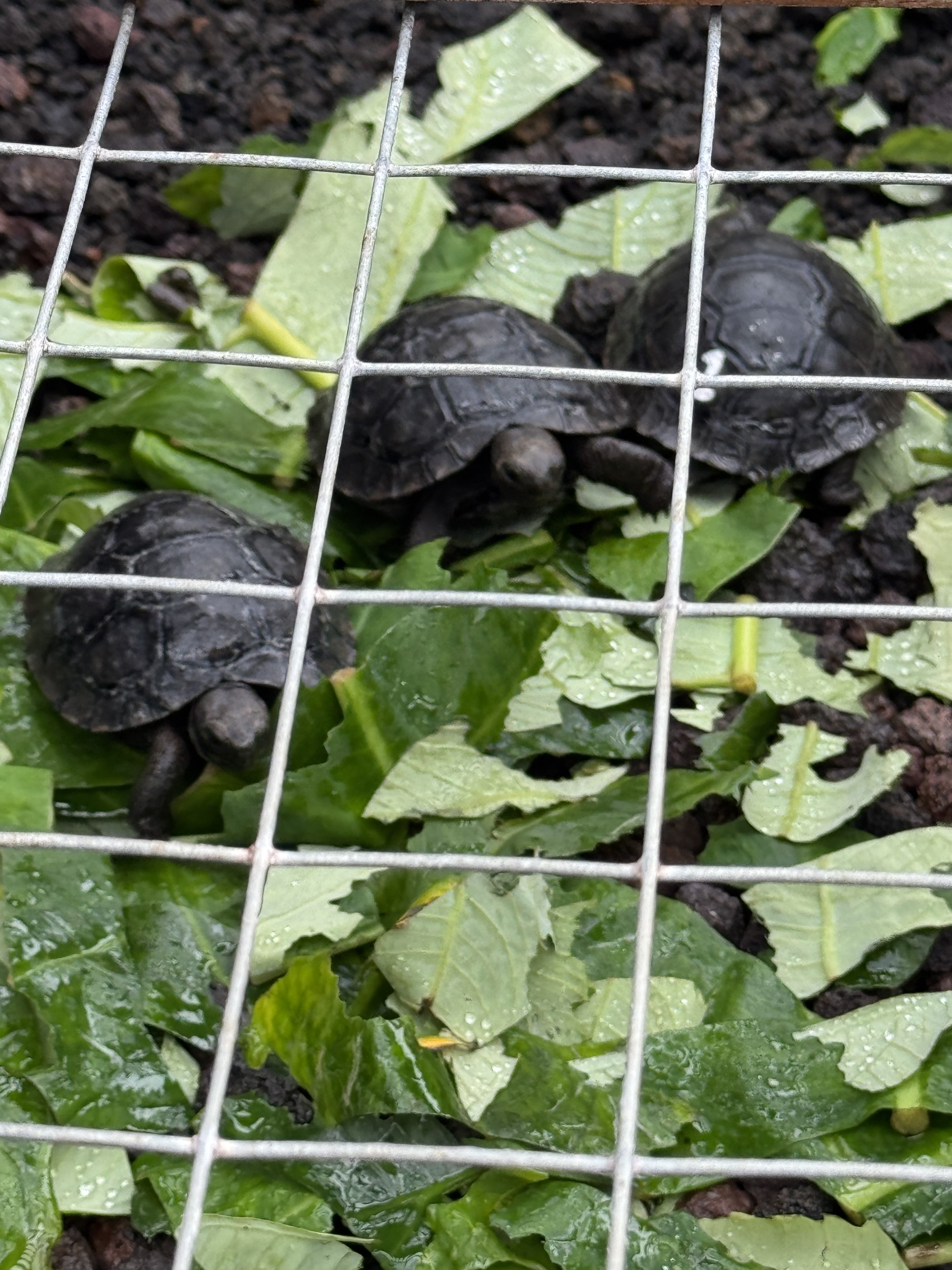
2 months
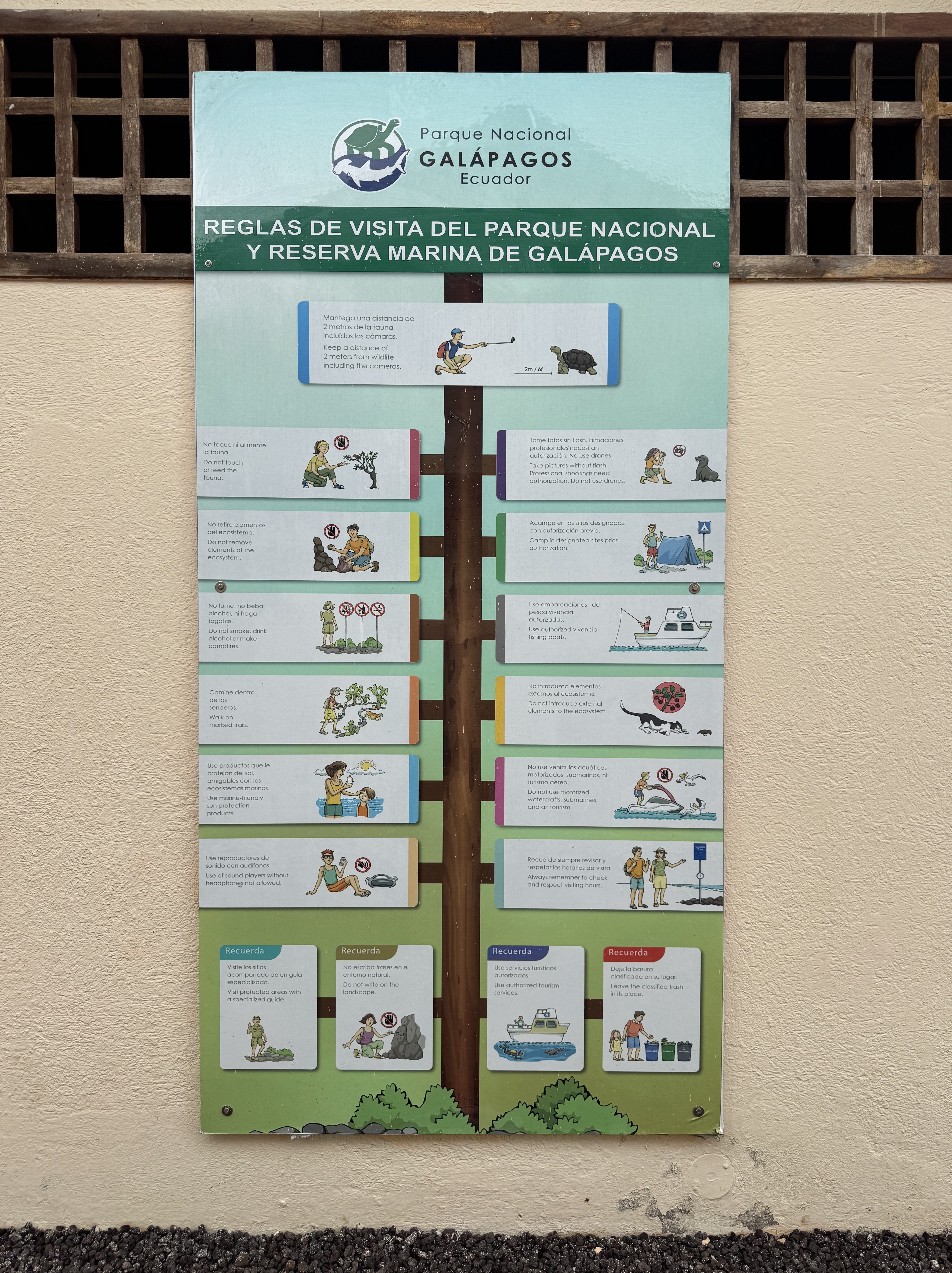
After lunch, we had some free time. The options were watching the Ecuador versus Germany futball match on a large screen in the public square, walking around town and doing a little shopping, or relaxing at the hotel. I chose shopping and relaxing. The futball game was a nationwide celebration. Companies and schools let out for the afternoon. It was fun to hear the crowd roar from my hotel when Ecuador won.
The President of Ecuador declared tomorrow a holiday, and people were given the day off to celebrate. Can you imagine the United States declaring a holiday because a sports team won?
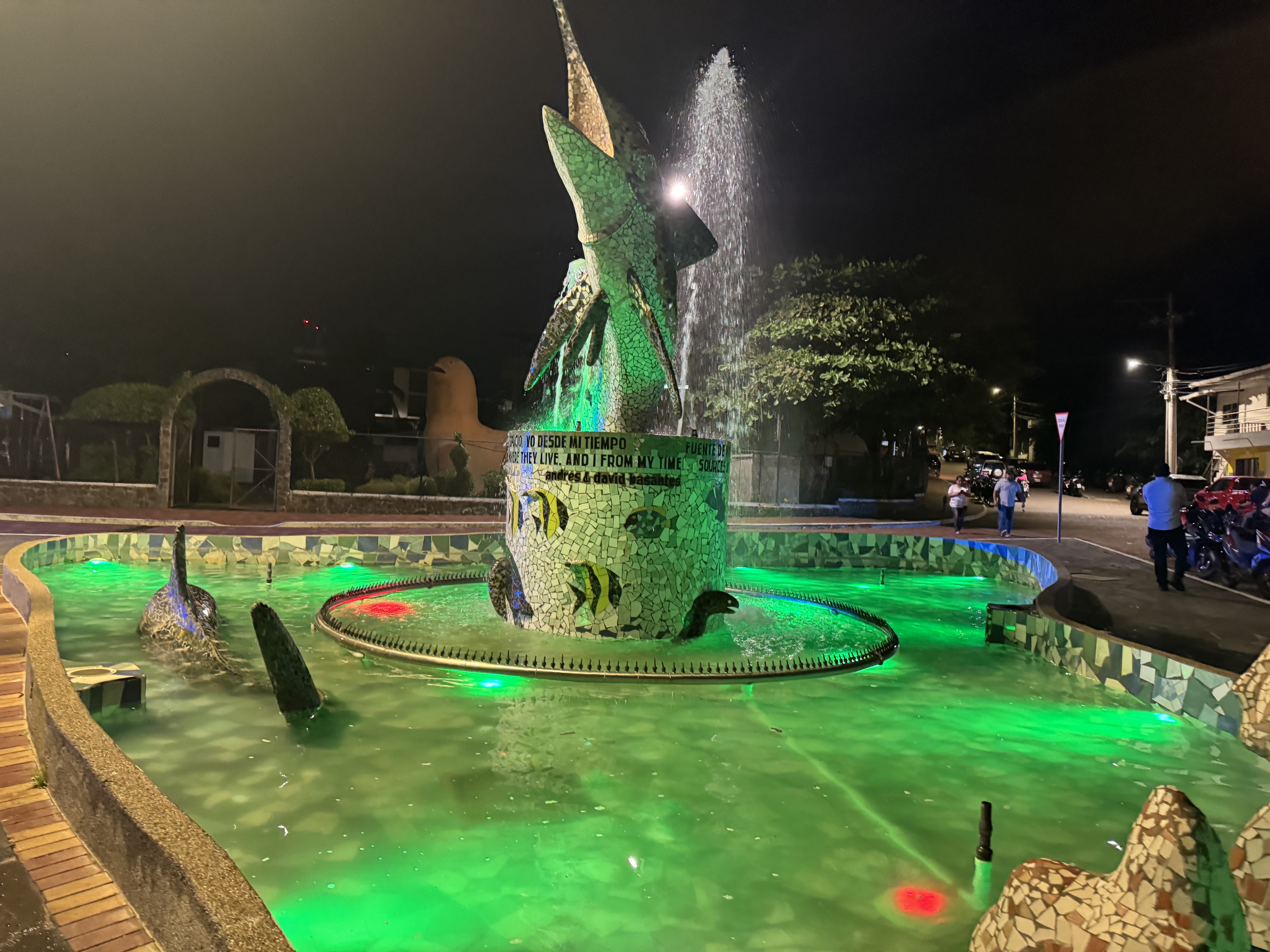
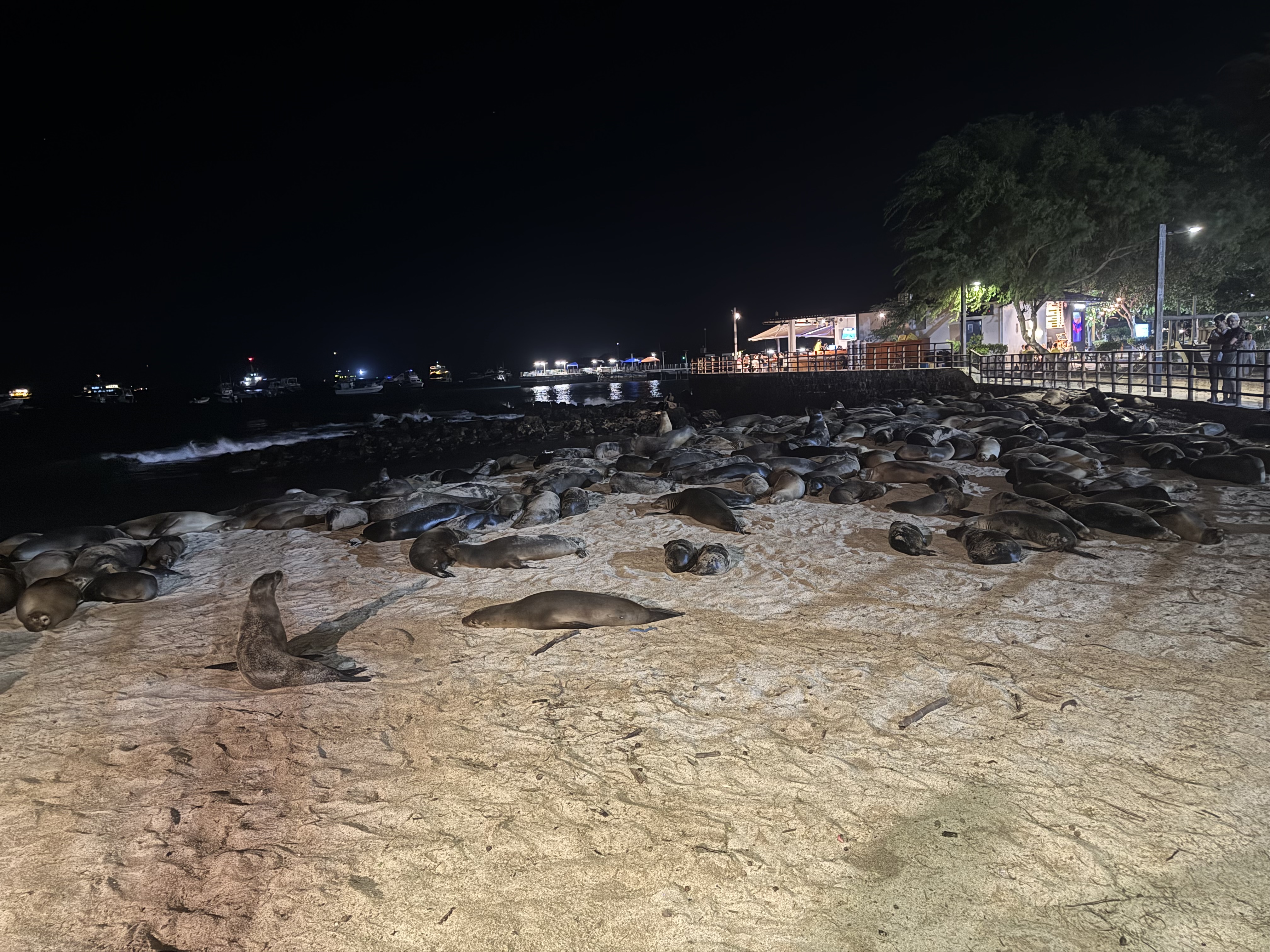
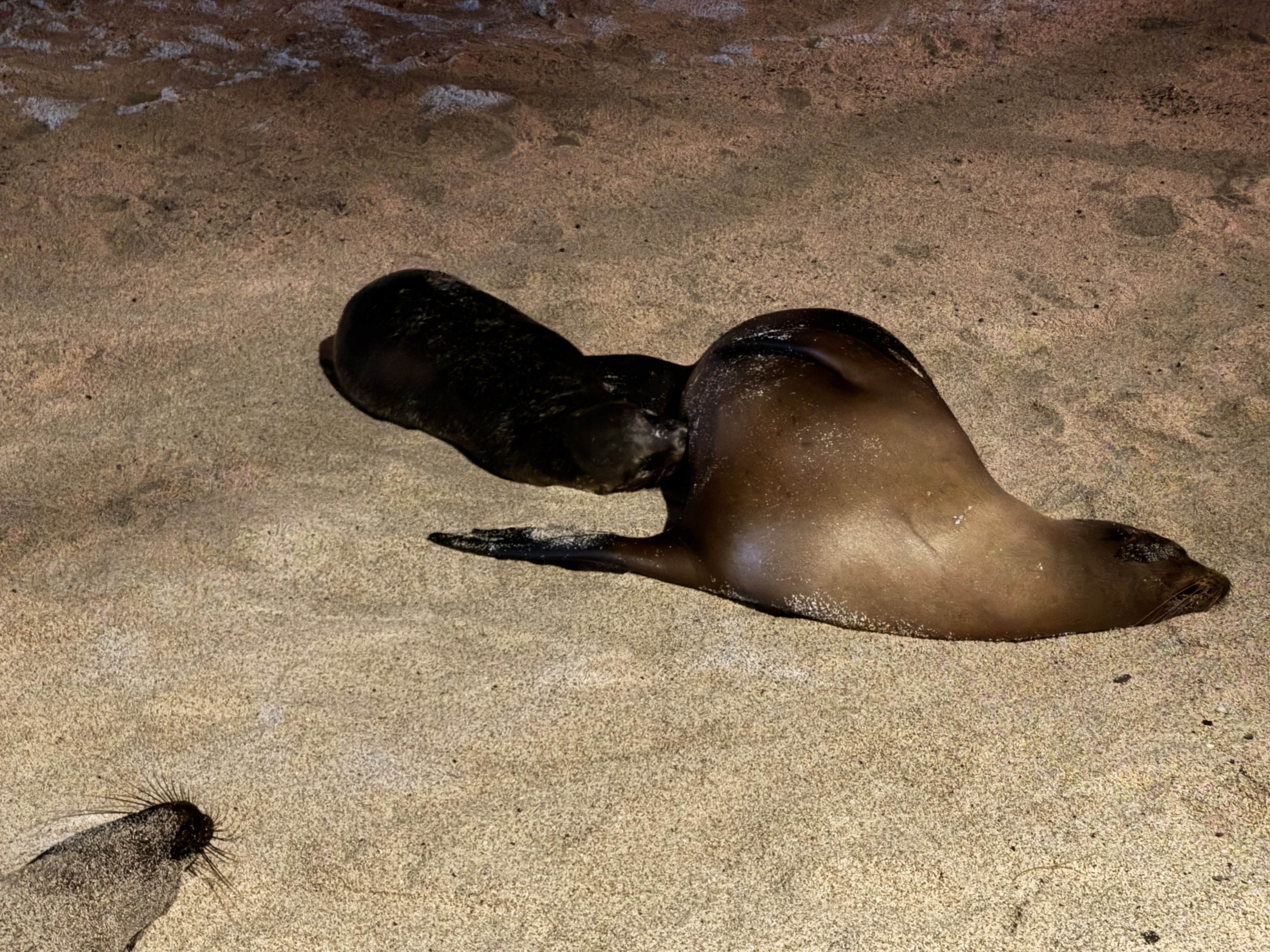
On a walk after dinner, we encountered sea lions covering the beach and a beautiful fountain at the end of the shopping area.
Day seven – June 26, 2025
Today’s island excursion took us to the National Park of San Cristóbal Interpretive Center (Parque Nacional). We learned about Charles Darwin’s visit to the islands. He only stayed for 5 weeks collecting specimens. He ate every species he came across as part of his research. He did not publish his work right away due to beliefs in creation and being against the theory of evolution.
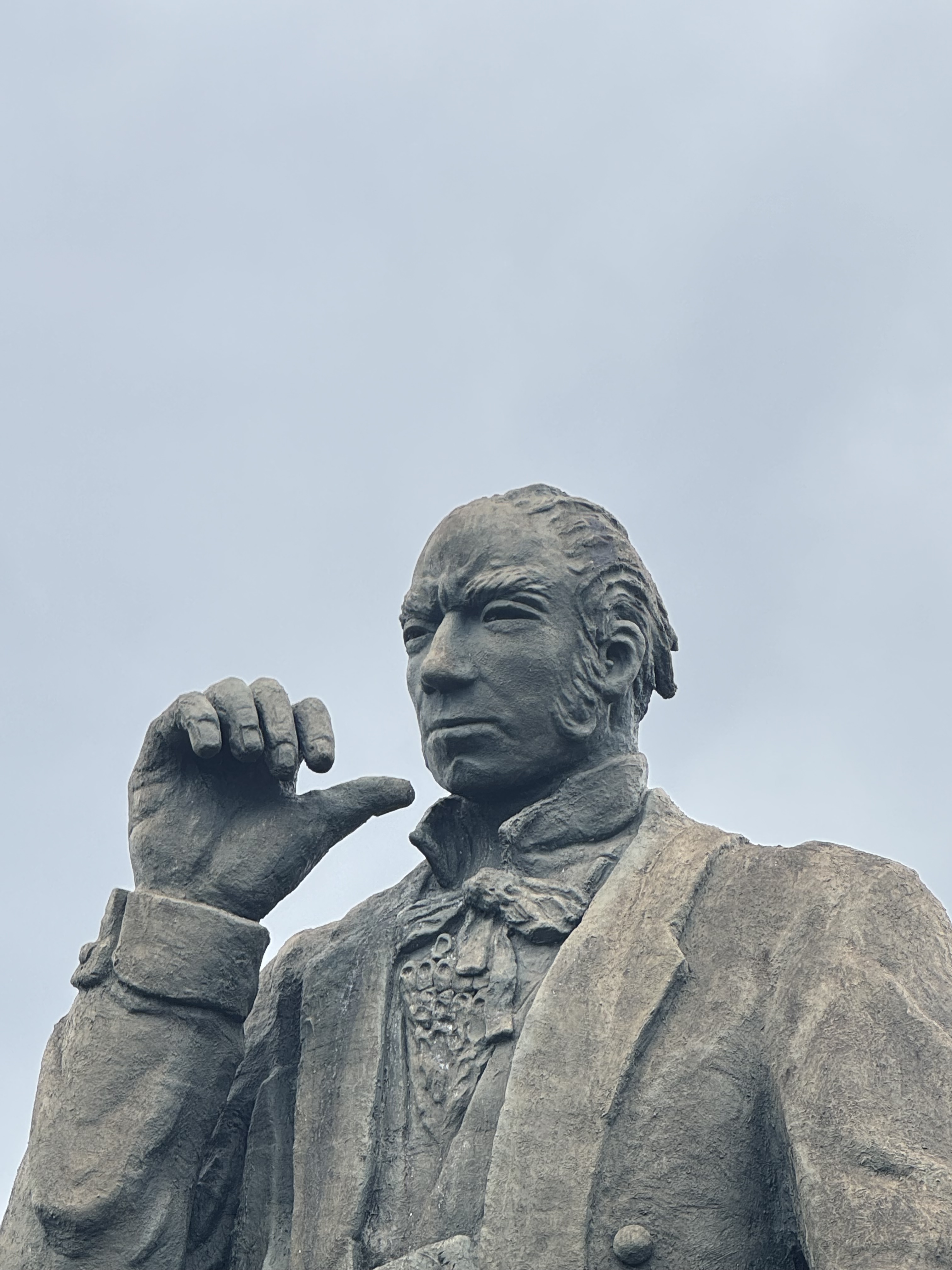
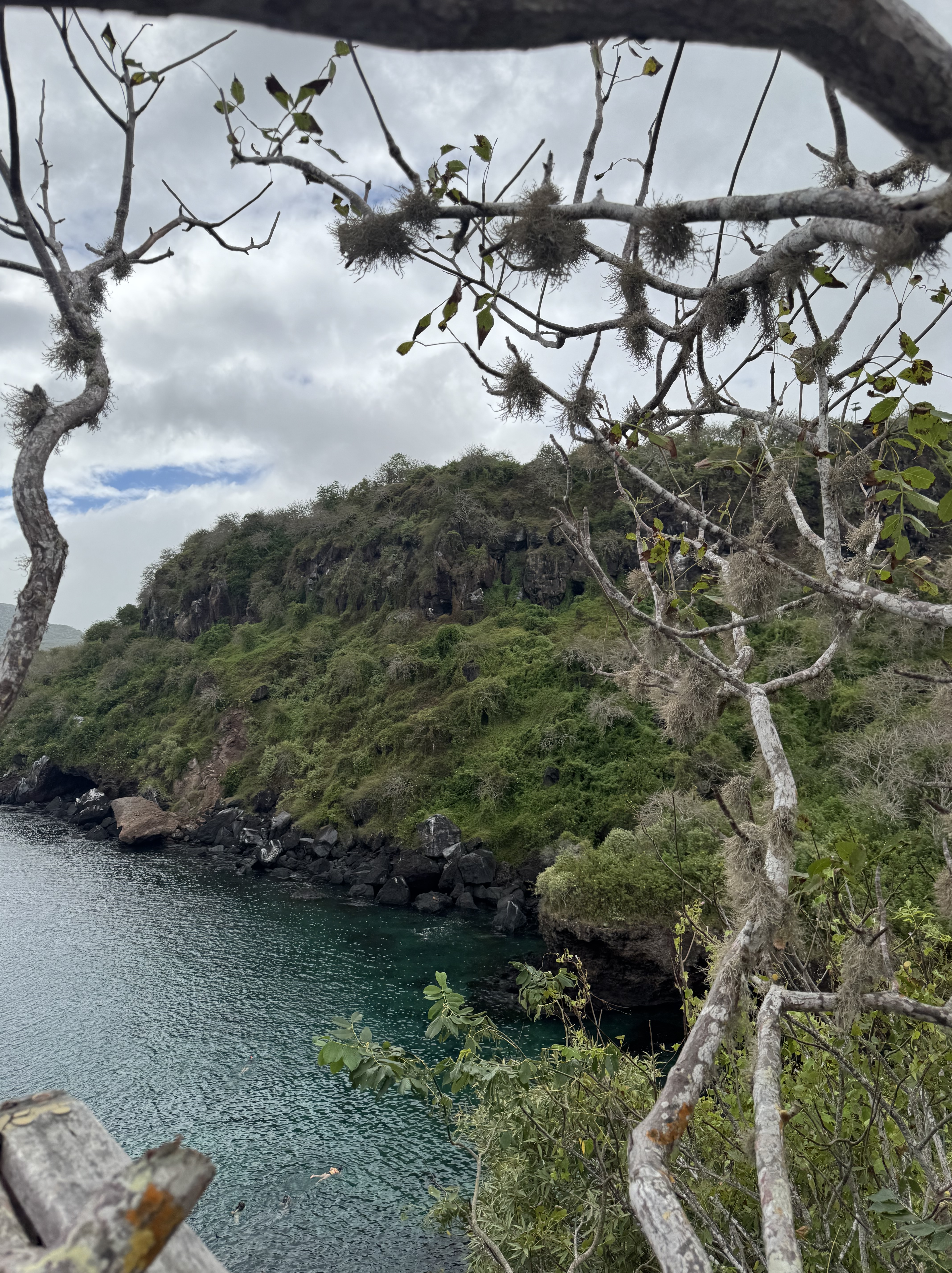
The day is not complete without a hike up a volcanic mountain. The view was amazing. We saw a huge Charles Darwin statue. Then back down the mountain and time for lunch.
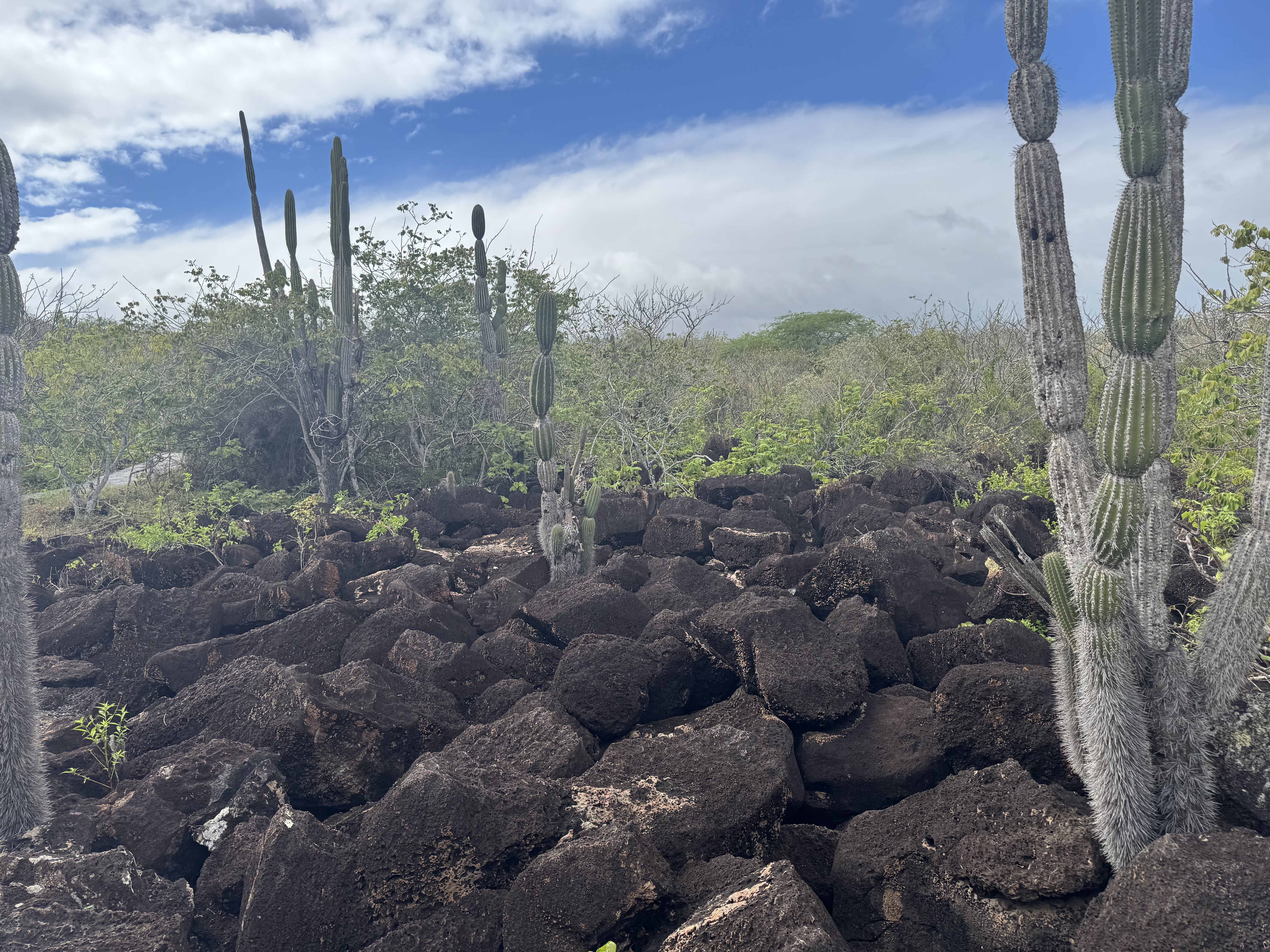
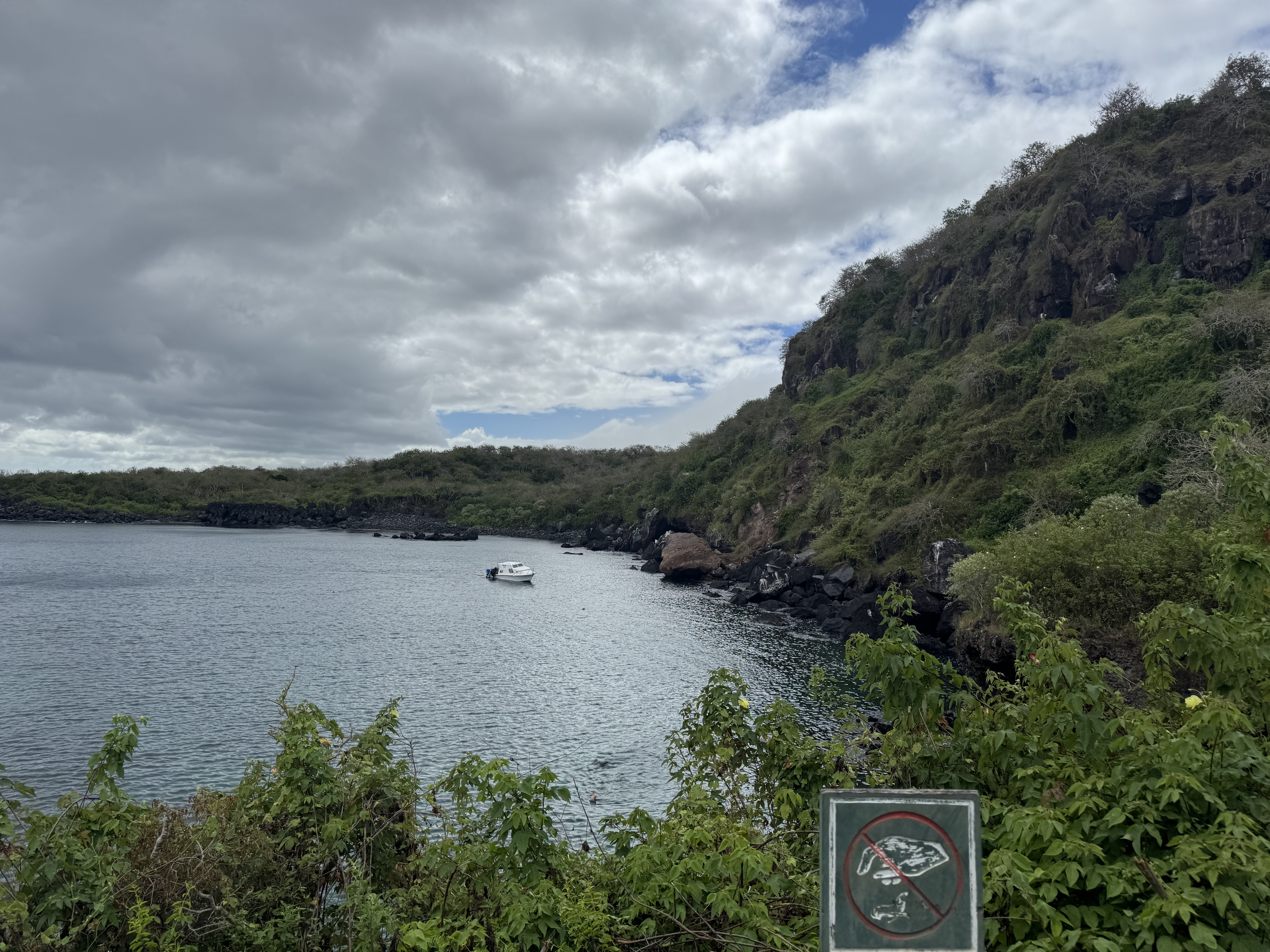
After lunch, we toured a coffee plantation. Travel is always an adventure. And this outing proved to follow that rule. First, it was pouring down rain. Then we needed a bus and multiple cars to get us to our destination. The final event was our bus stalled on our way up the mountainside. We had to get out of the bus and walk to the top of the hill so the bus could travel up the hill with too much extra weight on board. It was very odd. But we boarded the bus again and off we went to the coffee plantation.
Of course, when we arrived at the plantation, it was pouring down rain. The bus could not drive down the field road. So we had to walk in the rain and mud. It was a very short tour, and the farmer had so much he wanted to share with us. I felt really bad for him. A few things I learned were that coffee plants produce coffee beans for 10-15 years but can live for 100 years, and bean flavor is influenced by the plants growing around it.
We also visited a home on the edge of the city to learn from small business owners about their products. We enjoyed tasty fresh juices made with local fruit, coffee with beans from the plantation we visited, and rum made from sugar cane grown on the island. The coffee plantation owner demonstrated how beans are hulled and ground into coffee. The woman-owned juice business makes juice and packages it in freezer bags to sell at produce markets. The rum distillery owners talked about the process of making rum from sugar cane. The rum we tasted was the first batch the distillery bottled to sell. We were able to purchase coffee and rum we tasted. I wish we could have brought home some of the fresh juice.
The day’s adventures ended with beach time and cold beverages. The beach was covered with sea lions and people sharing the space, sunbathing and napping. I have never thought about where sea lions nap when they are tired of swimming. Now I know. They find a beach and sleep in the sun.
Day eight – June 27, 2026
Kicker Rock – full-day snorkeling excursion
What is Kicker Rock? A remnant of a vertical tuff cone formation rising almost 500 feet from the ocean; sea turtles, marine iguanas, rays, Galapagos sharks, and tropical fish.
Today we were divided into three groups. Each group will be on a boat with a snorkeling guide for a full-day excursion. I was in group three and would depart from the pier at 10:30. Sleep late and have a slow, leisurely breakfast to start the day. Then off to the snorkeling store to pick up equipment and meet our guide at the pier.
Our guide was an older man. “Older” defined as older than me. He had lived in the U.S. for decades, leading diving tours off the Florida coast. He was born and raised in the Galápagos. After “seeing the world,” he decided to retire back on the islands and lead snorkeling tours for “fun”. He had one rule: “listen to me and do what I say”. Great rule!
We spent a few hours at a beach practicing snorkeling. I chose to not snorkel. I was a little concerned about the tide and not having the strength to keep up with the group. I was glad I chose to be a spectator today. However, the captain insisted on taking me to the beach in a dinghy, a small, inflatable boat with an outboard motor.
My beach excursion consisted of standing in waist-deep water watching the sea turtles swim by. It was very relaxing. And I learned how to get in and out of a dinghy. A skill that could come in handy on future adventures.
The National Park Service maintains a schedule of boating excursions to Kicker Rock. They want to ensure the area does not become overcrowded and disrupt wildlife. The group got off the boat on one side of Kicker Rock where the tide was quite strong. Then they “swam”, or the current pushed them, through a large opening in the rock formation. The opening was formed by erosion.
The group then swam along the calmer side of the rock, looking for fish and swimming underwater. Some swam through schools of fish, a few saw sharks, and all got back to the boat safely.
My highlight for the day was watching Blue Footed Boobies nesting high up on the rocks and seeing more sea lions sleeping. I really wondered how they climbed up the steep, sharp rocks.
A beautiful day on the ocean watching birds, enjoying the fresh, salty air, and another great lunch of fresh tuna steak.
Day nine – June 28, 2026
Hasta luego Galapagos!
Our adventure in Galapagos has come to an end. It is sad to leave the islands and fly back to Quito. I would really like to see the other islands in the archipelago. Someday I will return!
La Mariscal artisanal craft market
Back in Quito for a little shopping. The market is known for souvenirs, crafts, and handmade items from throughout the country: blankets, paintings, hats, jewelry, bags, chocolate! Shop! Shop! Shop! I bought some earrings, a warm alpaca hat, and an alpaca shawl. I can’t leave Ecuador without some Alpaca items.
Dinner tonight was pizza. Ecuadorian pizza is much like American pizza with a few different herbs in the sauce. A great change from chicken or fish, which was lunch and dinner daily while on the islands. Then back to the hotel to organize our day pack for tomorrow and pack suitcases. This will be a challenge: packing swimsuits for the hot springs, clothes for the flight home in our day pack, and suitcases under 50 pounds.
Day ten – June 29, 2026
Papallacta volcanic hot springs
Today we have an evening departure, so it was off the hot springs for some relaxing before our flight home.
On the drive through the Andes to the hot springs, we stopped at a shrine at 13,000 feet. It was cold, sleeting rain, and very windy. The winding roads were a bit icy. The tour director told us there are many automobile accidents due to the poor road conditions. The mountain drive was beautiful, even with the ups, downs, and corners.
The Papallacta Hot Springs were amazing. The pools were rich in minerals and sulfates, ranging from cool to hot, and had health and beauty benefits. These hot springs were rated as the “gold” standard for hot springs. We are 65 kilometers from Quito at 3,300 meters above sea level. The pools are fed by the Antisana Volcano. The mineral-rich water does not have the sulfur smell like many hot springs.
It was rainy today and temperatures were cool. But the water felt amazing on my sore, tired muscles and joints. There were 10 different pools, raning
flight home
Chao Quito, Ecuador