
One may ask how does a teacher from a small town be selected for an adventure to Malawi, Africa? During the school year, the high school cultural geography class participated in the Global Concerns Classrooms program. Students completed curriculum materials learning about Non-Government Organizations and complex emergencies. Then attended a youth summit in Chicago where they worked in groups developing a plan to provide aid to a country experiencing an emergency situation. Students then develop a community action project to address emergency crisis around the world. This made the students eligible to apply for a field study to Malawi, Africa. One student from class applied and was awarded the opportunity to learn about the humanitarian work of Concern Worldwide. I was asked to participate in the field study as a teacher chaperone for the three U.S. students traveling on the field study. (One student from my class and two students from Boston, MA.


Community Action Project explaining the work of Non-Governmental Organizations (NGO)
Video explaining the Community Action Project: Non-Governmental Organizations
Preparing for the trip
There are many details to take care of before traveling. First a passport. You must ensure your passport does not expire within six months of travel. I am not sure why this is a rule, but very common in many countries. So if you are planning to travel first check the expiration date of your passport. Next check to see if you need a visa. Malawi does require American citizens to obtain a Visa. The country of Malawi does not require American travelers to apply in advance. (Some countries do require obtaining a Visa before traveling.) How do you figure out if you need a visa to enter a country? Check the U.S. State Department website. This site provides country information, travel to and from a country, safety, and security. Check it out. A great resource of information. It is also important to register with the state department in STEP (Smart Traveler Enrollment Program) when traveling to another country. If a security emergency occurs while you are in a foreign country the state department will know you are there and may need assistance.
The next thing to take care of are vaccinations. When traveling to a country with poor health care and sanitation or large mosquito problem, it is important to get vaccinations to protect your self. It is not possible to prevent a person from contracting all diseases when traveling. But it is important to try to be safe. The list of recommended vaccinations is extensive: Hepatitis A and B, tetanus, thyroid, yellow fever some of the most important. It is also good to take malaria medication while traveling to prevent contracting the disease. I will also be traveling with an antibiotic just in case I do get sick I will be able to start medication right away. Again check the State Department website. Then check the Centers for Disease Control and Prevention (CDC) website for health risks in each country and vaccination requirements.
Next to consider is clothing. What to pack? It is currently winter in the Southern Hemisphere. It will still be warm, with intense sun, yet cool at night. There are also cultural considerations to take into account when packing. The typical clothing worn in the United States is not appropriate in Malawi. Shorts, skirts above the knee and bare shoulders are not acceptable clothing in a conservative country that is a mix of Christian and Moslem. Spending a lot of time walking must be considered when selecting shoes. The last important part of packing is how much, or how little, to take. The best way to travel is with carry-on luggage only. This means one bag 20 inches by 14 inches by 9 inches maximum size and a small personal bag such as a backpack or purse. Why is it best to not check a bag? There is always the possibility checked baggage will get lost. You are taking a risk of not having your luggage for days or possibly not at all. So when possible go with a carry-on bag.
So what I am going to pack for an 8-day trip, using a carry-bag, during the winter season in Africa? Let’s start with shoes. I am planning to wear my tennis shoes. These will be my primary shoes I will wear most of the time. They are the heaviest shoes I am taking so to save on the weight of my luggage I will wear them. I am also planning to take one more pair of light tennis shoes and a pair of sandals. Next essentials; socks, underwear, etc. I always pack enough for the entire trip. I try to avoid washing socks and underwear. They do not come very clean with hand washing.
Now to consider clothing. I always wear the same clothes on the plane to and from my destination. Sounds a little gross but I will not wear this outfit during the tour. It will have time to air out. I could wash it if necessary as there will be plenty of time for these clothes to dry before I need to wear them again. This outfit must be comfortable. I also take a scarf on the plane with me. It comes in handy to wrap up in if the plane is a little chilly and then can be worn in the country if we visit a religious site that requires a head covering or for extra warmth if needed.
Here is my list of what I will wear during our adventure: one pair of jeans, one pair of quick dry pants (just in case I need to hand wash a pair of pants these will dry overnight), one pair of quick dry capris (these will be worn on the first part of our travel from O’Hare to JFK but can also be worn in Africa if temperatures allow), three button up the front long sleeved shirts, three long sleeved dry fit shirts, two short sleeved dry fit shirts, a skirt and knit top to wear if we need to get somewhat dressed up, a jacket, a t-shirt and yoga pants to sleep in.
We will travel from Chicago O’Hare to John F. Kennedy airport in New York (a two-hour flight) the day before we depart for Africa. We will stay overnight in a hotel near the airport. The next day we have two flights before our arrival in Malawi. First a fifteen-hour flight from JFK to Johannesburg, South Africa. A couple hour layover and then a two-hour flight from Johannesburg to Lilongwe, Malawi. On the return trip, we will travel from Lilongwe to Johannesburg. Then a stop in Dakar, Senegal to Dulles International Airport in Washington DC for a total of almost eighteen hours of travel time. We then take a flight from Dulles to Chicago O’Hare, a two-hour flight.
July 18, 2017
Organizing and packing have begun. We leave on Friday, July 21. I like to pack a few days before leaving. This allows time to rethink and take out items that are not necessary. It is easy to over pack. So pack, analyze, and remove is a process. Remember I am packing in a twenty-inch backpack and a daypack. If I want to bring home purchases I need to make room when I pack for extras. Here I go…..
Packing update….when it all doesn’t fit in the bag something must be left behind. With that said I have removed some clothing I thought I could do without. Only two long sleeved cotton shirts and one dry fit long sleeved shirts. No makeup and a few other cosmetics that are not necessary will be left at home. Yes. No makeup. I really don’t think anyone will notice. So leave it home.


After I deleted items and packed again my bag now weighs only 25 pounds. A checked bag must be under 50 pounds. I usually struggle to keep my luggage under checked bag weight. I am really excited about only 25 pounds but am a little concerned I will be carrying this heavy pack on my back through the airport. Still planning to not check my bag. We will see if that is what happens when I check in at the airport.
Background information
In order to understand the field visits, I think it is important to know some information about the country of Malawi. The people suffer from severe poverty and malnutrition. One would wonder why malnutrition is an issue when around 85% of the people engage in subsistence farming. The reason for malnutrition is a lack of diversity in people’s diet due to the primary food is maize (corn). This will be discussed in my blog as I talk about the “Kitchen Garden” program and the “Small Livestock” program. There is also the issue of food security. The country often falls victim to drought and floods. The “Livelihood & Resilience” program is working to provide economically sustainable relief for farmers in areas of that have experienced environmental impact on crops.
Another issue in the country is that 48% of the population is under the age of 18. This is a result of the HIV epidemic, lack of advanced healthcare, as well as good hygiene and balanced diet. Gender based violence is also an issue in Malawi. Sexual assault, rape, and young girls forced into early marriage are topics being discussed in communities and schools to change the cultural beliefs of the people. I will talk about programs promoting understanding and cultural changes in relation to gender based violence. A focus of many Concern programs is the empowerment of women and girls through education, business opportunities, and knowing their rights.
The Concern Worldwide is a Non-Governmental Organization (NGO) doing work in 4 of the most poverty struck districts in Malawi since 2002. They bring programs to 30 to 40 thousand households focusing on the people who show the highest risk of vulnerability. Many of the staff implementing programs are local Malawian citizens. The intense commitment by the staff working to improve the lives of their people was very apparent as they shared their work with us.


What do you know about the history of Malawi? The pop star, Madonna, adopted two children from Malawi. Rihanna visited Malawi earlier in 2017 to learn about the educational challenges facing the children. Her philanthropy organization, Clara Lionel Foundation, partnering with other NGOs to improve access to education in the world’s poorest countries.
Malawi history includes Portugues explorers arriving in the 17th century and the slave trade flourishing from the 1790s to the 1860s. Great Britain establishing the Nyasaland and District Protectorate in the late 1800s, later changing the name of the British Central African Protectorate. Then Malawi becoming known as Nyasaland again in 1907 and to be merged with the Federation of Northern and Southern Rhodesia (now Zambia and Zimbabwe) in 1953.
There were violent clashes between the Federation government and colonial leaders occurred resulting in leaders of the revolt to be put in prison. In 1961 elections were held and the Malawi Congress Party wins 94% of the vote. In 1964 independence was granted and the country returned to being known as Malawi. The country has suffered from political corruption, anti-government protests, government mishandling of the economy and failing to uphold human rights. In 2014 Malawi celebrated 50 years of independence with concerns of the citizens being poorer now than when under colonial rule.
A law was passed in 2014 to raise the marrying age to 18 due Malawi having one of the world’s highest rates of child marriage, even though the marriage of young girls continues to be a problem in the country.
July 21, 2017
Travel day one – Chicago O’Hare to John F. Kennedy Airport in New York City. All travel has snags. The first leg of our journey had its share of bumps. As we were driving to the airport a rain storm with large hail was just ahead of us. Traffic was slowed and somewhat backed up on Interstate 90. Luckily we left early so we had plenty of time to get to the airport. We had no problems getting through security and finding our gate. We loaded the plane on time. Then lightning struck and we couldn’t fly. We were able to take off forty-five minutes later. Arrived at JFK at 12:30 a.m. with no problem but then found out there was a mistake made with our hotel reservation. We were assisted by the travel agency handling our travel arrangements. After a little bit of a wait for a hotel to be booked, a 30-minute ride by a Lyft car (much like a taxi), slow processing our check in, we finally were in our rooms. It was after 3 a.m. and we needed to be back to the airport by 9 a.m. A little sleep, shower, breakfast, a hotel shuttle ride back to the airport and we were ready to depart on our journey to Malawi. A few travel bumps. But always remember “travel is an adventure”, be patient and enjoy the experience.
July 22, 2017
Today is our main travel day. We arrived at the airport at 9 a.m., checked in with South African Airway and then through security. We departed from JFK on time and settled in for our fourteen-hour flight to Johannesburg, South Africa.
What to do on the plane for 14 hours? Read, sleep, watch movies, plus remember to get up to walk and stretch so that you do not develop blood clots from sitting for too long. It was great to catch up on all the movies missed the past few months.
July 23, 2017
After arriving in Johannesburg, we had to go through immigration where they check your passport, add a stamp, and send you on the way for the next flight. We had a two-hour layover before boarding again for Lilongwe, Malawi.


Flight map approaching Johannesburg, South Africa. Arial views of South Africa.
When arrived our first stop was immigration, again. In Lilongwe, Malawi, we needed to apply for a Visa. This is a stamp in your passport indicating you have government permission to be in the country. This is separate from the entry stamp put in the passport. After being allowed to enter the country then you gather your luggage, exchange money to the local currency, and purchase a SIM card and data for my cell phone.
The SIM card provides a local service carrier to provide you cell service in the country. I also chose to purchase a data plan. This made it possible to post pictures and travel information to social media as we traveled through the country. Purchasing a SIM card and data were relatively inexpensive. The SIM card was 4,000 kwacha and the data was 1,000 kwacha for 1 gigabyte. I used 3 gigabytes of data during our week of travel. This was a lot of data but it used a large amount of data to upload images to social media. This is the first time I have purchase a SIM card and data when traveling. It worked very well and provided a level of security knowing I could call in country Concern Worldwide staff if necessary.
Now we were ready to meet our partners from Ireland and travel to the hotel.
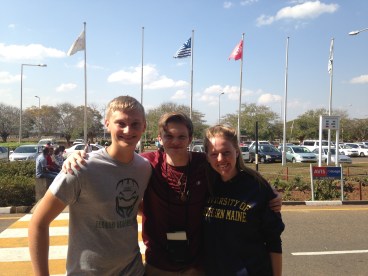
U.S. travelers: Isaac, Steven, and Anna (Steven’s photo)
Our hotel for tonight is the Bridge View Hotel in Lilongwe, the capital of Malawi. We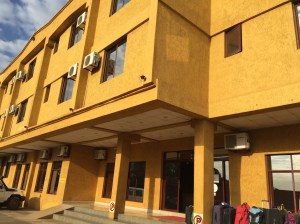 check in, take bags to our room and then a security briefing before dinner. Concern staff, Caoimhe De Barra, country director, and Sam Fox, program director, meet with us for the security briefing to explain how to stay safe while traveling. We will always be traveling with Concern Worldwide staff and are not to leave the hotel in the evening. We should not drink the water, eat “street” food (food sold at along the road or from street vendors due to not knowing if food safety and sanitation has been followed when preparing), and wear our seat belts when traveling in vehicles.
July 24, 2017
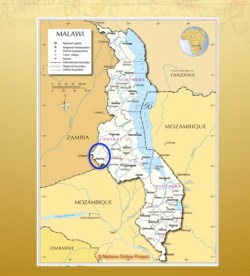
- Mchinji District
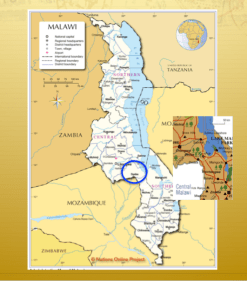
Today we traveled to the Mchinji District for a full day field study where we will learn about programs initiated by Concern Worldwide local staff: Care Groups, Kitchen Gardens, Village Savings & Loan program, and One to One Goat Program.
Our travel took us on the paved roads to travel into rural areas on dirt roads to T/A Mkanda. The roads were dusty and bumpy while the weather was warm but not too hot. Throughout our drive, we traveled through many small villages and past homes dotted along the sides of the path. Poverty was very
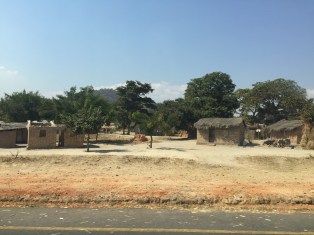
prevalent and surprisingly many school aged children hanging out a long the sides of the road. Our question of the day…why are these children not in school?
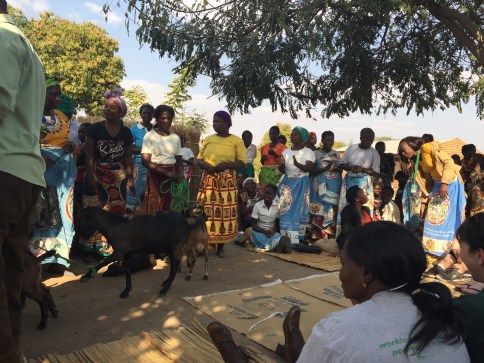
We were warmly welcomed with singing by the ladies of the village of Kachinaka. The ladies are each wearing the same chitenje (sarong) because they are all participants in the kitchen garden program.

The Care Group is a program where a Care Leader trains other leaders in the villages. The village care leaders then work with 10-12 women in their local area teaching about maternal health care, prenatal care, lactation (breastfeeding your baby), contraception and pregnancy prevention. By training village care leaders it is possible to reach so many more women in the region. A wonderful program creating change in the health of women, children, and even the men in the remote areas of Malawi.
Kitchen gardens are another program initiated by Concern Worldwide. The focus of the program is to create diversity in the diet to improve nutrition. The diet of many people

Nsima with goat meat, vegetables, and a banana
living in Malawi is based on maize, which is made into a dumpling type food by mixing maize flour with water then boiling. This maize dumpling is called “nsima” and has very little flavor.
Each participant is given seeds, a watering can, and training to grow vegetables in their yards. Some of the vegetables grown: tomatoes, Chinese cabbage, and mustard greens. Gardeners can sell the extra produce to also provide income for the family. It was interesting touring one woman’s garden and yard where she also was raising chickens, a pig, and had a structure for storing harvested maize.
Backyard “Kitchen Garden” program in Chakale Village.


We attended a meeting in the Kachinaka village where the citizens were participating in the Village Savings & Loan program. This program works like a banking system for members. Two members held keys to the two locks on the bank box. The box cannot be opened unless both key holders are present. This was a way to prevent theft from occurring. Members deposited money in the bank box with a person acting as “treasurer” and recording the balance. As a group, the members made the decision to loan money when someone made a request. The money borrowed would need to be paid back in two months with 20% interest. This is a really high interest rate. At the end of the year the profits from the interest are divided among members and then the banking year would begin again.
One woman talked about saving money to purchase a bicycle for her daughter. The bicycle was needed for her daughter to ride 12 kilometers to school safely.
The village also had a one to one goat program. It was determined who in the village was the most in need of a goat. For example, a family with young children would greatly benefit from a goat. The family would be given a goat from Concern Worldwide. Then when the goat had an offspring this goat would be given to another family. We watched a goat exchange during the village meeting we attended. They did not drink milk from the goats, but rather the goat provided some financial stability and equity.
Small Livestock Program – T/A Mkanda, Village of Kachinaka
Another very important health issue to address when water must be carried daily from the one pump in the village is hygiene. A hand washing station called a “tippy tap” is a great way to address the need to wash hands frequently to prevent diseases.


Anna demonstrating how to work the “tippy tap” by using her foot to press the stick to make the water bottle tilt so water can come out on her hands.


After today’s field visit we stayed in the city of Mua at the Greenhill Lodge. There was no wifi or hot water in the shower. But the rooms were comfortable and the beds had mosquito nets.


July 25, 2017
We started our day traveling to Gomani village in T/A Zulu, about twelve kilometers east of Mchinji Boma, to learn about the SKILLZ Girl program at the Gomani School sponsored by Grassroots Soccer. SKILLZ Girl uses soccer to educate, inspire, and work with the community to stop the spread of HIV and to make healthy choices. The program focuses on developing empowerment in girls through an interactive life skills curriculum that focuses on sexual and reproductive health, HIV prevention, personal rights and personal safety. The goal is for adolescent girls to have the information to delay marriage and pregnancy to be able to continue their education. Curriculum materials include: know the game (soccer), I am beautiful, sex and gender, healthy relationships, our changing bodies, know your rights, knowledge is power, advocate for yourself, know your status and healthy living. The program is open to girls currently attending school and ones who have dropped out of school, hoping these girls will enroll back in school.
In 2015, Concern Worldwide trained 30 coaches. The coaches are now implementing the program in fifteen schools. Local coaches have been trained to teach the twelve lesson curriculum to participants. Each coach is given a soccer ball, whistle, orange cones, and training to teach the curriculum.


The U.S. and Irish students participated in group activities, played a little soccer, and shared pictures with children. The children from the Gomani community were excited to interact with the visitors. They loved posing for pictures and then getting to see their picture.
We ate lunch at the Concern Worldwide office in the Mchinji District before departing for the Mua Mission in the Dedza District in the hills above Lake Malawi.


Pictures of the Dedza District landscape during our four hour trip to the Mua Mission where we spent the night.
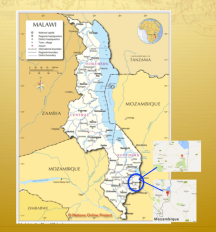
We arrived at the Mua Mission area we were able to visit the Chamare Museum. This museum documents the cultures of the Chewa, Ngoni, and Yao tribes living together in peace.
The pictures and displays also share how Christians and Moslums lived together in harmony. We walked through a room of masks used in moral teachings of the Chewa people. There were also artifacts explaining the Ngoni and Yao traditions. Pictures were not allowed in the room of masks and artifacts. We were allowed to take pictures of the display of pictures that told the story of the mission work that began in this area in 1902.


Today’s lodging and dinner were at Namalikhata Lodge. The students stayed in groups in round brick huts, while the chaperones each had their own huts. It was an interesting night of bats, small lizards, and rustic accommodations.
July 26, 2017

We were blessed this morning with a beautiful sunrise. Today is an early start as we have a 4 hour drive to Phalombe District for our field visit to learn about the Girl’s Club, Student Council, and Star Circle programs.
From the lodge dining hall, we had spectacular views of the river valley, flora and fauna, and the everyday activities of people living in a local village on the other side of the river.
Today’s field visit was to learn about programs to address gender based violence and to keep girls in school. We visited Matawa Primary School, sitting under a large old tree, we watched dramas about a girl dropping out of school, a girl being married at a young age by her father, plus singing and dancing to welcome us.


The dramas reinforced the beliefs of staying in school, ending the practice of early marriage, and ending violence toward females. The District Chief spoke of the need to change cultural practices and beliefs for the better of all the people. It struck me that we are all the same, no matter where you are in the world. However, the concerns of women in the United States cannot compare to the issues that face the women and girls of Malawi.
 After the dramas, we had time to talk to individual focus groups. I spent some time talking with three teachers. We came to the conclusion we face the same problems as educators; not enough money to support educational programs, would like unlimited teaching supplies, and lack of student motivation is a concern. One issue faced by the Malawian teachers, that I do not see, is severe poverty. Students often get only one meal a day and that is the one provided at school through the World Food Programme. Each student is given a bowl of “porridge”. I am not sure what porridge would be made of in Malawi.
Another group spoke with members of the Kalinde Star Circle. This is a father’s group working to educate other men about ending gender based violence, domestic abuse, early marriage of girls, and promoting girls to stay in school. This group can make a huge impact on changing cultural norms as Malawi is a patriarchial society as men are the primary decision makers for the females in the household and village.
The other Concern travelers met with members of a Parent/Teacher Association and a Student Council promoting student advocacy. It was an interested field experience and very much brought awareness to the need for worldwide change to improve the lives of women and girls.
As we were leaving the children once again surrounded our students wanting to have their pictures taken or to just interact with the people from Ireland and the United States.


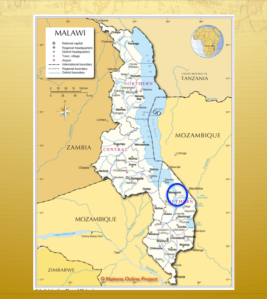
Tonight we stayed at the Thuchila Tourist Lodge, near the border of Mozambique. The lodge is at the base of the Mulanje Mountain Forest Reserve, which made for some breath taking scenery. We slept in rustic lodges (no hot water and one lodge having only an outside shower) and had to walk to the main lodge to the dining room for dinner and breakfast.
The internet reviews say the lodge had cages of baboons near the main lodge. But we didn’t see any cages or baboons new the main lodge or while we were walking to our group of lodges in the forest.


July 27, 2017
Another early morning breakfast then we leave the quiet lodges of Thuchila to a field
visit at Mbembembe School in the Phalombe District. Today we learned about the work of the organizations Comic Relief, Theatre for Change (TFAC) and Women’s Legal Resouce Centre to end gender based violence in the region. Again the focus is on gender based violence, sexual/reproduction health, and girl’s rights. The use of dramatics to practice how to deal difficult situations and to build confidence. The organizations sponsor the club “Agents for Change” in each school to reach girls ages 10 to 16. A male and a female teacher from each school are trained to lead the educational programs. There is an initiative to train more teachers to provide an opportunity for more girls to participate. The goal of the program is to address the issues of gender based violence, quality education, legal services to obtain justice for survivors.


When arriving at a field location we always began with a group meeting and usually some type of activity or song. Today was a team building activity. It was a fun activity combining concentration, team work, and laughter. The meeting with the teachers, Head School Teacher and members of the community group brought many requests for supplies, desks and building a changing room for girls. This was the first time we were directly asked for the things they needed. During the other visits, there was much appreciation for what Concern Worldwide has provided the community, not making requests for more. I was a little stunned by the requests. I understood the need for these items to make things better. I just found it odd, and different from other field visits, that I was somewhat shocked by the outward boldness.
After the group meeting, we were divided into smaller groups to visit the two different programs. I attended the Agents for Change group activity. Where we brainstormed and practiced how to deal with difficult situations related to personal safety. Two of our students interviewed one of the members of the club.
The other two group took part in a Student Council meeting. The council is made up of ten girls and ten boys with a focus on advocacy for teenagers. After these meetings, our entire group spent time with parents and community members. This group was made up of people who participate in Star Circle, Women’s Group, and Listening Club programs. The Star Circle and Women’s Group were similar to the one we talked about yesterday. It did seem as there were both men and women in the Star Circle group. The Listening Club was a group of 30 key community members who met to listen to podcasts about issues impacting girl’s lives. Members of the group stood to talk about what their group is doing and how they have benefitted from the group. I was very much impacted by a man who stood and stated he did not know marrying his daughters at a young age was considered abuse and he will no longer follow this custom. Wow! To stand in front of not only the people from your community but also people from other countries was powerful to me. Words cannot say how admirable it is when people want to make cultural changes for the better of their families and community.


We took time today for a leisurely lunch at Casa Rossa, remaining in the Phalombe District. I decided today to try something a little different. Our diet so far has consisted of either chicken, goat, or beef (looked and tasted like goat) as the protein. I selected Al Croccodillo, yes crocodile served in a tomato based sauce over pasta and a very nice cup of strong coffee.


Back on the road to the Mangochi District where our last field visit will take place.
Tonight we stayed in the city of Mangochi at the Villa Tafika Lodge along Lake Malawi. The lodge was once a private residence built in 1891. After many years of neglect, it was renovated with guest room additions added to open as a lodge in 2006. The site was once a Britsh settlement, known as Fort Johnston, to prevent the influence of the Portuguese. The British fought and defeated the Yao tribe, who was involved in the slave trade.
A walk through the grounds of the lodge took us to the edge of Lake Malawi, an important lake for fishing and boat transportation. As I was taking pictures of the lake I think I saw a hippopotamus surface and quickly go back under the water. It was so fast I wasn’t sure what I saw until after the hippo had swum away.


Some of us ordered cheese burgers for dinner at the lodge. To our surprise, there was no burger, just cheese. Our table found it hysterically funny. Not that I am sure it was funny enough for us to laugh out of control for many minutes or if it was a little bit of exhaustion setting in to make it seem so funny.


July 28, 2017
Today’s field visit took us to a mountainous region to view the Livelihood & Resilience program. This area has been impacted by a period of drought and then flooding. The 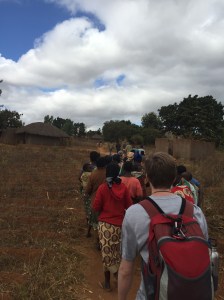 area of Mangochi District was identified during a study of poverty in Malawi as being very much at risk. The program we viewed was different from other humanitarian aid given in situations of severe poverty. The people were given money to buy seeds, farming tools, and other necessary supplies. The philosophy of the program was to provide aid through money that can be used in the village market which will also benefit the local economy and create a sense of empowerment.
Farmers were growing a variety of crops, such as maize, tomatoes, mustard greens, Chinese cabbage, bananas, mangos, papaya, sugar cane and cassava. A goal of the program for the farmers is to increase output while preserving the environment. Three principles are being followed: minimum soil disturbance by using small planting holes, maximum soil cover using mulch (maize stalks) as well as companion planting to prevent erosion and crop rotation to prevent loss of soil nutrients.


The farming plots used an elaborate irrigation system where a system of trenches had been dug through the fields from a water reservoir that collects water during the rainy season. These trenches can be damned up using bags filled with soil. They also use a natural pesticide to deal with bug infestations. The leaves of the neem tree are dried, crushed, and mixed with water. The pesticide can be dripped into the center of the plant from a recycled plastic bottle. The mixture can only be used in the early morning or evening. If it is used during the heat of the day the pesticide exposed to the sun will burn the plants. One gentleman was very excited to proudly demonstrate how the pesticide can be applied to the plants.


After our visits to the fields, the people from the village enjoyed talking with us through interpreters and taking pictures and then viewing themselves. I was anxious to try out the water pump. We had seen them all over the country and I wanted to know how hard it was to pump water. I asked some ladies if I could help them fill their water containers. They were more than happy to allow me to do the work for them.


We were told that many of the households were experiencing severe poverty due to women being the head of the household. Many men leave the area to find work in South Africa leaving the women behind to tend to the farming and raise the children.
After visiting the farming village, we stopped at a pottery business for lunch in the restaurant and a little shopping for pottery pieces.


We traveled from Mangochi to Lilongwe, where we spent our last night in Malawi at the same hotel we stayed at the first night. It was nice to stay in a hotel with air conditioning, hot water in the shower, and no mosquito nets. The simple things in life are enjoyed after spending the week in hotels Americans would consider to be “primitive” lodging. Don’t misunderstand, we stayed in comfortable hotels that were safe and provided a good night sleep.
July 29, 2017
Today we must depart from our adventure in Malawi. It was an eye opening journey to see poverty, food insecurity, chronic malnutrition due to lack of food variety in the diet, issues of gender based violence and young girls leaving school early to marry. We were warmly welcomed by the people of Malawi, so willing to share the progress they have made in their lives.
The Concern Worldwide staff provided us with a learning experience that will intensely impact our lives. Every detail of our trip, from lodging, meals, interaction with Malawi citizens, to our drivers, was well planned to ensure a powerful learning experience. I cannot thank the organization and staff enough for making this opportunity available for me as a teacher and the students of the United States and Ireland.


Check out my blog post on the Global Concerns Classroom web page: “Think Globally, Act Locally”
Zicomo (Thank you)
Tsalani bwino (Stay well)
 Roaming the World with Mrs. Kelly